




The glass loading table with arm is a big step forward in modern glass production. It combines robotic accuracy with smart automation to handle fragile materials quickly and safely. Programmable Logic Controller (PLC) technology and vacuum suction mechanisms work together in these systems to automatically load, place, and move glass panels that range in size from small shower door parts to large building sheets. If production leaders and plant managers want to get rid of bottlenecks and cut down on waste, they need to know how these core technologies work together in order to make smart investments in capital equipment.
Understanding the Glass Loading Table with Arm
Glass handling has come a long way since the days of simple conveyor belts and hand lifting. The brains of efficient production lines are an automatic glass loading table with an arm. This is especially true in settings that require architectural glass, curtain wall integration, and furniture. The system is smart because it has a PLC-driven control framework that manages the arm movement, the vacuum and safety rules all at the same time.
What Makes Air Flotation Systems Essential
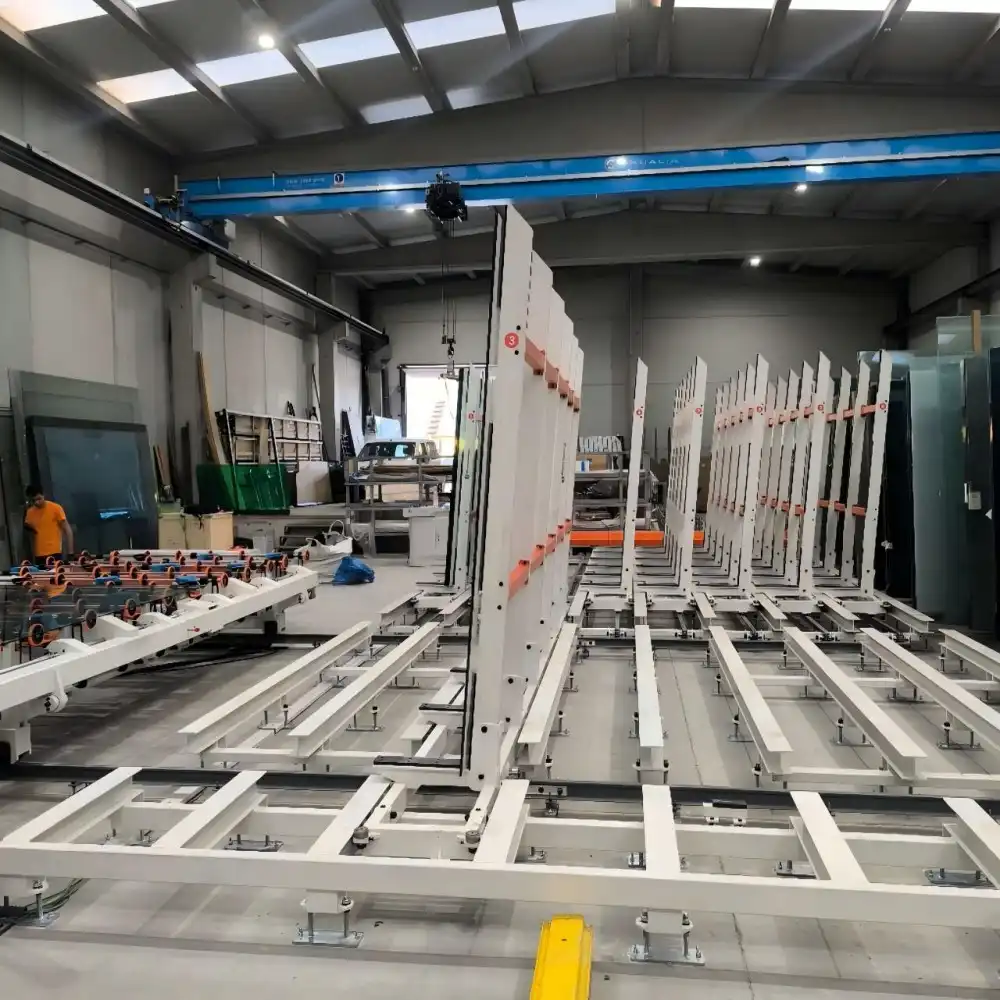
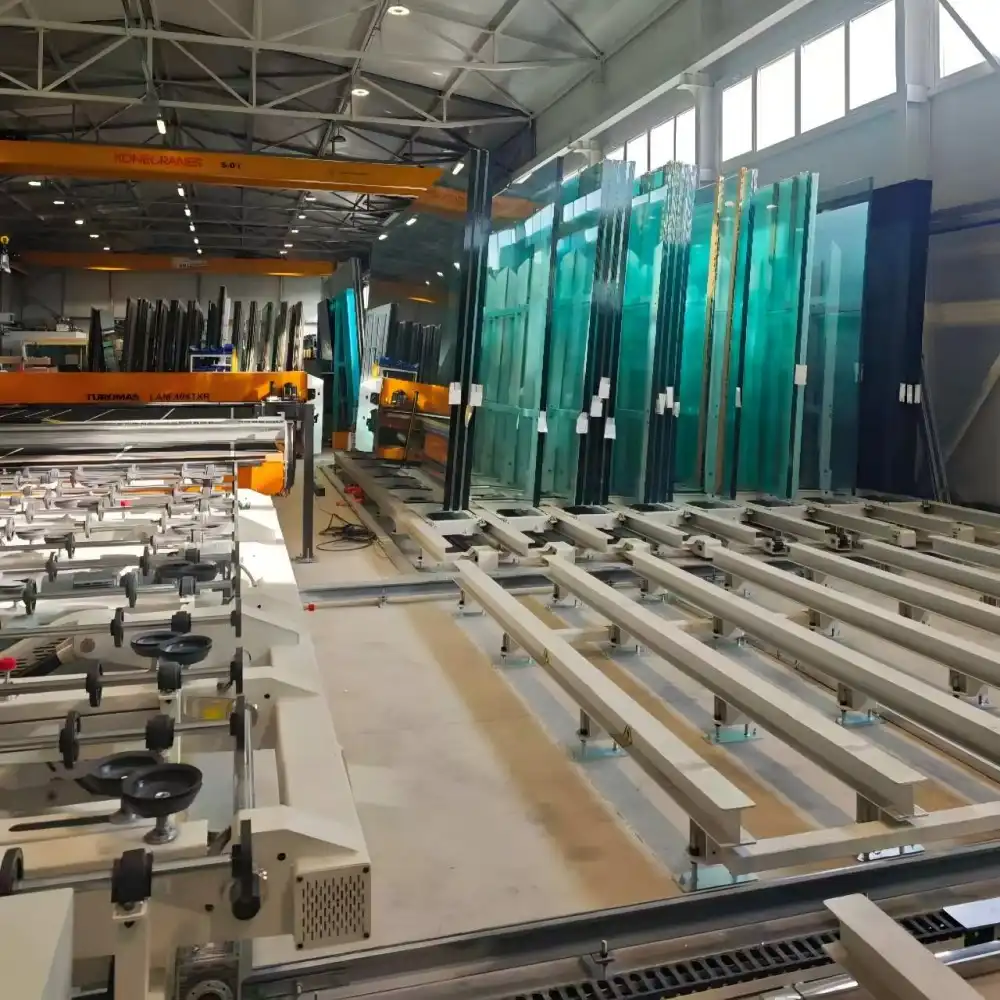
The air floating part changes how workers deal with big glass sheets every day. By putting a thin layer of pressurised air under the glass surface, these tables reduce friction to almost nothing, making it possible for one person to move panels that weigh several hundred pounds without any problems. This technology is especially helpful when placing 3660mm by 2440mm pieces of architectural glass that are too big to be moved by hand. Normally, this would take a lot of people and heavy moving gear.
When glass pulls across standard roller tables, it leaves tiny scratches. Air flotation systems stop these scratches. The constant air cushion keeps the support level the same across the whole panel, so there is no point-loading stress that can cause edge chips or internal cracks. Production managers can see this benefit right away because the number of rejects goes down and the cost of materials goes down.
PLC Control: The Decision-Making Brain
The Programmable Logic Controller is the computer's backbone. It takes data from position sensors, vacuum pressure monitors, and safety interlocks and processes them to run complicated motion patterns with millisecond accuracy. Modern PLCs are different from older relay-based systems because they let engineers write conditional logic, error recovery routines, and output tracking measures right into the control software.
The PLC controls the time of the vacuum operation, the movement of the horizontal table, and the position of the vertical arm when connected to a glass loading table with an arm. This teamwork makes sure that the robotic arm gets to the right place to pick up the object, that the suction cups only get activated when there is enough seal pressure, and that the glass is released at the right place without any sudden drops in pressure that could break fragile materials.
Vacuum Suction Mechanics and Safety
Making negative pressure zones between the suction cups and the glass surface is what vacuum handling technology is based on. Industrial vacuum pumps create the needed difference in pressure, which is usually between 0.5 and 0.8 bar below air pressure. This means that each suction cup can hold more than 100 kg. The real gripping power relies on the size of the cup, how smooth the glass surface is, and how well the seal works.
New systems have extra safety features that older systems don't have. Vacuum sensors constantly check the pressure levels in each suction zone and send a message to the PLC if any cup fails to properly seal, which could happen with rough or patterned glass. When this happens, the system either moves the load to working cups or starts a controlled emergency stop. This stops any glass from falling and hurting workers or damaging equipment further down the line.
Core Components and Working Principles
By breaking down the technical design, we can see how the different parts work together to provide reliable automation that can handle the tough conditions of ongoing production settings.
Robotic Arm Design and Payload Capacity
The system's flexibility and output are based on the framework of the mechanical arms. Complex picking patterns from stacked glass racks can be made with articulated designs that have multiple degrees of freedom, while simpler gantry-style arms are great for making repeated linear moves between fixed stations. Specifications for load capacity must take into account both the weight of the glass itself and the forces that act on it when it accelerates. For example, a 300-kilogram payload grade can usually support panels that weigh up to 250 kilograms, with safety gaps built in.
Arm reach measurements have a direct effect on how efficiently a plant layout works. A unit with a 3-meter horizontal reach can serve multiple processing areas from a single placement point. This saves floor space and makes it easier for materials to move. When making specifications, technical managers should compare current production areas to arm coverage zones.
PLC Architecture and Communication Protocols
Standardised protocols like Modbus, Profibus, or EtherNet/IP let industrial PLCs talk to other devices. This makes it possible to connect them to workplace control networks that are already in place. With this connection, production data from the glass loading table with arm can be sent to corporate resource planning software. This lets you see cycle times, machine utilisation rates, and maintenance needs in real time.
The system's ability to grow depends on how the controller's inputs and outputs are set up. It is possible to add more sensors, limit switches, and other equipment to a PLC with 32 digital inputs and 24 outputs without having to update the hardware. Procurement teams should make sure that control tools have enough extra space for making changes to the production line in the future.
Vacuum System Components and Performance Metrics
The pump unit, distribution manifolds, flexible lines and suction cup sections make up a complete vacuum system. When there are different loads, rotary vane pumps always work the same way. Venturi-style systems, on the other hand, are easier to maintain but use more compressed air. Which one to choose hinges on the infrastructure of the building and how much it costs to run.
The choice of a suction cup has a big effect on how reliably the handle works. Soft rubber materials can smooth out small surface flaws but wear out more quickly than polyurethane substitutes. The number and width of cups must fit the thickness and fragility of the glass. For example, 3 mm thick panels need more contact points than 12 mm thick tempered sheets, which are stronger. Modular cup fastening plates can be quickly rearranged between production runs, which is a feature that furniture makers who work with a variety of products like.
Advantages Over Traditional Glass Loading Methods
When you compare automated systems to manual and semi-automated options, you can see that they have real benefits that make the investment in capital worth it by increasing output and lowering risk.
Eliminating Manual Handling Risks and Inefficiencies
Handling glass the old-fashioned way puts workers at risk for back problems, repeated stress injuries, and cuts from sharp edges. Moving 150-kilogram panels over and over again during a shift can cause mistakes and poor quality, even if the right lifting methods are used. These ergonomic issues are taken care of by automated filling, which also increases productivity.
Variability is also added by manual processes that are taken away by technology. Human workers place glass with millimetre-level errors, which throws off later equipment and causes rejection spikes. Robotic arms put panels within 0.5 mm of each other, which ensures that the cutting is accurate and the edges are good over thousands of daily rounds.
Quantifiable Productivity and Quality Improvements
Curtain wall makers have found that automatic glass loading tables with arm systems cut cycle times by 40 to 60 per cent compared to manual methods. A machine like the HSL-SPT3624 type can load panels in 15 to 25 seconds, while it would take two people 45 to 90 seconds to do the same thing by hand. Over the course of an 8-hour shift, this means processing 200 more panels, which is a direct effect of the reliability of the supply plan.
Quality measures get better over time. Automated vacuum handling cuts the number of edge chips by 75% and gets rid of surface scratches that happen when people touch things incorrectly. These reductions in defects lower the cost of materials and make customers happier by making sure that the standard of the products stays high.
Enhanced Workplace Safety and Continuous Monitoring
In addition to keeping people safe, automatic systems keep records that can be used for auditing, which cannot be done by hand. Every turn, PLCs record data with a timestamp that keeps track of production levels, fault conditions, and repair events. This digital record meets the standards for quality control set by ISO 9001 and lets you find the root cause of process variations.
When guard doors open or people enter restricted areas, safety interlocks stop the tools from working. As required by strict machinery safety rules, emergency stop circuits stop all action within 200 milliseconds. These planned safety measures cut down on accidents at work and the costs of workers' compensation that come with them by a large amount.
Selecting the Right Glass Loading Table with Arm for Your Needs
To get the best return on investment from automation, the factors for specifications must match both the current needs of output and the expected growth in capacity.
Technical Specifications and Capacity Planning
The main selection criteria are the largest glass size that can be used. For operations that work with standard architectural glass up to 3660mm by 2440mm, they need tables with beds that are the same size, plus extra space around the edges. The HSL-SPT3624 type can handle these standard sizes in the industry, and it can also handle special panel sizes as long as they are within its working range.
To keep the acceleration performance and extend the life of mechanical parts, load capacity rates should be 25 to 30 per cent higher than usual glass weights. When working with 300-kilogram panels, a glass loading table with arm rated for 400 kilograms is more reliable than a 350-kilogram unit in the same circumstances.
Evaluating Supplier Reliability and Support Infrastructure
The level of after-sales assistance and the availability of spare parts have a big impact on how often equipment is used. Managers of procurement should make sure that sellers keep regional parts stores stocked with important wear parts like vacuum pumps, seals and electronic modules. Response time promises for technical help, including both online analysis and on-site service, should be spelt out in detail in the contract.
Certifications are objective ways to measure quality. CE marking shows that the product meets European safety standards for machinery, and ISO 9001 approval shows that the company follows written quality management practices. These qualifications lower the risk of procurement and make the due diligence process easier.
Customisation Options and Integration Flexibility
Different production settings need different kinds of automation systems. Customising things like suction cup layouts, arm reach sizes, and control panel layouts makes sure that the equipment fits the needs of a specific process. Suppliers who can do both OEM and ODM can change standard designs to fit specific needs or connect them to their own processing equipment.
Having a remote control adds to the working freedom. Systems that have wireless remote controls that work from any angle let workers exactly place the loading table during setup without having to keep walking back and forth between control panels and work areas. This feature, which might not seem important, cuts down on setup time and makes switching operations more comfortable.
Implementing and Optimising Your Glass Loading System
For automation rollout to go smoothly, there needs to be an organised set of steps taken from the initial installation to ongoing efforts to make things better.
Installation Best Practices and Commissioning Procedures
The base must be properly prepared to ensure long-term location accuracy and mechanical stability. The glass loading table with arm units needs concrete pads that are level and have flatness limits of within 2 mm across the whole installation area. Foundation work that isn't done right can cause frame warping, which can lead to alignment issues and early component wear.
Power quality needs must be taken into account when electrical integration is done. PLCs and vacuum pumps need clean, controlled power that is safe from voltage spikes and phase imbalances that are typical in factories. Using dedicated circuit breakers and surge reduction devices stops problems that are annoying and stops work from getting done.
Operator Training and Competency Development
Full training programmes boost the trust of operators and cut down on mistakes that cost a lot during the learning curve. A good curriculum includes basic troubleshooting skills, regular repair jobs that operators can do without special tools, and steps for running the machine normally. Hands-on practice under direction makes sure that employees become skilled before they take on duty on their own.
Technical paperwork should have thorough descriptions of PLC programs and electrical diagrams that can be used by plant support staff to fix things. Suppliers who offer training materials in a variety of forms, such as written guides, video lessons, and live models, help people remember what they have learned.
Maintenance Strategies and Performance Analytics
When repairs are done at regular times, unexpected breakdowns that stop output are avoided. Every 2,000 hours of use, vacuum pumps need to have their oil changed, and every month, suction cups need to be checked for damage and wear. PLCs don't need much care other than backing up their control programs and parameter sets every so often, which is standard practice recommended by reputable CNC glass cutting machine suppliers.
Modern computer systems create streams of data that let repair plans be made ahead of time. By following changes in vacuum pressure over time, you can see how the pump is losing its effectiveness before it breaks completely. Monitoring the accuracy of the positioning of the arm finds bearing wear that, if not fixed, leads to expensive mechanical damage. When production leaders use these analytics tools, unexpected downtime is cut down by a large amount.
Conclusion
Using a PLC-controlled glass loading table with arms and vacuum suction systems to automatically handle glass has clear benefits in terms of quality, safety, and efficiency. These technologies solve basic problems in the production of architectural glass, curtain walls, and furniture by getting rid of the variations that come with human handling and increasing processing capacity. Technical leaders get reliable automation systems that work with their current production infrastructure and come with data analytics tools that help them keep making things better. When air flotation positioning, clever robotic handling, and multiple safety systems are used together, they make production settings where accuracy and efficiency are always met.
FAQ
1. How Does PLC Control Improve Glass Loading Efficiency?
PLC technology manages complicated motion patterns that would have to be coordinated by several people working together by hand. The controller runs pre-programmed processes that place the robotic arm, turn on vacuum suction, check the security of the grip and complete transfer moves at the best times without requiring humans to respond. This technology cuts down on cycle times and gets rid of errors that can happen when operators are tired or have different training.
2. What Are Common Vacuum Suction Challenges and Solutions?
Surfaces that are dirty with dust, grease, or cutting fluids can stop the vacuum seal from forming properly. Grip dependability is maintained by cleaning the suction cups regularly and using automatic air blow-off systems. Textured or patterned glass surfaces need special cup designs with closing sides that can bend to fit uneven surfaces. Monitoring systems that find not enough vacuum pressure before lifting attempts stop things from falling.
3. Can Glass Loading Tables Handle Different Panel Sizes and Weights?
Modern systems give you a lot of options because you can change where the suction cups are placed and set up arm patterns. The HSL-SPT3624 can automatically load a glass loading table with arms that are up to 3660 mm x 2440 mm in size. With quick-change fixing plates, workers can quickly change the shape of cups for different product runs. PLC programming can store many recipes, which lets production standards be switched quickly without having to make any hardware changes.
Partner with HUASHIL for Advanced Glass Loading Automation
Leading-edge glass loading table with arm options from Shandong Huashil Automation Technology are designed to work in tough industrial settings. Our HSL-SPT3624 model blends precise air float, smart PLCs, and reliable vacuum systems that are backed by CE and ISO 9001 certifications. As a manufacturer with a lot of knowledge and full after-sales support, we offer expert advice, unique setups, and quick access to spare parts that keep your production lines running at their best. Get in touch with our team at salescathy@sdhuashil.com to talk about how our automation knowledge can change the way you make glass by giving you custom equipment solutions that cut costs and raise quality.
References
1. Müller, A. and Schmidt, T. (2021). Programmable Logic Controllers in Industrial Automation: Architecture and Applications. Berlin: Industrial Press.
2. Chen, J. (2020). Robotic Material Handling Systems for Fragile Components. Journal of Manufacturing Technology, 45(3), 234-251.
3. Anderson, K. (2022). Vacuum Gripping Technology: Principles and Industrial Practice. London: Engineering Publications Ltd.
4. Zhang, L. and Wang, P. (2019). Air Flotation Systems in Glass Manufacturing. International Journal of Production Engineering, 38(7), 1456-1472.
5. Roberts, M. (2023). Safety Standards for Automated Glass Handling Equipment. Chicago: Machinery Safety Institute.
6. Thompson, R. and Davis, S. (2021). Total Cost of Ownership Analysis for Production Automation Investments. Manufacturing Economics Review, 29(2), 89-107.