




A high quality mirror processing machine cuts, grinds, and polishes coated mirror glass, conserving the reflective coating and maintaining constant edge dimensions. Polishing is important since a mirror displays every scratch, chip, and uneven bevel. The finest equipment delivers precise cutting, consistent edge work, and soft handling, so fabricators ship fewer rejections. This guide is for plant managers, engineers, and buyers throughout the U.S. who seek a clear comparison. On the way, I will present the HUASHIL HSL-YTJ2721, a cutting machine that prepares mirror blanks for the edging and polishing step.
What Makes a High-Quality Mirror Processing Machine Different?
Core Purpose and Coating Protection
Mirror glass is coated with silver and may be damaged by harsh handling or dirty water. So a mirror finishing machine does more than just shape glass. It delicately lays each sheet down, eliminates the jagged edges, and polishes the edge to a smooth gloss. ASTM C1503, Specification for Silvered Flat Glass Mirror, emphasizes the importance of both attractiveness and durability. Mirror-focused machines provide a greater emphasis on gentle handling, clean coolant, and stable feed pressure than ordinary glass equipment.
Quality Indicators Buyers Should Check
I would propose rating a machine on quantifiable factors, not on brochure wording. Check dimensional tolerance, edge straightness, bevel uniformity, polishing brightness, and spindle stability. Then look for flexibility for thickness and size, operator safety features, and maintenance access. The steel needs just as much support. Buyers in the US also want availability of replacement parts, installation instructions, and transparent export service. These elements drive total cost of ownership and should be part of every quote evaluation along with the price.
Where the HSL-YTJ2721 Fits
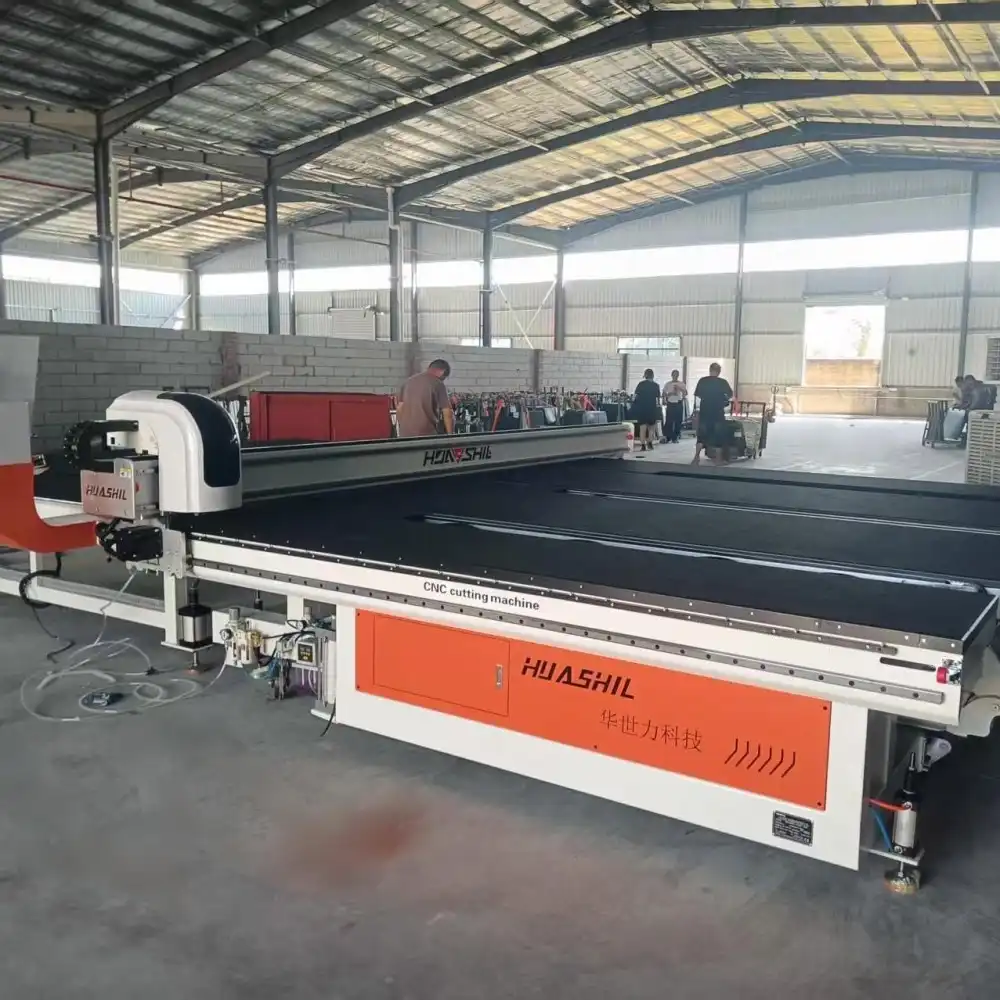
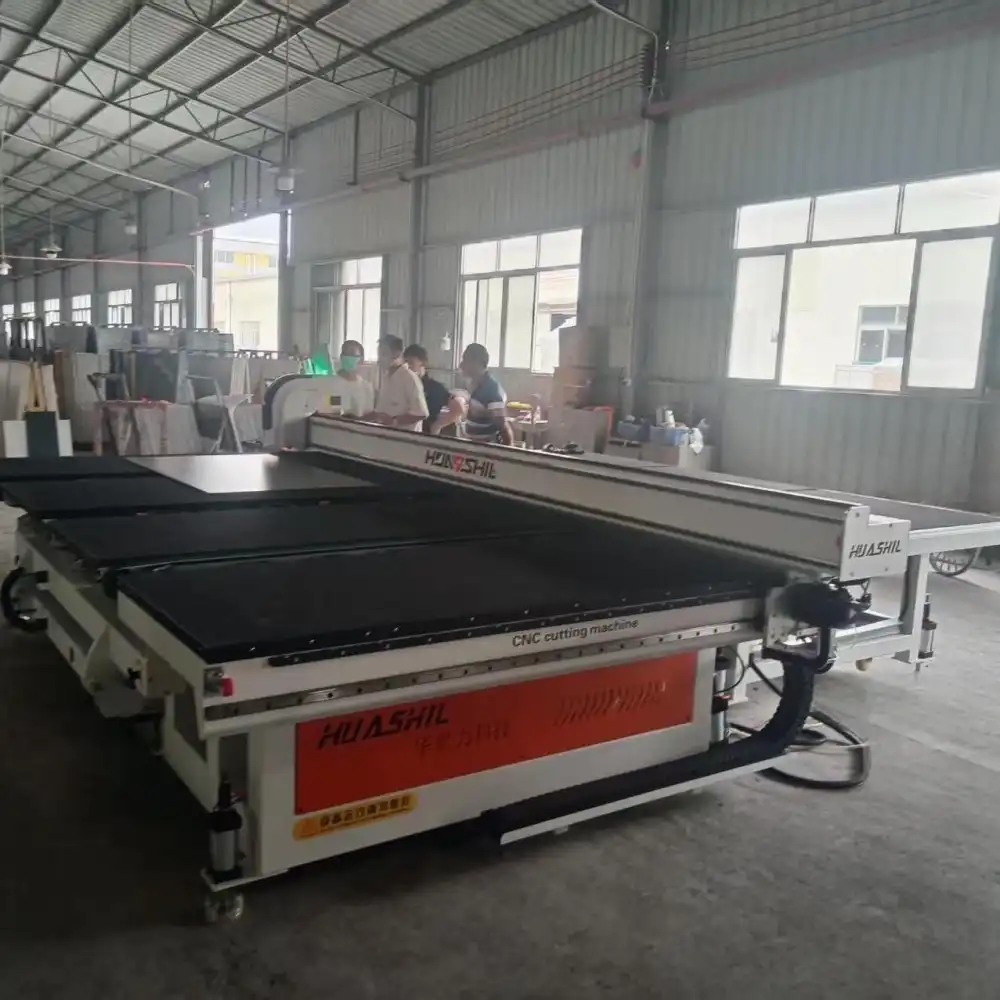
HSL-YTJ2721 does the cutting step before edging and polishing. It can take glass up to 2700×2100 mm and cut thicknesses from 2 to 19 mm. Optima optimization program develops cutting layouts. Automatic loading, automatic pressure control, and automatic edge detection decrease the manual procedures. Air flotation technology facilitates movement of the sheets, suction cups transport the glass, and 360-degree remote-controlled walking offers flexibility throughout the work space. The machine has CE and ISO9001 approvals.
How Mirror Glass Polishing Equipment Works and Which Type to Choose
From Loading to Finished Edge
A typical work begins with loading and placement. Suction cups, conveyors, or automated methods are used to keep alignment. Then the diamond wheels grind roughly, grind finely, and calibrate. The polishing wheels with compounds provide the final finish, such as flat polish, pencil edge, arris edge, bevel, etc. These sophisticated high quality mirror processing machines control speed, pressure, coolant, and tool movement for reliable outcomes. The mirrors are subsequently inspected for dimensions and edge quality and washed, dried, labeled, or packed by operators or integrated systems.
Main Equipment Types
Straight line edge and polishing machines are ideal for consistent edges and constant production. Specialized beveling machines generate beautiful angle profiles. CNC systems provide more freedom for unusual forms, drilling, notching, and OEM designs. Automatic lines integrate loading, grinding, polishing, cleaning, inspection, and unloading for high-volume operations. Semi-automatic and manual equipment still make sense for smaller companies. Working width, thickness range, voltage standards, control language, and conveyor arrangement are customizable. Each decision impacts how easily the equipment may be fitted into an existing US factory.
Choosing the Right Configuration
Begin with production volume, product variety, personnel availability, floor space, and expansion goals. Automatic systems usually provide better throughput, more reliable outcomes, and less need for manpower. Semi-automatic devices need a lower initial cost for constructing the workshops. The CNC is suited to high-mix work, while the specialized lines are suited to high-volume standardized orders. When comparing estimates, I suggest calculating total delivered cost: tools, software, installation, training, warranty, packing, shipping, and after-sales support. The sticker price is low, but add-ons might affect the true figure.
Applications, Performance Metrics, and Maintenance
Applications Across Industries
Mirror processing caters to home bathroom and bedroom mirrors, furniture panels, framed items, hotel interiors, retail displays, elevators, and architectural projects. Furniture producers making cabinets, closets, and display units require precise measurements and reduced chipping for clean assembly. For shower door and partition manufacturers, uniform edges are a plus for long runs. The versatility of CNC is an advantage since OEM purchasers may request unusual forms, customized bevels, or cut-outs. Distributors covering multiple markets choose versatile equipment with comprehensive documentation, training, and replacement parts.
Performance Metrics That Matter
The advertised speed alone tells you nothing. Calculate true capacity based on your actual mirror diameters, thicknesses, loading time, and changeover time. Make sure the equipment can handle current and future sizes – max weight and diagonal size. The HSL-YTJ2721 is available with a maximum dimension of 2700 x 2100 mm and thickness from 2–19 mm, so it may be used as a benchmark against your order book. Also consider motor power, water and abrasive usage, guarding, emergency stops, and maintenance access. All affect operational cost.
Maintenance Habits That Protect Edge Quality
Clean glass debris and polishing residue daily. Check wheels, belts, conveyors, suction cups, water nozzles, lubrication points, and emergency stops. Check spindle runout, guide rails, bearings, electrical connections, pumps, filters, and tanks weekly or monthly. Edge flaws are often caused by worn tools, excessively high feed speeds, improper alignment, polluted water, or unstable posture. Logging downtime, faults, and changes in consumables enables your team to detect trends early and schedule preventative repair before a little problem stops the line.
Buying Guide, Quality Control, and Supplier Support
Define Requirements Before Requesting Quotes
Please state your goods, mirror sizes, thickness range, edge profiles, daily production, expectations for automation and future capacity. A complete estimate should include high quality mirror processing machine model, layout, tooling included, accessories, warranty, lead time, shipping, installation, training, and replacement parts. US consumers should also check the voltage, utilities, packaging, delivery durations, and customs formalities. Early on, it’s also good to talk about payment terms. Deposit and final payment. A letter of Credit is used for overseas transactions. It cuts down the evaluation process, whether you’re purchasing one machine in a few weeks or designing an entire line over three to six months, with clear inputs.”
Production Process and Acceptance Testing
A good project starts with a technical analysis of the kind of glass, the coating, thickness, edge profiles, utilities, and layout. Then the provider selects the right frames, motors, controls, safety items, then calibration, software setup, trial production, and functional testing. Before delivery, confirm edge quality, dimensional accuracy, production rate, water circulation, noise, and safety against the given approval standards. ISO 9001 sets the requirements for a quality management system. Behind the CE marking. EU Equipment Directive 2006/42/EC: Equipment safety. HSL-YTJ2721 has CE and ISO9001 certifications.
Supplier Support and Automation Benefits
A reputable source will match the machine to your needs and not attempt to sell you a generic model. The engineers will review your needs, production goals, and factory conditions, then direct you in installation, train operators, provide replacement parts, and provide full documentation. Automation decreases operator variation, idle time, and handling harm. Controlled pressure prevents chipping and scratching. The HSL-YTJ2721 solves such problems, offering automated loading and automatic pressure control during cutting. HUASHIL is based in Shandong and also provides OEM and ODM service for customers with special configuration needs.
Conclusion
High quality mirror processing machines protect the reflective coating for consistent results in cutting, grinding, and polishing. This article discusses the relationship between loading, edge work and finishing, and how straight-line, beveling, CNC and automated systems meet different volumes and product combinations. There are measurable criteria for judging performance. These criteria include tolerance, edge straightness, bevel uniformity, performance under real order conditions, and access for maintenance. Applications include bathroom mirrors, furniture panels, and architectural work, depending on size, thickness, and edge profile needs. Acceptance testing, ISO 9001 standards, and direct supplier assistance reduce risk. The HSL-YTJ2721 has a cutting surface of 2700 × 2100 mm and can cut thicknesses ranging from 2 to 19 mm. It also includes several automation possibilities.
FAQ
1. What glass size and thickness can the HSL-YTJ2721 cut?
It handles glass up to 2700 × 2100 mm, with a cutting thickness range of 2 to 19 mm.
2. Which functions does the HSL-YTJ2721 include?
It offers automatic loading, automatic pressure control, automatic edge finding, an air flotation system, and 360-degree remote control walking. Optima optimization software plans cutting layouts, and suction cups convey the glass.
3. Should I choose automatic or semi-automatic equipment?
Base the choice on daily volume, labor availability, product variety, and budget. Automatic systems suit higher output and repeatable results, while semi-automatic machines suit smaller workshops.
4. What information do you need for a quotation?
Send mirror dimensions, thickness range, edge profiles, daily output, automation needs, drawings, and your destination. These details let engineers recommend a matching configuration.
Request a High-Quality Mirror Processing Machine Quotation from HUASHIL
HUASHIL is a high quality mirror processing machine manufacturer in Shandong, supporting US fabricators with HSL-YTJ2721 recommendations and project quotations. Send your mirror sizes, thickness range, and daily output to salescathy@sdhuashil.com, and our team will reply with a matched proposal.
References
1. ASTM C1503 Standard Specification for Silvered Flat Glass Mirror, 2018
2. ISO 9001:2015 Quality Management Systems – Requirements, 2015
3. Directive 2006/42/EC of the European Parliament and of the Council on Machinery, 2006
4. ASTM C1036 Standard Specification for Flat Glass, 2021
5. ANSI Z97.1 Safety Glazing Materials Used in Buildings, 2015
6. Introduction to Glass Science and Technology, Royal Society of Chemistry, 2005
