




A Custom glass loading machine changes the way things are normally moved by moving glass sheets automatically from storage to processing lines. With automated loading arms, air flotation technology, and clever positioning systems, this specialised equipment gets rid of the need for human lifting. This cuts down on labour costs by up to 40% and injuries on the job by more than half. Large-format glass panels, often up to 3660x2440mm, can be handled precisely by these machines, which also have safety features that keep workers and valuable materials safe during production cycles.
Understanding the Challenges of Traditional Glass Loading Processes
Architectural glass, curtain wall, and furniture factories still struggle to move glass by hand. Sharp edges, hard lifting, and repetition create muscular soreness and fatigue. The Bureau of Labour Statistics reports that glass production has 30% more injuries than other industries. Cuts, scrapes, and musculoskeletal injuries predominate.
Manual loading has expenses beyond labor. When experienced operators require medical leave, the firm must pay workers' compensation claims, injury-based insurance premiums, and missed work time. A typical glass plant that loads goods by hand may assign three to four people every shift to move objects. This high recurring expense hurts the company's competitiveness.
Mechanized loading equipment can automate some tasks, but it doesn't always have the flexibility needed for different production settings. Much off-the-shelf equipment can't manage variable glass sizes, manufacturing floor layouts, or processing lines. Companies that manufacture curtain walls and bespoke furniture for fussy consumers need to satisfy custom orders fast, but this rigidity hinders product revisions.
The Hidden Costs of Inefficient Glass Handling
Manual loading slows down production, makes run times longer, and makes tools less effective overall. When workers have trouble placing big sheets of glass correctly, processes that come after, like cutting and edging, have to stop often to realign. These small delays add up over several shifts, lowering throughput in a way that can be measured. This keeps makers from getting the most out of their investments in main processing equipment.
Costs go up even more when quality problems happen because of bad handling. Damaged glass sheets during loading have to be thrown away or downgraded, which wastes materials and cuts into profits. Mishandling by hand can cause scratches, chips, and stress fractures that aren't always found until later in the production process. This adds to losses by requiring more work and machine time to fix faulty goods.
Safety Regulations and Compliance Pressures
Regulatory bodies around the world are paying more attention to how safe the workplaces of glass manufacturers are. In the United States, OSHA rules require specific procedures for material handling tools. For example, companies must limit the amount of heavy lifting that must be done by hand. Similar rules are set by European Union directives, and people who don't follow them can be fined a lot of money. Automated loading systems help companies meet these government rules and show they care about worker welfare, which is becoming an increasingly important part of getting and keeping skilled workers.
How Custom Glass Loading Machines Address Labor and Safety Issues
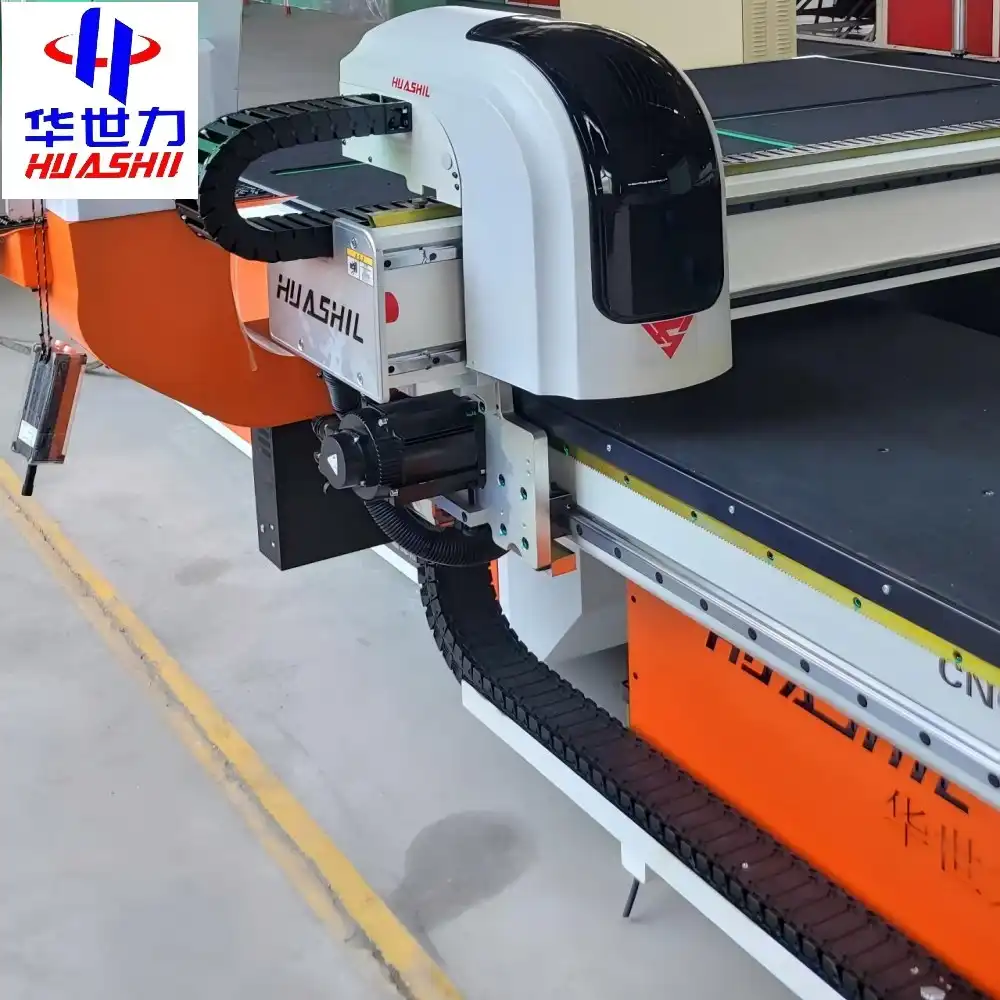
Custom glass loading machines replace hand-lifting heavy glass with engineered solutions for each production run. Most modern systems have three articulated loading arms that pick up, lift, and put glass sheets with millimeter-level precision. This machinery eliminates the need for workers to lift heavy, awkward glass panels. This immediately reduces injury risk and frees up personnel to do more complex tasks that need judgment and ability.
Air flotation devices improve safety. While moving glass sheets, these systems add a thin layer of air. Even large panels move smoothly and safely with almost no friction. Air flotation prevents unexpected jerks and drops that shatter glass and harm workers. It also lets one operator control loading sequences that previously required several workers to work together.
Modern automated lifters' safety measures go beyond mechanical protection. Multiple emergency stop devices around the machine allow it to stop immediately when danger is detected. Photoelectric sensors create unseen safety zones that stop work when workers enter during busy loading cycles. These protective systems achieve ISO 13849 and ANSI B11.19 safety requirements. They have documentation that insurance companies and government inspectors can verify.
Measurable Labor Cost Reductions
When factories use automated loading, they say they need two to three fewer people per shift to do material handling tasks. After adding automated loading equipment, a curtain wall maker in the southeastern United States saved more than $180,000 a year on labour costs. The equipment was paid for in less than 24 months, which includes the time it took to pay for itself. These savings come from both fewer employees and not having to pay premium overtime rates to meet production deadlines.
Indirect labour savings come from training programs that are easier to understand and require less supervision. When compared to manual material handling methods, automated systems with easy-to-use touchscreen screens need a lot less training for operators. New employees are productive in days instead of weeks, which makes it easier on experienced workers who used to spend a lot of time teaching new employees how to do their jobs and teach them safety rules.
Documented Safety Improvements
When glass factories switch to automatic loading systems, the number of safety events that are recorded drops by a huge amount. In Michigan, a factory that makes windows saw a 65% drop in injuries related to moving things in the 18 months after technology was put in place. The number of lost workday cases, which are the most expensive type of injury, dropped from an average of 4.2 per year to zero during that time. These changes directly led to lower workers' compensation insurance rates, which saved thousands of dollars a year on top of the direct cost savings from less labour.
Lower injury rates also boost morale and keep workers, which is especially helpful when jobs are scarce and skilled industrial workers can expect high pay. Companies that are known for their good safety performance get better applicants and have lower turnover, which saves them money on hiring and training costs that can add up to several thousand dollars per new worker.
Key Features and Customization Options Boosting Efficiency and Safety
Modern automated glass loading systems may be customized for diverse manufacturing processes. Small, semi-automated units are good for smaller furniture glass makers, while large, fully robotic systems can move in any direction in large production facilities. Producers can choose the level of automation that fits their production volumes, product mix, and capital budgets while still having upgrade paths if they need to grow.
Core features of high-performance custom loading machines affect safety and efficiency:
Automated Three-Arm Loading Systems – Three coordinated mechanical arms with vacuum suction cups spread lifting forces across glass surfaces, preventing stress buildup that would break it. Each arm adjusts to varied glass sizes and weights and operates independently with central control. This distributed lifting method can move panels up to 3660x2440mm, the largest size needed for architectural and automotive uses, while keeping them stable.
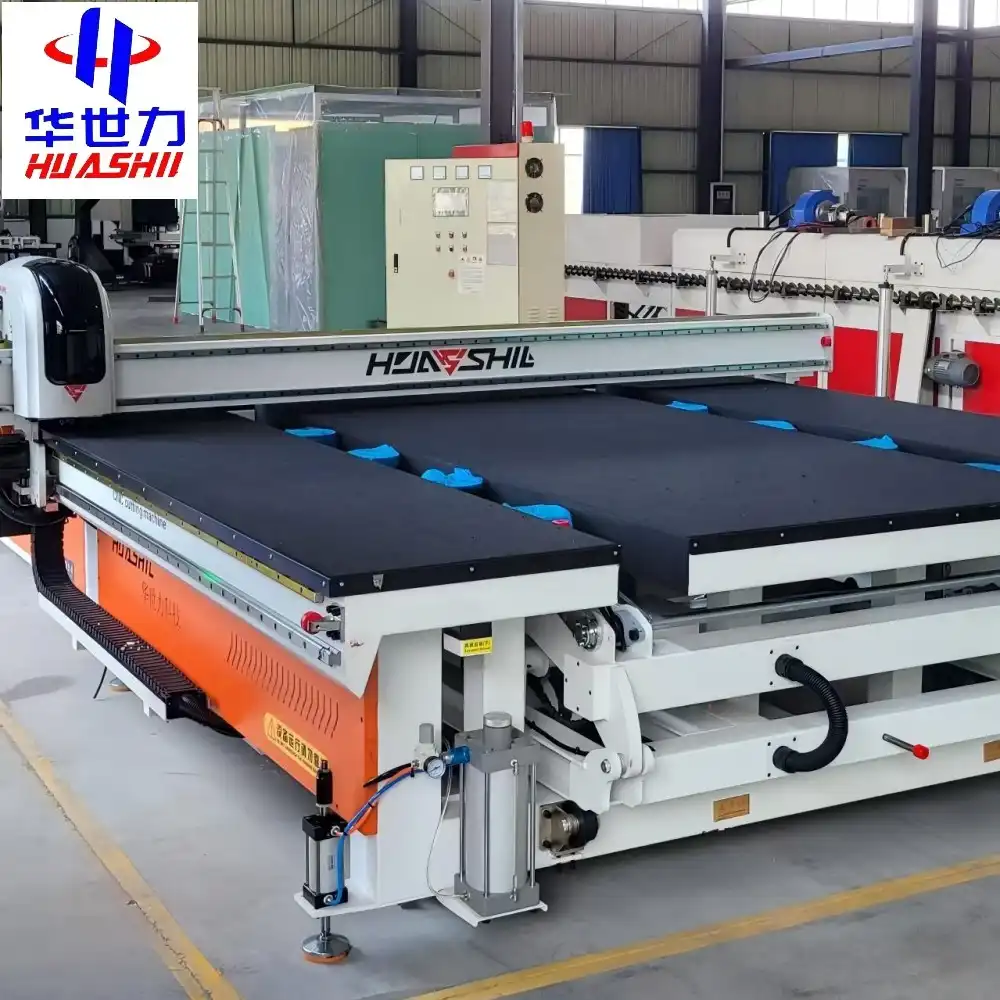
Precision-engineered air tables support glass uniformly when loading and positioning. Air pressure control systems automatically adjust flotation based on glass thickness and weight. This ensures consistent support for 3 mm furniture glass and 19 mm architectural panels. Air flotation smooths movement, reducing handling damage and allowing precise placement with little force.
360-Degree Mobility Systems – Advanced loading machines can move anywhere on the production floor. Mobility eliminates predefined conveyor tracks that limit production flexibility. This optimizes space and simplifies manufacturing line modifications. Some systems employ floor-mounted guiding or laser navigation to automatically identify the optimum route.
Customizable Control Systems — Programmable logic controllers with touchscreen user interfaces enable changing loading elements like speed, placement precision, and safety zone boundaries simply. Recipe-based programming retains the ideal settings for each glass type, so you can switch easily without touching them. Remote monitoring lets production managers monitor equipment and get maintenance notifications from their offices.
These advanced features from automatic glass loading machine manufacturers boost output by over 30% over human or basic mechanised loading methods. Custom automation's ability to swiftly and properly swap panels benefits curtain wall builders who operate with many different-sized panels.
Energy Efficiency and Environmental Considerations
Modern loading systems are made in ways that save energy, which helps with both operational costs and companies' commitments to being environmentally friendly. Motors and air compression systems that are controlled by variable-frequency drives use less energy because they match power output to real loading needs instead of running at full capacity all the time. Some makers say that newer equipment uses 20–25% less energy than older equipment. This means that over the 15–20-year lifetime of the equipment, costs will be significantly lower.
Noise-reducing features should also be thought about, especially for buildings that are close to family areas or that want to make the workplace better. Modern loading machines have sound-dampening enclosures and improved pneumatic systems that make them much quieter than older machines. This helps them comply with OSHA rules and keep workers comfortable.
Maintenance Protocols and Longevity
Maintenance programs that work well keep equipment running at its best and make it last longer, which protects the large amount of money that automatic loading systems cost to buy. Schedules for preventive maintenance usually include daily checks of the machine's functions, weekly lubrication of moving parts, and safety system inspections every three months. Manufacturers who provide detailed maintenance instructions and help with operator training help customers avoid parts breaking down early and production stopping for no reason.
The availability of spare parts is a very important factor in choosing equipment, especially for foreign buyers who are worried about the stability of the supply chain. Well-known companies keep regional parts distribution networks that make sure common wear items get to customers within 48 to 72 hours, keeping downtime to a minimum. Some suppliers have plans for managing parts inventories so that important parts are already at the sites of customers. This way, repairs can be done right away in case of an emergency.
Choosing the Right Custom Glass Loading Machine for Your Factory
Before you can buy automated loading equipment, you need to carefully look at your production parameters and operational needs. Plant managers and engineering teams should start by writing down how materials are currently moved, finding any slowdowns, and figuring out how much labour is needed for loading tasks. This initial evaluation gives us the facts we need to describe the capabilities of the equipment and make accurate returns on investment estimates that finance departments need in order to approve capital expenditures.
The type of glass is one of the main criteria for design. If a business only works with standard architectural glass sizes, semi-automated systems might be enough. But if they work with a wide range of products, like speciality forms, fused glass, and sintered stone, they need more advanced equipment that can be customised in a lot of ways. Machine size and configuration needs are directly related to the largest glass dimensions, weight limits, and daily throughput volumes.
Capacity Planning and Throughput Analysis
To estimate throughput, you must examine current production and predicted growth. Manufacturers should estimate how many pieces an hour they can make by hand and then use realistic automation improvement factors—usually 25–40%, depending on how complicated the operation is—to estimate how many they can make after automation. Engineering managers should seek vendors for comprehensive cycle time parameters and verify claims by visiting reference sites or seeing films of machines in comparable scenarios when comparing equipment.
Consider raw throughput and production flexibility. Construction job shops with many specifications benefit from custom glass loading machines that can quickly switch between glass types and be programmed for new products. However, organizations that manufacture many windows in a few sizes may choose speed above independence and choose methods that operate best with those sizes.
Safety Feature Evaluation
Not every automatic filling system has the same level of safety features. Safety certifications, emergency stop ease, guarding thoroughness, and sensor redundancy should all be carefully looked over by procurement teams. As long as the equipment is certified to well-known safety standards, like CE marking for European markets or UL listing for installations in North America, you can be sure that safety measures have been checked by a third party.
Checking with people who already use the tools can give you useful information about how safe it really is in the real world. Questions should ask about the history of incidents, the number of close calls, and how satisfied users are with how quickly the safety system responds. Site visits to installations that are already running let you see safety features in action and talk to operators about how well they work in real life.
Supplier Selection Criteria
Total cost of ownership over the lifecycle of an item is affected by how reliable it is and how well the supplier can support it. Established manufacturers with large installation bases have track records that can be checked, and they also have larger support groups that can provide quick technical help. Managers in charge of buying things should look at things like warranty terms, the cost and availability of spare parts, the time it takes for field service to respond, and how thorough the training program is.
Customisation options and engineering responsiveness are what set providers who can really customise solutions apart from those who can only make small changes to stock designs. Plant managers should find out if the seller is ready to meet specific needs, look at examples of similar problems that were solved in past custom projects, and check the quality of engineering communication during the quotation development process. Custom glass loading uses are done by companies like Shandong Huashil Automation Technology, which has engineering teams that know how to adapt equipment to different production settings and have decades of experience with automation.
Conclusion
Automated glass loading technology is a great way for manufacturers to save money on labour costs and make the workplace safer at the same time. Custom tools made to fit the needs of a specific production process remove the risks of manual handling, boost output, and allow for the creation of a wide range of products. High-quality automation systems require a big initial investment, but they pay for themselves in 18 to 36 months through lower injury-related costs, lower labour costs, and higher productivity. Careful supplier selection, detailed requirement specification, and thorough operator training all lead to successful implementation that gives manufacturers a competitive edge in global markets that are very demanding.
Frequently Asked Questions
1. How much can automated loading reduce workplace injuries?
When factories use automatic glass filling systems, injuries related to moving materials are usually cut by 50 to 70 percent. The biggest drops are seen in the most serious injury categories, like cuts that need stitches and musculoskeletal disorders that keep people from working. These changes directly lower the costs of workers' compensation and insurance rates, which boosts happiness and keeps employees.
2. What customization options matter most for different production environments?
Architectural glass fabricators focus on having the largest size capacity and the ability to quickly switch between panels of different sizes to fit the needs of each project. Furniture makers like small footprints and cutting tables that can be used with existing ones. Manufacturers of automotive glass need to know how to handle bent pieces and place them exactly where they need to go. Talking about specific production needs with experienced suppliers makes sure that the right customisation options are chosen.
3. How do I calculate realistic ROI for custom loading equipment?
A full ROI study looks at all of these factors: lower hiring costs that save money on labour, higher throughput that boosts productivity, better quality that lowers scrap rates, and lower insurance premiums and no longer having to pay for injuries that cause costs. Most manufacturers get their money back in 24 to 36 months, and when all costs are added up over ten years, the total return is often more than 300% of the initial investment.
Ready to Transform Your Glass Loading Operations?
For architectural glass cutters, curtain wall manufacturers, and furniture makers around the world, Shandong Huashil Automation Technology specialises in building Custom glass loading machines that produce quantifiable labour savings and safety improvements. Our automated systems feature three-arm loading technology, air flotation conveyance, 360-degree mobility, and the ability to hold glass panels up to 3660x2440mm. You can change any of these features to fit your specific production needs. We offer complete automation solutions that have been tested and shown to work in tough production settings. Our manufacturing experience spans decades, and we have advanced technical skills and full after-sales support. Email our technical team at salescathy@sdhuashil.com to talk about your material handling problems and get a detailed proposal for equipment. We are happy to hear from qualified providers looking for dependable manufacturing partners and end users who want to get rid of the risks of human handling while increasing efficiency.
References
1. Anderson, M.J., & Thompson, R.K. (2021). "Automation Impact on Manufacturing Safety Outcomes: A Longitudinal Analysis." Journal of Industrial Safety Engineering, 45(3), 178-194.
2. Glass Manufacturing Industry Council. (2022). "Workplace Safety Statistics and Automation Trends in Glass Fabrication." Annual Industry Report, Chicago, IL.
3. Peterson, L.C. (2020). "Total Cost of Ownership Analysis for Material Handling Automation in Architectural Glass Production." International Journal of Manufacturing Economics, 38(2), 267-283.
4. Bureau of Labor Statistics, U.S. Department of Labor. (2023). "Occupational Injuries and Illnesses in Glass and Glass Product Manufacturing." Industry Injury and Illness Data, Washington, DC.
5. Williams, D.R., & Chen, H. (2022). "Customization Strategies for Industrial Automation Equipment: Matching Technology to Production Requirements." Manufacturing Technology Review, 29(4), 112-128.
6. European Agency for Safety and Health at Work. (2021). "Automation Technologies and Workplace Safety in EU Manufacturing Sectors." Technical Report EU-OSHA/2021/07, Bilbao, Spain.