




An in-depth guide for industry engineers and people in charge of B2B procurement. Glass breaking while being cut has been a problem for architects, automakers, and furniture makers for a long time. Advanced computer numerical control technology, precise tooling, and automatic tracking systems are used in a glass CNC cut out machine to solve this important problem. These machines cut down on material waste, production delays, and overall manufacturing costs by eliminating human error and optimising cutting parameters in real time. These improvements can be seen and felt right away, and they have a direct effect on your bottom line.
Introduction
Modern industrial glass processing must be rapid and precise, particularly when cutting intricate curtain walls, automobile windscreens, and furniture panels that look good. Traditional cutting techniques cause too many breaks, slowing output and lowering earnings. Glass CNC cut-out machines are a vital solution for firms seeking to eliminate these costly issues while maintaining competitive productivity.
Breakage reduction offers more than material savings. Every damaged panel consumes raw resources, manufacturing time, setup processes, and late client delivery. Plant managers and production leaders are under pressure to maximize outputs, while technical teams seek solutions that can achieve consistent quality across glass kinds and thicknesses.
With modern CNC cutting technology, these operational issues might become competitive advantages. Automatic glassworking equipment breaks less than manual or semi-automated choices. Precision control systems, cutting equipment, and software optimization enable this. This extensive book discusses ways to reduce the danger of breaking things, compares performance data to old-fashioned approaches, and advises capital equipment buyers.
Understanding Glass Breakage in Cutting Processes
Primary Causes of Glass Breakage
Three issues complicate manufacturing and shatter glass when cut. Cutting tools induce mechanical stress on glass by applying unequal pressure. Tiny fissures become complete fractures. Thermal effects occur when friction causes localized heat concentrations that cause glass structure expansion rates to vary. Human error causes inconsistent cutting rates, tool angles, and material response delays.
Traditional cutting procedures increase these hazards due to their limitations. Manual marking techniques rely on the worker's expertise; hence, quality might vary across projects and workers. Basic straight-line cutters don't have adaptive control systems; therefore, their parameters don't alter with glass density or surface roughness. Semi-automated machinery reduces human error but can't modify cutting settings depending on real-time data.
Production Impact and Cost Analysis
Breaks produce losses beyond basic material costs. Factory breakdowns often delay output by 15 to 45 minutes, including cleaning, restarting machinery, and procuring new parts. According to architectural glass manufacturing facility studies, reducing breakage rates from 8% to 2% may save medium-sized enterprises that create 500 panels each day about $180,000.
Breakage during complex cutoff procedures complicates quality control. Cutting complicated designs like shower door knobs, architectural accent panels, and automobile sensor housings in multiple directions stresses the material. When these applications are explored using existing techniques, producers must incorporate safety gaps that waste material or abandon projects. The cumulative impact creates bottlenecks that reduce manufacturing capacity and make design changes tougher for subsequent users.
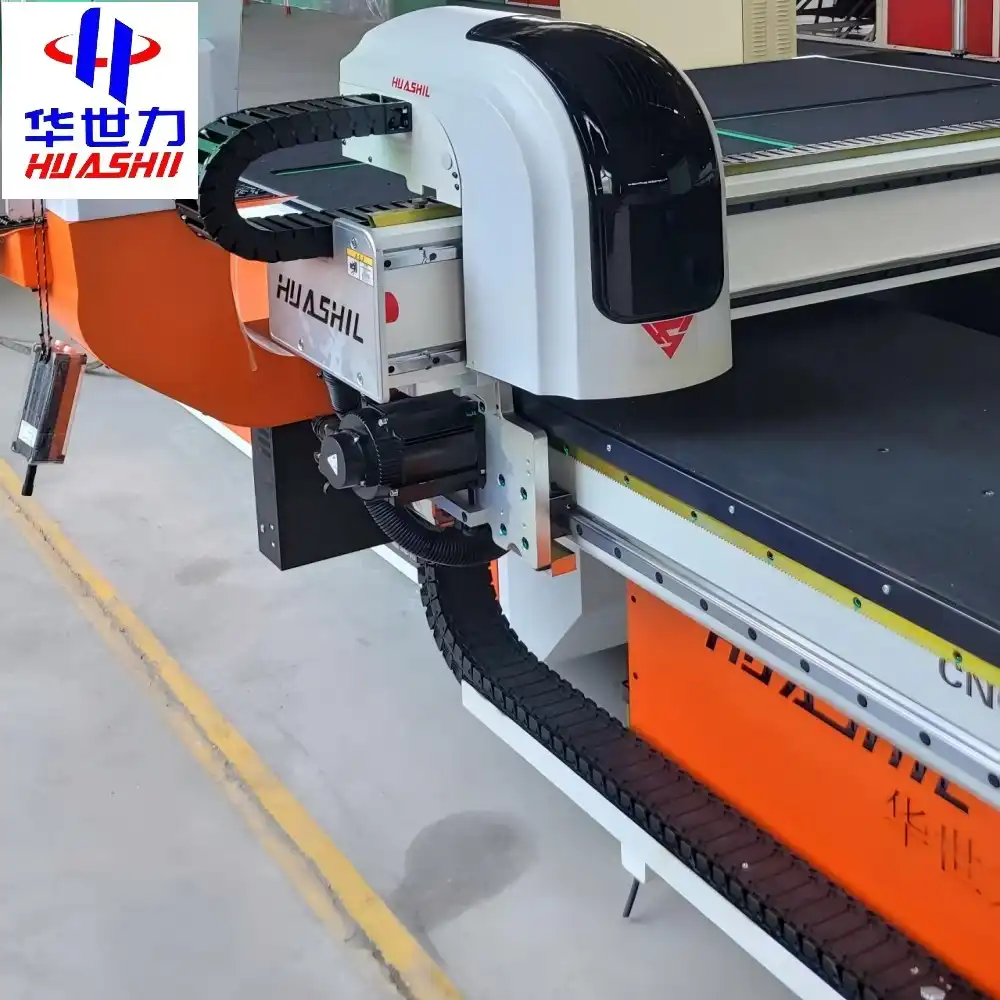
How Glass CNC Cut-Out Machines Reduce Breakage – Core Mechanisms
Precision Computer Numerical Control
Computer numerical control eliminates differences by repeating micrometer-accurate cutting routes across thousands of manufacturing cycles. Linear encoders verify position 1,000 times per second, and servo motor systems maintain cutting rates regardless of weather or fatigue. A closed-loop feedback system detects deviations of less than 0.02 mm and fixes them before stress builds up.
Built-in motion control systems let the cutting head smoothly glide over glass sheets up to 3660mm x 2440mm in the HUASHIL HSL-YTJ3826 model. Automatic pressure control adjusts cutting force depending on glass thickness (2–19 mm). This optimizes stress distribution, preventing fractures. Automatic edge-finding technology photographs the glass's genuine edges before cutting. This compensates for material placement discrepancies that might otherwise misalign and damage the tool.
Intelligent Software Optimization
Advanced optimization software makes cutting proactive for a glass cnc cut out machine. The Optima platform checks cutting patterns before implementation. It discovers stress concentration areas where direction changes or complicated geometries increase pattern breakage. Path planning algorithms maintain structure with cuts. Support portions remain alone until separation is complete.
Live monitoring enables you to make modifications during current cutting cycles. Strange oscillations in vibration sensors may indicate tool wear or material inconsistency. This triggers automated speed modifications to optimize cutting conditions. Thermal imaging technologies identify heat sources and initiate targeted cooling to prevent thermal stress fractures. These millisecond smart interventions maintain product quality without the operator noticing or interrupting production.
Specialized Tooling and Cooling Systems
Carbide cutting wheels have inferior edges to diamond-filled ones. They provide smoother score lines that harm the surface less. Optimizing tool form reduces cutting pressures by 30–40% while maintaining score depth. This significantly minimizes mechanical stress on the glass structure. Instead of random intervals, automated tool wear monitoring determines replacement dates based on performance decline. This maintains cut quality throughout manufacturing runs.
Integrated cooling systems feed precise water to the metal-cutting area to reduce temperature stress. Air flotation tables prevent scratches and cracks by preventing the glass and support surfaces from touching while cutting. Low mechanical stress, regulated heat conditions, and shielded surfaces provide the finest circumstances for cutting tempered, laminated, and low-iron glass without shattering.
Key Features of Glass CNC Cut Out Machines That Enhance Durability
High-Accuracy Positioning Systems
Positional accuracy within ±0.05mm is achieved across the whole working area by linear guide systems that are supported by precision-ground tracks. This precision is very important when doing multi-pass processes that need precise alignment between cuts. Servo motor technology gets rid of backlash and stick-slip problems that happen with regular drive systems. It also provides smooth acceleration profiles that keep shock loads to a minimum on glass panels.
Dual-axis synchronisation keeps perpendicularity within 0.03mm per metre, which means that no matter what size the panel is, rectangular cuts will always be the right shape. When compared to cantilever designs, bridge-type gantry construction is stiffer and doesn't bend during fast traverse movements. By keeping the best possible relationship between the tool and the workpiece during the cutting process, these mechanical advantages directly lead to lower breakage rates.
CAD/CAM Integration and Pattern Optimization
Modern CNC glass cutting systems can read design files directly from engineering and architectural software. This gets rid of the need for mistakes in manual programming that lead to wrong tool paths. Nested cutting patterns make the best use of the material while automatically keeping the minimum edge distances that stop breakout failures. The control system's glass property files change the cutting parameters based on the manufacturer's instructions, the state of the tempering process, and the coating's properties.
Advanced models have a walking function that can be controlled by a remote. This lets operators check on the cutting progress from the best viewing angles without stopping the machine from running. This all-around accessibility makes quality checks easier during production runs and lets people step in right away if something goes wrong. When combined with automatic loading systems that make sure panels are always in the same place, these features create failsafe operating routines that protect both the quality of the product and the investment in the equipment.
Safety Protocols and Preventive Maintenance
Around the machine's boundaries are emergency stop systems that can be used by any user to quickly shut down the machine. This protects people and stops cascade failures when something goes wrong. Collision detection algorithms keep an eye on how close the cutting head is to fixtures and panel edges. If they sense a collision, they automatically retract the cutting head, which stops tool damage and secondary breakage events. Interlock systems stop operations if protective guards are not kept in the right place. This promotes safe behaviour and cuts down on downtime caused by accidents.
The control system has features for preventative maintenance that keep an eye on operational parameters like axis movement cycles, cutting distance accumulation, and the performance of the coolant system. Predictive alerts plan repair tasks for planned breaks instead of waiting for breakdowns that happen out of the blue and stop production. Access to parts built into the body of the machine cuts down on repair time because major assemblies can be accessed without taking the machine apart completely. These design elements that focus on reliability make sure that the consistent performance that procurement teams need when figuring out the total cost of ownership is met.
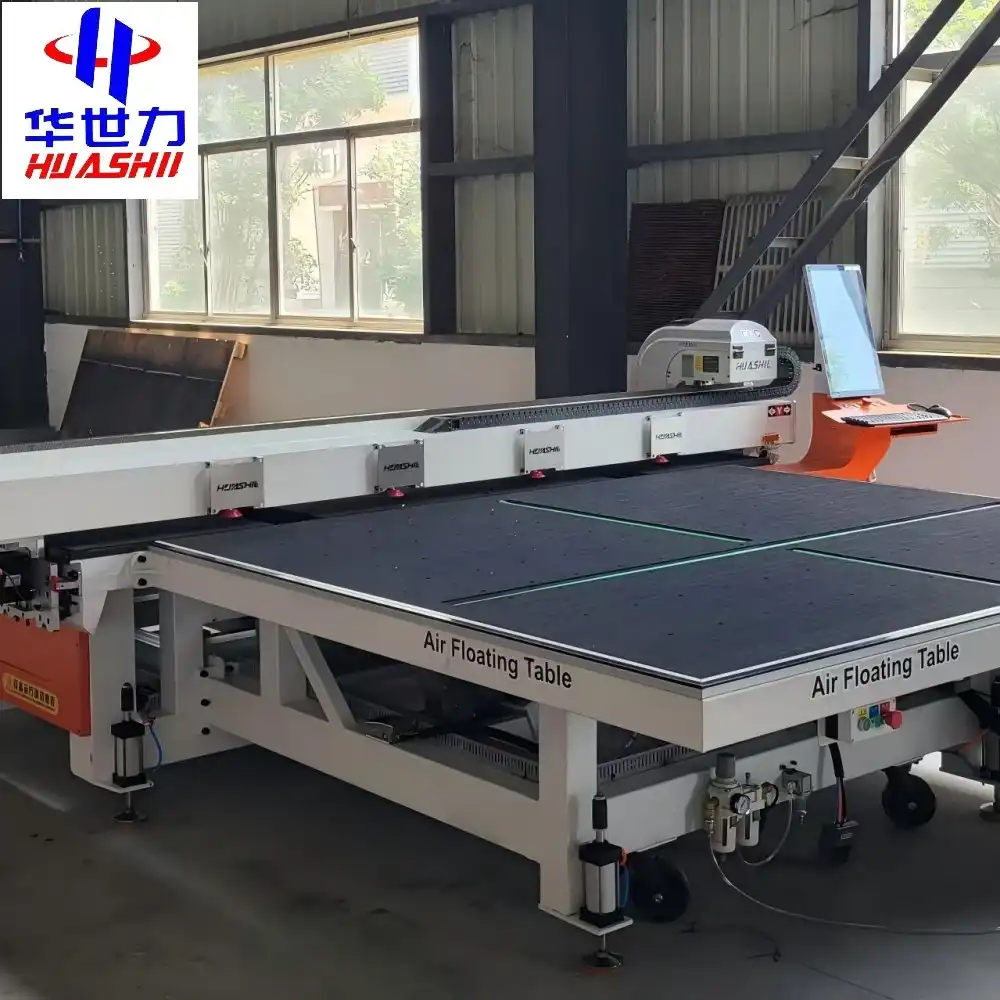
Comparison: Glass CNC Cut Out Machines vs Traditional Cutting Methods
Quantitative Breakage Reduction and ROI
Case studies from architectural glass fabricators show that the rate of breakage dropped from 6–9% when done by hand to less than 1.5% when CNC automation was used with a glass cnc cut out machine. For a plant that processes 300 square metres of glass every day and spends an average of $45 per square metre on materials, this change saves more than $24,000 a month just in waste reduction. CNC equipment usually has a return on investment period of 18 to 28 months, which takes into account the time saved on repairs, the money saved on disposal, and better obedience to delivery schedules.
By increasing effective output, improvements to production capacity make these savings even bigger. Automation systems can work nonstop without losing performance due to tiredness, keeping cycle times constant, which is something that human workers can't do for full shifts. Standard building panels can be processed by the HSL-YTJ3826 model in 4 to 6 minutes, which includes loading, cutting, and breaking. This is about 40% faster than skilled human teams and produces better edge quality and dimensional accuracy.
Operational Efficiency and Energy Consumption
Even though they are more complicated to automate, modern CNC systems use less energy per cut than older methods. Optimised motion profiles cut down on unnecessary cycles of speeding up and slowing down, which lowers peak power needs by 25–35%. During quiet times, standby modes automatically lower system power to levels that aren't needed. This helps keep total energy costs low. Compared to manual cutting machines, automatic cutting equipment has significantly lower costs for electricity, compressed air, and cooling when measured per panel.
Improving the efficiency of work is just as important as buying reasons. Automated loading systems get rid of the need to move panels weighing up to 180 kilograms by hand. This lowers the risk of harm and lets a single person oversee whole cutting cells. Skilled technicians are no longer needed to do constant cutting tasks by hand; instead, they are needed to oversee multiple automated systems. This changes how workers are used and lowers the direct cost of labour per manufactured unit.
Surface Quality and Edge Precision Advantages
Measuring the edge quality shows that manual and CNC cutting methods are very different. Automated systems consistently get edge chip sizes below 0.3mm, while manual scoring methods usually get them between 0.8 and 1.5mm. This level of accuracy gets rid of the need for secondary grinding in many situations, cutting out whole steps that take time and increase the chance of breaking. Better surface finish quality cuts down on light scattering at the edges, making goods that look better and are useful for building and decorative uses.
The ability to do complex cutouts is probably the best feature for manufacturers who want to serve a wide range of customers. CNC systems can cut complex shapes like tight radius curves, acute angles, and asymmetric patterns that are very hard or impossible to do with regular straight-line cutting tools. Manufacturers can now accept orders that they couldn't before because of technical issues. This directly increases their revenue opportunities while maintaining quality standards that keep customers loyal and encourage them to buy from them again.
Procurement Considerations for B2B Clients: Buying the Right Glass CNC Cut-Out Machine
Supplier Evaluation and Quality Assurance
A brand's image in the glassmaking industry indicates its instruments' durability and support. ISO 9001-certified manufacturers demonstrate quality management consistency. CE certification verifies that manufacturers satisfy international safety and performance criteria. Because HUASHIL has created a lot of automated glass processing equipment, they have specialized expertise that general-purpose machine producers lack.
Warranty offers indicate that manufacturers expect their items to endure and how much they will cost to own. Full coverage of main components, control systems, and software modifications prevents capital investment failures. Over the equipment's lifespan, after-sales support infrastructure, including replacement parts, technical helplines, and field servicing, influences production uptime. This implies these criteria are as significant as the original purchase price when selecting a provider.
Financial Planning and Total Cost Analysis
The size, automation, and built-in functionality of glass CNC equipment determine its pricing. Fully automated manufacturing lines cost $350,000, while basic systems cost $85,000. Procurement teams must consider the total cost of ownership when evaluating CNC glass cutting machine suppliers. Installation, user training, continuing repairs, and tool replacement are included. Financial alternatives like leasing keep cash accessible and provide predictable monthly payments to help you budget.
Customized configurations take 90–120 days to supply following confirmation. This is because the building must be prepared for things like improving the electrical infrastructure, verifying the compressed air system capability, and determining floor weight. Equipment manufacturers provide installation services to ensure proper setup and calibration. Complete operator training packages speed up skill development and save starting time.
Integration and Ongoing Support Requirements
Implementing a CNC system correctly involves more than just setting up the tools; it also involves improving the flow of work and creating new procedures for quality control. Technical consulting services help manufacturing teams create cutting parameter libraries that are specific to the types of glass they use and the products they make. This cuts down on the time and money wasted on trial-and-error testing during commissioning. Modern control systems have optimisation features, nested cutting capabilities, and production reporting functions that engineers must be trained on in order to fully use them.
Long-term partnership value comes from quick technical support that answers operational questions, helps with troubleshooting, and suggests ways to keep getting better. Established providers have a lot of application knowledge that they've gained from working with a wide range of customers. This gives them ideas on how to best solve certain manufacturing problems. Because they work together, equipment suppliers are no longer just transactional vendors but strategic partners who help keep operations running smoothly.
Conclusion
Precision control, clever software optimisation, and specialised cutting systems that get rid of the main failure mechanisms in glass CNC cut-out machines make it possible to measurably lower the number of breaks. Improvements in material yield, production efficiency, and product quality are well-documented. These improvements justify capital investment while manufacturing capabilities are expanded to include more complex cutout applications. When makers make decisions about what to buy, they have to weigh technical specs, supplier image, and total ownership costs. This helps them stay ahead of the competition in the tough architectural, car, and furniture glass markets.
FAQ
1. What maintenance routines extend a CNC glass cutting machine's service life?
Cleaning glass dust off of air flotation tables, checking the state of the cutting wheels, and checking the cooling system levels are all part of daily maintenance. It is necessary to check the lubrication of the linear guides once a week, calibrate the automatic edge-finding sensors, and look over the error logs in the control system. As part of the monthly tasks, calibrated test fixtures are used to measure the accuracy of positioning, drive belt tension is checked, and cutting parameter libraries are backed up. When qualified technicians do annual service, they check the major parts, make sure the servo motors are working correctly, and go through a lot of calibration steps to make sure the machine stays accurate over time.
2. Can CNC glass cutting systems handle various glass types and thicknesses?
Clear float glass, low-iron glass, tempered glass, laminated structures, and coated architectural products can all be cut with modern CNC equipment. The HSL-YTJ3826 type can cut materials up to 19 mm thick without having to change the tools. It does this by automatically changing the cutting pressure and speed based on the material information entered through the control interface. Specialised cutting wheels made for specific jobs make it possible to work with tough materials like ceramic-printed glass and surfaces with different textures that need different cutting methods.
3. How do software updates impact machine performance and breakage rates?
Better cutting methods were developed from collecting practical data across installed machine groups and are added to the software through regular updates. Path optimisation improvements shorten the time it takes to cut while keeping or even improving the quality of the edge by making tool moves more efficient. Better monitoring tools find progress in performance degradation earlier, letting you take action before quality problems happen. These ongoing changes make sure that the performance of equipment keeps getting better over its working life instead of staying the same at the installation specs.
Partner with a Trusted Glass CNC Cut Out Machine Manufacturer
HUASHIL specialises in providing advanced automated glass processing solutions that meet the needs of architectural fabricators, curtain wall manufacturers, and furniture manufacturers who want to cut down on breakage and improve operational efficiency. Precision engineering and smart optimisation software are combined in our HSL-YTJ3826 glass CNC cut out machine, which is backed by full technical support and a stockpile of replacement parts. Our CE and ISO 9001-certified equipment is used by manufacturing teams all over the world to keep quality high in harsh production environments. Email our expert sales team at salescathy@sdhuashil.com to talk about your unique processing needs and find out how automated cutting technology can improve the way you run your business. We give you detailed technical documentation, help with your ROI analysis, and personalised demos that are tailored to your specific manufacturing problems.
References
1. Anderson, J.M., & Richards, P.K. (2021). Advanced Glass Processing: Automation Strategies for Industrial Applications. Manufacturing Technology Press.
2. Chen, L., & Williams, D.R. (2020). "Comparative Analysis of Glass Cutting Methods: Breakage Rates and Cost Implications." Journal of Materials Processing Technology, 287, 116-128.
3. European Glass Technology Association. (2022). CNC Glass Cutting Systems: Performance Standards and Best Practices. EGTA Technical Publication Series.
4. Martinez, R.S., & Thompson, H.L. (2023). "Predictive Maintenance in Automated Glass Manufacturing Equipment." International Journal of Production Research, 61(4), 892-907.
5. National Glass Association. (2021). Glass Fabrication Equipment Selection Guide for Commercial Processors. NGA Industry Resource Manual.
6. Zhou, X., & Patel, N.K. (2022). "Thermal Stress Management in Precision Glass Cutting Operations." Materials Science and Engineering Reports, 148, 100-115.