




A glass loading machine fits beside an existing cutting table, sitting parallel or perpendicular to it. It picks a sheet from a rack and places it on the cutting surface for alignment. Whether it fits depends on table height, side clearance, travel radius, utilities, and control signals. I wrote this guide for plant managers, engineers, and buyers in the United States who want to automate loading without replacing a table that still works. Below, I cover layout, site checks, configuration, installation, safety, throughput, and service.
Why Add a Glass Loading Machine to Your Current Cutting Line?
The Real Cost of Manual Sheet Loading
It seems cheap to load by hand until you think about the risks. As you go up in thickness, glass gains about 2.5 kg per square meter. So, a full sheet of 6 mm glass that is 3660 mm x 2440 mm (about 144 x 96 inches) weighs about 134 kg, which is 295 pounds. According to the NIOSH lifting equation manual, the safest amount of weight to lift is 51 pounds. This sheet is much heavier than that. When operators move sheets by hand, they also risk breaking them and cutting them out of the wrong place, especially when the glass is thick, coated, or laminated. People don't have to lift anything when the glass loading machine loads automatically, and each sheet starts out in the same place.
Who Benefits Most From a Side-Mounted Upgrade
A unit on the side is good for shops where the cutting table works well but needs to wait for materials. Companies that make architectural glass, curtain walls, shower doors, furniture glass, and smart mirrors are common users. Auto glass makers also need precise loading that can be done over and over again. You can keep the CNC machine you already have and add automation in stages instead of replacing the whole line because the machine sits next to the table. That means less money is needed for the plant manager. For finance, it means figuring out the payback based on one clear problem: the cost of labor and damage from loading.
How the Machine Sits Beside the Table
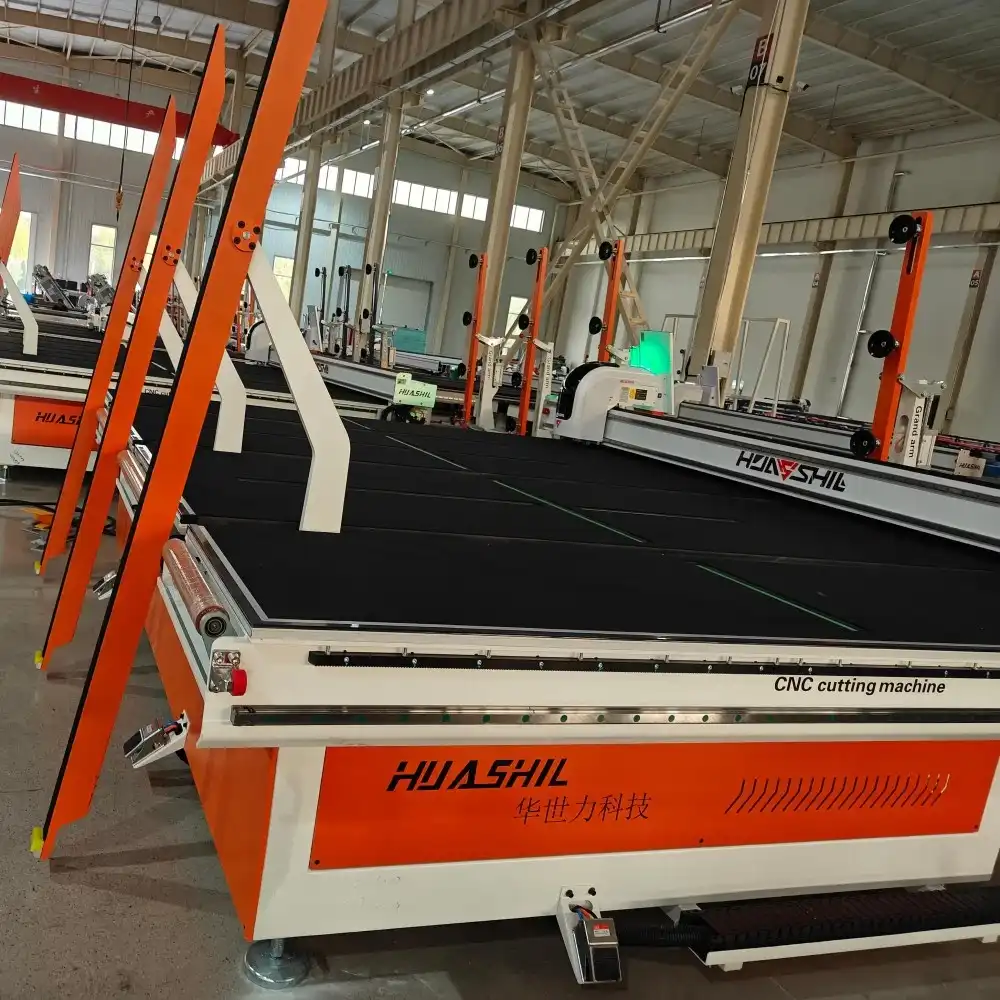
Layout is based on floor space and where the racks are placed. The machine is set up so that it runs parallel to the long side of the cutting table. It can save space in small bays if it is set up perpendicularly, at the front or side. The machine takes a sheet from the rack, moves it over the table, and then sets it down so that it is automatically straight. This is how a normal line is put together: glass rack, glass loading machine, CNC cutting table, and a conveyor or split table, if asked for. First, check four numbers: the height of the table, the space on the sides, the travel radius, and the operator's access. If one doesn't work, change the plan before you place your order, not after it's been sent.
Planning the Site and Choosing the Right Configuration
Site Assessment Checklist Before You Order
That's why good data is the first step to making a good proposal. I think you should measure the cutting table's length and width, as well as the space around it, the condition of the floor, the ease of maintenance access, and where the power and compressed air outlets are located. Then write down the glass's minimum and maximum sizes, thickness, weight, surface type, loading direction, and how often you switch jobs. US plants use 60 Hz power, so tell the supplier what your voltage and phase are and make sure the electrical work meets NFPA 79, which is the standard for industrial machinery. Draw and take pictures of the room. With these details, the provider can make sure that the two work together and give you a real answer instead of a guess.
HUASHIL Machine Features That Matter Beside a Table
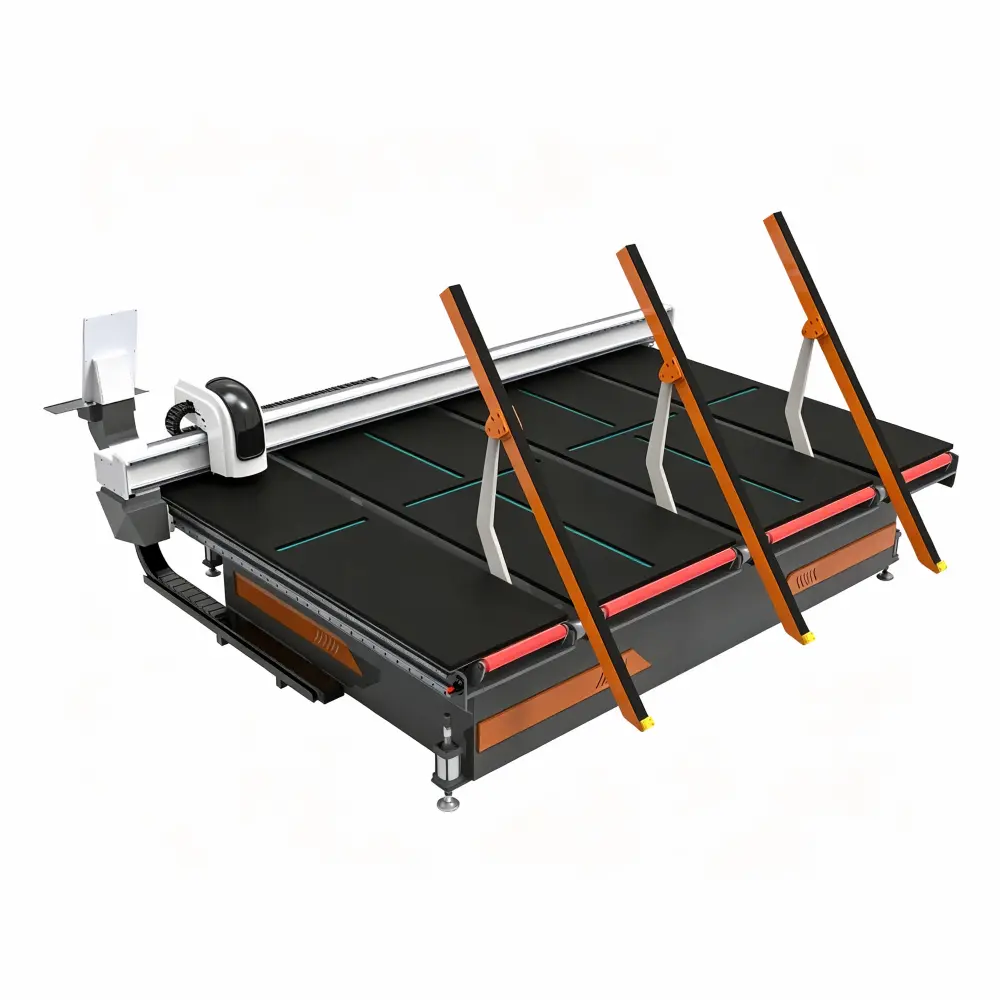
Our glass loading machine has three arms that move sheets from the rack to the table automatically, so no one has to lift the sheets. The sheet is held up by air in the air-floating system, which lets it glide into place. Large architectural sheets can be made from glass that is up to 3660 mm x 2440 mm in size. With the 360-degree walking feature, you can move freely between the rack and the table. We can also change the machine to fit your table's height, floor plan, and glass range. This last point is very important when putting new equipment into an old building that already has racks and walls that don't move.
Automatic or Manual: A Practical Buying Decision
Some situations, like when there isn't much room on the floor or the sheets are small or light, still make sense to load by hand. Automatic loading is helpful when big or heavy glass poses a safety risk, when the cutting table often needs sheets, or when there aren't enough people to do the loading. More than just price should be used to compare human glass lifters, mobile glass lifters, side-mounted automatic systems, and fully automated lines. You need to figure in the cost of installation, shipping, duties, training, spare parts, maintenance, savings on labor, and fewer breaks. That view of the total cost of ownership will be asked for by the finance and procurement teams. Before giving you a quote, ask any supplier to make sure that their product will work with the table you already have.
Installation, Safety, and Long-Term Performance
Installation and Commissioning Steps
Make sure there is a clear path for the machine to move so it doesn't touch the table, walls, racks, or people. Align and level the base, then set it at the right height for the table. Power, air, and other utilities should be run according to the supplier's instructions. Cables and hoses should be kept away from people and forklifts. Next, make a list of the signals that go from the glass loading machine to the CNC system. These signals should include "ready," "start," "stop," "fault," and "cycle complete." Then there is a set order for commissioning: a dry run, a check of the machine's position, tests with real glass, and training for the operator. Write down the settings that are okay so that each shift starts from the same place.
Safety Controls and Risk Checks
Heavy sheets and moving arms need more than one layer of safety. Check for safety features like anti-collision monitors, trip limits, emergency stops, and safety scanners or light curtains. If your model doesn't have any of these, ask the seller which ones come with it. Before each shift, operators should check the glass surface and moving parts. During automatic cycles, they should stay out of the transfer zone. OSHA Release 3120 says that maintenance should come after lockout/tagout, which is what OSHA 29 CFR 1910.147 says. An ISO 12100-based risk review can help you figure out what guarding is. Also, find out what kind of checking the firm does before the goods are sent out.
Improving Throughput and Planning Service
Check out the time it takes to manually load, the length of the cutting cycle, delays in alignment, breaks, and stops that weren't planned. Then, set up the racks according to the order of the jobs, keep the most common sizes close to the machine, and time loading and unloading with cutting. During the first three to six months, keep track of the number of sheets used per hour, the rate of scrap, the uptime, the amount of labor used, and the payback. Early planning helps. Before starting up, make a list of the most important extra parts and ask for instructions, drawings, and a maintenance routine. You can talk about space for future conveyors or storage racks during the design stage because HUASHIL can make the machine fit your needs.
Conclusion
A glass loading machine can sit beside an existing cutting table and remove manual lifting without replacing the table. Manual handling of large sheets brings weight, breakage, and alignment problems, while a parallel or perpendicular layout moves sheets from rack to table. Fit depends on measured table height, clearance, travel radius, utilities, and control signals, and the right configuration depends on glass size, weight, volume, and automation level. Careful installation, commissioning, safety controls, and lockout/tagout procedures protect people and glass, while throughput tracking and spare parts planning protect the investment. The HUASHIL machine's three-arm loading, air floating system, 3660 x 2440 mm capacity, customization, and 360-degree walking address these needs. Accurate site data and total cost of ownership matter more than purchase price alone.
FAQ
1. Can a glass loading machine fit beside my current cutting table?
In many cases, yes. The answer depends on table height, side clearance, travel radius, utilities, and control signals. Send drawings and photos so we can check the layout.
2. What is the largest glass size the HUASHIL machine handles?
The maximum glass size is 3660 x 2440 mm, about 144 x 96 inches.
3. Can the machine be customized?
Yes. We can discuss table height, floor layout, and glass range for your plant.
4. What information do you need for a quotation?
Please share cutting-table dimensions, layout drawings, installation-area photos, glass size and thickness ranges, maximum sheet weight, production volume, utilities, CNC communication needs, destination country, and preferred delivery schedule.
Request a HUASHIL Glass Loading Machine Integration Proposal
Shandong Huashil Automation Technology Co., LTD brings years of production and export experience, advanced techniques, stable quality, and attentive service to every project. If you are searching for a glass loading machine manufacturer, send your table drawings, glass sizes, and layout photos to salescathy@sdhuashil.com. Our team will review the fit and recommend a customized configuration.
References
1. NFPA 79: Electrical Standard for Industrial Machinery, 2021
2. OSHA 3120: Control of Hazardous Energy (Lockout/Tagout), 2002
3. Applications Manual for the Revised NIOSH Lifting Equation, 1994
4. ISO 12100: Safety of Machinery – General Principles for Design – Risk Assessment and Risk Reduction, 2010
5. ASTM C1036: Standard Specification for Flat Glass, 2021
6. ANSI/RIA R15.06: Industrial Robots and Robot Systems – Safety Requirements, 2012