




Tolerances of ±0.1mm to ±0.3mm can be reached by modern automated glass processing, which is more accurate than human methods. Modern CNC systems, laser-guided cutting, and real-time sensor input make sure that every glass panel is the exact size it needs to be. This cuts down on mistakes and boosts output. The most competitive companies that make architectural, automobile, and decorative glass need to invest in automated glass processing. This is because this level of accuracy affects the quality of the product, the strength of the structure, and the cost-effectiveness of the process.
Understanding Accuracy in Automated Glass Processing Systems
Defining Precision in Modern Glass Manufacturing
Glass processing accuracy goes beyond cutting dimensions. It includes edge straightness, corner squareness, surface flatness, and hole location. Each parameter affects product performance, especially for weather sealing, structural load-bearing, and optical clarity applications. Modern measuring techniques establish dimensional conformance across manufacturing batches using laser scanning and optical inspection.
Key Technologies Driving Processing Accuracy
Modern glass factories use many precision technologies. CNC machines regulate movement with micron-level accuracy, while servo motors maintain speed and position during each cutting cycle. Automatic cutting accuracy adjustments are made by real-time monitoring systems that detect vibrations, temperature changes, and material discrepancies. Digital encoders continually track blade position, assuring alignment within tolerances over long production runs.
How Accuracy Standards Are Measured and Verified
Industry standards for glass manufacturing precision vary by application, but architectural glass generally requires ±0.2mm length and breadth tolerances. Safety standards need stricter automotive glass specs. By measuring sample parts regularly using calibrated instruments, manufacturers check accuracy through statistical process control. Quality assurance teams record deviation trends to enhance equipment calibration and preventative maintenance.
Comparing Automated Glass Processing with Traditional Manual Methods
Consistency and Repeatability Advantages
Automation for automated glass processing removes human variability in manual activities. Skilled technicians generate good outcomes, but weariness, attention wandering, and technique variances cause production shift irregularities. Regardless of manufacturing volume or time, automated equipment produces equal outcomes on the first and thousandth pieces. Repeatability is especially useful for huge building projects that require thousands of identical glass panels with flawless interchangeability.
Material Utilization and Waste Reduction
Due to inaccurate measurements, cutting mistakes, and safety margins, manual glass cutting wastes 15-20% of material. Automation reduces waste to 5-8% by optimizing glass sheet layering with software algorithms. Precision cutting saves money on raw materials and speeds up production by eliminating large blanks and trimming. Efficiency increases result in cost reductions that justify automation investments in 18–24 months.
Production Speed and Throughput Comparison
Experienced manual operators cut 30-40 glass pieces every shift, taking time for quality inspections and repair. Automated cutting lines produce 200-300 pieces simultaneously without fatigue-related deterioration. Software programming instead of template revisions speeds up product specification updates, reducing manufacturing downtime. This throughput advantage lets producers execute larger contracts and respond rapidly to market demand changes.
Core Processes Affecting Accuracy in Automated Glass Handling
Precision Cutting Technologies and Control Systems
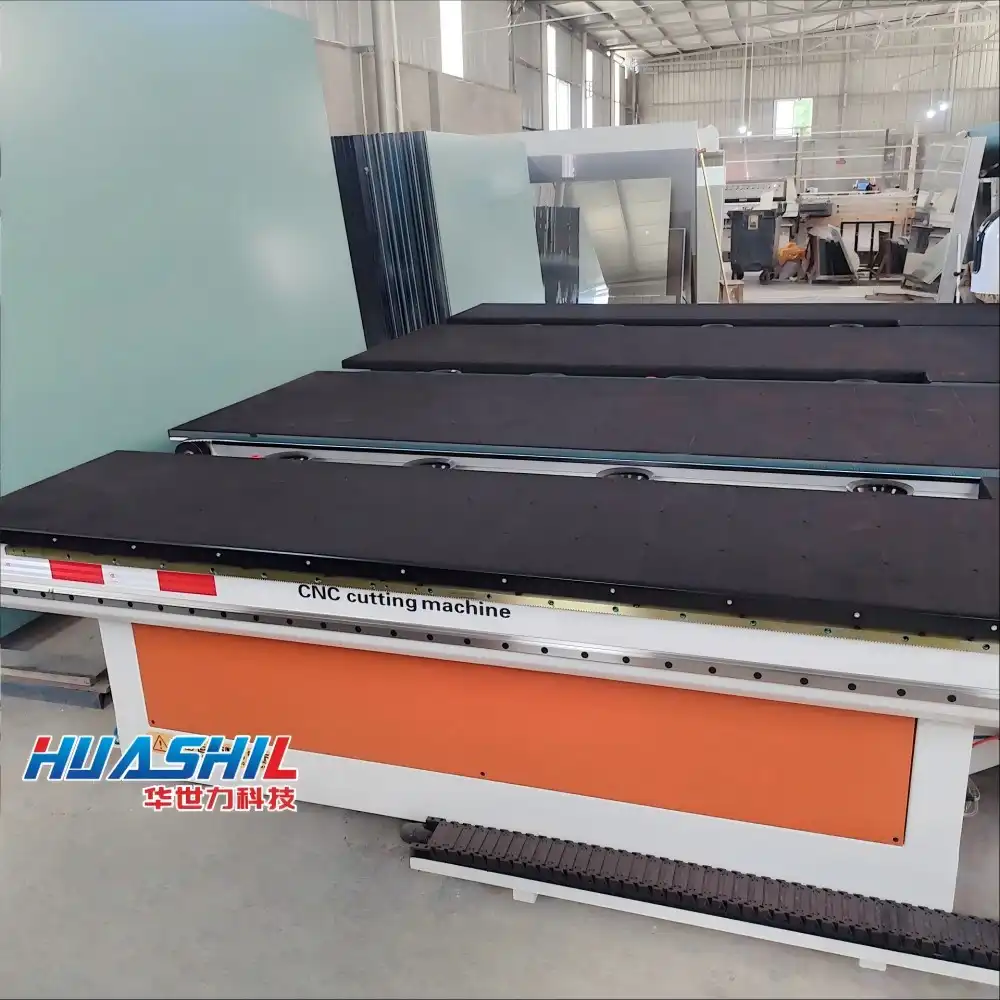
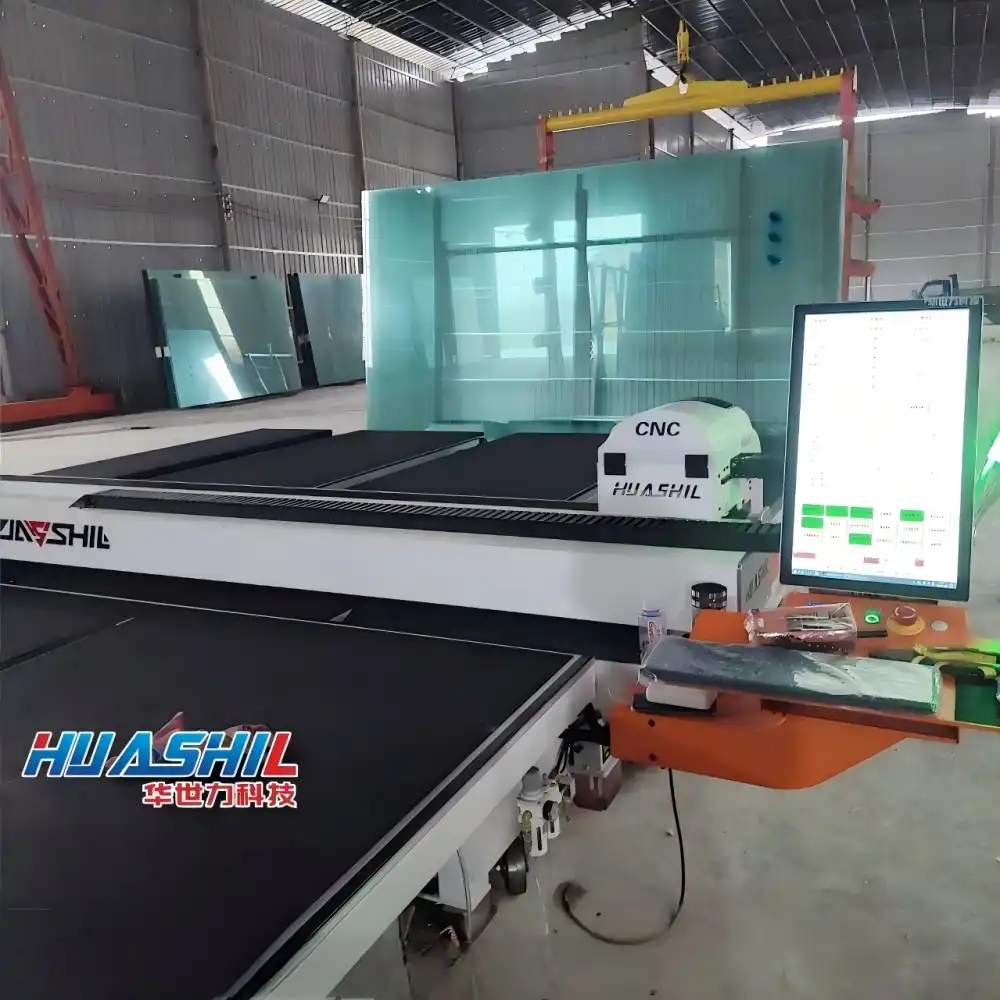
Diamond wheels, waterjet cutters, or laser scoring are used in advanced cutting systems, depending on glass thickness and composition. Optima software optimizes cutting patterns for each glass sheet to enhance yield and precision. The HSL-LSX4228 model has a three-table layout (loading, cutting, and breaking) with advanced motion control for glass panels up to 4200×2800mm. Four grand arms on each side stabilize the cutting sequence, while above-ground or subterranean rail solutions offer diverse facility layouts with 2+2 customizable stations to meet production volume requirements.
Edge Finishing and Polishing Precision
Edge quality greatly affects glass strength and appearance. Automated edging machines provide optically clear edge profiles with constant grinding pressure and traverse rates. Programmable logic controllers modify settings based on glass thickness and edge complexity to polish many stages with finer abrasives. Automation checks edge smoothness and detects microchips that might weaken structures.
Drilling and Hole Positioning Accuracy
In automated glass processing, precision holes with stringent diameter tolerances are needed for hardware, hinges, and mounting brackets. CNC drilling systems use digital templates to accurately place drill bits ±0.1mm from glass edges and corners. Tool changers automatically adjust hole diameters, and coolant systems avoid heat stress and fractures. Vision systems check hole location and diameter before glass leaves the drilling station, reworking or discarding non-conforming pieces.
Selecting the Right Automated Glass Processing Equipment for Accuracy
Evaluating Machine Specifications and Capabilities
When evaluating equipment, procurement experts should consider numerous performance parameters. Maximum glass size, cutting speed, acceleration rates, and servo motor resolution affect accuracy. Linear guide rails and ball screw drives provide better positioning precision than belt-driven systems, but cost more. Thermal compensation combats expansion and contraction effects that degrade dimensional precision during manufacturing temperature variations.
Software Features That Enhance Operational Precision
Contemporary glass production equipment relies on sophisticated software. Optimisation algorithms analyse hundreds of nesting combinations in seconds to minimise material waste and cut accurately. Calibration algorithms alter motion control settings to preserve accuracy throughout mechanical wear. Prevention of costly production disruptions is possible with diagnostic capabilities that notify operators to concerns before they affect product quality.
After-Sales Support and Long-Term Reliability Considerations
For automated glass processing, installation, calibration, and maintenance greatly affect equipment accuracy. Manufacturers with extensive training, prompt technical support, and easily available replacement parts assist facilities in sustaining equipment performance over time. Service responsiveness and accuracy promises should be explicitly stated in warranties. Plant managers benefit from suppliers with local service networks that can provide fast calibration and emergency repairs to save downtime.
Future Trends Enhancing Accuracy in Automated Glass Processing
AI Integration and Predictive Maintenance
Historical performance data is used by machine learning algorithms to forecast component wear and accuracy decline. These systems propose calibration and component replacements before dimensional accuracy degrades. When sensors detect material property changes, adaptive control systems alter cutting parameters to ensure output quality despite raw material discrepancies that would challenge fixed-parameter operations.
Advanced Sensor Technologies and Quality Monitoring
Non-contact laser triangulation and structured light scanning devices provide 100% inspection without stopping production. Real-time detection of dimension variations, surface flaws, and edge quality concerns allows process modifications. Integrating factory execution systems offers complete quality documentation for customer audits and continual improvement.
Industry-Specific Customization Solutions
For automated glass processing, automotive glass makers have different accuracy requirements than architects. Equipment manufacturers now provide industry-specific handling methods, cutting sequences, and inspection standards. Integrators can specify specific features to handle production issues using OEM and ODM capabilities, providing competitive advantages through proprietary process capabilities.
Conclusion
The precision of automated glass processing technologies transforms architectural, automotive, furniture, and decorative glass manufacture. Tolerances of ±0.1mm, repeatability, and decreased waste offer operational benefits that justify investment. Equipment selection demands careful consideration of machine specs, software capabilities, and provider support networks. Manufacturers in quality-sensitive sectors need AI-guided controls and modern sensor systems to increase accuracy and distinguish automated processes from human techniques.
FAQ
Q1: How much accuracy improvement can manufacturers expect with automated glass processing?
Automation often achieves 5-10 times tighter dimensional tolerances than human operations. Although trained human operators may achieve ±1-2mm accuracy under ideal conditions, automated equipment consistently achieves ±0.1-0.3mm precision independent of output volume. Rework rates drop from 8-12% to 1-3%, changing material prices and manufacturing efficiency.
Q2: What factors most significantly influence cutting accuracy?
The main accuracy factors include machine stiffness, motion control precision, cutting tool condition, and software optimization quality. Environmental variables like temperature stability and vibration isolation are crucial. Normal calibration, maintenance schedules, and operator training affect equipment accuracy throughout its lifecycle, making them almost as crucial as initial specs.
Q3: Does high-accuracy equipment justify the additional investment cost?
Medium to high-volume operations generally return on investment in 18-30 months from material savings, labor cost reduction, enhanced throughput, and product quality. Defect reduction improves customer relations and warranty claims. Accurate processing helps producers compete for premium projects with stringent specifications, reaching higher-margin market segments that offset equipment costs through pricing power.
Partner with HUASHIL for Industry-Leading Automated Glass Processing Solutions
With decades of manufacturing experience and cutting-edge automation technology, HUASHIL makes glass processing equipment that satisfies the most exacting standards. Our HSL-LSX4228 CNC glass cutting assembly line uses modern Optima optimization software and precise mechanical equipment to maximize material usage and dimensional accuracy. Four grand arms on each side ensure steady glass handling during cutting and breaking, allowing panels up to 4200×2800mm with flexible 2+2 station combinations for production demands.
We provide dependable machinery and technical assistance to architectural glass fabricators, curtain wall integrators, furniture makers, and sintered stone processors as an established automated glass processing equipment manufacturer. Contact salescathy@sdhuashil.com to discuss bespoke setups for your accuracy and production needs.
References
1. Glass Manufacturing Industry Council. (2022). Precision Standards in Automated Glass Processing: Industry Benchmarks and Best Practices. International Glass Manufacturing Association.
2. Anderson, M. & Chen, L. (2023). Comparative Analysis of Manual versus Automated Glass Fabrication Methods. Journal of Industrial Manufacturing Technology, 45(3), 178-194.
3. Schmidt, R. (2021). CNC Control Systems in Glass Processing: Accuracy Enhancement Through Digital Integration. Advanced Manufacturing Systems Quarterly, 18(2), 67-82.
4. International Organization for Standardization. (2023). ISO 12543: Glass in Building—Quality Control and Dimensional Tolerances. Geneva: ISO Publications.
5. Williams, J. & Patel, S. (2022). Economic Impact of Automation in Architectural Glass Manufacturing. Construction Materials Economics Review, 29(4), 112-128.
6. European Glass Processing Equipment Manufacturers Association. (2023). Technology Roadmap: AI and Sensor Integration in Glass Fabrication Systems. Brussels: EGPEMA Technical Publications.
