




Production directors and procurement managers must choose a reputable cutting laminated glass machine manufacturer as the worldwide construction and architectural glass industries grow. Innovations in automation, accuracy, and energy efficiency occur in 2026. Today's technology handles sophisticated laminated glass combinations and fits into current manufacturing processes. This guide covers top manufacturers, technical advances, and practical selection criteria to assist you in choosing capital equipment that boosts your facility's competitiveness.
Overview of Laminated Glass Cutting Machines in 2026
Multi-layered glass structures coupled with polymer interlayers present distinct problems for cutting laminated glass machine techniques. Laminated glass manufacturing requires machinery that can handle different thicknesses and maintain clean, accurate edges without delamination.
Core Working Principles and Components
Modern machines use diamond-tipped cutting wheels and controlled breaking mechanisms for interlayer flexibility. Photoelectric positioning systems direct the cutting head along precision-guided rails to 0.1mm accuracy. Advanced versions use dual-bridge designs to treat glass layers and interlayer film concurrently, minimizing secondary processing. CNC control systems modify cutting speed, pressure, and blade angle in real time to match glass thickness and film composition.
Machine Categories: Manual to Fully Automated
Three market groups serve various operating sizes. Skills are needed to guide cutting tools along measured lines on manual cutting tables for low-volume bespoke fabricators. Semi-automatic systems use motorized cutting heads with pattern libraries to reduce manpower and allow for variable production runs. Fully automated lines with loading conveyors, CNC cutting stations, automatic breaking systems, and unloading robots can handle hundreds of panels daily without human interaction. Fully automated solutions that ensure output quality and minimize per-unit labor costs are preferred by architectural and curtain wall production plants.
Key Benefits Driving 2026 Adoption
Modern machines fulfill strict architectural tolerances, making precision the key benefit. Cutting speeds have increased to 100 meters per minute, substantially lowering cycle times compared to equipment from five years ago. Power consumption may be reduced by 30% using energy-efficient servo motors and improved motion routes, lowering operational costs. Emergency stop systems, protective enclosures, and operator presence sensors conform with revised international safety requirements, safeguarding workers and reducing liability. These advantages make upgrading to 2026-generation equipment essential for market competitiveness.
Top Cutting Laminated Glass Machine Manufacturers in 2026
Choosing equipment from recognized manufacturers provides proven technology, strong after-sales networks, and ongoing innovation. Three manufacturers excel in technology and market response in 2026.
HUASHIL: Automation Excellence for Mid-to-High Volume Production
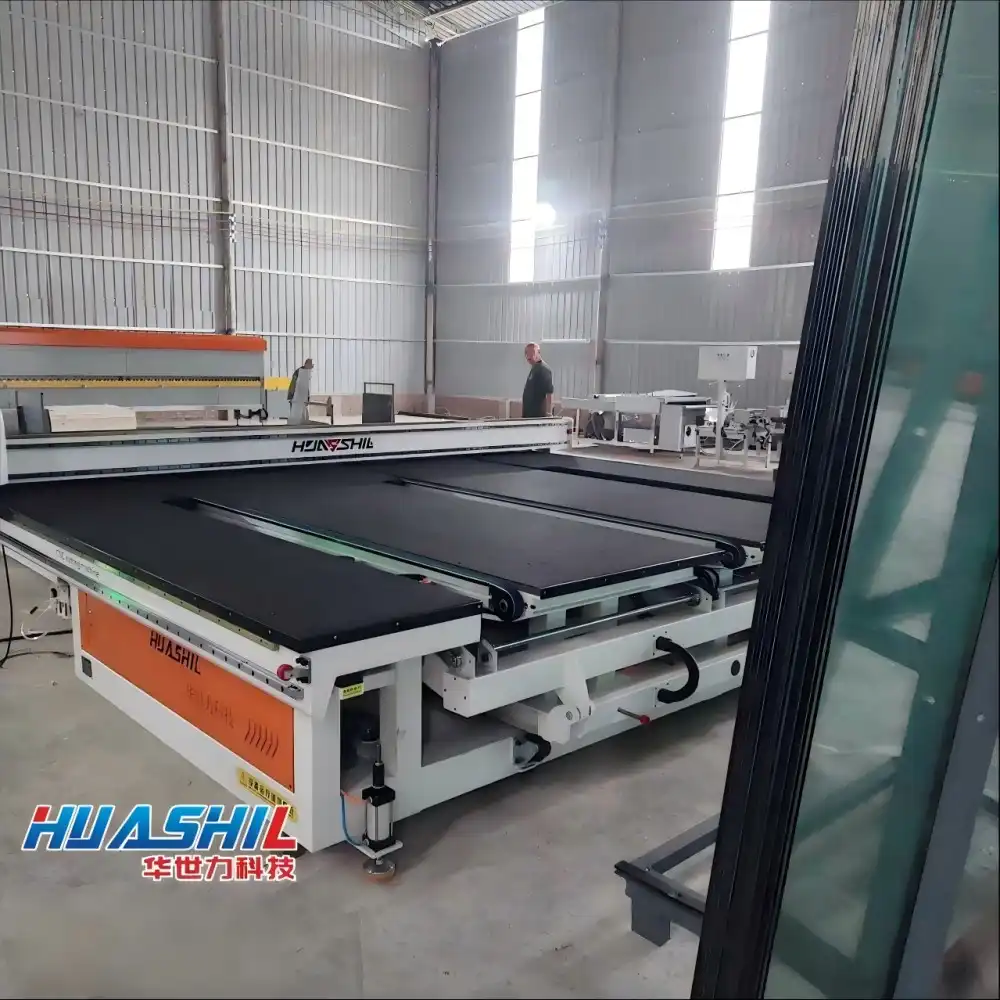
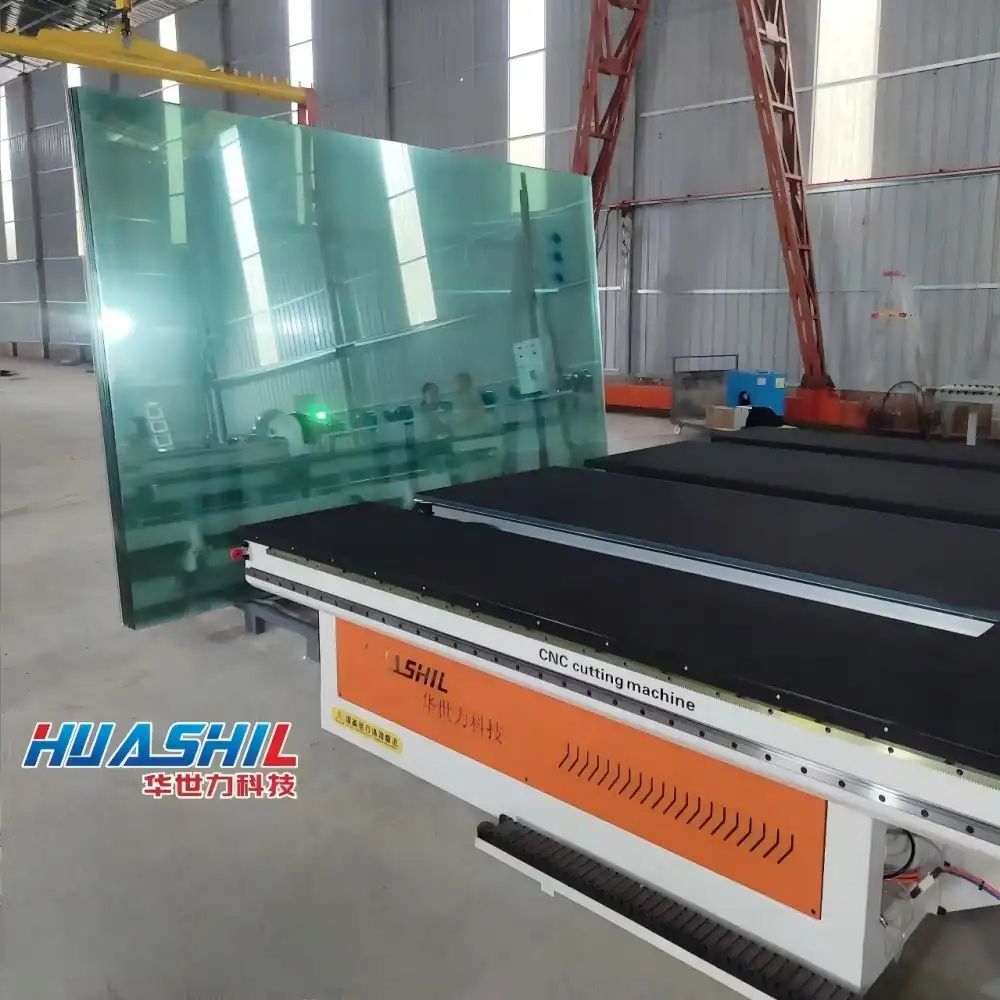
Shandong Huashil Automation Technology Co., Ltd. is trusted by North American and European architectural glass fabricators and curtain wall integrators. The flagship automated cutting laminated glass machine (4700×3100×840mm) is small and fits existing manufacturing layouts while providing industrial-grade performance. The machine handles laminated glass from 3+3mm to 8+8mm thick and interlayer films from 0.38mm to 1.52mm for most architectural and automotive applications.
Photoelectric positioning allows quick setup adjustments between production runs without manual recalibration, distinguishing HUASHIL's technology. Cutting lengths range from 300mm to 3800mm, accommodating conventional window sizes and large curtain wall panels. The ergonomic work table height (820mm ±50mm) matches common material handling equipment, simplifying integration into manufacturing processes. Compared to earlier technology, production managers claim throughput gains of over 40% at 100m/min cutting speeds.
HUASHIL's dedication goes beyond equipment sales. Their technical staff supports installation, trains operators, and stocks spare parts at regional distribution locations. OEM and ODM capabilities allow curtain wall system integrators to tailor cutting settings and software interfaces to meet project needs, a major benefit for contractors overseeing huge architectural initiatives.
Additional Leading Manufacturers: Comparative Overview
Two more manufacturers' specialties deserve examination. One European firm makes automotive and aerospace ultra-precision cutting equipment with laser measuring systems and sub-millimeter accuracy. For safety-critical glass components, the equipment is expensive yet consistent. A second Asian firm makes tiny semi-automatic equipment for furniture and interior design manufacturers that process shower doors, glass partitions, and ornamental panels at low cost.
The comparison below illustrates important differences:
| Manufacturer | Primary Market Focus | Automation Level | Cutting Speed | Typical Lead Time | After-Sales Network |
|---|---|---|---|---|---|
| HUASHIL | Architectural & Curtain Wall | Fully Automated | 100m/min | 45-60 days | Regional centers in US, EU, Asia |
| European Specialist | Automotive & Aerospace | Fully Automated | 80m/min | 90-120 days | Factory-direct support |
| Asian Compact Solutions | Furniture & Interior | Semi-Automatic | 60m/min | 30-45 days | Distributor network |
This comparison helps procurement teams match manufacturer capabilities to production needs and budgets. HUASHIL's balanced approach—speed, automation, affordable lead times, and accessible support—benefits architectural glass and window production enterprises seeking dependable, high-performance equipment.
Innovations and Technology Trends Shaping Laminated Glass Cutting Machines
The cutting laminated glass machine industry is rapidly changing due to digitization and sustainability. Procurement experts may predict future capabilities and minimize equipment obsolescence by understanding these tendencies.
AI and Robotics Integration
Artificial intelligence systems analyze glass sheet dimensions to improve cutting patterns in real time and increase yield. Industry studies show that machine learning algorithms may reduce material costs by 8% by predicting optimal cutting sequences based on past manufacturing data. Robotic loading and unloading solutions improve worker safety and enable 24-hour production cycles by eliminating heavy glass sheet handling. Vision systems with AI-powered defect detection detect raw glass faults before cutting, saving processing time.
Energy Efficiency and Sustainability Focus
Environmental factors increasingly impact equipment design. Variable frequency drives precisely adjust motor speeds, using electricity only as needed. Regenerative brakes convert deceleration energy into electricity for facility power systems. LED lights and low-power control electronics save electricity. Manufacturers say 2026 models use 30–40% less power than 2020 versions, saving money throughout equipment lifespans and helping corporate sustainability goals.
IoT-Enabled Predictive Maintenance
Internet of Things sensors in essential machine components track vibration, temperature, and functioning. Cloud-based analytics tools detect maintenance issues before breakdowns using this data. Maintenance teams receive automatic warnings when components reach service intervals, allowing scheduled replacements during downtime rather than emergency repairs during production shifts. Facilities using IoT-enabled predictive maintenance report downtime reductions of 25%, improving production capacity and delivery reliability.
How to Choose the Right Laminated Glass Cutting Machine Manufacturer?
Choosing the best cutting laminated glass machine manufacturer involves evaluating numerous factors beyond equipment price. Production directors and technical managers benefit from organized evaluations.
Production Scale and Technical Requirements Assessment
Determine present and forecast production quantities. Facilities processing less than 50 panels daily may use semi-automatic equipment, while those processing over 200 panels need fully automated lines to survive. Glass thickness range is another important specification—ensure your equipment can safely handle your thickest laminate structures. Cutting length should include your biggest panels plus 10% for future product line extensions. Architectural and furnishing facilities need devices that can quickly switch between radically diverse panel dimensions.
Evaluating After-Sales Support Infrastructure
Equipment dependability is less important than support response during inevitable maintenance. Quality manufacturers have regional warehouses with same-day or next-day delivery of vital spare parts. Technical assistance is crucial; make sure manufacturers offer local language phone and video consulting during business hours. Note warranty length, components, and response time assurances. Some manufacturers provide extended warranties and annual maintenance contracts to help finance departments budget for capital equipment lifecycles.
Total Cost of Ownership Analysis
Purchase price is only part of the equipment cost. Use manufacturer power specs and local electricity prices to calculate energy consumption costs during device lifespan. Include periodic consumables, planned service visits, and significant component failure rates in maintenance expenses. Training helps operators optimize equipment capabilities—consider if manufacturers include or charge for training. Some manufacturers provide full installation, while others sell equipment only and require you to provide rigging, electrical connections, and startup services. Comprehensive TCO analysis often shows that mid-priced equipment from manufacturers with solid support networks outperforms budget choices needing costly third-party service contracts.
Customization and OEM Capabilities
Custom functionality is typically needed by curtain wall contractors and system integrators. Assess producer versatility in adjusting cutting patterns, interacting with factory automation systems, and tailoring machine footprints to facility constraints. OEM allows you to trademark equipment when reselling full manufacturing lines. In-house engineering teams may prototype specific solutions and iterate ideas based on testing input, speeding up project timescales compared to outsourced design contractors.
Maintenance, Safety, and Operational Tips for Laminated Glass Cutting Machines
Maintenance and operational discipline are needed to maximize the cutting laminated glass machine ROI. Maintained machinery preserve quality, and reduced production delays.
Essential Maintenance Routines
Check cutting wheels daily for chips or wear that degrades edge quality. Manufacturers recommend weekly guide rail lubrication and monthly drive mechanism lubrication. In pneumatic systems, moisture drain checks prevent condensation from harming control valves. Monthly rigorous cleaning eliminates glass and film debris that can damage precise components. Cutting wheel replacement intervals vary by production volume but are usually 500–2,000 linear meters. Tracking usage allows proactive replacement before quality decline. Factory-trained experts test electrical systems, structural components, and safety devices annually to prevent production-stopping problems.
Operator Safety Protocols
Despite increased safety features, training is key. To automate responses, operators must know emergency stop locations and practice activation. Personal protective equipment—including safety glasses, cut-resistant gloves, and steel-toed footwear—should be required and strictly enforced. Lockout/tagout all maintenance actions to prevent machines from energizing while workers operate on interior components. Hold quarterly safety refresher seminars on loading, pinch spots, and safe work procedures. Record all safety occurrences, regardless of severity, and analyze patterns to identify risk factors that require procedural or equipment changes.
Troubleshooting Common Issues
Inconsistent edge quality on the China laminated glass cutting machine frequently implies dull cutting wheels or incorrect cutting pressure. Photoelectric sensors are often contaminated, so clean them with solvents and check alignment. Unusual vibration or noise indicates worn or loose mounting bolts requiring prompt treatment before catastrophic collapse. Instead of ignoring software error codes, send them to the manufacturer's technical help, as they often signal hardware issues. Technical personnel can uncover persistent faults needing engineering solutions rather than recurrent fixes by keeping extensive maintenance logs.
Conclusion
In 2026, you must weigh technological capabilities, after-sales service, and total cost of ownership against your production needs when choosing a cutting laminated glass machine manufacturer. HUASHIL shows how automation excellence, flexible customization, and responsive support networks generate attractive value propositions for architectural glass fabricators, curtain wall integrators, and furniture makers. Partnerships with manufacturers devoted to technological improvement guarantee your manufacturing facility remains competitive throughout the equipment's operational lifecycle as AI, IoT, and energy efficiency advances change equipment capabilities. Systematic assessment utilizing this guide's frameworks helps procurement teams make informed decisions that boost production efficiency, save operating costs, and expand the business.
FAQ
Q1: What distinguishes laminated glass cutting from tempered glass processing?
Cutting laminated glass, which has polymer interlayers between glass layers, requires particular techniques to avoid delamination. Cutting machines must score both glass surfaces while permitting interlayer flexibility. Tempered glass cannot be cut after heat treatment; all shaping happens before tempering. This basic difference implies that cutting laminated glass machine equipment prioritizes accuracy and clean breaking mechanisms, whereas tempered glass processing emphasizes perfect pre-tempering cutting and shaping. Laminated application manufacturers use adjustable pressure systems and specialized breaking bars to allow for interlayer cushioning, which ordinary or tempered glass cutting machines lack.
Q2: Can small furniture manufacturers justify automated cutting equipment costs?
Production volume, labor expenses, and quality determine ROI. Facilities processing 30 or more laminated panels daily pay for themselves in 18–30 months through labor savings and material waste reduction. Automation eliminates measuring mistakes and irregular hand cutting that cause scrap, saving 8–12% in raw material prices. Customer returns and rework costs decrease with quality improvements. Shops handling less than twenty panels daily may find semi-automatic equipment more cost-effective, saving full automation for capacity development. For correct investment viability, financial modeling should include labor rate predictions and volume growth.
Q3: How can buyers verify manufacturer credibility and reliability?
Credible producers have ISO 9001 quality management and CE safety certificates, available upon request. Reputable manufacturers will provide client reference lists from similar facilities with comparable production quantities. Factory tours, whether in person or by video, show manufacturing and quality control. Market commitment and equipment demonstrations are shown at major industry trade fairs like GlassBuild America and Glasstech Asia. Web presence with technical documentation, installation case studies, and prompt question handling shows established operations vs temporary providers. Established manufacturers accept letters of credit and regular deposit structures, whereas less reputable suppliers may require unique payment conditions.
Partner with HUASHIL for Advanced Glass Cutting Solutions
For architectural glass fabricators and curtain wall system integrators, HUASHIL's cutting laminated glass machine solutions improve production efficiency with decades of automation knowledge and attentive client support. Our equipment meets current glass manufacturing demands with 3800mm maximum cutting length, 100m/min cutting speed, and photoelectric positioning precision. As an established manufacturer, we have regional spare parts warehouses and technical support teams around North America to minimize production line downtime.
Our engineering team advises on equipment selection, facility layout optimization, and workflow integration for capacity expansion or new production facilities. Our OEM and ODM solutions are open for contractors and system integrators with unique specifications. To discuss production needs, schedule equipment demos, and obtain full technical proposals, email salescathy@sdhuashil.com. HUASHIL's production competence and customer collaboration help you meet operational goals and maintain a competitive edge in changing glass fabrication markets.
References
1. Glass Manufacturing Industry Association. (2025). "Automation Trends in Architectural Glass Production: 2025 Industry Survey Results." Annual Technical Report, Volume 34.
2. Chen, M. & Rodriguez, P. (2024). "Energy Efficiency Improvements in Industrial Glass Cutting Equipment: A Comparative Analysis." Journal of Manufacturing Systems Technology, 18(3), 445-462.
3. International Glass Processing Standards Committee. (2025). "Safety Requirements for Automated Laminated Glass Cutting Machinery." Technical Standard IGPS-2025-07, Third Edition.
4. Anderson, K. (2024). "Predictive Maintenance Implementation in Glass Fabrication Facilities: Cost-Benefit Analysis Across 200 Production Sites." Industrial Automation Quarterly, 41(2), 78-94.
5. European Glass Technology Institute. (2025). "Laminated Glass Processing: Technical Requirements and Equipment Capabilities for Architectural Applications." Technical Guidebook Series, Volume 12.
6. Williams, J. & Zhang, L. (2026). "AI-Driven Optimization in Glass Cutting Operations: Yield Improvements and Material Waste Reduction." Advanced Manufacturing Review, 29(1), 112-128.