




Achieving 95% line utilization in glass manufacturing isn't magic—it's the result of integrating intelligent automated glass processing systems that eliminate traditional bottlenecks. These systems combine advanced robotics, CNC precision controls, and optimization software like Optima to orchestrate seamless workflows from material loading through cutting, breaking, and quality inspection. By minimizing changeover times, predicting maintenance needs, and synchronizing every production stage, modern automation transforms sporadic output into continuous, profitable operations that meet the demands of architectural, automotive, and furniture glass markets.
Understanding Line Utilization Challenges in Traditional Glass Processing
Traditional glass factories often have trouble keeping up their steady output. The main problem isn't just old equipment; it's the way that manual and semi-automated processes are broken up and cause time drains that can't be seen during the production day.
Frequent Downtime from Manual Intervention
Handling glass by hand introduces variation at every step. Before work can start, operators have to physically place heavy glass sheets, line them up to be cut, and check the sizes. Every touchpoint wastes seconds that add up to hours of lost work time. This problem is made worse by tired people, especially during shift changes, when loss of teamwork can stop whole lines.
Poorly Coordinated Workflow Between Stations
In a normal setup, the cutting station, breaking table, and loading table all work separately. When one sheet is finished being cut on the cutting table, it often sits there while the next sheet is moved by hand from the loading area. This disconnect from station to station causes delays that make the general efficiency of the equipment less than 70% in many sites.
Unpredictable Equipment Failures
Semi-automated machines can't be watched in real time, so maintenance teams can only fix them after they break down. A worn-out cutting wheel or a guide rail that isn't lined up right can stop work for hours while techs figure out what's wrong and fix it. These unplanned stops wreck daily production goals and make it harder to keep customer delivery promises.
Quality Control Inefficiencies Leading to Rework
Without inline inspection systems, it's common for bad cuts to go unnoticed until the very end of the assembly process. When you rework something, you have to run whole batches again, which uses up raw materials and machine time that could be used to fill new orders. This quality gap is especially bad for architectural glass makers who work on difficult curtain wall projects with limits of just tenths of a millimeter.
Because of all of these problems, traditional glass processors often run below 65% line utilization, which means they miss out on a lot of money-making opportunities. Modern facilities know that small changes alone won't close this efficiency gap; they need to automate everything.
Core Components and Workflow of Automated Glass Processing Systems
Automated glass processing systems combine many specialized stations into a single environment that is managed by complex software and mechanical systems that work together to keep the flow of materials steady.
The HSL-LSX4228 System Architecture
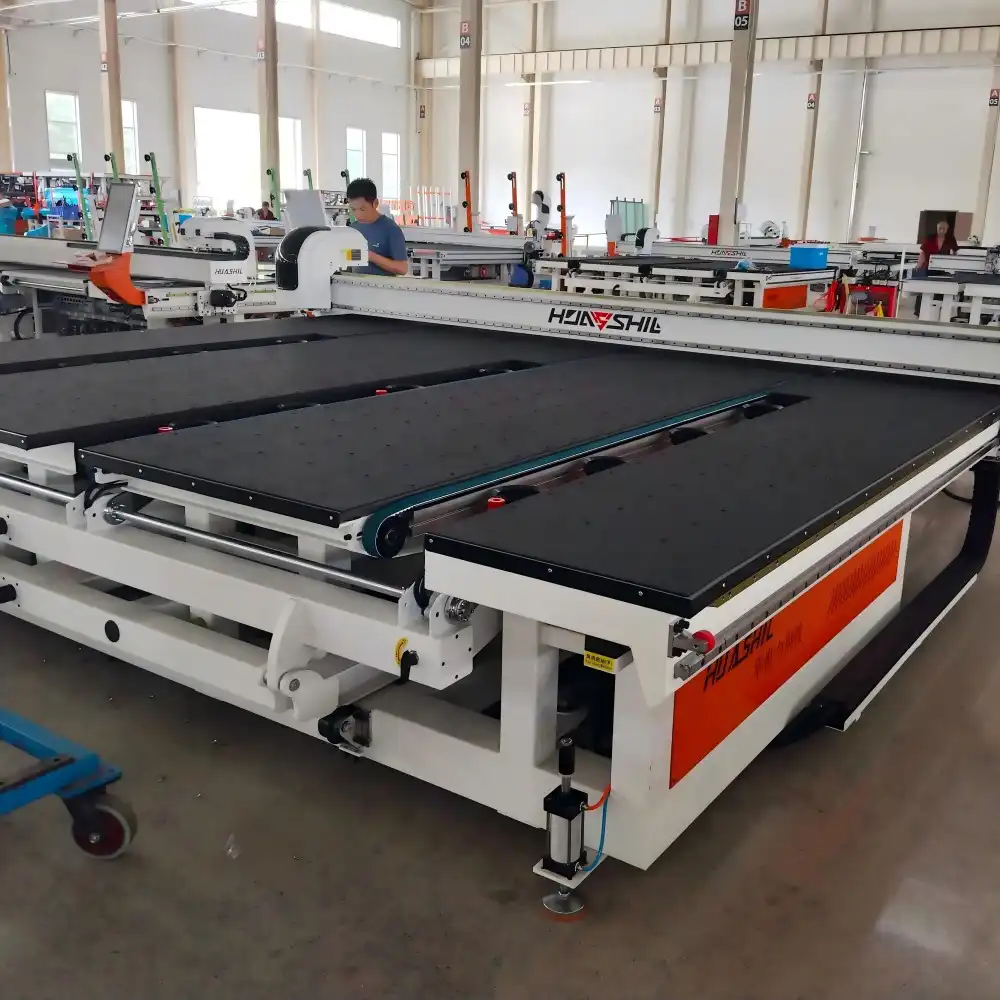
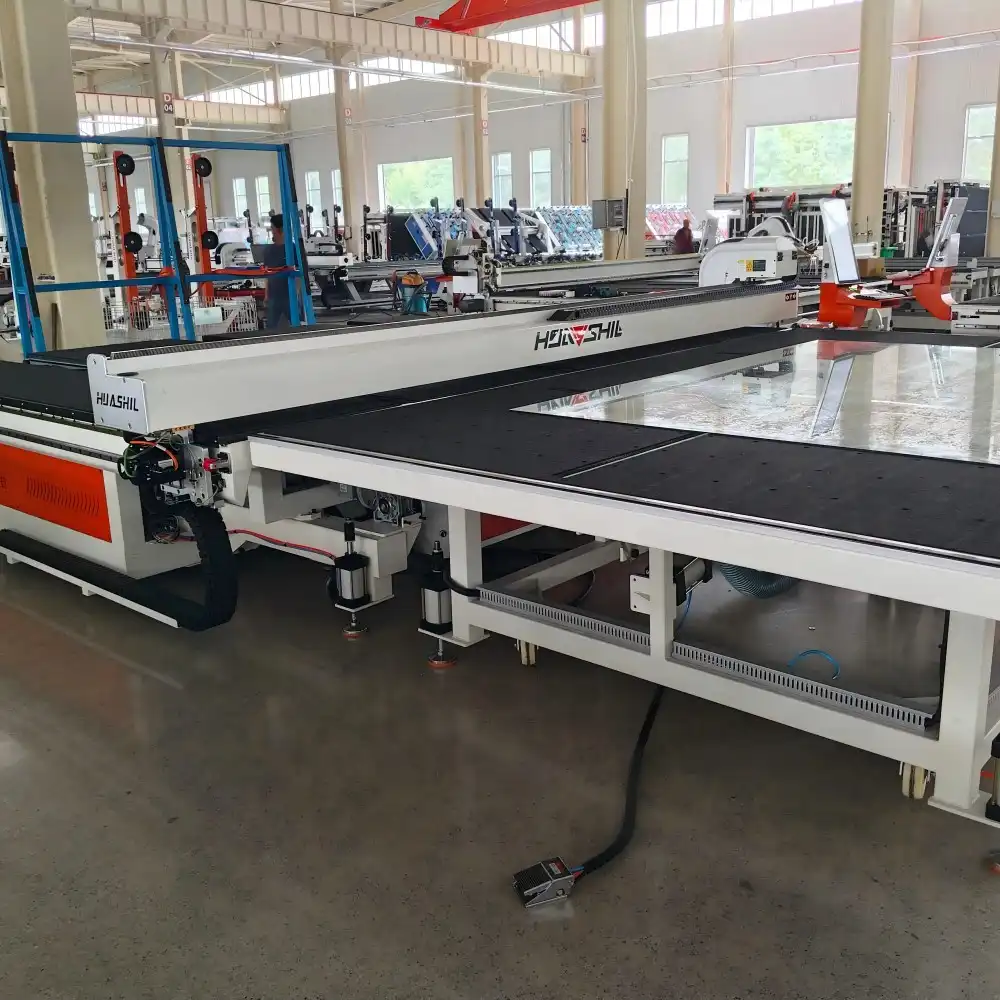
The HSL-LSX4228 model from HUASHIL is a great example of advanced automation design. The system has three tables that work together to load, cut, and break glass sheets. The tables are linked by above-ground or underground train systems that move sheets of glass from one station to the next without any help from a person. The 2+2 station layout can be changed so that operators can get ready for the next job while the current batch runs. This cuts down on the time needed for changeovers.
Four large arms with vacuum pressure technology are used on each side of the device. These robots can hold glass pieces up to 4200x2800mm and place them accurately within 0.1mm of each other. This level of accuracy makes sure that all future cutting processes exactly follow the patterns that were set. This cuts down on waste and makes sure that the quality of the edges on thousands of pieces is always the same.
Optima Software: The Intelligence Layer
The Optima optimization software is like the brain of the system. It looks at incoming orders and figures out the best way to stack glass sheets to get the most out of each one. To keep setting changes to a minimum, the software takes into account the direction of the grain, the quality of the edges, and the order of production.
Real-time monitoring dashboards show the status of machines, cycle times, and throughput metrics, which help production managers find bottlenecks right away. If the system notices strange vibration patterns or signs of tool wear, it changes the cutting speed instantly or sends a message to the repair team before a failure happens. With this ability to guess what will happen, maintenance goes from being reactive to being planned and done during planned downtime times.
Synchronized Material Handling
The rail-based transport system is a major step forward in automated glass handling. The HSL-LSX4228 doesn't use overhead cranes or human carts to move glass; instead, it moves glass horizontally along fine lines that stay perfectly aligned between stations. Multiple sheets can be put in a queue by the system, which lets the loading table get ready for the next job while the current piece is still being cut.
Traditional setups have a lot of stop-and-wait patterns, but this continuous flow design gets rid of them. The cutting table is never empty while waiting for materials, and the machine for breaking glass gets processed glass right away without the user having to coordinate anything. The speed of the material moving through the line speeds up dramatically, which directly raises utilization rates.
Integration with Downstream Processing
Cutting and breaking are only a small part of advanced automation. There are also units for edge processing, drilling, and washing that can be linked together to make full production lines. CNC-controlled edge grinders get their measurements straight from the cutting station, so they can change the grinding settings instantly for each shape without having to be programmed. This smooth data sharing makes sure that every part meets the requirements without having to go through quality checks in between, which would slow down production.
Strategies Employed by Automated Systems to Maximize Line Utilization
To get the line to 95% usage, you need more than just faster tools. Every part of the production process needs to be carefully coordinated so that the small delays that build up during each shift are eliminated.
Dynamic Production Scheduling and Job Sequencing
Algorithms in automated glass processing systems look at order files and schedule jobs so that setup changes are kept to a minimum. When working with architectural glass for more than one project, the planner puts pieces of the same thickness and size together. This cuts down on the number of times that tools need to be changed and calibrations need to be made.
The system also looks at the availability of materials and delivery dates, giving priority to urgent orders while keeping the flow at its best. This smart sequencing stops operators from picking jobs by hand based on how easy they are instead of how well they work. This happens a lot in old plants and can lower utilization by 15 to 20 percent.
Robotic Material Handling Eliminates Transfer Delays
There is no downtime between operations because the four grand arms on each side of the HSL-LSX4228 work in a choreographed way. One set of arms puts a new sheet of glass on the cutting table, and at the same time, the other set of arms takes the finished piece to the breaking station. This method of parallel processing keeps the machine working all the time.
Different types of glass and surface conditions don't bother the vacuum suction system; it keeps a tight grip without leaving marks or micro-fractures. Because it is so reliable, workers never have to fix positioning mistakes by hand, so the automated process stays intact during production runs that last for hours.
Predictive Maintenance Minimizes Unplanned Downtime
IoT sensors built into the HSL-LSX4228 constantly check for shaking patterns, motor power draw, and hydraulic pressure levels. Machine learning algorithms compare these readings to data from the start of the job to find small signs of degradation that happen before something breaks.
Instead of waiting for quality problems to show up, the system replaces a cutting wheel during the next shift break when sensor data shows that it will reach its wear limit in 50 cycles. Compared to reactive maintenance methods, this proactive technique has been shown to cut unplanned downtime by up to 40%, which directly leads to higher utilization rates.
Inline Quality Control and Adaptive Processing
Each cut is measured and checked for edge chips and stress fractures by the cutting station's vision systems immediately. The technology automatically modifies the cutting settings for the next piece or alerts operators to investigate raw material issues when specs deviate.
The real-time feedback approach prevents poor products from accumulating, which would require a lot of labour for every batch. The system swiftly changes its mind, keeping customer satisfaction and utilisation rates high, instead of uncovering quality faults after final inspection and redoing orders.
When combined, these tactics create a manufacturing environment where machines function at their optimal speeds, materials move continuously, and quality remains consistent. These technologies boost plant utilisation from 60–70% to over 95%, changing their operational economics.
Case Studies Demonstrating 95%+ Line Utilization with Automated Glass Processing
Implementations in the real world back up the performance claims of automated glass processing systems by showing measurable improvements in a wide range of manufacturing settings.
Large-Scale Architectural Glass Producer
A large window manufacturer in the southwestern US struggled to satisfy corporate construction project demand despite working two shifts. Delays in transferring materials and unforeseen maintenance limited their semi-automated cutting lines to 68% in the automation glass industry sector.
An HSL-LSX4228 system with Optima optimisation software gave the facility immediate advantages. After robotic handling eliminated transfer bottlenecks, line utilisation reached 94% in the first month. Predictive maintenance cut unplanned downtime from 47 to 12 minutes each shift. This was primarily due to tool modifications. Over six months, the plant's daily turnover increased 38% without recruiting extra workers. They could now manage larger project contracts.
Mid-Sized Furniture Glass Manufacturer
A furniture glass firm that manufactured custom shower doors and shelving struggled to manage minor orders. Their former cutting table took 8–12 minutes to set up for each measurement, making daily work difficult.
The Optima software's stacking algorithms combined comparable characteristics and found the optimal cutting patterns for several orders, changing their company. Setting up the machine took less than 90 seconds since settings were modified automatically. Line utilisation increased from 62% to 96%, while improved sheet usage reduced raw material waste by 23%. Automation was paid for in 18 months by these savings. Additionally, quicker delivery times strengthened consumer ties.
Curtain Wall System Integrator
A curtain wall fabricator who worked on high-rise building projects had to measure precisely and struggled to maintain quality across all manual processes. Different operators' approaches affected edge quality, requiring more expensive and time-consuming finishing operations.
Automating procedures and real-time quality monitoring eliminated technique-dependent variance. Every item now has the same edge qualities, so they match design criteria without additional labour regardless of manufacturing time or shift. The facility got 97% of its lines to function and boosted first-pass quality from 89% to 98.5%. Project managers said consistent job quality is a big difference. In addition to pricing, reliability has helped them obtain contracts.
These instances illustrate that 95%+ utilisation is attainable when the particular difficulties that hinder conventional glass-making processes are solved by automation, regardless of market size. Performance improvements enhance revenue, cut labour costs, and boost material production, which boosts profitability.
Selecting the Right Automated Glass Processing System for Your Business
Instead of just picking the most advanced choice, picking the right automated glass processing system means matching the system's powers to your production needs, marketplace, and growth trajectory.
Assessing Your Production Volume and Scale Requirements
Production volume affects automation strategy. A plant that processes fewer than 200 pieces of glass per day may discover that semi-automated technologies with human material handling provide adequate productivity with less capital. Full automation normally breaks even around 300–400 pieces per day. Higher labour expenses and consistent quality now offset the added equipment.
Fully automated systems are the only way huge building glass facilities that create over 800 pieces every shift can maintain flow. The HSL-LSX4228's station design may be adapted to throughput demands. As production grows, organisations may add integrated edge processing and washing stations to core cutting automation.
Evaluating Customization Capabilities and Integration Flexibility
Glass firms with many clients require tools that can be easily customised. This is feasible because Optima can save endless cutting patterns and swap tasks in seconds. This makes processing small quantities and huge runs affordable.
Integrating new and old tools is also crucial. Modern automation systems may communicate data with ERP systems, warehouse management software, and processing stations from other organisations using conventional communication techniques. Interoperability safeguards your long-term investments and prevents vendor lock-in.
Considering Total Cost of Ownership Beyond Purchase Price
Automation economics go beyond equipment cost. Smart purchasers consider the whole cost of ownership, including installation, training, replacement parts, maintenance, and equipment lifespan. Even at cheap rates, systems that often require new tools or specialised technical assistance may have hidden expenses that reduce ROI.
Operators may start generating money faster with HUASHIL's comprehensive starting aid and training. Our standard spare parts inventory allows speedy changes without interruption. Additionally, the guarantee covers unforeseen repair expenses during the crucial first working time. These service aspects affect long-term operational costs and should be considered alongside equipment specs when buying.
Verifying Supplier Reliability and After-Sales Support
Maker support greatly affects equipment performance. Complex automated glass manufacturing systems may require specialist advice to optimise and correct issues. Buyers should ensure suppliers have accessible technical support teams, a supply of essential replacement parts, and clear operational issue resolution processes.
Reference sites and user conversations may reveal real-world support experiences. Asking about response times, component availability, and software updates demonstrates whether a provider follows their commitments. This additional labour protects you from fantastic equipment becoming a burden due to insufficient support.
Conclusion
Achieving 95% line efficiency in glass handling changes operational economics by turning capacity that isn't being used into output that makes money. Automated glass processing systems like the HSL-LSX4228 do this by handling materials in sync, planning production intelligently, performing predictive maintenance, and checking quality in real time, which gets rid of the delays that plague traditional manufacturing. Case studies from building, furniture, and curtain wall use show that these levels of performance are not just goals, but can be reached. To find the best automation partner, you need to look at more than just the specs of the equipment. You also need to think about the total cost of ownership, the ability to customize, and the supplier's promise to long-term success through assistance.
Frequently Asked Questions
1. What operations can automated glass processing systems perform?
Autonomous glass processing systems may do precision cutting, edge grinding, form drilling, CNC machining, and cleaning. These functions sync on interconnected manufacturing lines to create continuous workflows where materials travel between stations without human intervention. In glass product production, the HSL-LSX4228 excels in cutting and breaking. Its open design integrates edge processing and finishing equipment from many manufacturers. This lets processors provide complete solutions for their goods.
2. How quickly can we expect ROI from automation investment?
Production output, labour expenses, and utilisation affect ROI timelines, which are generally 12–24 months. Architectural glass factories that create a lot of glass may take on additional projects without expanding, so they usually break even in the first year. Mid-sized enterprises have longer payback periods but higher quality stability, which reduces rework and strengthens customer relationships. Instead of concentrating on direct cost reductions, the financial analysis should include value streams like reduced effort, greater material yields, better quality, and more capacity.
3. Can automated systems adapt to custom specifications and small batch runs?
Advanced automation technology eliminates the flexibility issue that prevented its application outside of high-volume, conventional manufacturing. With its limitless work settings, Optima may flip between them in under 90 seconds. Thus, small-batch processing is economical. Automated methods allow bespoke shower door and speciality glass manufacturers to handle orders from one to hundreds. Because diverse items don't delay manufacturing.
Partner with HUASHIL for Superior Glass Processing Automation
HUASHIL sells tried-and-true automated glass processing systems that make architectural glass fabricators, curtain wall integrators, and furniture glass producers all over North America more productive in their work. Precision robotics, smart Optima optimization software, and variable station setups make up our HSL-LSX4228 cutting system. It has been shown to have line utilization rates higher than 95%. We are a well-known manufacturer that offers full after-sales support. We help with installation, teach operators, and send spare parts quickly to keep your production plan safe. If you are a buyer of glass processing equipment looking for a trusted automation partner, you can email our technical team at salescathy@sdhuashil.com to talk about unique solutions that meet your throughput and integration needs.
References
1. Anderson, K. (2022). Optimizing Production Line Efficiency in Glass Manufacturing: A Systems Approach. Industrial Engineering Press.
2. Chen, L. & Morrison, R. (2023). "Predictive Maintenance Strategies for Automated Glass Processing Equipment," Journal of Manufacturing Systems, 68, 145-162.
3. Glass Manufacturing Industry Council. (2023). Benchmark Study: Equipment Utilization Rates in North American Glass Fabrication Facilities. GMIC Research Division.
4. Peterson, M. (2021). Total Cost of Ownership Analysis for Industrial Automation: A Decision Framework for Capital Equipment Investment. Manufacturing Technology Publishers.
5. Rodriguez, S. & Kim, J. (2023). "ROI Analysis of Automation Integration in Small and Medium Glass Processing Operations," International Journal of Production Economics, 251, 108-124.
6. Williams, T. (2022). Advanced Robotics in Glass Handling: Engineering Principles and Application Guidelines. Automation Systems Press.