




Automation fundamentally transforms how glass cutting loading machines operate by replacing labor-intensive manual processes with intelligent, precision-engineered systems. Modern automated glass cutting loading machines integrate robotic handling, sensor-driven positioning, and optimization software to eliminate bottlenecks, reduce cycle times, and minimize material waste. These systems enable manufacturers to process larger glass volumes with consistent accuracy while reallocating skilled workers toward higher-value supervision roles. By synchronizing loading, cutting, and breaking operations into seamless workflows, automation delivers productivity improvements exceeding 30% in many documented industrial applications, making it an essential investment for competitive glass manufacturers.
Understanding Traditional Glass Cutting Loading Processes and Their Limitations
Smaller factories still mostly use manual and semi-automatic ways to handle glass, but these methods are very limited when it comes to meeting current production needs. Heavy glass sheets are put on cutting tables by hand, and workers use their strength and their eyes to make sure they are lined up correctly. This method not only slows down production, but it also makes placement less accurate, which leads to more cutting mistakes and waste.
Safety Hazards in Manual Glass Handling
Injuries at work are still a problem when people have to lift and move large glass panels by hand. Architectural glass sheets are dangerous because they have sharp edges, odd shapes, and are very heavy. Data on work safety shows that handling glass by hand causes a lot of injuries in factories, which raises insurance costs and makes operations less efficient overall.
Scalability Challenges in Conventional Systems
Traditional ways of loading don't work well for large amounts of work or when orders change quickly. Manual positioning needs the operator's full attention all the time, which makes it hard to work long shifts or quickly meet specific cutting needs. Curtain wall installers and architectural glass makers who are in charge of big building projects with tight deadlines find these restrictions especially hard to deal with.
Quality Inconsistency and Material Waste
The variability of humans causes positioning mistakes that directly lead to more broken and scrap glass. During long production runs, even expert workers lose accuracy because they are tired. When glass sheets are off by just a few millimeters, the next step of cutting them makes broken pieces that have to be thrown away. This has a direct effect on the cost of materials and the profit margins.
Realizing these basic flaws is why production leaders and engineering managers are putting more and more emphasis on automated solutions when they are looking at ways to improve tools or set up new production lines.
Core Automation Technologies in Glass Cutting Loading Machines
Modern automated systems use complex technology stacks that connect different subsystems and make production workflows work together as a whole. The precise mechanics and smart software settings in these machines make it possible to reach levels of performance that are hard to reach by hand.
Robotic Positioning and Handling Systems
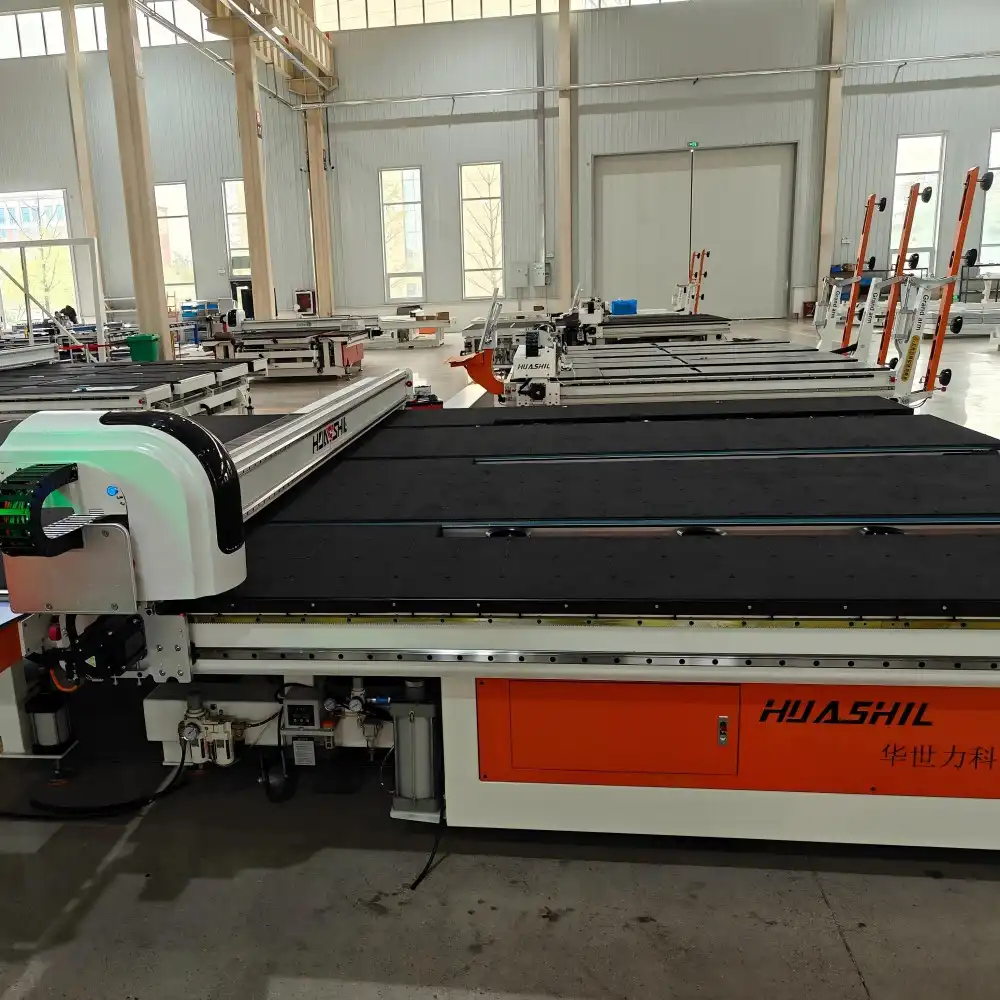
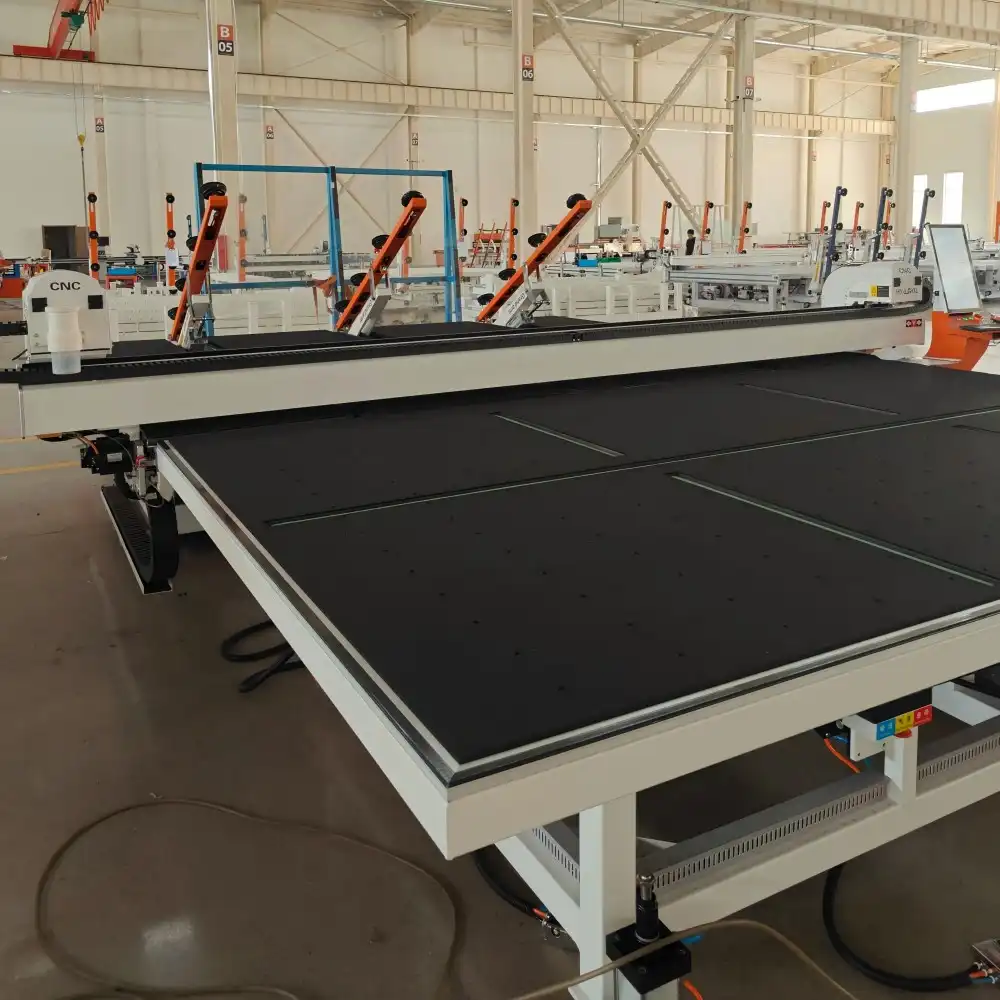
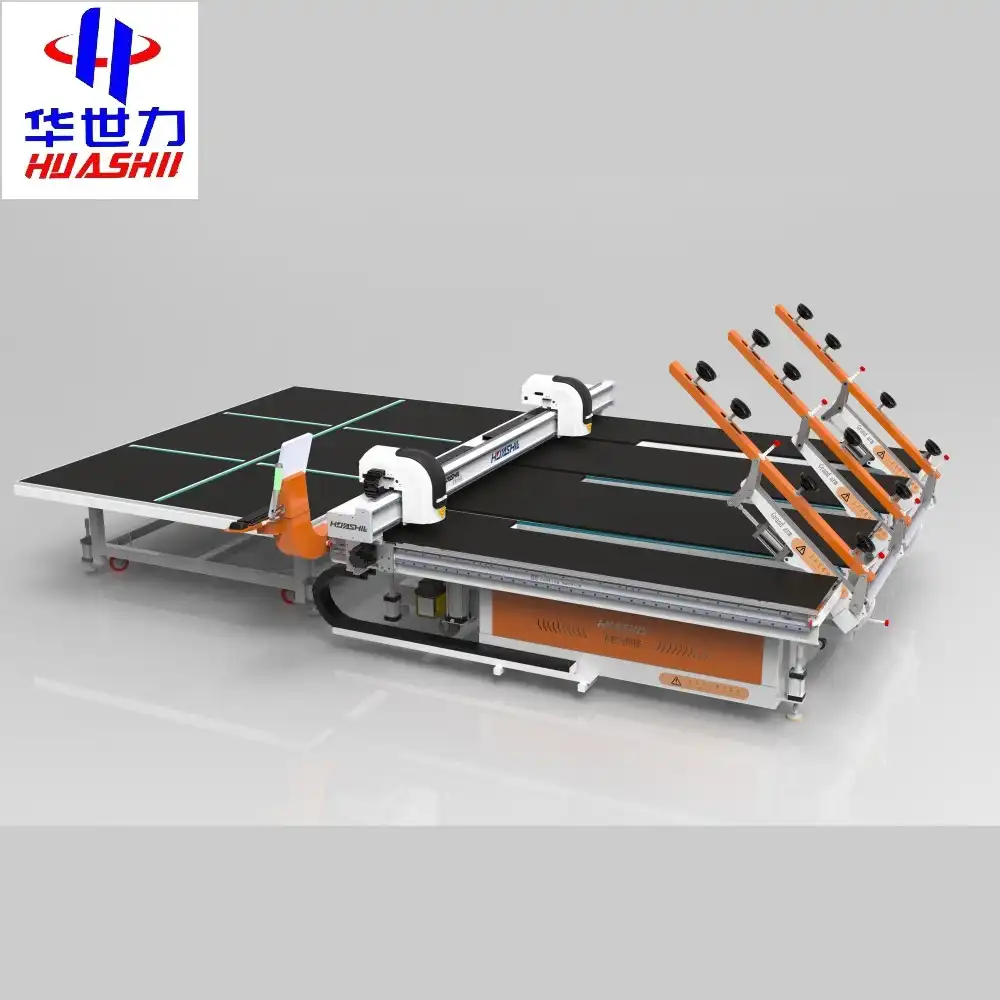
Vacuum suction arms on customizable motion systems are used in high-tech automatic loading equipment. This method is shown by the HUASHIL HSL-LSX5133 type, which has five large arms on each side and can hold glass sheets up to 5100x3300mm. These robots place glass with sub-millimeter accuracy, making sure it is perfectly aligned for the next cutting step and getting rid of the dangers of lifting glass by hand.
These moving devices are powered by pneumatic and electric drive systems, which allow for a variety of configurations. Different facility layouts can work with either above-ground or underground rail systems. Station layouts that can be changed, like the 2+2 arrangement, let manufacturers make the best use of workflows for each type of production.
Intelligent Software Control and Optimization
Software systems like Optima are changing the way makers think about how to cut glass more efficiently on a glass cutting loading machine. These systems look at new orders, figure out the best way to cut to reduce waste, and then make machine instructions that coordinate the loading, cutting, and breaking sequences. By using better nesting algorithms to cut down on material waste, optimization software lowers costs in a way that can be measured and directly boosts profits.
Real-time monitoring lets production managers see how machines are working, so they can make choices about when to do repairs and how to improve the process based on data. These systems keep track of cycle times, find places where efficiency is being held back, and make performance reports that help with efforts to keep getting better.
Integrated Three-Table Workflow Architecture
These days, automatic systems combine loading tables, cutting tables, and breaking tables into production rooms that work together. This design gets rid of the need for human transfer steps between tasks, which speeds up the process and lowers the risk of damage caused by handling. The lifting, cutting, and controlled breaking of glass sheets all happen at the same time, so the maximum number of sheets can be processed at all times.
Specialized features make products more adaptable to a wide range of needs. For example, the Low-E deletion feature lets low-emissivity coatings be automatically removed along predetermined cutting paths, meeting the requirements for architectural glass without any help from a person.
These core technologies work together to make production settings where accuracy, speed, and dependability are normal working conditions instead of goals to be reached.
Productivity Benefits of Automation in Glass Cutting Loading
When you switch from manual to automated loading systems, you can see changes in a number of performance areas that have a direct effect on the costs of manufacturing.
Throughput Enhancement and Cycle Time Reduction
Automated systems can work with glass sheets a lot faster than people can. When done by hand, adding a sheet might take several minutes, which includes positioning, checking alignment, and safety measures. However, automated systems can do these tasks in seconds. This speeding up continues through multiple shifts, which lets manufacturers handle bigger orders or projects that need to be done quickly without having to pay extra for overtime.
According to case studies from architectural glass plants, throughput went up by 25% to 40% after automation was put in place. These improvements directly lead to better capacity utilization, which lets makers take on more work without having to spend money on building bigger facilities.
Precision Improvement and Waste Reduction
Automation gets rid of the differences in placement that people make, so every sheet of glass is always lined up exactly the same for cutting. This consistency cuts down on edge flaws and measurement mistakes that cause pieces to be rejected. It is common to cut down on material waste by 15% to 20%, which saves a lot of money when you consider how much quality float glass and specialty architectural glazing products cost.
When you use precise loading and optimization software together, they work better together. Cutting patterns determined by software algorithms use the most material possible when the glass sheets are placed perfectly. This means that more raw materials are turned into finished goods that can be sold.
Workforce Optimization and Safety Enhancement
Automation moves workers from doing hard, repeated work that requires a lot of energy and strength to doing more valuable jobs like quality control, maintenance, and process optimization. Skilled workers move up from being manual handlers to system managers, where they watch over automatic processes and only step in when special circumstances call for human judgment.
When heavy glass handling is automated, safety measures at work get a lot better. Lower accident rates lower insurance rates and workers' compensation costs, boost happiness, and keep employees. Production directors always say that investments in automation pay off quickly because they increase productivity and lower the number of accidents.
Operating Cost Reduction
Automation cuts many costs that aren't directly related to wages. Quality that stays the same lowers the number of customer complaints and guarantee claims. Cycle times that can be predicted make deliveries more reliable, which builds relationships with customers and lets you charge more for reliable service. Total cost of ownership benefits are increased by better energy efficiency from running machines more efficiently.
These gains in productivity add up to strong business cases that finance leaders who are looking at capital expenditure plans can relate to. When production leaders show advances in automation that will increase throughput, cut down on waste, and make things safer, the approval process moves much faster.
Selecting the Right Automated Glass Cutting Loading Machine for Your Business
When buying automated glass processing equipment, it's important to carefully look at the technical specs, the company's needs, and the supplier's abilities. Engineering managers and purchasing leaders need to work together to make sure that the equipment chosen meets both working needs and budgetary limits.
Production Capacity and Glass Size Requirements
Manufacturers need to make sure that the capabilities of their glass cutting loading machine match the types of things they make. The maximum glass size specification, like the HSL-LSX5133's 5100x3300mm capacity, tells you if the equipment can handle the biggest panels you need for your mix of products. Architectural glass makers who work on curtain wall projects need tools that can handle jumbo glass sizes, while furniture manufacturers may be more interested in a different range of sizes.
Forecasts of demand and growth must match up with throughput ability. Underspecified equipment causes bottlenecks right away, while too much capacity raises the original cost without a corresponding rise in profits. Technical managers should look at past production data and expected order volumes to figure out what size machine is needed.
Technology Sophistication and Integration Compatibility
Check to see if the current infrastructure of the building can handle advanced automation features. In existing buildings, above-ground rail systems are easy to place, while underground systems make the floor space cleaner in new buildings. Station design versatility, like 2+2 setups that can be changed, lets workflow be tailored to changing output needs.
Software consistency is very important. Enterprise resource planning (ERP) tools and order management databases should be able to work with optimization platforms like Optima. Seamless data flow gets rid of the need to reenter data by hand and lets changes be made to the production schedule in real time.
Total Cost of Ownership Analysis
Managers of procurement have to look at costs that go beyond the purchase price. Long-term ownership economics are affected by things like installation costs, the need for operator training, ongoing maintenance costs, and the availability of spare parts. Downtime risks that can ruin production plans are kept to a minimum by machines that have parts that are easy to find and strong technical support networks.
When figuring out the return on an investment, you should take into account both hard cost savings, like less labor and less waste, and soft benefits, like more reliable delivery and happier customers. Full financial models help top managers understand what the real value is and why capital expenditures are necessary.
Supplier Reputation and After-Sales Support
The knowledge and help system of the manufacturer has a big impact on how reliable the equipment is. With years of experience making things and customers all over the world, companies like Shandong Huashil Automation Technology Co., Ltd. have track records that lower the risk of buying from them. When comparing different suppliers, warranty terms, promises to provide spare parts, and how quickly technical support can help become very important differentiators.
System integrators and specialized manufacturers care a lot about being able to customize. Suppliers that offer OEM and ODM support can change standard platforms to fit specific needs. This lets companies stand out from the competition by offering customized production options.
By systematically addressing these selection criteria, procurement teams ensure investments deliver expected performance improvements while minimizing implementation risks.
Best Practices for Maintenance and Safety in Automated Loading
To get the most out of your investments in automation, you need to follow strict operational procedures that keep equipment reliable and keep people safe.
Preventive Maintenance Protocols
Setting up regular repair plans keeps unexpected breakdowns from stopping production. Cleaning vacuum suction systems on a regular basis keeps the pulling force consistent, and lubricating the parts of motion systems stops them from wearing out too quickly. Manufacturers' software updates often include bug fixes and performance improvements that make the software more stable.
Regular checks of the calibration should be done to make sure that the positioning accuracy stays within the limits. Even small changes in how sensors are aligned or how machines are placed can slowly lower quality, making flaws that might not be obvious at first but add up to a lot of waste over time.
Operator Training and Competency Development
Comprehensive training programs make sure that employees know how to do both normal tasks and fix problems. Operators should know how to do an emergency stop, understand sensor feedback indicators, and spot early signs of mechanical problems before they get worse. Investing in the skills of the workforce stops operators from making mistakes and speeds up the solving of problems when they do happen.
Cross-training several team members makes sure that production keeps going even when the main operators aren't available. Writing down standard operating procedures gives you reference materials that help you remember what you've learned and make sure that everyone on the shift follows the same rules.
Safety System Verification
Automated equipment has many safety features, like emergency stops, presence monitors, and protective walls, that need to be tested regularly to make sure they work. Safety checks should make sure that all safety gear works properly and that people using it know what it's for. Following the safety rules for the business saves both workers and companies from being sued.
Implementing these maintenance and safety practices safeguards automation investments while creating work environments where operators confidently manage advanced equipment. Production stability resulting from disciplined operational practices directly supports the productivity gains that justify automation adoption.
Conclusion
Automation completely changes how productive glass cutting is by getting rid of the limits of manual handling, improving accuracy, and creating streamlined processes that make the best use of materials. Modern systems like the HUASHIL HSL-LSX5133 show how robotic placement, clever optimization software, and synchronized three-table designs can improve productivity while lowering waste and making the workplace safer. When manufacturing leaders are thinking about investing in automation, they should make sure that the equipment's capabilities match the needs of production, figure out the full total cost of ownership, and work with suppliers that offer strong technical support. If you choose and take care of automated glass cutting loading machines correctly, they pay for themselves quickly through higher productivity, better quality, and lower operating costs. This makes you more competitive in the tough architectural, automotive, and decorative glass markets.
Frequently Asked Questions
1. How does automation enhance cutting precision compared to manual methods?
Automated positioning systems use servo-controlled robotic arms and high-precision sensors to put glass sheets with accuracy of less than one millimeter. This gets rid of the errors that come with hand alignment caused by people. This consistency makes sure that cutting tools go exactly where they're supposed to go, which cuts down on edge flaws and measurement mistakes that lead to waste. Optimization software improves accuracy even more by finding the best cutting sequences and taking into account the properties of the material automatically.
2. What return on investment timeline should manufacturers expect from automation?
ROI times depend on how much is being made and how much it costs to hire workers, but most producers see a return on their investment in 18 to 30 months. Businesses that prepare a lot of architectural glass for building projects often see faster returns because they can get more done and lose less. When estimating returns, a full financial analysis should take into account things like direct labor savings, less material waste, lower injury costs, and more reliable delivery.
3. Can small and mid-size manufacturers benefit from automation?
Of course. Modern automated systems can be set up in a variety of ways to work in a variety of production settings. Smaller operations can start with semi-automatic solutions, and as the business grows, it can add more capabilities gradually with flexible designs. The key is to make sure that the level of sophistication of the equipment matches the actual needs of production, rather than investing too much in too much capacity. Automation improves consistency and lowers the risk of injuries for manufacturers working with even small amounts of glass.
Partner with HUASHIL for Advanced Glass Processing Solutions
Shandong Huashil Automation Technology Co., Ltd. offers automated glass cutting loading machine options that improve production efficiency by combining many years of manufacturing experience with new engineering ideas. Our HSL-LSX5133 model comes with tried-and-true robotic handling, Optima optimization software, and station configurations that can be changed to fit your needs. HUASHIL equipment meets the high standards of architectural glass makers, curtain wall installers, and furniture manufacturers around the world. It can hold up to 5100x3300mm of glass, can delete specialized Low-E signals, and comes with full after-sales support. Email our technical team at salescathy@sdhuashil.com to talk about how our knowledge of automation can help you with your production problems.
References
1. Chen, W., & Liu, X. (2021). "Automation Technologies in Architectural Glass Manufacturing: A Comprehensive Review." Journal of Manufacturing Systems and Technology, 15(3), 245-262.
2. International Glass Manufacturing Association. (2022). "Global Trends in Glass Processing Automation and Productivity Benchmarks." Annual Industry Report, IGMA Publications.
3. Martinez, R., & Thompson, J. (2020). "Economic Analysis of Automated Loading Systems in Glass Fabrication Plants." Industrial Engineering and Management Review, 8(4), 112-128.
4. Nakamura, T., & Singh, A. (2023). "Safety Improvements Through Robotic Material Handling in Glass Processing Facilities." Occupational Safety and Health Journal, 19(2), 78-95.
5. Peterson, L. (2022). "Optimization Software Applications in Glass Cutting: Material Waste Reduction Strategies." Manufacturing Technology Quarterly, 34(1), 56-71.
6. Williams, D., & Foster, K. (2021). "Total Cost of Ownership Models for Automated Glass Processing Equipment Procurement." B2B Capital Equipment Investment Analysis, 12(2), 134-150.