




Modern glassmaking has been changed by automation, which has changed how complicated cutting and sealing tasks are done in factories. Modern CNC technology, robotics, and precise sensors are now built into industrial glass cutting and laminating systems. These systems can achieve levels of accuracy and throughput rates that manual processes can't match. This change solves long-lasting problems like uneven quality, high labour costs, and production bottlenecks. As a result, architectural glass makers, curtain wall installers, and furniture manufacturers looking for competitive benefits must use automatic solutions. In a market that is becoming more competitive, the move toward intelligent automation is a direct response to demands for higher precision, faster delivery, and scalable production capacity.
Challenges in Traditional Industrial Glass Cutting and Laminating
Limited Accuracy and Inconsistent Output
Repeatability is a problem for both manual and semi-automatic processes. Dimensional differences get a lot bigger when workers use hand measures and eye alignment. When cutting glass, one mistake can cause a lot of waste and require a lot of extra work, which can throw off whole production plans. We've seen plants with scrap rates higher than 8% just because of mistakes made by humans in measuring. This means that a lot of money and materials were wasted, which cut into profits.
Safety Concerns in Manual Operations
Handling glass comes with its own set of risks. When moving big panels through cutting stations, workers could get hurt by sharp edges, heavy lifting, and places where they touch equipment. People who work with traditional laminating methods are at risk of being hurt by high temperatures and pressure during bonding operations. Not only do these safety holes put workers' health at risk, but they also make plant managers vulnerable to liability and cause insurance problems that are hard to solve.
Operational Bottlenecks and Downtime
Conventional methods need to be maintained and adjusted by hand on a regular basis. Checking for alignment, replacing blades, and calibrating machines all slow down output, sometimes for longer than the planned repair windows. When downtime happens without warning, it can cause a chain reaction of problems, including missed delivery dates, the cost of a staff that isn't working, and unhappy customers who may look for other providers. Because of these organisational errors, it is almost impossible to increase production when there are sales possibilities.
Core Principles and Benefits of Automation in Glass Cutting and Laminating
Integration of Advanced Control Technologies
CNC controllers are used in modern industrial glass system integration automated systems to make complex cutting patterns with micron-level accuracy. Robotic handling systems move glass panels between processing stations without any help from a person, and advanced light sensors check the accuracy of the position before each operation. Real-time tracking systems keep an eye on performance metrics all the time and let workers know when they start to change, before quality problems happen. This combination of technologies makes work settings where uniformity is normal, not something to strive for.
Precision and Throughput Enhancement
Automated cutting heads can go as fast as 100 meters per minute and keep very close tolerances even when the thickness of the glass changes. Systems made for making laminated glass can work with materials that are 3+3mm to 8+8mm in size and have film thicknesses that range from 0.38mm to 1.52mm, so they can meet a wide range of building and automobile needs. Better repeatability means that every piece is the exact size it needs to be, so there are no quality differences like there are in manual processes. Production directors say that throughput went up by 40 to 60 percent after automation was put in place. This directly affected their ability to take on bigger contracts and grow their market presence.
Workplace Safety Improvements
Personnel are taken out of dangerous areas where machines deal with people. Robotic systems move big glass panels that used to need more than one person to do, which lowers the risk of joint injuries. Enclosed working areas keep cutting debris inside and reduce noise levels, making workplaces healthy. These safety improvements lower insurance rates and settlement claims, which have real financial benefits beyond increased output. Managers in engineering like how modern tools have interlocking systems and emergency stops that keep things from going wrong during maintenance or when something unexpected happens.
Cost Efficiency and Resource Optimization
Through optimised operational cycles and precise temperature control in laminating processes, automated equipment lowers the amount of energy used. Lower rates of scrap directly save money on materials, and lower labour needs free up skilled workers to do more valuable work, like inspecting quality and improving processes. Automation is usually a good investment for even medium-sized production plants because the total cost of ownership usually pays for itself in 18 to 24 months for high-volume operations.
Types of Automated Industrial Glass Cutting and Laminating Systems
The market for glass processing equipment has solutions for a wide range of levels of automation and production needs. Knowing about these groups helps purchasing managers make sure that the tools they buy fit the needs of the business and its growth plans.
Fully Automatic Glass Cutting Systems
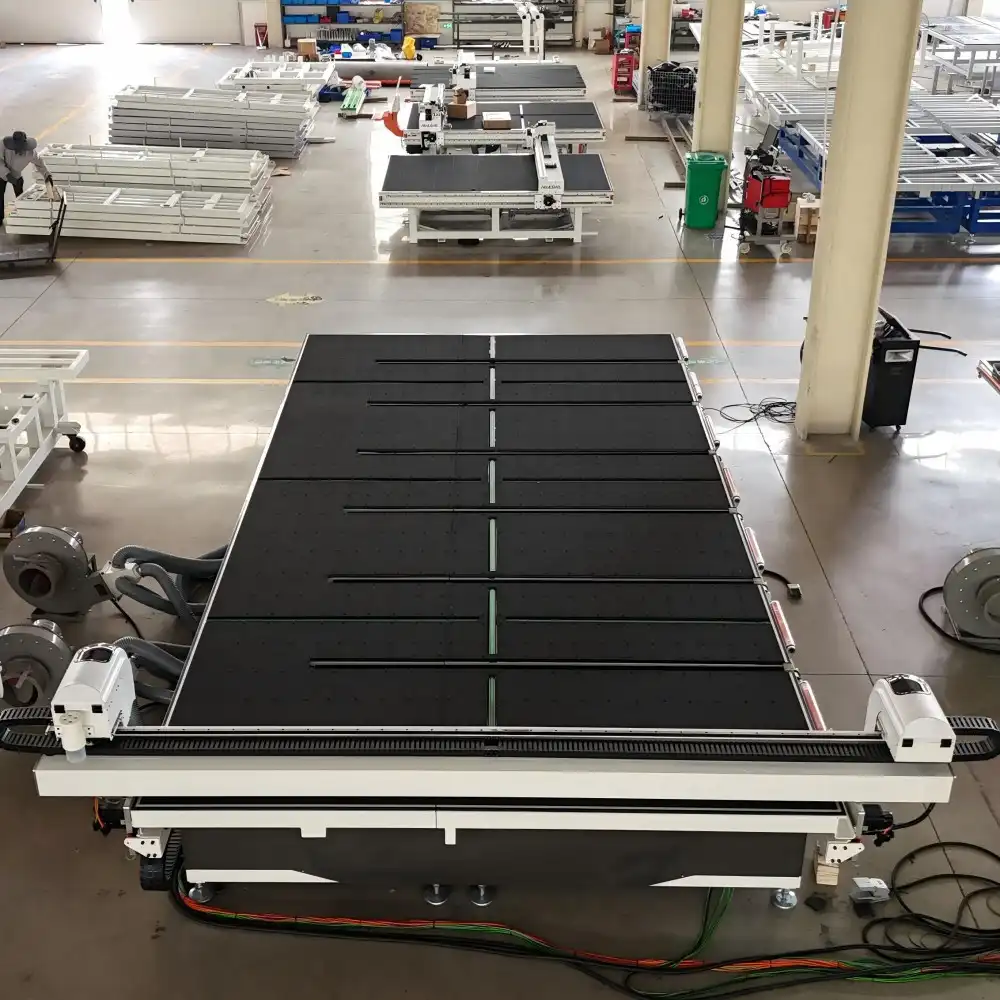
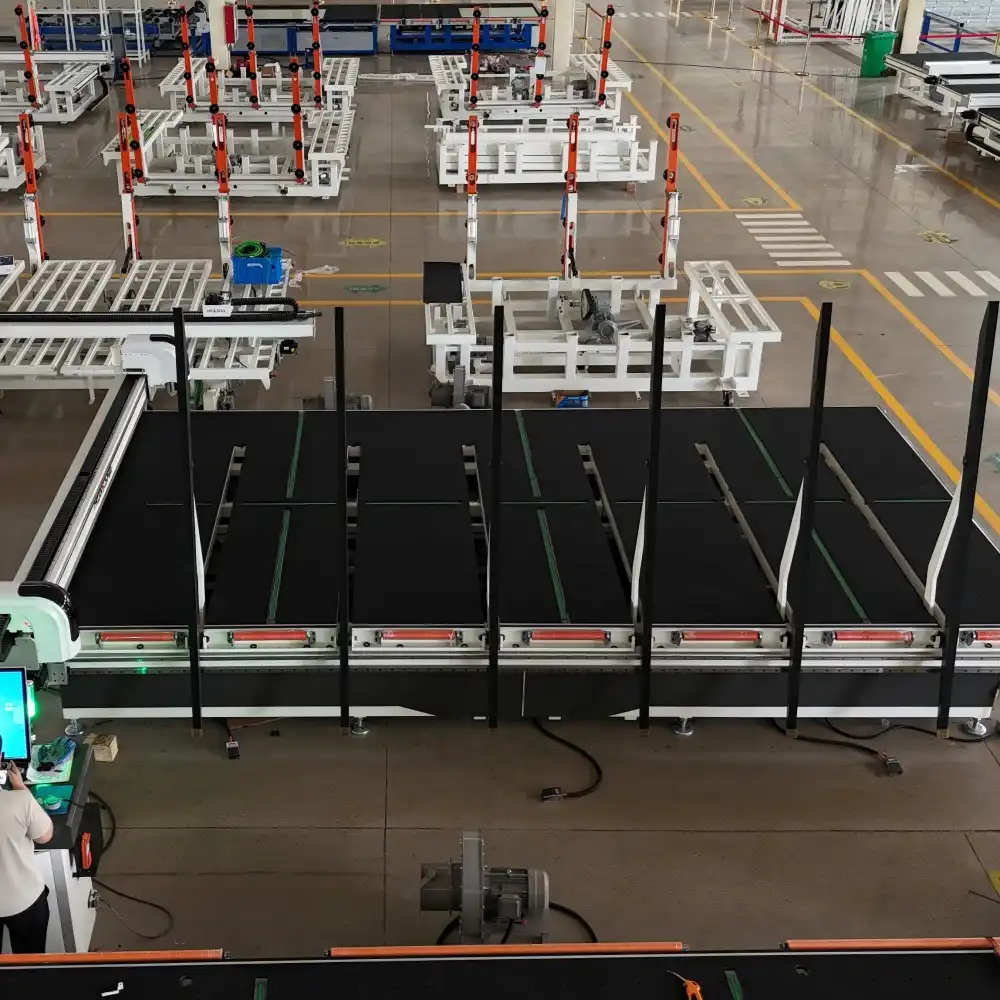
It is possible for fully automatic setups to include features for loading, placing, cutting, breaking, and releasing in production lines that work together smoothly. These systems help architectural glass plants make the most standard window and curtain wall panels in the shortest amount of time. Photoelectric placement technology makes sure that everything is lined up perfectly before the cutting starts, so there are no more steps of measuring by hand. Large architectural panels can be cut on equipment with a maximum cutting length of 3800mm, while smaller decorative glass parts can be cut on equipment with a minimum cutting length of 300mm. Modern systems have a small size (about 4700mm x 3100mm x 840mm), so they can be added to current plant plans without making major changes to the building.
Semi-Automatic and Batch Processing Solutions
Semi-automatic versions are best for factories that don't make a lot of things or that need to change over a lot of different products often. These systems can still cut and place materials automatically, but they also have steps for manually adding and removing materials. This arrangement saves money for companies that make furniture, glass, and shower doors that work with a range of shapes and sizes during production runs. Batch processing laminating units are a cheap way to do work that doesn't need continuous line speeds. They provide consistent bonding quality for smaller production quantities.
Continuous Laminating Lines: Continuous automated laminating lines are the most efficient way to make a lot of architectural glass for industrial glass system integration. During the cleaning, film coating, pre-pressing, and steam bonding steps, these systems keep the flow of materials steady. End-to-end automation, which turns raw glass sheets into finished layered goods without any handling in between, is made possible by connecting the automation to cutting tools. Integrators of curtain wall systems like these layouts because they help them meet tight project deadlines while still meeting strict safety glass standards.
Technology Differentiation Among Suppliers
Leading equipment makers stress the unique technology benefits. Some brands focus on improving cutting speed, while others try to use less energy in the laminating process by using smart heating controls. Different software packages have different levels of software interaction, which affects how well the equipment works with ERP and production management platforms. Warranty terms and the availability of spare parts are very important when making a decision, especially for plants that work multiple shifts and where the reliability of the equipment directly affects how much money they make. Technical managers should look at the infrastructure for after-sales support, such as how long it takes to fix problems and how many factory-certified techs are available in their operating regions.
Implementation and Maintenance of Automated Glass Systems
Pre-Installation Assessment and Customization
A thorough evaluation of the facility is the first step to a successful automation deployment. To find the best place for equipment, engineering teams look at things like floor load capacities, electrical infrastructure, and material flow patterns. A study of the production process shows ways to improve the structure so that the benefits of automation are maximised. Customisation talks include specific processing needs, like how to deal with special glass coatings or how to fit panels with non-standard sizes that standard configurations might not be able to handle well. For complicated installs, this part of getting ready usually lasts between 4 and 6 weeks. This makes sure that commissioning goes smoothly when the equipment comes.
Workforce Training and Transition Management
Automated systems change the way things are done, so people need to learn new skills. Comprehensive training programs teach people how to use machines, do regular upkeep, and figure out what's wrong. During equipment commissioning, hands-on sessions help operators feel more confident before full production starts. When plant managers put enough money into training, ramp-up times are shorter and operational mistakes happen less in the first few months, which is very important. Technical documentation should have clear maintenance schedules and calibration procedures that workers can use on their own, so they don't have to rely on outside help for everyday tasks.
Integration with Existing Manufacturing Systems
Standardised communication protocols make it easy for modern automated equipment to connect to business software. This integration lets you watch production in real time, keep track of inventory automatically, and make predictions about the future that make the best use of resources. Centralised screens let production directors see how often machines are being used, how well they're doing, and what repairs need to be done. This kind of openness helps people make decisions about planning capacity and implementing continuous improvement programs that make operations more efficient over time.
Preventive Maintenance Strategies: Systematic maintenance programs for industrial glass cutting and laminating systems make equipment last longer and reduce the number of times it breaks down without warning. Regular checks include looking at mechanical parts, electrical systems, and precise tracking systems that decide how accurately the cutting is done. Customised calibration plans based on production volume guarantee long-term performance that meets requirements. Replacing worn-out parts before they break down stops damage from spreading to more expensive subsystems. Suppliers of equipment usually give advice on how often to do repairs based on how often it is used. Following these rules keeps the guarantee valid and lowers the total cost of ownership.
Future Trends and Innovations in Automated Glass Cutting and Laminating
Artificial Intelligence in Process Control
AI programs look at production data to find the best cutting lines, cut down on waste, and guess what the best processing settings are for each type of glass. Machine learning systems can spot small changes in quality before they become major production problems. This lets them make changes ahead of time that keep output consistent. This layer of intelligence turns machines that can be programmed into systems that can adapt and keep getting better by using what they've learned.
Predictive Maintenance Through IoT Connectivity
Internet of Things sensors built into automatic systems check the health of parts in real time. Vibration analysis finds worn bearings before they break completely, and heat imaging finds weak electrical connections. Cloud-based analytics platforms collect data from many computers and look for patterns that can tell you days or weeks ahead of time when maintenance is needed. Because they can predict what will happen, plant managers can schedule maintenance for planned downtime instead of having to deal with emergency breakdowns that stop production without warning.
Sustainable Automation Technologies
Equipment progress is still being driven by better ways to use energy. Modern servo motor systems use less power when they're not in use, and laminating equipment with optimised heating cycles also wastes less energy. Closed-loop cooling systems reuse the water that is used to make glass, which is good for the environment and saves money on utilities. These environmentally friendly technologies help companies meet their social responsibility goals while also lowering their costs, which makes them more competitive.
Scalability for Market Responsiveness
Modular expansion is a big part of modern automation architectures. As output levels rise, plants can add automatic handling, automated checking, or more processing stations. They can start with core cutting and laminating. This scalability keeps future expansion options open and keeps you from having to spend too much on automation at the start. This level of freedom is important to procurement managers, especially when the way money is approved prefers small investments spread out over big ones.
Conclusion
Automation completely changes how industrial glass is processed, solving long-standing problems with safety, accuracy, and economy. Modern systems use advanced control technologies that make them more accurate and faster than systems that are operated by hand. Today, there is a wide range of equipment available to fit different production sizes and budgets. This means that architectural glass makers, curtain wall installers, and furniture manufacturers can all use automation. As new technologies like artificial intelligence, predictive maintenance, and sustainable operation keep making things better, early users gain competitive benefits that help them stay ahead in the market and allow for scalable growth. By lowering costs, improving quality, and making workers safer, strategic investments in robotics pay off in a way that can be measured.
FAQ
1. How much faster are automated cutting systems compared to manual methods?
Automated industrial glass cutting machines achieve speeds up to 100 meters per minute, representing throughput increases of 40-60% over manual operations. This acceleration stems from continuous operation without fatigue, precise positioning that eliminates measurement time, and seamless integration with handling systems that reduce material transfer delays.
2. What safety features do modern laminating systems include?
Contemporary automated laminating equipment incorporates emergency stop mechanisms, interlock systems that prevent operation when access doors open, and enclosed processing zones that contain high-temperature and pressure hazards. Robotic handling removes personnel from heavy lifting tasks, reducing injury risks associated with manual glass panel manipulation.
3. How should plant managers select appropriate automation levels?
Selection criteria include production volume requirements, product complexity, available capital budget, and growth projections. Facilities processing standardized architectural panels benefit most from fully automatic lines, while operations with diverse product mixes may find semi-automatic systems more cost-effective. Consultation with equipment specialists and factory assessments helps identify optimal configurations aligned with specific operational contexts and financial parameters.
Partner with HUASHIL for Advanced Glass Processing Solutions
Shandong Huashil Automation Technology specializes in delivering reliable industrial glass cutting and laminating systems tailored to architectural, automotive, and furniture manufacturing applications. Our equipment combines precision engineering with user-friendly interfaces, enabling straightforward operation and minimal training requirements. With photoelectric positioning accuracy and cutting speeds reaching 100m/min, our systems handle glass thicknesses from 3+3mm to 8+8mm and laminating film ranging from 0.38 mm to 1.52 mm, accommodating diverse production specifications. As an experienced manufacturer with comprehensive after-sales support, we provide prompt technical assistance and readily available spare parts to maximize your equipment uptime. Contact our team at salescathy@sdhuashil.com for customized consultations and quotations that address your specific production goals and operational requirements.
References
1. Glass Processing Technology Journal. "Advances in Automated Glass Cutting Systems for Architectural Applications." Volume 28, Issue 4, 2023.
2. Industrial Automation Research Institute. "Comparative Analysis of Manual versus Automated Glass Laminating Processes." Manufacturing Efficiency Studies, 2022.
3. International Glass Manufacturing Association. "Safety Standards and Best Practices for Automated Glass Processing Equipment." Technical Publication Series, 2023.
4. Manufacturing Technology Review. "ROI Analysis of Automation Investments in Glass Fabrication Facilities." Industrial Equipment Finance Report, 2022.
5. Advanced Materials Processing Conference. "Integration of IoT and AI Technologies in Modern Glass Manufacturing Systems." Conference Proceedings, 2023.
6. Building Materials Industry Report. "Market Trends and Technology Adoption in Architectural Glass Production." Annual Industry Analysis, 2023.