




Door glass cutting machines stand as essential tools in modern door manufacturing and glass processing industries, enabling precise shaping and sizing of glass components critical to today's architectural projects. Production managers, procurement specialists, and engineering teams across the United States face mounting pressure to deliver exceptional quality while controlling operational costs. This guide targets procurement managers, engineers, OEMs, and distributors seeking to understand the technology, operational benefits, and market solutions available in automated glass processing. By exploring machine types, working principles, key benefits, and maintenance protocols, readers will gain practical insights to make informed purchasing and operational decisions that enhance productivity, improve product quality, and ultimately strengthen competitive positioning in a demanding marketplace.
What Is a Door Glass Cutting Machine?
A door glass cutting machine represents an advanced, precision-driven machine that is widely used in fields such as architecture, automotive manufacturing, smart mirror production, and decorative glass fabrication. This automatic equipment measures and cuts glass sheets to exact specifications with minimal human intervention. It was designed to make the process of working with glass faster and more accurate. These tools ensure that everything is uniform and accurate, which is very important in fields that have strict quality and safety standards, whether they are working with big building panels or making one-of-a-kind forms for specific uses.
Types of Glass Processed
Modern cutting systems can handle different types of glass that are needed for different tasks. These tools are just as good at cutting tempered glass, laminated panels, decorative glass, and regular float glass. Because of this, makers can make windows, doors, and curtain walls for building projects, windshields for cars that need to be precisely shaped, and patterns for furniture and other interior design elements that need to be made to order for decorative installations.
Core Machine Components
Knowing the basic design makes it easier for procurement teams to rate tools correctly. The real scoring and separation are done by cutting heads with diamond-tipped wheels or laser systems. Integrated software controls, like Optima optimization programs, figure out the best way to cut so that there is the least amount of waste and the most work gets done. Automatic pressure control, edge detection systems, and emergency stop devices are some of the safety features that keep workers safe and the integrity of the material safe during the production process.
Automation Levels Available
Equipment runs from fully automatic lines that load, place, cut, break, and unload without any help from a person to manual systems that need to be guided through each cut by an operator. Semi-automatic machines are a good compromise because they combine the accuracy of automation with the control of a person for medium-sized processes. This range lets companies find the right balance between investing in technology and the amount of work they need to do, the quality they need, and the skills of the people they have working for them.
How Does a Door Glass Cutting Machine Work?
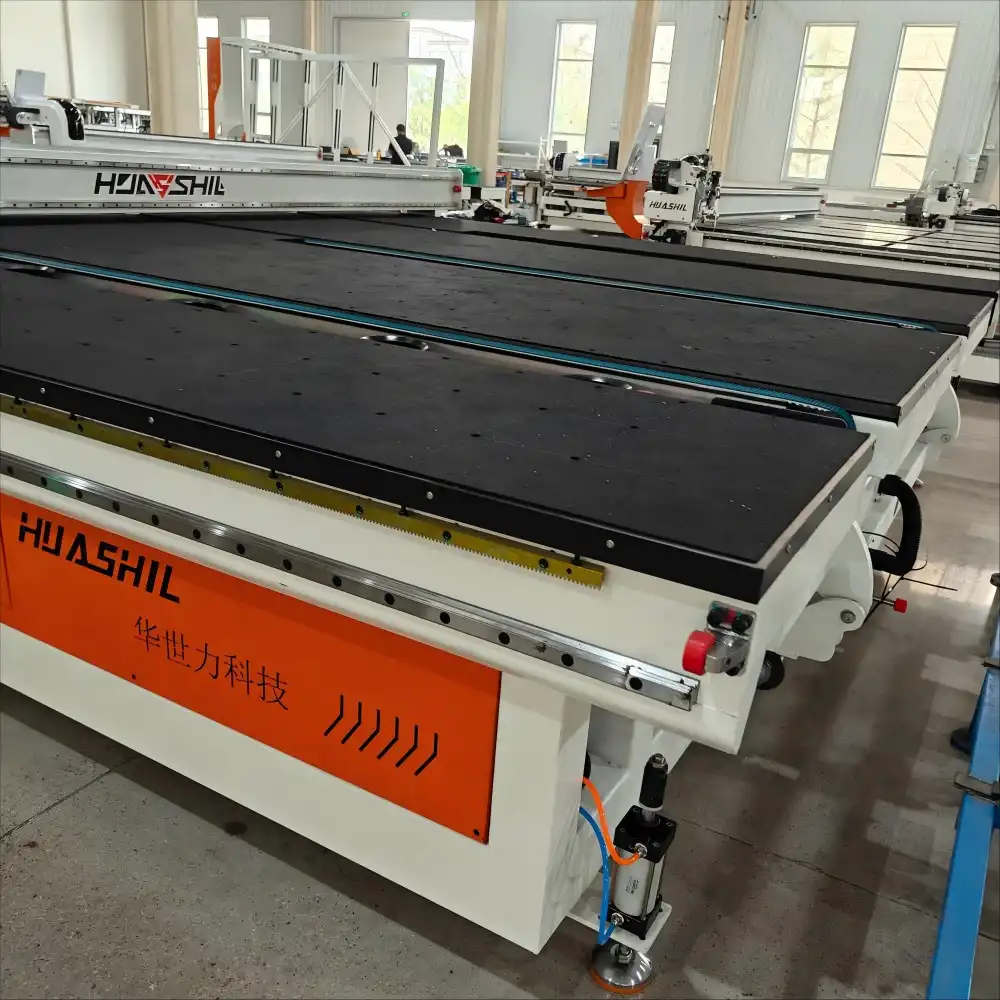
The first step in the process is preparing the glass. This is done by bringing raw sheets to the loading station. Advanced models like the HSL-YTJ3826 have automated loading systems that use synchronized belts and air flotation technology to place large panels up to 3660x2440mm without damaging the surface or causing stress fractures. When working with high-quality products, this non-contact handling is very important.
Precision Positioning and Edge Detection
Once the glass is loaded, automatic edge-finding sensors scan its edges to find the exact coordinates inside the cutting field. This digital mapping makes sure that all future cuts line up perfectly with the edges of the material. This gets rid of mistakes that can happen when measuring or positioning sheets by hand. The door glass cutting machine control system compares these measurements to cutting patterns that were created by optimization software, calculating the most efficient layout to get the most useful output from each sheet.
Cutting Execution Process
As the cutting heads move along set routes across the surface of the glass, controlled pressure is applied through diamond wheels that score the material. Automatic pressure control systems change the force based on the thickness of the glass, which can be anywhere from 2mm to 19mm on machines that can handle it. This adaptability prevents both not scoring enough, which causes breaks that aren't straight, and too much pressure, which causes cracks to form too soon. Tolerances measured in fractions of millimeters are kept by CNC guidance, providing the stability needed for precise assembly in curtain wall systems or automotive glazing.
Breaking and Quality Verification
After the scoring step, built-in breaking tables use mechanical force along the score lines to cleanly separate the pieces. Modern systems have remote controls that work in all directions. This lets operators watch the breaking process from a safe distance while still being able to see what's happening. Final quality checks, like automatic sensor-based checking or human verification, make sure that the dimensions and edges are correct before the pieces move on to the next step in the process or are packaged.
Benefits of Using a Door Glass Cutting Machine in Industrial Applications
When manufacturers use automated door glass cutting machine technology, they report measurable improvements in a number of operational areas. Gains in production efficiency are seen right away as flow goes up and worker needs go down. One automated line can do as much work as or more than several manual cutting units put together. This changes the economics of glass production in a big way.
Enhanced Productivity and Labor Optimization
Automation changes how workers are used by moving skilled workers from cutting tasks that are done over and over to more valuable tasks like quality control, maintenance, and process optimization. The steady speed of automatic equipment gets rid of the slowdowns that come from getting tired that are common in human tasks. Cycle times that stay fixed make it easier to plan production, and they also make it easier for scheduling teams to agree on delivery dates.
Superior Cut Quality and Consistency
Precision cutting has a direct effect on processes that come after and on how well the final product works. It takes less time and costs less money to do more edging when the sides are clean and straight. Consistent sizes make sure that everything fits correctly when it's put together. This is especially important in curtain wall construction, where panels must line up perfectly across large building facades. Less difference means fewer rejections and customer complaints, which is good for both image and profit margins.
Financial Returns and Cost Control
Cutting down on material waste has immediate positive effects on the bottom line. Optimization software figures out nesting patterns that get the most useful space out of each glass sheet. Compared to human plans, these patterns can sometimes get five to fifteen percent more material use done. As automated systems make cuts faster and more efficiently than human ones, the amount of energy used per unit created usually goes down. Even though maintenance costs need to be planned for, they are still predictable and less expensive than the total costs of managing larger manual labor forces, which include benefits, training, and turnover.
Comparison of Door Glass Cutting Machines: Choosing the Right Solution
To choose the right tools, you need to carefully consider the types of technology, levels of automation, and feature sets that meet the needs of your operations. Even though manual cutting methods don't require a lot of money up front, they have limits on throughput, accuracy, and worker safety. These methods work well for specialty work that isn't done very often, but they don't work well in current production settings.
Semi-Automatic Systems
For growing businesses, semi-automatic door glass cutting machines are an easy way to get started. The most precise parts of these systems are automated, like moving the cutting head and controlling the pressure. However, parts like loading and breaking are still done by hand. For a moderate investment, this configuration offers big quality gains over manual methods. This makes them appealing for shops that make furniture, shower doors, and decorative glass that work on 20 to 50 pieces every day.
Fully Automatic Production Lines
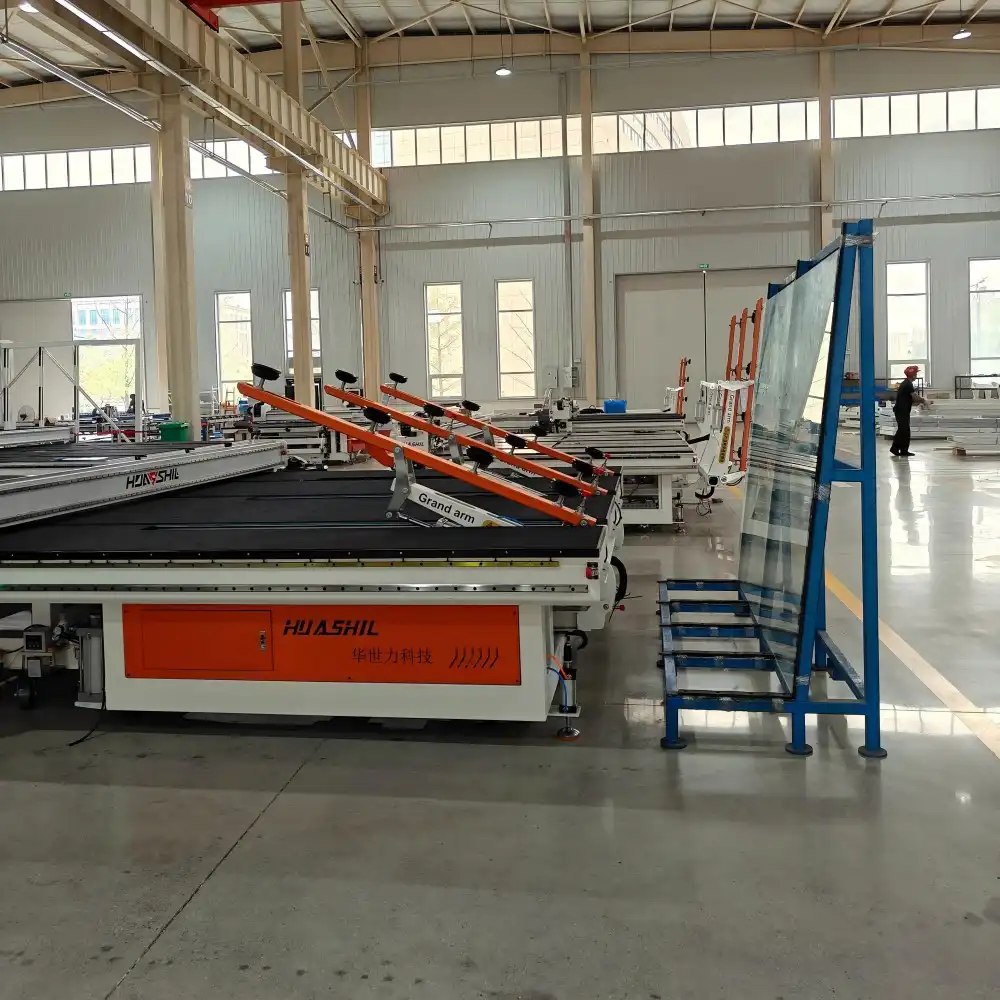
Fully automated systems are the best way to cut glass because they handle every step of the process, from adding the raw sheet to sorting the finished pieces. This group includes models like HUASHIL's HSL-YTJ3826, which is approved to CE and ISO9001 standards and has features like automatic loading, pressure control, edge finding, air float handling, built-in breaking tables, and remote operation. These machines can work with glass panels up to 3660x2440mm and thicknesses ranging from 2mm to 19mm. They can handle hundreds of pieces per shift with little help from an operator. The 5550x4925mm size fits into most production floor plans and produces output that is good for plants that make architectural glass, companies that put together curtain wall systems, and companies that make a lot of doors.
Evaluating Manufacturers and Support
Working with well-known manufacturers guarantees access to dependable tools, thorough training, and quick technical support. Reliable suppliers give clear pricing information for buyers to evaluate, detailed documentation for engineers to look over, and warranty terms that meet the needs of financial approval. It is especially important to have new parts and field repair available for automated equipment, since downtime directly affects production responsibilities. Companies that have worked with others in international markets before show that they are stable and able to support long-term partnerships.
Maintenance Tips and Troubleshooting for Door Glass Cutting Machines
To keep equipment working well, a door glass cutting machine needs structured repair plans that are made to fit the amount of use and the surroundings. Every day, the focus is on cleaning the cutting beds of glass debris, checking the cutting wheels for wear, and making sure the safety interlocks work properly. These quick checks, which are usually done when shifts change, keep small problems from getting worse and stopping production.
Weekly and Monthly Service Intervals
As part of weekly maintenance, linear guides and moving parts need to be oiled, belt tension in conveyor systems needs to be checked, and edge detection sensors' calibration needs to be confirmed. More thorough checks of electrical connections, the integrity of the pneumatic system, and software backup procedures are added every month. By writing down these tasks, you can make maintenance histories that can help you find patterns of wear and plan replacements for parts before they break.
Common Issues and Resolutions
Cutting errors are usually caused by cutting wheels that are worn out, cutting oil that is dirty, or a change in the setting of the tracking system. Changing cutting wheels as directed by the manufacturer keeps the edge quality high, and using the right oil and filtering it properly stops buildup that lowers wheel performance. Overheating usually means that there isn't enough wind to cool the machine, the cutting speed is too high, or the drive systems are mechanically stuck. Taking care of these signs right away keeps expensive parts from getting damaged again.
Parts Sourcing and Technical Support
Keeping in touch with approved parts providers guarantees that you can get genuine parts that were designed to fit your specific model of equipment. Generic alternatives might save you money at first, but they often cause problems with compatibility or faster wear. Expert fixing help is available through warranty-backed technical support, which cuts down on testing time and speeds up the resolution of complex problems. During the warranty period, these resources are very helpful, and you can still access them through service contracts that offer extra protection after the initial coverage.
Conclusion
In conclusion, door glass cutting machines represent investments that pay off in the form of increased output, improved quality, and lower operating costs. Procurement managers and engineering teams can choose equipment that is perfectly matched to production needs when they understand the basics of technology, how it works, and how to make a choice. Automatic systems like HUASHIL's HSL-YTJ3826 show how advanced features like optimization software, automatic handling, and remote operation can turn the process of making glass from a craft that requires a lot of work into a process that can be done quickly and over and over again. Businesses can get the most out of these high-tech tools by carefully researching makers, following maintenance instructions, and investing in training for operators to ensure long-term success.
Frequently Asked Questions
1. How does automated cutting compare to manual methods in terms of accuracy?
Positional accuracy of automated systems is within ±0.1mm when conditions are controlled. This is much better than the accuracy of manual cutting, which depends on the skill and fatigue of the operator. In architectural applications, where dimensional tolerances directly affect how well an assembly works, this consistency is very important. The improvement makes it worth investing in technology, especially when working with expensive products or markets that care a lot about quality.
2. What safety rules must be followed when using these machines?
Operators need to be taught how to stop in an emergency, how to handle materials safely so that they don't break, and how to spot pinch points in automatic handling systems. Safety glasses, cut-resistant gloves, and steel-toed shoes are still required as personal protective equipment. Regular safety checks make sure that guards, interlocks, and warning systems work properly, keeping equipment safe as it gets older.
3. Can door glass cutting machines be customized for specific applications?
Manufacturers often offer customization to deal with special types of materials, non-standard sizes, or the ability to work with current production lines. Being able to OEM and ODM means that you can specify specific cutting head setups, changed handle systems, or your own software interfaces. When requirements are discussed early on in the buying process, providers can come up with custom solutions that meet the needs of the project while keeping door glass cutting machines cost-effective.
Partner with HUASHIL for Your Glass Cutting Equipment Needs
At Shandong Huashil Automation Technology Co., LTD, we offer tried-and-true solutions for processing glass. These solutions are backed by years of experience in manufacturing and the global market. Our HSL-YTJ3826 automatic door glass cutting machine is the pinnacle of engineering excellence. It comes with Optima optimization software, automatic loading and edge detection, air flotation handling, and a full set of safety controls in a CE and ISO9001-certified package that is ready for production. This machine can handle glass panels up to 3660x2440mm and a thickness of 2mm to 19mm. This gives architectural glass plants, curtain wall installers, and furniture makers the flexibility they need.
We know that choosing glass-cutting tools means carefully looking at their technical specs, their total cost of ownership, and how reliable their suppliers are. Our team provides clear pricing for procurement analysis, detailed documentation to support engineering review, and clear warranty terms that meet financial approval processes. HUASHIL has options that can be changed to fit businesses of all kinds, whether they need a single machine or a whole production line. Contact our experts at salescathy@sdhuashil.com to talk about your needs, set up demos, and find out why manufacturers all over the world choose HUASHIL as their supplier.
References
1. Glass Manufacturing Industry Council. (2023). Automation in Architectural Glass Processing: Industry Standards and Best Practices. Glass Technology Press.
2. Henderson, M. & Roberts, P. (2022). Precision Cutting Technologies for Modern Glass Fabrication. Journal of Industrial Manufacturing Systems, Volume 18, Issue 4.
3. National Glass Association. (2023). Safety Guidelines for Automated Glass Processing Equipment. NGA Technical Publications.
4. Chen, L. (2021). Economic Analysis of Automated vs. Manual Glass Cutting Systems in Mid-Scale Manufacturing. International Journal of Production Economics, Volume 235.
5. European Committee for Standardization. (2022). EN 12150: Glass in Building - Thermally Toughened Soda Lime Silicate Safety Glass. CEN Standards Library.
6. Williams, J. & Patel, R. (2023). Maintenance Strategies for CNC Glass Cutting Equipment: Extending Service Life and Optimizing Performance. Industrial Equipment Management Quarterly, Spring Edition.