




A fast speed glass cutting machine typically handles flat glass from about 2 mm to 12 mm in standard configurations. Reinforced models can process 15–19 mm. Our HSL-YTJ3826 cuts glass from 2 mm to 19 mm on sheets up to 3660 x 2440 mm. Real capacity depends on bridge rigidity, scoring pressure, sheet weight, and the breaking system. Advertised travel speed tells you little by itself. I suggest confirming thickness compatibility before you compare prices, because a mismatch leads to incomplete scoring, breakage, and wasted material.
What Glass Thickness Can a Fast Speed Glass Cutting Machine Handle?
First, I'll talk about the numbers that buyers ask about most often. Then I'll talk about heavy sheets and special types of glass.
Standard Thickness Ranges for Flat Glass
Most CNC cutting tables can work with 2–4 mm and 5–12 mm thick flat glass. Shapes that are reinforced can reach 15–19 mm. I think of these numbers as business standards, not exact requirements. In the US, ASTM C1036 sets the types of flat glass, quality levels, and thickness tolerances. It does not, however, set machine limits. These limits are set by the rigidity of the bridge, the pressure on the scoring wheels, the capacity of the servos, the design of the table, and the breaking system. Even if the paper is 19 mm thick, the machine still needs a frame that is stiff enough to keep the pressure even across the whole sheet.
Maximum Thickness on Automatic Machines
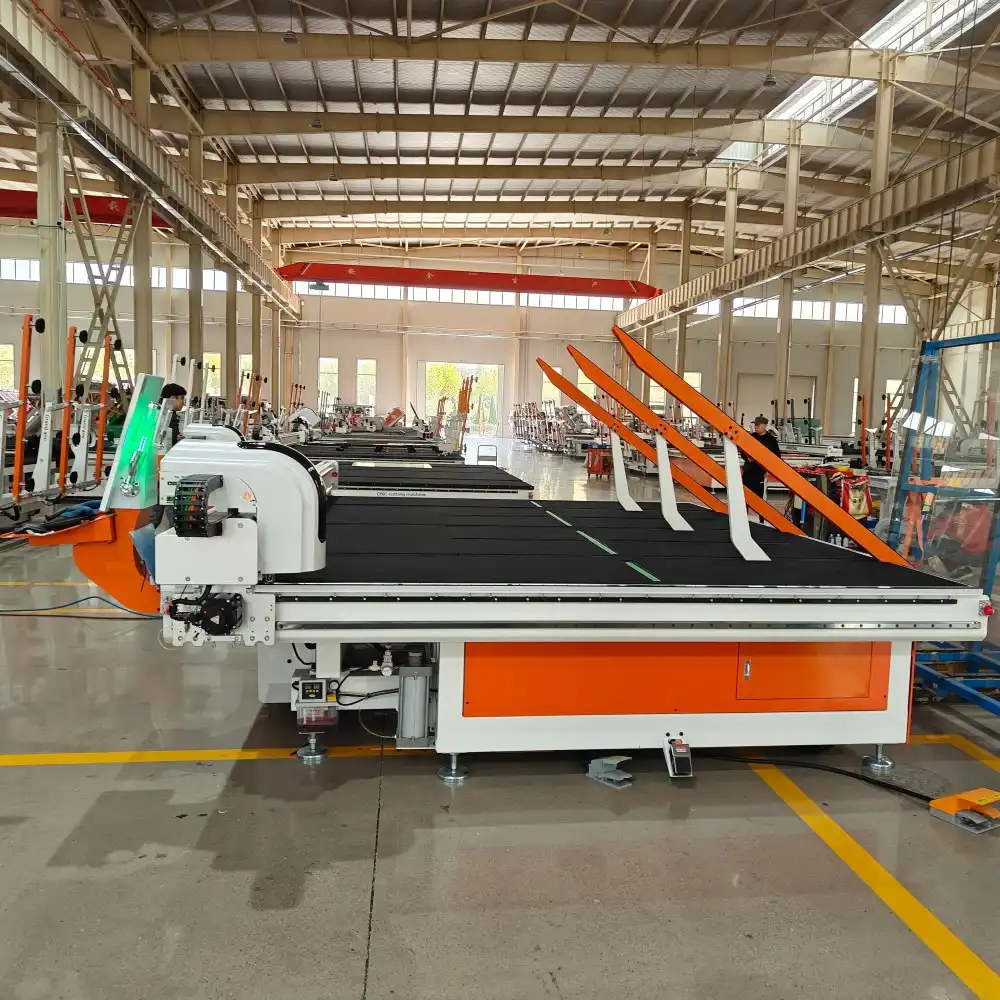
The largest sheet size that the HSL-YTJ3826 can handle is 3660 x 2440 mm, which is 2–19 mm thick glass. It has automatic edge finding, automatic pressure control, and automatic loading. Controlling the pressure is important because the scoring force needs to be different for each thickness. Edge finding tells you where the sheet is before you start cutting it. A system of air bubbles supports the sheet as it moves, and synchronous belts move the glass. The marked sheet is then split up by a broken table. These features work together to make it easier for one machine to switch between thin and thick orders.
Laminated, Coated, and Heavy Sheets
The weight of the sheet makes it less thick than many buyers think it can be. As you go up in thickness, glass gains about 2.5 kg per square meter. As a result, a full 3660 x 2440 mm sheet of 19 mm steel weighs about 424 kg. ASTM C1172 talks about laminated glass, which has an interlayer between the plies. This means that both plies must be scored and the interlayer must be taken apart. Coatings that are reflective or low-e can change how scoring works. ASTM C1048 says that tempered glass that has been heated cannot be cut. Let us know what you need for laminated or treated glass, and we'll go over it with you.
How Glass Thickness Affects Cutting Speed and Accuracy
It changes more than the cutting time. It also changes the quality of the edges and the way you control the sizes.
How Thickness Changes Cutting Time
To score thicker glass, you need to use more controlled pressure, and to break it, you need to be more precise. As a safety measure, operators often slow down the process. It's also more likely for thick glass to chip, change sizes, and crack in ways that aren't straight. The HSL-YTJ3826 has automatic pressure control that helps keep the scoring force steady. This means that you can get the same results when you switch from 3 mm to 19 mm orders. For a clean break to happen, the score line needs to stay the same.
Maximum Speed Versus Production Capacity
The fastest speed usually only works with certain types of glass, certain thicknesses, and simple cutting patterns. I always keep empty-table travel speed separate from scoring speed. Loading, positioning, breaking, unloading, and pattern complexity are also parts of production capacity. The Optima layout program sets up the cutting patterns on each sheet, which cuts down on wasted glass and head movement. It is possible for a fast-speed glass cutting machine with a moderate scoring speed and short handling steps to make more than one with a high peak speed and slow loading.
Performance Data to Request From Suppliers
Ask each supplier for the same short dataset. For speed numbers, you can filter by glass thickness, positioning accuracy, cutting tolerance, types of glass that can be used, and the heaviest sheet weight that can be handled. Then ask to have your own glass cut as a test. What a brochure can't do is show you the state of the edges, the quality of the breaks, and the spin time under your conditions. To look over the details, engineers can use these numbers, and buyers can use them to compare quotes. Also, written data protects your investment if the performance changes after installation.
Types of Fast Speed Glass Cutting Machines and Their Thickness Capabilities
How speed, thickness flexibility, automation, and cost all work together depends on how the machine is designed.
CNC Machines for High-Volume Flat Glass
CNC cutting machines are good for high-volume, repeatable work with architectural glass, furniture, appliance panels, shower doors, and parts for cars. From the first sheet to the thousandth, computer placement makes sure that the sizes are the same on all of them. Window manufacturers and curtain wall installers like this because the sizes of the panels have to match the project drawings. Because each model has a different thickness range, I tell buyers to compare the range given to their actual product list, not just the biggest number in a catalog.
Automatic Machines With Loading and Unloading
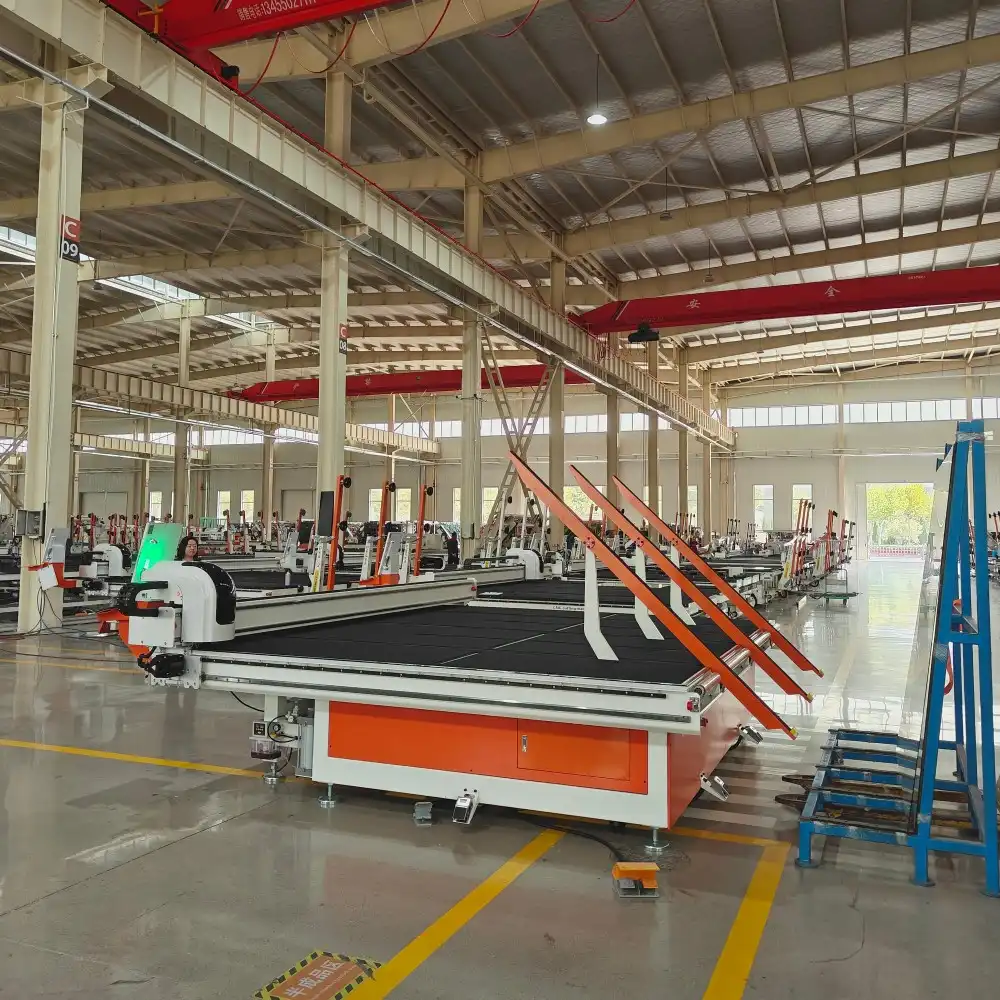
The cutting step is made longer by automatic machines that load, position, break, and unload. This cuts down on moving heavy sheets by hand and keeps cycle times the same. The HSL-YTJ3826 has an air flotation system, a breaking table, automatic loading, and remote control walking in all directions. That's 5550 x 4925 mm, so plant managers should make sure they have enough floor space and know how to move materials before they order it. The CE and ISO9001 certificates are pieces of paper that the sourcing and compliance teams can add to the project file.
Semi-Automatic and Specialized Machines
When capital budget is more important than throughput, semi-automatic systems work best in smaller factories with mixed orders and lower volumes. Specialized tools for laminated or covered glass can do things like separate films, heat them, or find the edges of the glass. Instead of depending on general specifications, make sure that these features work with the products you have in mind. If all you sell is regular float glass, then a specialized machine will cost you money without giving you anything in return. The extra features quickly pay for themselves if it has reinforced screens.
Fast Speed Glass Cutting Machine vs. Traditional Glass Cutter
In this case, volume, repeatability, and safety are the things that matter as sheets get thicker and bigger.
Limits of Manual Glass Cutting
Cutting by hand depends on how skilled the person is. The same sheet can be scored by two people at different speeds and with different amounts of pressure. The results change from shift to shift. Throughput stays low, and the risk of getting hurt when lifting big sheets goes up. Repairs, prototypes, one-of-a-kind shapes that aren't perfectly round, and very small runs can still be cut by hand. The cost of rework and labor goes up faster than most plants think once the number of orders or sheets gets too heavy to handle.
Efficiency Gains From Automatic Machines
An automatic speed glass cutting machine uses CNC positioning and consistent scoring instead of the operator's judgment. The Optima program sets up the parts on each sheet so that there are fewer scraps, and automatic edge finding speeds up setup. Powered filling and the air float system make it easier to do work that doesn't require pulling. Fewer workers can run more sheets per shift, and the consistency of the dimensions gets better. Plant managers can see this because there is less waste and more steady production, which helps them plan their workers and keep their delivery promises to customers.
Why Thickness Divides the Two Methods
A skilled worker can cut 3 mm sheets by hand because thin glass doesn't mind small mistakes. The scoring force, the breaking method, and the sheet weight all need more control when the thickness is 12 mm or more. To meet safety and quality standards, the structure must be strong and have a specific breaking table. So, I suggest you get automatic tools if a lot of your regular orders are thick or large-format glass, even if most of the orders are thin glass.
How to Choose the Right Thickness Range for Your Production
A simple three-step process makes sure that the choice is based on data from your own production.
Step 1: Define Glass Products and Order Mix
Write down the thinnest and thickest pieces of glass you cut, the sizes of the sheets, the number of orders you get, and how much you produce each day or each month. Add the things you want to sell in the next few years. A company that makes shower doors might need 8–12 mm, but a company that puts together curtain walls might need 19 mm. You won't have to pay for capacity you won't use because of this list, which you use as a starting point for all conversations with suppliers.
Step 2: Set Realistic Speed and Accuracy Targets
Which is more important: speed, physical tolerance, low breakage, maximum thickness, or the ability to work with small batches? A factory that makes a lot of standard sizes needs different priorities than a shop that fills orders that are unique to each customer. Write the goals down as numbers that can be measured, like the accepted range or the number of sheets per shift. After that, engineers can check them during a test cut, and the finance team can connect them to the expected return on investment.
Step 3: Match Machine Structure to Thickness
Review the bridge's strength, the table's load capacity, the design of the scoring head, the performance of the servos, the loading method, and the systems for breaking and unloading. Leave some room for error. There is a 19 mm machine that works well below its limit and lasts longer than a 15 mm machine that works at its limit every day. The HSL-YTJ3826 has that range for a lot of different building and furniture uses. For bigger projects, we also talk to integrators about OEM and ODM customization.
Conclusion
Glass thickness capacity isn't just based on a catalog number. Standard CNC machines can cut up to 12 mm, and stronger ones can cut up to 19 mm. Sheet weight, type of glass, and structural rigidity make the range less useful. But thickness also changes the scoring pressure, breaking accuracy, and edge quality, so peak speed is not always the same as real output. Loading, positioning, stopping, and emptying are all part of cycle time. Automatic machines are safer than hand-cutting when it comes to handling thick and large sheets, while semi-automatic and specialized machines are better for smaller jobs or jobs that need to be done with a specific material. Before choosing a speed glass cutting machine, buyers should write down the types of products they want to buy, set goals that can be measured, ask for performance data based on thickness, and make test cuts with their own glass.
FAQ
1. What thickness does the HSL-YTJ3826 cut?
The HSL-YTJ3826 can cut glass up to 19 mm thick. The largest sheet it can hold is 3660 mm x 2440 mm. Please let our team know the exact type of glass you have before you place your order.
2. Does thicker glass slow down a fast glass-cutting machine?
Most of the time, yes. When you score and break thicker glass, you need to be more careful about how much pressure you use. The fastest speed usually only works for certain layers and easy patterns, so ask for speed information by thickness.
3. Which certificates does the HSL-YTJ3826 hold?
The machine has both CE and ISO9001 marks on it. If you ask, our team can send the papers to your procurement or safety staff.
4. Can I test my own glass before buying?
It's best to test-cut your own glass to see how good the edges are and how long the cycle takes. Get in touch with us to talk about your samples and the testing options that are available.
Request a Fast Speed Glass Cutting Machine Quote From HUASHIL
Huashil is a company that makes fast speed glass cutting machines and has been making and exporting them for years. Our team will help you choose the right model, like the HSL-YTJ3826, based on the width of the glass, the size of the sheets, and the amount of work you do each day. Please email salescathy@sdhuashil.com for details, instructions, and OEM help.
References
1. ASTM International, Standard Specification for Flat Glass (ASTM C1036), 2021
2. ASTM International, Standard Specification for Heat-Treated Flat Glass (ASTM C1048), 2018
3. ASTM International, Standard Specification for Laminated Architectural Flat Glass (ASTM C1172), 2019
4. American National Standards Institute, Safety Glazing Materials Used in Buildings (ANSI Z97.1), 2015
5. Glass Association of North America, GANA Glazing Manual, 2008
6. Arun K. Varshneya, Fundamentals of Inorganic Glasses, 2006
