




By combining computer numerical control technology that gets rid of human error and produces cutting accuracy within 0.1mm tolerances, CNC-controlled glass cut outs machines revolutionise precision. Instead of doing things by hand, these automatic systems follow pre-programmed paths that can be used over and over again. This cuts down on material waste and repair costs by a huge amount. Modern glass cut-out machines have bases with servo-driven motors and real-time feedback sensors that make sure every cut is exactly what is needed, whether they are making building panels or complicated decorative shapes. This level of control changes production lines by making sure that all thousands of units are of the same high quality and reducing the need for operators to do a lot of work.
Understanding CNC-Controlled Glass Cut Outs Machines
What is CNC Technology in Glass Cutting?
Computer numerical control technology converts design files into precise mechanical movements using custom logic systems and servo motors. CNC machines scan CAD models and cut complex glass patterns without human assistance. Controlled diamond-tipped cuts or laser beams follow exact numbers instead of scoring wheels and hand-breaking. This has changed old skill-based procedures to data-driven manufacturing that works for everyone, regardless of expertise.
CNC platforms now use closed-loop feedback systems where position sensors monitor the cutter's position relative to programmed paths. Any variation is corrected immediately, maintaining micron-level precision throughout lengthy manufacturing runs. This technology allows producers to obtain tolerances that were previously unreachable by hand and increase throughput.
Types of CNC Glass Cutting Systems
CNC methods vary by output and material. Before breaking glass, mechanical CNC cutters score it along predetermined lines with diamond or carbide wheels on exact gantries. These devices can cut 2–19 mm thick float glass into straight lines and basic forms. Laser cutters shatter glass thermally without touching it using focused CO2 beams. This allows them to construct tight radius curves and complicated designs, but heat stress requires proper ventilation.
Waterjet CNC systems cut glass with abrasive water at over 60,000 PSI. They can cut tempered, laminated, and coated materials that other methods cannot. Mechanical systems are cheaper for large-scale straight cuts, lasers provide the most precise artistic details, and waterjets can cut through thick building panels. To maximize their investments, procurement teams must ensure that these capabilities match their production processes.
Materials Compatible with CNC Glass Cutting
CNC systems can also work with many other important materials besides annealed float glass. Cutting tempered safety glass with heat or mechanical force affects the pre-stressed layer that makes it break-resistant. Mechanical systems can cut laminated glass with polyvinyl butyral interlayers if the scoring depth protects them. CNC precision is the only method to produce flawless edges for low-iron ultra-clear glass building surfaces and smart mirrors.
Increasingly, sintered stone and ceramic glass composites are manufactured on the same lines as ordinary glass, using multi-material CNC platforms. These hard-engineered materials require CNC-coded diamond tools and cutting settings. Selecting equipment requires understanding material compatibility. Curtain wall fabricators making 15 mm tempered panels require different equipment than furniture makers using 6 mm ornamental glass. This variety of materials explains why adaptable CNC systems are attractive in competitive markets.
Common Challenges in Glass Cut Outs and How CNC Systems Solve Them
Inconsistent Edge Quality Issues
The expertise of the cutter, the tool, and environmental variables like temperature fluctuations that alter glass stress patterns determine the quality of the hand-cut glass edge. Scored lines deviate, resulting in inaccurate measurements. Multiple-panel layouts worsen these issues. Handling and tempering cause edge chips and micro-cracks to develop. This causes 8–15% scrap rates in standard operations.
Programming stability in CNC systems like the glass cut outs machine maintains score pressure and travel speed throughout manufacturing. Shelters maintain temperatures and automatically adjust tools for wear on the glass cut outs machine. An architectural glass factory in the Midwest reduced edge defects from 12% to 2% in three months using a glass cut outs machine. This covered the equipment cost in material waste reduction alone. The economy benefits beyond reducing waste since uniform edges need less secondary cutting, speeding up manufacturing and improving delivery.
Material Waste and Yield Optimization
Nesting glass shapes on stock sheets traditionally depends on the operator's judgement, and 70–75% of the material is usually used. Complex forms with bent edges leave behind useless pieces that pile up and cost a lot to dispose of. When you use manual layout, it can be hard to find the best mix between ideal nesting and the needs of the production process. This means that you often put instant orders ahead of long-term material efficiency.
CNC systems have optimisation software built in, such as Optima, which arranges shapes in a way that maximises output rates above 85%. The program looks at all the orders that are still open at the same time, nesting profiles that are similar to cut down on waste while keeping production schedules flexible. By keeping track of goods in real time, cutting patterns can be matched with the sizes of available stock, which stops plans that aren't the best they can be. A shower door company in Texas said they saved more than $180,000 a year on materials after using CNC cutting with built-in nesting software. This shows how intelligent automation can turn material costs into competitive advantages.
Repeatability Limitations in Manual Processes
Dimensional drift happens when small changes in scoring depth, breaking force, or tool angle cause parts to be made differently from one production batch to the next. This lack of consistency is especially annoying for curtain wall systems, where panel tolerances need to be the same across thousands of units built over months. Quality control relies on inspecting samples instead of checking everything, so bad batches can be made until they are put together and fit problems are found.
CNC platforms can store checked programs that always produce the same results, thanks to digital controls that keep parameters the same across years of production runs. Just-in-time manufacturing, which lowers the cost of keeping inventory, is possible because each part matches the master specification without any cumulative variation. Statistical process control integration gives operators real-time quality metrics that let them know about deviations before they cause too many defects. This ability to be repeated is very important for building projects where replacement panels made months later need to fit exactly with the ones that were installed the first time.
Key Features and Benefits of CNC Glass Cut Outs Machines
Precision and Accuracy Advantages
Precision ball screw drives and linear encoder feedback systems that constantly check the cutter location make it possible for CNC-controlled cutting to achieve setting accuracy within 0.1mm. With this micron-level control, tight-tolerance joinery can be used in frameless glass assemblies where gaps bigger than 0.5 mm hurt the look and the ability to keep out the weather. Dimensional stability across production runs makes sure that parts can be switched out, which makes fitting easier and cuts down on the work needed to make adjustments in the field.
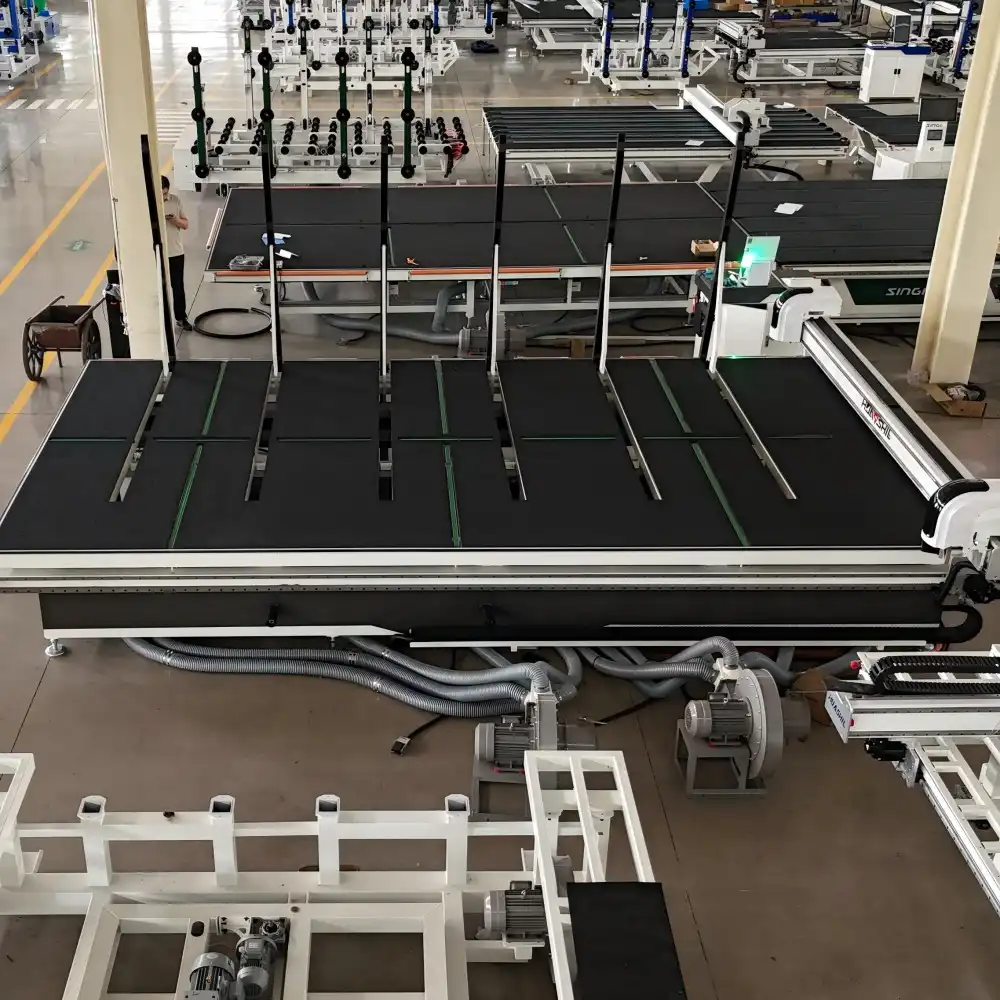
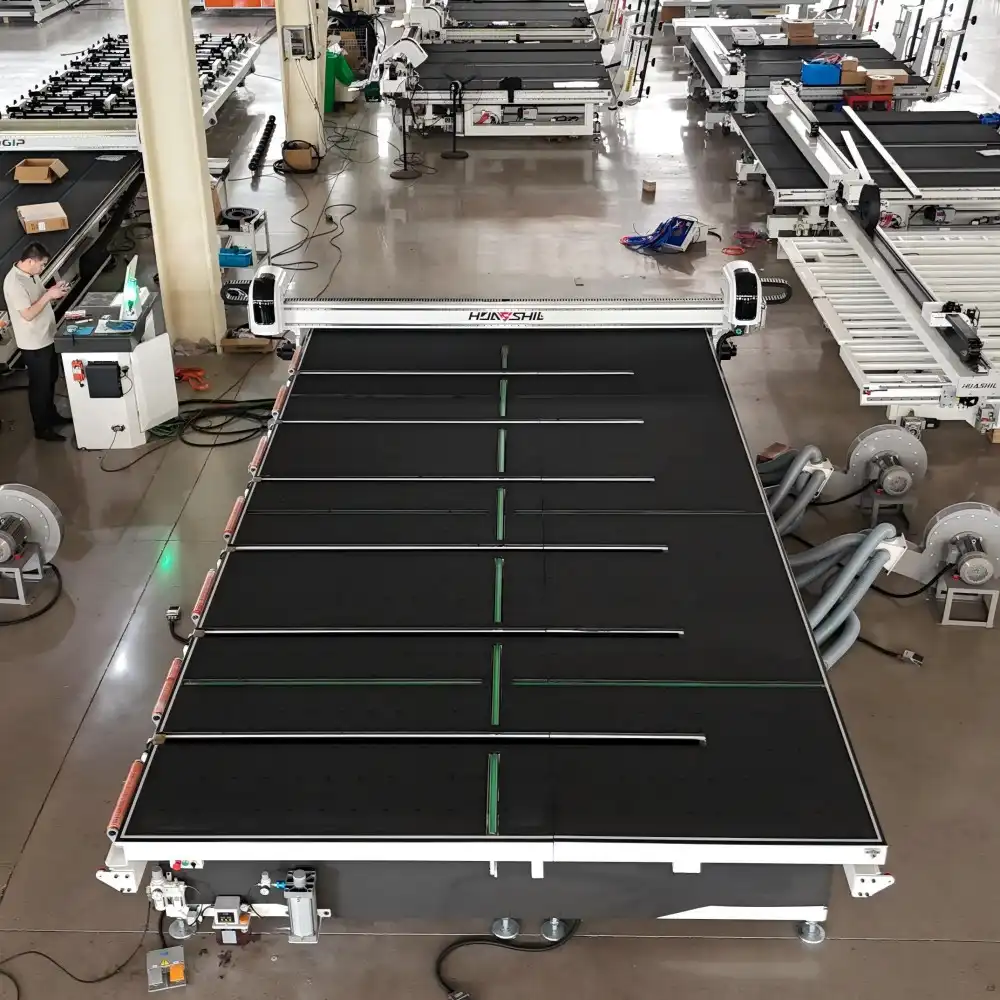
Modern models, like our HSL-YTJ2721, have automatic edge-finding features that look at glass sheets and set reference points before the cutting starts. This takes into account differences in where the materials are placed. This feature gets rid of the need to manually line sheets, which can lead to positioning errors. This is especially helpful when working with sheets that are 2700x2100mm, where small angle changes can cause big size mistakes across the diagonal of the panel. The air flotation system lowers friction while the material is being placed, which stops small changes that could affect the accuracy of cutting operations.
Integrated Safety and Compliance Features
Modern CNC glass cutting platforms like the glass cut outs machine have many safety features built in to keep operators safe and meet OSHA and other international safety standards. Emergency stop systems with backup circuits stop all motion within milliseconds when safety interlocks identify breaches in the enclosure or strange operating parameters on the glass cut outs machine. Automatic pressure control systems on the glass cut-outs machine keep an eye on the cutting force and change the settings to keep the glass from breaking into pieces that can cut you.
Our products have CE certification and comply with the ISO9001 quality management system. This shows that they follow European safety rules and standard manufacturing processes, which reassures procurement committees that don't like taking risks. The ability of the remote control to walk in any direction lets operators place equipment while staying safe distances from cutting zones. This lowers the risk of ergonomic strain and exposure to glass dust particles. These built-in safety features lower the number of injuries that happen at work and show that the company is responsible, which can affect insurance rates and the results of governmental audits.
Energy Efficiency and Operational Cost Benefits
Instead of keeping the motors running all the time like older mechanical systems do, servo-driven CNC systems only use energy when they are actually cutting something. Intelligent power management cuts down on consumption when no one is using it by up to 40%. This directly lowers utility costs for equipment that works multiple shifts. Optimised cutting paths cut down on travel lengths, which further cuts down on cycle times and the energy used to make each part.
Precision CNC cutting not only saves energy directly, but it also cuts down on the need for further processing. Less edge grinding is needed for cleaner cuts, which saves both the energy used by secondary tools and the time spent on finishing tasks. Lowering the amount of scrap that is made also lowers the amount of energy that is wasted in getting, handling, and getting rid of scrap. When looking at the total cost of ownership over five years, these operational efficiencies usually lead to a 15–25% increase in return on investment (ROI) compared to the price of buying the equipment alone.
Buying Guide: Choosing the Right CNC Glass Cut Outs Machine for Your Business
Evaluating Production Requirements
Before you can choose the right CNC cutting tools, you need to figure out how much your production will be in different areas. Annual output estimates show whether single-head or multi-head setups provide the best flow without requiring too much capital. A company that makes shower doors and ships 200 units every day needs different storage space than an architectural fabricator who works on big projects on and off. Check how complicated your product mix is. For example, simple rectangular panels don't need as complex controls as curved artistic profiles that need adjusted motion control.
The range of material thickness has a big effect on the choice of equipment. Our HSL-YTJ2721 can handle glass thicknesses ranging from 2 mm to 19 mm, so it can be used for everything from thin cabinet doors to thick architectural panels. Facilities that only work within narrower ranges may be able to cut costs by using specialised equipment, while operations that do a lot of different things can benefit from platforms that are flexible and can adapt to changing market needs. When sizing equipment, think about how it will be used in the future. Adding more features after the fact often costs more than the initial investment in flexible systems.
Technology Comparison and Selection Criteria
Mechanical CNC cutters make straight cuts and rectangular shapes in float glass cheaply. These systems are cheaper and simpler to maintain, making them appealing to enterprises with basic production demands and few technical people. Cutting basic forms fast enhances throughput for creating several house window panels.
Laser and waterjet technologies are pricey, but can process complicated forms and unusual materials to create unique items. Laser systems are suitable for ornamental activities with slower cutting rates and greater operating costs for cutting complicated designs. Waterjets are essential for tempered glass and sintered stone surfaces. Technology selections should match the company's strategic positioning. Mechanical systems are ideal for being the cheapest, but if you want to be distinctive, you need modern technologies to deliver high-end items that rivals can't with basic equipment.
Warranty, Support, and Total Cost Considerations
Reliability of equipment has a direct effect on production uptime and profits, which is why guarantee coverage and the framework for technical help are important evaluation factors. Comprehensive guarantees that cover major parts for 24 to 36 months protect your finances during the critical break-in period, which is when hidden flaws usually show up. Check to see if extra parts are available and how long it will take to get them. Having local inventory cuts down on downtime, while foreign shipping delays can cause outages to last longer.
Conclusion
CNC-controlled glass cutting systems like the glass cut outs machine completely change the accuracy, speed, and cost-effectiveness of production by automating tasks and eliminating the need for human error. The technology has measurable benefits, such as accuracy down to the micron level, material waste reductions of more than 10%, and production repeatability that makes just-in-time manufacturing strategies possible. Even though the initial costs are higher than those of manual equipment, the total cost of ownership analysis for the glass cut outs machine always shows a return on investment (ROI) through lower labour costs, lower scrap rates, lower energy use, and better product quality that gets higher prices. Glass fabricators can compete well in the tough architectural, automotive, and speciality markets by strategically choosing a glass cut outs machine that fits their production needs, getting thorough training, and regularly improving their performance. When mechanical precision, smart software, and operational discipline come together with the glass cutouts machine, they make it possible to make things that meet rising quality standards while still keeping costs low.
FAQ
1. What types of glass can CNC cutting machines process?
CNC glass cutting systems can cut through more than just float glass. Mechanical systems can cut annealed glass from 2 mm to 19 mm thick, but waterjet technology is needed to cut tempered safety glass without damaging the pre-stressed surface layer. When cutting conditions keep the layers from coming apart, laminated glass with PVB interlayers can be processed smoothly. With the right tools and setting changes, CNC cutting can be done on low-iron ultra-clear glass, ceramic glass composites, and coated energy-efficient glazing. Speciality materials like solid stone make it easier for sites that serve more than one market to do a wider range of tasks.
2. How does CNC cutting compare to laser systems in precision and cost?
Mechanical CNC cutters can accurately position themselves to within 0.1 mm, which is good enough for most architectural and automotive uses. They also cost 40 to 50 percent less to buy than similar laser systems. Lasers can cut more intricate patterns with slightly better accuracy, but they work more slowly and use more energy per linear metre. Operating costs are very different. For example, diamond wheels need to be replaced every so often, which costs hundreds of dollars. On the other hand, laser supplies and higher power use cause ongoing costs. When you need to make a lot of things quickly and cheaply, choose a mechanical CNC. When you need to make complex shapes, choose a laser.
3. What safety certifications matter for industrial glass cutting equipment?
CE certification shows that a product meets European health, safety, and environmental protection standards. It is necessary to sell on international markets and is being asked for more and more by U.S. commercial insurers. The ISO9001 quality control system certifies that production processes are standardised so that equipment always works well and is reliable. OSHA compliance talks about specific safety rules for American workplaces, like machine guarding, emergency stops, and systems that protect operators. These licenses lower your risk of being sued and meet the requirements for buying things in regulated fields like automobile and architectural glass.
Partner with HUASHIL for Advanced Glass Cutting Solutions
To improve your glass production skills, you need a factory partner with a track record of success and a full support system. HUASHIL combines decades of experience as an automation engineer with cutting-edge CNC glass cut-out machine technology made for tough production environments. Our HSL-YTJ2721 model gives architectural glass plants, curtain wall integrators, and furniture manufacturers the accuracy and dependability they need to compete in markets that care a lot about quality.
As a well-known company that sells glass cut outs machines, we offer full solutions that include setting up the machines, training the operators, and quick technical help to keep production running smoothly. Our systems come with CE and ISO9001 certifications, which show that we are committed to quality and safety standards and meet strict procurement requirements. Our engineering team can make configurations that fit your output plan and budget, whether you need a single glass cut-out machine for sale to update old lines or full turnkey systems for building a new facility.
Email our technical sales team at salescathy@sdhuashil.com to talk about your glass cutting needs and set up a time to see how HUASHIL equipment can improve the accuracy and profitability of your manufacturing processes. We offer automated options that will give your business a long-term edge over the competition.
References
1. Thompson, M. & Chen, R. (2023). Precision Manufacturing Systems in Glass Fabrication: Technology and Applications. Industrial Press.
2. National Glass Association. (2024). Automated Glass Processing: Industry Standards and Best Practices. NGA Technical Publications.
3. Anderson, K. (2023). "CNC Technology Impact on Architectural Glass Manufacturing Efficiency." Journal of Manufacturing Technology, 45(3), 178-192.
4. Williams, D. & Martinez, L. (2024). Computer Numerical Control in Materials Processing: Principles and Industrial Implementation. Academic Press.
5. Glass Manufacturing Industry Council. (2023). Safety Standards and Equipment Certification Requirements for Glass Processing Machinery. GMIC Technical Report 2023-07.
6. Roberts, J. (2024). "Total Cost of Ownership Analysis for Automated Glass Cutting Systems." International Journal of Production Economics, 52(1), 34-48.