




When professionals need to buy automation equipment to work with complicated sintered stone designs, they need to know what the technology can do, how reliable the supplier is, and how much the whole thing will cost. Intricate outlines, curves, and angled profiles that traditional rectangular cutting lines cannot achieve are made possible by special shape sintered stone cutting machines, which are sophisticated CNC-controlled systems. There are clear improvements in material output, edge quality, and production speed with these machines. This makes them necessary for makers who work with the architectural, furniture, and decorative markets that need unique forms other than standard tile formats.
Understanding Special Shape Sintered Stone Cutting Machines
What Defines Special Shape Cutting Technology
Specialized cutting systems are different from regular straight-line cuts because they can handle complex two- and three-dimensional shapes. They do this by combining multi-axis CNC control, clever path optimization software, and precision servo motors. These machines can handle curved countertops, uneven wall panels, rounded furniture parts, and architectural features that need to be cut with a radius or meet at an angle. The control software turns CAD drawings into machine instructions, so the same level of accuracy can be used for all batches of production with little help from an operator.
These days, CNC cutting tools are both mechanically stable and smart digitally. High-rigidity frames made of welded steel absorb vibrations during high-speed cutting operations. Linear guide systems keep placement accuracy at the micron level during long production runs. Automatic edge-finding sensors and air flotation tables work together to cut down on setup time and protect material surfaces while they are being handled.
Key Machine Types and Their Capabilities
Automation levels vary widely across equipment types. Manual methods need operators to put materials and move cutting instruments along designated lines. They are low-cost but have low throughput and inconsistent edge quality. Semi-automatic machines have programmed cutting paths and manual loading and unloading sequences for repeatability and low costs.
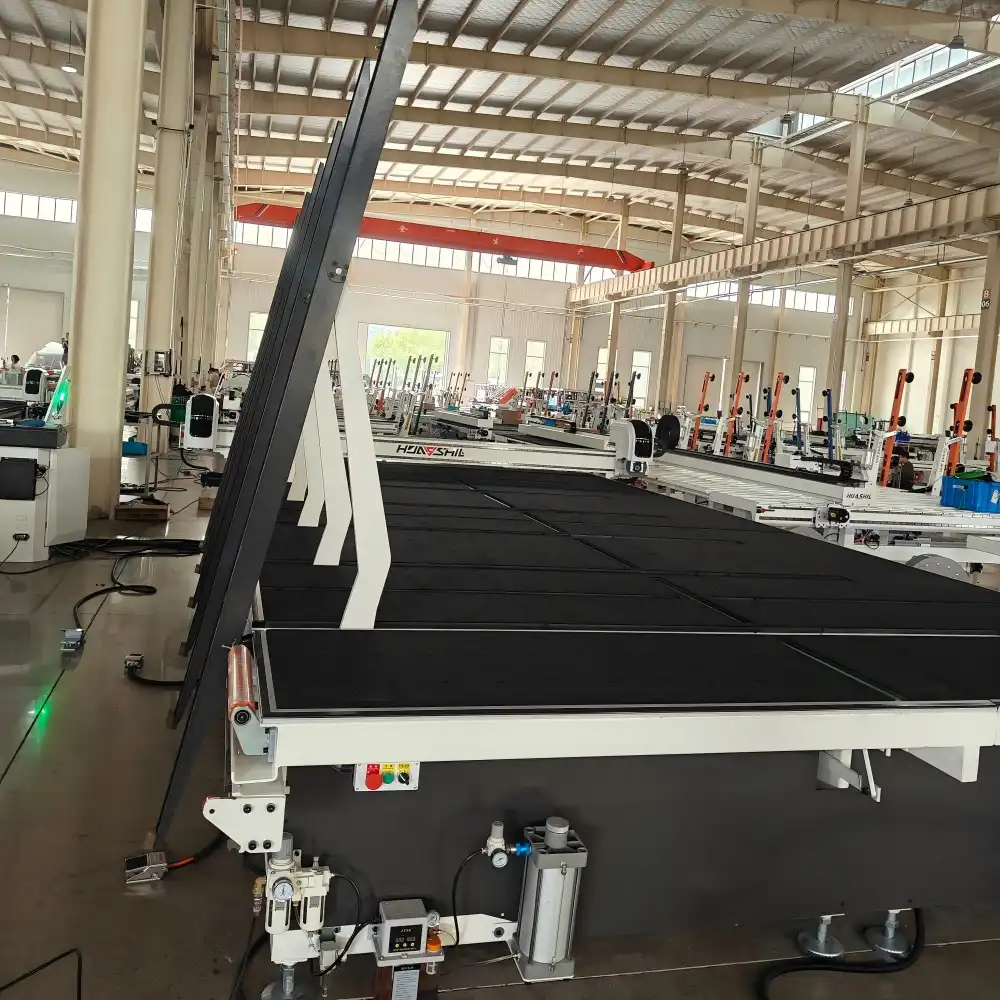
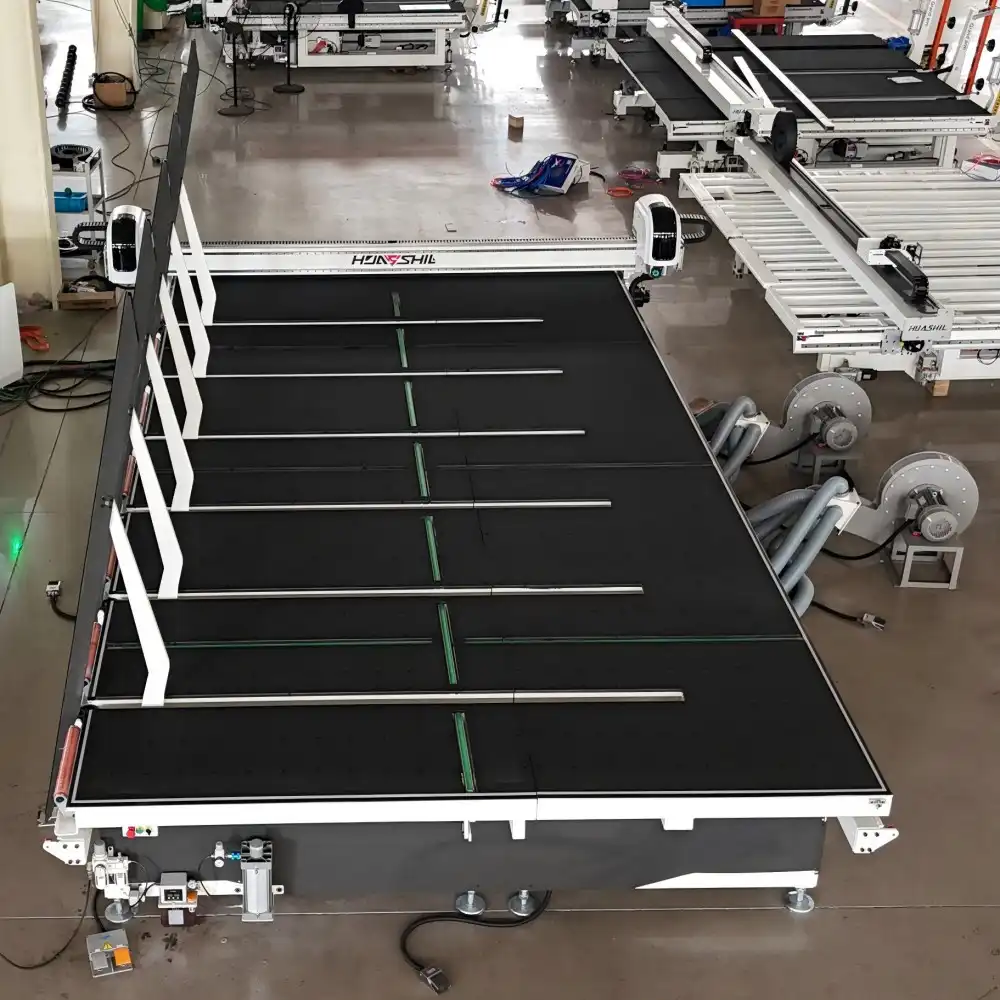
Medium- to high-volume producers that value quality consistency and time savings should choose fully automated CNC systems. The HSL-CNC3616 model illustrates this. It cuts sintered stone blocks up to 3600x1600mm at 3mm to 12mm. The cutting force adjusts automatically depending on material density, and the air flotation mechanism maintains contact with the surface without damaging delicate finishes. A 360-degree joystick controls the remote control's walking capability, allowing precise setup adjustments.
One-platform hybrids combine waterjet cutting and mechanical blade systems. This enables fabricators to use sintered and natural stone without switching equipment. This versatility helps organizations accommodate a variety of clients with diverse material preferences.
Core Benefits Driving Equipment Investment
Precision cutting technology improves operations in a measurable way, so output-focused companies should invest in it. Achieving ±0.1mm measurement accuracy reduces rework and material waste from 8-12% to 3-5%. Complex shapes that used to take several hand-finishing steps can now be finished in one automated cycle, saving 60% of the work per project.
Improving edge quality affects downstream processing. Machine-made clean edges need less polishing than hand-made edges, reducing finished products processing time by 30–40%. Smart cutting path algorithms and variable-speed motors optimizing energy use reduce electricity costs by 20–25% compared to older fixed-speed equipment.
Investments are best for increasing production. Production schedules with two or three shifts may treble output quantities without increasing personnel expenses since automated systems operate constantly with no oversight. This ability to grow is crucial for large architectural projects or seasonal demand.
How to Choose the Best Special Shape Sintered Stone Cutting Machine
Matching Equipment Specifications to Production Requirements
Instead of concentrating on theoretical maximum specifications, plant managers should match equipment capabilities to output profiles. The slab sizes, form complexity, and material thicknesses our equipment must manage may be determined from prior order patterns. Facilities that mostly work with curved furniture and tables need different cutting head setups than those with straight architectural panels.
The Optima optimization program in sophisticated systems illustrates how digital technologies may boost manufacturing efficiency. This program automatically organizes various cutting patterns over slab surfaces using clever tool path sequencing to maximize material use and cut rapidly. Using optimization software instead of hand nesting increases material output by 12–18%, say fabricators.
Cutting speed affects throughput directly on special shape sintered stone cutting machines. Modern CNC systems can cut 8–15 meters per minute, depending on material thickness and strength. Acceleration rates and positioning speeds between cuts affect cycle times more than cutting speed for special shape sintered stone cutting machines. Equipment with traverse speeds above 30 meters per minute saves time while cutting complex multi-segment projects.
Technical Specifications That Impact Long-Term Performance
Automation makes the process more consistent and reduces human expertise. Automatic edge-finding technology examines the slab's size and placement before cutting, eliminating the need for manual measurements. This function compensates for material placement and prevents costly tool crashes that damage materials and equipment. Automatic pressure control adjusts cutting force depending on load sensor data in real time. This prevents the blade from deflecting while cutting strong materials and from overworking weak materials, which may chip.
Maintenance accessibility affects an item's lifetime cost of ownership. Modular component arrangements in machine designs allow for rapid part replacement without production interruption. Oil ball screw drive systems every 500 hours and inspect linear guide rails every 1000 hours. Centralized lubrication systems automate these maintenance operations, reducing handwork and preventing equipment from wearing out too soon from inadequate service.
Consider your power, air conditioning, and refrigerator needs while conserving energy. Servo motor machines use 30–40% less energy between cutting processes than hydraulic machines. Air flotation tables need 6–8 bar compressed air. Note that this raises machine operating costs when comparing them.
Budget Considerations and Financing Strategies
Depending on automation, table size, and software, advanced CNC cutting systems cost $80,000 to $250,000. Automatic lines with multiple heads and built-in material handling cost more than manual systems with one head. Procurement managers should calculate payback periods based on labor cost reduction and throughput improvement, not only the original purchase price.
Warranty length and scope vary widely between suppliers, indicating their confidence in their products' quality and commitment to customers after the sale. Standard warranties cover construction issues for 12–18 months. Extended warranties of up to 36 months protect operations in remote areas with limited technical support. For contract producers with tight deadlines, part lead times greater than two weeks risk production delays, making spare part availability a significant assessment element.
Risk measurement is easier with a sintered stone fabrication supplier's identity. ISO 9001-certified companies have rigorous quality control processes that reduce equipment problems. CE certification assures multinational enterprises that they satisfy European safety requirements. Suppliers that exhibit at Coverings & Surfaces demonstrate their market commitment and allow customers to test equipment.
Top Special Shape Sintered Stone Cutting Machines in 2026
Leading Equipment Solutions and Performance Benchmarks
Shandong Huashil Automation Technology is well-known in sintered stone processing due to its technological advancement and client assistance. The HSL-CNC3616 platform is ideal for medium- to large fabrication shops that make custom building and furniture parts and has the latest robotic features. Edge-finding sensors, automated pressure control, and air flotation handling are incorporated within a robust steel frame for long-term output.
Performance validation data from current installations advises purchasers what valuable characteristics new equipment should offer. A California furniture producer reported that replacing three manual cutting stations with one HSL-CNC3616 machine boosted productivity by 45% and cut edge finishing by 60%. Surface scratches that used to reject 3-5% of materials were eliminated by the air flotation technique, increasing earnings on high-value commodities.
Durability metrics help firms prepare for longer equipment lifecycles. Heavy-duty linear guide rails that can travel 50,000 kilometers may operate three shifts for five to seven years before needing replacement. Compared to 4,000 to 6,000 hours for industrial motors, IP54 servo motors last 8,000 to 10,000 hours between breakdowns. They can withstand stone fabrication dust and moisture.
Comparative Analysis of Technology Approaches
Blade cutting or waterjet cutting is a simple equipment decision with huge operational impact on a sintered stone cutting machine. Straight and slightly curved sintered stone cuts are easy using diamond blade systems on a sintered stone cutting machine. They cut 10–15 meters per minute and offer decent edges for most tasks. Predictable blade wear on a sintered stone cutting machine requires replacement every 40–60 hours, depending on material roughness and cutting depth.
Waterjet cutting eliminates thermal stress and improves edge quality, making it ideal for cutting complex shapes with tight radius curves or fine corner details. Blade systems cut at substantially faster rates than 2–5 meters per minute. Working with abrasive media costs $8–15 per hour. Hybrid machines, which integrate both technologies, cost 40 to 60% more than blade-only machines but let fabricators pick the optimum method for each work.
Comparing how much energy various generations of equipment consume indicates large disparities in running expenses. Modern servo-driven CNC platforms require 8–12 kW while cutting, compared to 15–20 kW for hydraulic systems. For processes that run 2,000 hours a year, annual energy cost savings of $6,000 to $9,000 add up and affect the total cost of ownership over the typical 7–10 year equipment lifecycle.
Procurement and Transaction Guide for Buyers
Identifying Qualified Suppliers and Distribution Channels
Global sourcing makes it easier to find competitive prices but harder to evaluate suppliers. You may get the greatest pricing and advice from manufacturers directly, but you must verify their manufacturing and quality control. Going to factories to examine how products are manufactured, the quality of the parts, and the company's stability might help you decide whether a partnership can last.
Authorised distributors in the US provide speedier shipment, simpler warranty claims, and professional English assistance. These middlemen add 15–25% to the maker's price, but they compensate by monitoring installations, training operators, and promptly supplying spare parts. Distributors reduce downtime risk, so operations that work with them often find it worth the initial cost.
B2B portals like Made-in-China and Alibaba simplify supplier discovery and pricing comparison. Buying equipment above $50,000 requires a visit to the supplier's plant or a trade fair like GlassBuild America. Live equipment demonstrations show operational characteristics like noise levels, vibration patterns, and control interface usability that specifications sheets can't.
Payment Terms and Financial Structures
Foreign purchases typically need a 30% deposit upon order confirmation and 70% before shipping. These terms vary by order value and credit history. Letters of Credit safeguard buyers and sellers. Bank fees range from 1% to 2% of the transaction value. Specialized industrial lenders finance equipment to boost output without consuming operating capital. Repayment terms are usually 60 months, and interest rates range from 6 to 9 percent, depending on credit.
Depending on customization and production time, delivery lead times are 45 to 90 days. Standard setup machines ship in 6–8 weeks, while customized production lines with technical upgrades might take 12–16 weeks. Procurement managers should schedule deliveries around building preparations like upgrading electrical service, checking compressed air system capacity, and reinforcing the floor to support equipment weight.
Installation and commissioning services must be clearly defined in the contract to avoid confusion. Full packages include equipment setup, utility connection, testing, and 3- to 5-day user training. Buyers would have to prepare rigging, electrical connections, and software setup if basic delivery just involves curbside delivery. Making these service areas explicit during negotiations prevents unexpected expenditures and project delays.
After-Sales Support Infrastructure
When operational problems happen, the ability to get technical support has a direct effect on the continuity of production. Suppliers who offer phone and email support 24 hours a day, seven days a week have less downtime than those who only offer help during work hours. Technicians can use remote diagnostics to connect to machine control systems over the internet and find software setup mistakes or sensor problems without having to go to the site. This online troubleshooting fixes about 60% of reported problems within two to four hours, saving time and money on trips.
When choosing a source for spare parts, supply lines need to be carefully looked at. Important parts like cutting motors, control system modules, and sensor assemblies should always be in stock in North America and ready to ship within 48 to 72 hours. Parts that aren't as important, like protective covers, cable assemblies, and pneumatic fittings, may ship from warehouses overseas with lead times of 7–14 days. By understanding these supply patterns, you can plan your spare parts inventory in a way that reduces the risk of production interruption.
As part of their preventative maintenance plans, some providers schedule service calls every 6 or 12 months to check and adjust mechanical parts in a planned way. These programs cost $2,000 to $4,000 a year, but they extend the life of equipment by finding wear patterns before parts break. These tools help businesses that don't have their own technical staff keep their equipment working at its best and protect their investments in it.
Conclusion
Special shape sintered stone cutting machines are important purchases for makers who work with the custom furniture, building, and decorative markets. To choose the right equipment, you need to carefully look at the production needs, technical specs, seller reputation, and overall cost. The HSL-CNC3616 is a great example of the latest version of CNC automation. It has smart software control, automatic process changes, and precise mechanical systems built into strong industrial platforms. Successful procurement depends on carefully screening suppliers, negotiating contracts that cover installation and support services, and committing to regular maintenance practices that protect equipment investments and keep them running at their best for longer periods of time.
Frequently Asked Questions
1. How do specialized cutting systems differ from standard tile cutters?
Standard tile cutters that make straight cuts on standard formats use the score-and-snap method or simple bridge saw designs that don't give you much control over the axes. With intelligent path optimization, automatic process adjustments, and multi-axis servo control, specialized CNC platforms can make complex curves, angular intersections, and intricate two-dimensional geometries. With these advanced systems, measurements are accurate to within ±0.1mm, compared to ±1-2mm when cutting by hand. Also, automated material handling lowers the risk of damage to the surface and increases operator productivity.
2. Can existing manual equipment be retrofitted with CNC automation?
Retrofitting older manual equipment is hard to do because it costs a lot and requires a lot of technical know-how. For CNC control integration to work, there must be precise linear guide systems, servo motor drive mechanisms, and a rigid frame that is built to work automatically. Comprehensive retrofits often require engineering costs and component investments that are 70–80% of the price of new equipment, but they don't work as well as automated platforms that were built just for that purpose. When businesses want to get the most out of automation, they should buy new tools instead of trying to adapt old ones.
3. What are typical delivery and installation timelines?
Standard configuration CNC cutting systems usually ship 45 to 60 days after the order is confirmed and the deposit is received. Lead times are extended to 75 to 90 days for customized platforms that include specialized software integration or changed table dimensions. Installation and commissioning procedures take 5 to 7 days and include positioning equipment, connecting utilities, calibrating the control system, and full training programs for operators. Managers in charge of procurement should make sure that these dates work with activities that are being done to get the building ready so that the electrical service, compressed air system, and floor load-bearing capacity all meet the needs of the equipment.
Partner with HUASHIL for Advanced Cutting Solutions
HUASHIL is a reliable company that sells solid stone cutting machines and is dedicated to providing automation technology that improves the quality and efficiency of manufacturing. Precision engineering and smart software control are combined in our HSL-CNC3616 platform. This lets fabricators make complicated forms with consistent accuracy while cutting down on labor needs and material waste. Our quality management systems have been approved by CE and ISO 9001, and we back up our reliable equipment with full technical support and quick delivery of spare parts. Our group of experienced engineers can give you personalized advice that takes into account your unique production needs, building limitations, and budget limits. Contact our sales team at salescathy@sdhuashil.com to talk about how our special shape sintered stone cutting machines can help you make better products and compete in the tough building and furniture markets.
References
1. Stone World Magazine. (2023). Automation Trends in Sintered Stone Fabrication: Technology Assessment and Market Analysis. BNP Media Publications.
2. International Surface Fabricators Association. (2024). CNC Cutting Technology: Best Practices Guide for Stone Fabrication Professionals. ISFA Technical Publications.
3. Chen, W., & Rodriguez, M. (2023). Precision Machining of Engineered Stone Materials: Process Optimization and Quality Control. Journal of Manufacturing Technology, 45(3), 178-195.
4. Fabricator's Resource Center. (2023). Total Cost of Ownership Analysis for Stone Cutting Equipment: A Comparative Study. Stone Industry Education Foundation.
5. Mitchell, P. (2024). Advanced Automation in Architectural Stone Processing: Equipment Selection and Implementation Strategies. Industrial Press Technical Series.
6. Global Stone Industry Research Institute. (2023). Market Intelligence Report: Sintered Stone Processing Equipment Trends and Supplier Evaluation Criteria. GSIRI Annual Publications.