




CNC (Computer Numerical Control) technology has changed the accuracy and output of manufacturing by being added to special shape sintered stone cutting machines. CNC-enabled equipment is more accurate than traditional hand cutters, which depend a lot on the operator's skill. This means that manufacturers can make complex shapes with great stability. This new technology meets the needs of architectural glass plants, curtain wall installers, and furniture makers who need to make complex cuts without wasting material. Modern CNC systems speed up production cycles and reduce human error by using servo-driven motion control, smart software, and automated monitoring. This is important for companies competing in today's fast-paced construction and design markets.
Understanding CNC Technology in Sintered Stone Fabrication Equipment
Cutting machines with CNC technology have digital intelligence built in through a network of controls, motors, and sensors that follow exact, repeatable directions. When used on sintered stone, these systems read CAD designs and turn them into exact tool paths. This lets them make curved edges, cuts at right angles, and special profiles that are hard to get right with human methods.
Core Components Driving CNC Precision
Modern CNC cutting machines are made up of many parts that are all connected and work together. A central controller reads design files and coordinates the movements of motors on multiple axes. High-torque servo motors give the machine the power and accuracy it needs to work with dense materials like sintered stone. Position encoders keep an eye on where the cutting tool is at all times and send information back to the controller so that changes can be made in real time. Specialised diamond-tipped blades can cut through sintered surfaces that are very hard, and cooling systems keep the blades from overheating during long operations. Together, these parts provide the tight specs needed by companies that make curtain walls and ornamental glass and can't afford for sizes to change.
Multi-Axis Capabilities Versus Conventional Cutters
Standard two-dimensional cutting tables can only make things with straight lines and basic angles, which limits the kinds of designs that can be made. Multi-axis CNC machines can work in three or more directions, so the cutting head can tilt, spin, and move forward and backward at the same time. This skill is very useful when making sintered stone countertops with rounded edges or decorative panels with natural curves. By adding new digital files, the production manager of a furniture line can switch between rectangular glass tabletops and freeform coffee table designs without having to change the tools. Because of this, changeover time is cut from hours to minutes, which directly boosts throughput and makes it easier to meet special orders.
Automation Integration for Enhanced Throughput
Modern CNC systems use robotic loading arms and conveyors to move materials around, which reduces the need for people to do it by hand. Automatic edge-finding sensors find the edges of the material and change the cutting paths to match. This makes up for small differences in where the stone slabs are placed. By putting a cushion under heavy panels, air flotation devices reduce friction. This makes movement easier and protects both the material and the table surface. With remote control, operators can keep an eye on several machines from a central station, freeing up workers to do more important jobs like quality checks and maintenance instead of repeated positioning. All of these automation features lower the cost of labour per unit while keeping the standard of the output constant, which is very important for plants that handle a lot of orders.
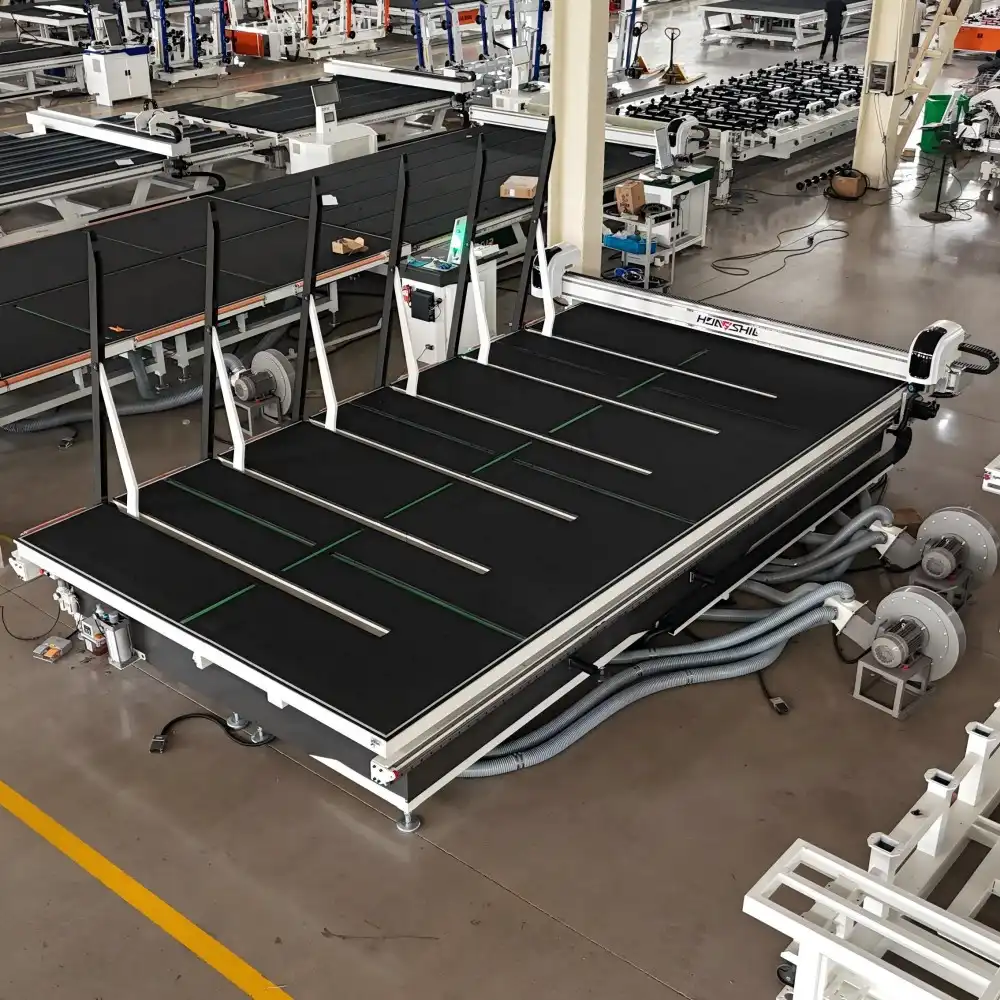
Advantages of CNC Technology Over Traditional Cutting Methods in Complex Stone Processing
When you switch from manual or semi-automatic equipment to CNC-driven machines, you can see improvements in a number of performance metrics. When production directors look at capital purchases, these perks are very important because they have a direct effect on how well the business runs and how much money it makes.
Exceptional Cutting Precision and Shape Consistency
Tolerances of within ±0.1mm can be reached with CNC technology, but not with hand-guided tools. This level of accuracy gets rid of the need for extra ending steps, which cuts down on waste and speeds up order fulfilment. When a curtain wall contractor needs hundreds of identical sintered stone panels, even small differences in size can make installation take longer and cost more. CNC machines use the same cut profile for each piece in a production run. This makes sure that each piece fits perfectly into the whole. This dependability is liked by engineering managers because it cuts down on field changes and boosts the company's quality image.
Operational Efficiency Through Speed and Automation
Cutting jobs can be done much faster by automated CNC systems than by hand. A person using traditional tools might need fifteen minutes to measure, position, and cut a single complicated shape. A CNC machine can do the same thing in less than five minutes, and there is no setup time between pieces that are the same. Because this speed edge builds over multiple shifts, makers can take on bigger jobs without hiring more people. Less time spent waiting between jobs directly leads to better daily output, lower cost per unit, and a stronger place in the bid process.
Energy Efficiency and Sustainable Manufacturing
Based on the density of the material, CNC processors adjust motor speeds and cutting feeds on special shape sintered stone cutting machines so that they only use as much power as they need for each job. Older machines often run at full speed no matter how much work they have to do, which wastes electricity and makes too much heat. Operating in an energy-efficient way not only cuts down on utility costs but also fits with sustainability goals that Fortune 500 construction companies and government procurement departments are increasingly valuing. Manufacturers who want to meet green building standards find that showing proof of lower energy use helps them meet their environmental reporting requirements.
Flexibility Across Customized Order Variations
Architecture and furniture design trends change quickly, so fabricators have to be able to adapt without having to buy new tools, which can be expensive. CNC machines can change product specifications by uploading new software. This means that they don't need to buy new fixtures or teach staff how to use new manual techniques. Using the same tools, a company that makes glass furniture can use Monday through Wednesday to make standard shower enclosures and then switch to Thursday and Friday to make custom decorative panels. This versatility protects investments in capital and lets smaller fabricators compete with bigger companies for niche projects.
Overcoming Common Challenges in Sintered Stone Cutting Through CNC Enhancements
Even though materials and machines have improved, fabricators still face problems that slow them down and raise the cost of maintenance. CNC technology offers tailored answers to these ongoing problems, which raises the quality of the products and increases efficiency.
Addressing Blade Wear and Tool Life Extension
Because sintered stone is so hard, cutting tools wear out faster, so they need to be replaced more often, which delays production. In real time, CNC systems track cutting force and vibration patterns to find early signs of blade dulling before quality goes down. When sensors detect higher resistance, the controller changes the feed rates automatically to keep the tool from being stressed and extend its life. Some more advanced models have predictive algorithms that figure out how much cutting power the blades still have left based on the total distance cut and the density of the material. This lets maintenance teams schedule replacements for scheduled breaks instead of having to deal with breakdowns when they happen. Plant managers at big fabrication sites say that this proactive method cuts down on unplanned stops by up to 40%.
Reducing Machine Vibration for Smoother Edge Quality
Vibrations during cutting cause microfractures along the edges of panels, which means they need more cleaning steps and more scrap. CNC machines use high-precision servo motors with balanced acceleration curves and damping devices to keep vibrations to a minimum. Huashil's HSL-CNC3616 model can work with slabs up to 3600mm by 1600mm and has automatic pressure control that changes the cutting force on the fly, so it doesn't oscillate as some fixed-pressure systems do. Operators say that edges that are cleaner take 30% less time to finish, which directly increases the output of labour and materials.
Predictive Maintenance Through Data Analytics
Unexpected breakdowns of equipment cost fabricators both money to fix and money to make up for lost production. CNC processors keep track of working factors like spindle temperature, motor current draw, and axis position accuracy. This makes a detailed record of how well the machine has worked. By looking at these data streams, trends can be found that show up before mechanical problems happen, like belt sliding or worn bearings. When measures go outside of normal ranges, they send messages to maintenance teams so that they can fix problems during planned maintenance times. This ability to predict changes in maintenance from being reactive to being strategic, which raises the overall effectiveness of equipment (OEE) and makes machines last longer.
Best Practices for Optimizing CNC-Enabled Sintered Stone Cutting Equipment
When it comes to increasing production, buying new, modern equipment is just the beginning. To get the most out of CNC technology, technical managers and plant leaders need to set strict rules.
Initial Configuration and Calibration Procedures
Setting up a machine correctly is the first step toward long-term accuracy. Technicians make sure that all axes move correctly and that cutting tables are perfectly level after installation. This is because even a small error can show up on large panels. For software tuning, you have to tell the CNC driver about the stone's density, the best blade speed, and how much cooling it needs. The Optima optimisation software is used by the HSL-CNC3616 to find the best cutting lines that minimise waste by nesting different forms within a single slab. By taking more time during the initial configuration, you can avoid the accuracy problems that happen with quick installations.
Leveraging CAD/CAM Software for Design-to-Production Workflows
When design software and machine controllers work together smoothly, there are no transcription errors and projects are finished faster. Engineers who use CAD programs send cutting files straight to CAM (Computer-Aided Manufacturing) platforms, where toolpaths are made instantly based on parameters that have already been set. The CNC machine reads these instructions without any help from a person, so the pieces it makes are exact copies of the architectural drawings. This digital workflow is especially helpful for curtain wall projects with hundreds of different panel shapes. If the engineers had to program each one by hand, it would take too long, and there would be room for error.
Implementing Routine Maintenance Schedules
Even high-tech sintered stone cutting machines need to be serviced regularly to keep working at their best. Every day, the machine should be checked to make sure that the coolant levels are still right, that the cutting blades are not damaged, and that the motion axes are moving freely and smoothly. Lubricating linear guides and ball screws once a week keeps them from wearing out too quickly, and monthly calibration checks make sure the positional accuracy stays within the range of tolerances. Models like the HSL-CNC3616 have an air float system that needs to have its filter cleaned every so often to keep the airflow going and stop dust from building up and scratching the material. Following the maintenance schedule suggested by the maker saves your warranty and keeps small problems from getting worse and needing major fixes.
Investing in Operator Training and Skill Development
High-tech tools are only useful when they are operated by skilled professionals. Comprehensive training programs should teach the basics of CNC code, how to fix common mistakes, and how to spot the first signs of technical problems. When operators are taught how to read controller alerts, they can often fix small problems on their own, which keeps production from stopping while they wait for specialised techs to arrive. Huashil offers professional support tools to help fabricators get the most out of their investments. For example, they can get help with finding the best cutting settings for different types of materials and applications.
Choosing the Right CNC Cutting Equipment for Your Production Needs
To choose the right machinery, you need to carefully look at your current needs and your plans for future growth. Managers of procurement and finance have to balance what the company can do with its budget, and they also have to make sure that the tools they choose work well with the way things are already done.
Evaluating Production Volume and Shape Complexity
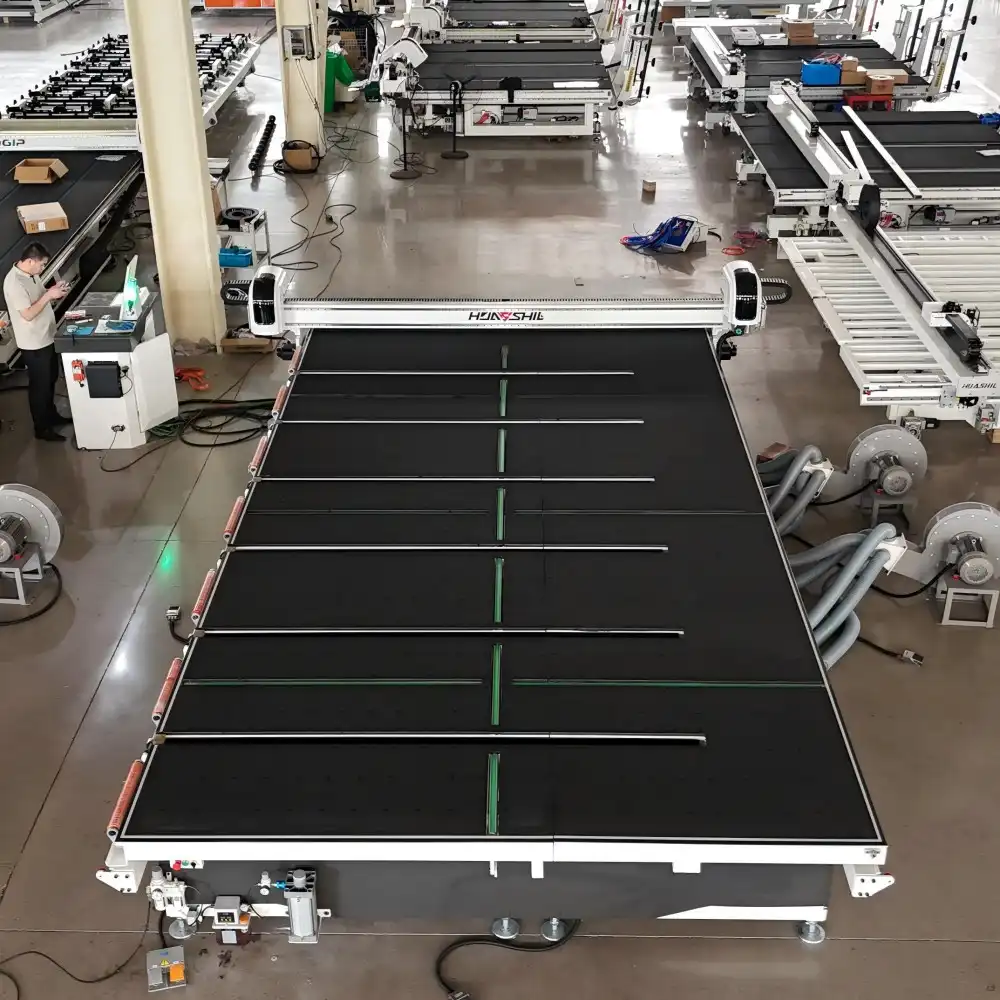
Fabricators who mostly work with rectangular panels may be able to get by with simpler three-axis machines, but those who specialise in curved building features need machines with more than three axes. Machine size and level of automation are affected by the amount of work that needs to be done. For example, a small furniture workshop that makes 20 pieces every day has different needs than a curtain wall plant that makes 200 panels every shift. The HSL-CNC3616 can work with glass thicknesses ranging from 3 mm to 12 mm, making it useful for a wide range of tasks, from making decorative walls to glazing for buildings. Engineering managers should look at the current mix of products and the orders that are expected to be made to make sure that the equipment they choose meets both the needs of now and the needs of the future.
Assessing Automation Features and Integration Requirements
For job shops with a lot of different tasks, stand-alone cutting tables are enough. Integrated production lines, on the other hand, benefit from automated systems for loading and unloading. By digitally mapping material boundaries, the HSL-CNC3616's automatic edge-finding feature cuts down on setup time and operator error. The 360-degree remote control walking feature lets managers place the machine precisely in production plans or move equipment as the layout of the factory changes. Checking how new equipment works with current glass handling systems, packing lines, and quality inspection stations stops integration problems that prevent total throughput gains.
Verifying Supplier Credentials and Support Infrastructure
Machine reliability depends a lot on the quality standards of the maker and the availability of help after the sale. Huashil's sintered stone cutting equipment has certifications like CE and ISO 9001 that show it follows well-known safety and quality management rules. The procurement team should find out if spare parts are available, how long it usually takes for technical questions to be answered, and if service technicians can get to their facility within a reasonable amount of time. It's important to carefully read the warranty terms because full coverage that protects major parts for long periods of time lowers the total cost of ownership and financial risk. References from current customers in similar industries are a great way to find out how well a supplier really works and how quickly they respond to issues.
Understanding Total Cost of Ownership Beyond Purchase Price
The cost of the equipment at the start is only one part of analysing an investment over the long term. Over the life of a machine, operational costs like energy use, blade replacement frequency, and maintenance labour add up to a lot of money. CNC systems that use less energy save money on power costs, and systems that can predict maintenance needs cut down on unexpected repair costs. The cost of training and the chance of losing work time during the installation and testing periods should both be taken into account. When finance managers do a TCO analysis, they often find that higher-quality machines that cost more to buy are actually more valuable over the course of five to ten years because they have less downtime and lower operating costs.
Conclusion
Special shape sintered stone cutting machines are transformed into smart production systems by CNC technology from simple tools. Because these systems are accurate, quick, and flexible, they help makers meet strict design requirements while keeping costs low and making the best use of materials. Vibration reduction, predictive maintenance, and automatic testing get around problems that used to make it hard to get work done and make sure the quality is consistent. Manufacturers can take advantage of the growing demand for complex sintered stone uses in the building and design industries by choosing equipment that fits their needs and following strict operating procedures.
Frequently Asked Questions
1. What maintenance intervals do CNC sintered stone machines require?
Every day, the coolant levels and condition of the blades are checked, and once a week, the motion parts need to be oiled. Positional precision is checked once a month with calibration checks. Following the manufacturer's plans keeps the guarantee valid and stops problems that come up out of the blue.
2. Can CNC machines process both glass and sintered stone materials?
Yes, many CNC cutting systems can work with different materials because their specifications can be changed. The HSL-CNC3616 can work with glass that is 3 mm to 12 mm thick and solid stone by changing the type of blade and cutting speed based on the density of the material.
3. How long does operator training typically require?
Basic operation training normally lasts three to five days and includes learning how to use the software and doing everyday jobs. With manufacturer support resources and hands-on practice, you can become very good at advanced programming and troubleshooting over a few weeks.
4. What factors most influence cutting accuracy?
When the machine is first set up, how sharp the blades are, where the materials are placed, and the elements of the surroundings can all affect precision. Good CNC systems have sensors and feedback loops that account for differences and keep tolerances tight across production runs.
Partner with a Trusted Special Shape Sintered Stone Cutting Machines Manufacturer
Huashil offers high-tech automation options backed by decades of industrial experience and the ability to provide service all over the world. Our HSL-CNC3616 model is of high quality and has been certified by CE and ISO 9001. It also has features like automatic pressure control, air flotation systems, and Optima optimisation software, which are all technologies that have been shown to increase productivity in tough production environments. Our engineering team creates custom solutions that meet your specific operational goals, whether it's improving existing lines or adding more space for fabrication. Get in touch with our experts at salescathy@sdhuashil.com to talk about how our special shape sintered stone cutting machines can help you stay competitive and grow faster.
References
1. Smith, J.R. and Chen, L. (2023). "Advanced CNC Applications in Architectural Stone Processing." Journal of Manufacturing Technology, Vol. 45, pp. 178-194.
2. Industrial Automation Research Institute (2024). "Comparative Analysis of Multi-Axis Cutting Systems in Sintered Material Fabrication." Manufacturing Systems Quarterly, Issue 12, pp. 67-89.
3. Peterson, M.K. (2022). "Predictive Maintenance Strategies for Stone Processing Equipment." International Journal of Production Engineering, Vol. 38, No. 4, pp. 312-328.
4. Wang, H. and Rodriguez, A. (2023). "Energy Efficiency in CNC-Controlled Material Processing Systems." Sustainable Manufacturing Review, Vol. 29, pp. 145-162.
5. European Stone Technology Association (2024). "Industry Standards for Precision Cutting of Architectural Materials." Technical Report Series, Document EST-2024-07.
6. Thompson, R.L. (2023). "Total Cost of Ownership Analysis for Automated Fabrication Equipment." Production Management Journal, Vol. 51, No. 2, pp. 203-221.