




Industrial glass production requires the correct glass cut-out equipment for quality and efficiency. After working with hundreds of plant managers and purchasing teams in architectural glass, curtain wall fabrication, and furniture production, I've seen how the appropriate tools can revolutionize operations. This handbook covers business-to-business procurement by procurement managers, engineers, OEMs, and distributors. It clearly explains pre-purchase considerations. We'll discuss technologies, how to find the best, market comparisons, upkeep, and buying. Decision-makers will have the knowledge they need to make sensible investments to help their organization succeed. For a glass cut outs machine, you must evaluate precision against budget and future production growth. The improper decision causes poor quality, delays, and costly repairs. If you get the correct equipment, it will benefit your company for years. We'll discuss how automated glass cutting systems vary from manual ones, which specifications matter most, and how to assess a seller's dependability before investing a lot of money.
Understanding Glass Cut-Out Machines: Technology and Types
Many industrial enterprises utilize glass-cutting equipment to accurately cut and shape glass items. Controlled scoring, shattering, and edge processing convert raw glass sheets into finished items. From hand-cranked glass cutters that required experienced operators to completely automated equipment that can cut intricate forms without assistance, technology has advanced.
Manual versus Automated Glass Cutting Systems
Skills are needed to move cutting wheels over glass surfaces using manual glass cutting instruments. Initial investment is low, but manual techniques restrict production pace, and outcomes rely on operator expertise. Computer controls in automated cutting instruments ensure preprogrammed cutting lines are followed. A factory that utilizes more than 100 square meters of glass daily benefits from automation since it reduces labor expenses and increases production.
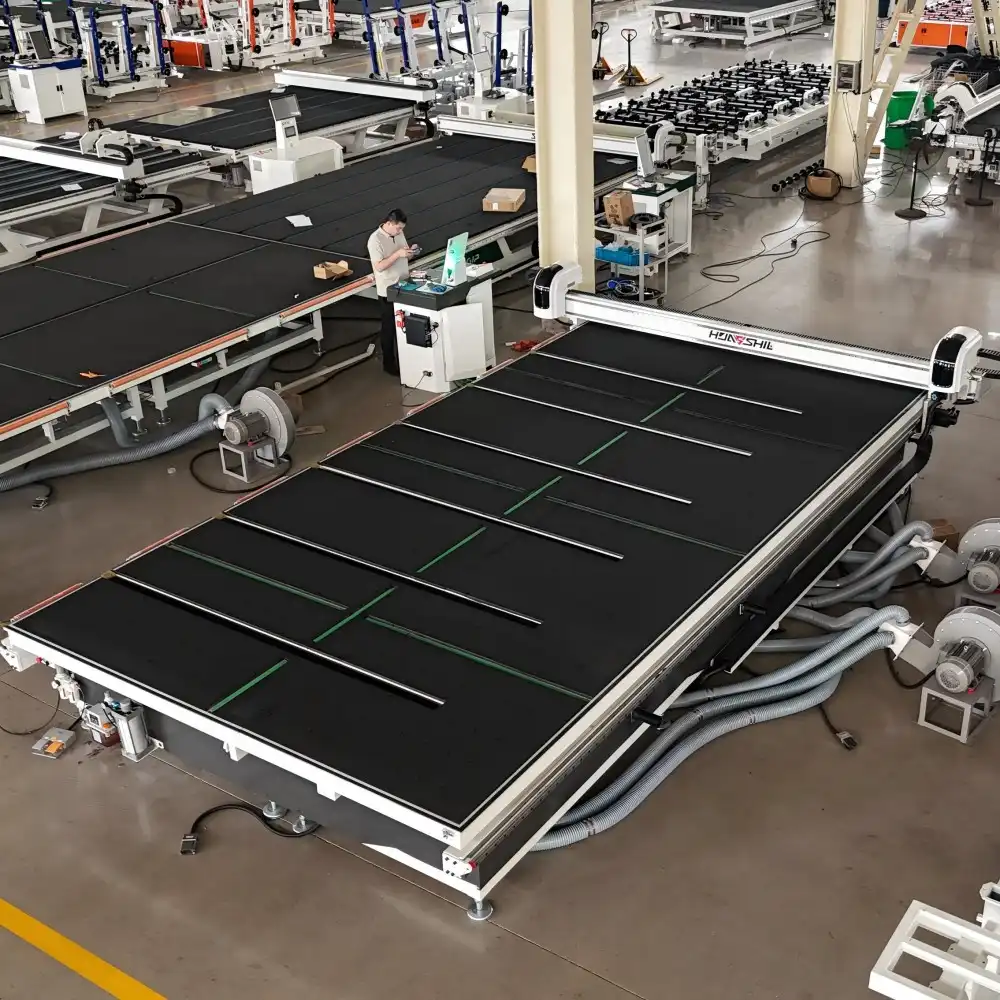
The Shandong Huashil HSL-YTJ2721 automated system has error-free features, including automatic loading, pressure control, and edge detection. With a maximum dimension of 2700 × 2100 mm, these machines can handle 2–19 mm glass. They can meet most construction and furniture glass demands.
CNC Glass Cutters, Waterjet, and Laser Technology
Various cutting procedures are utilized for various manufacturing purposes. Diamond or carbide cutting wheels in CNC glassmakers are controlled by computers. Flat glass may be cut straight and bent gently by them quickly and efficiently. To maximize material utilization, advanced CNC systems employ Optima optimization software to determine cutting plans. This reduces scrap by 15–25% over manual planning.
Waterjet cutting uses abrasive bits and high-pressure water to cut glass without heating it. This method can handle intricate curves and large glass panels, but it requires more resources and is slower and more expensive. Laser cutting provides fine lines and is precise for thin glass, but it generates heat that may shatter heavier materials. Most building glass manufacturers employ CNC cutting since it's versatile and cost-effective.
Specialized Machines for Custom Shapes
Along with rectangular cuts, modern glassmaking instruments must be able to manufacture shower enclosures, ornamental panels, and smart mirror glass. Cutting tables with 360-degree remotes allow operators to create complex geometric designs. Advanced variants incorporate air-floating devices that prevent surface contact during placement. It prevents scratches on high-quality glass. With these talents, furniture and creative glass makers may fulfill custom orders without hiring outside labor.
Key Criteria to Consider When Choosing Your Glass Cut-Out Machine
When purchasing glass-cutting machines, procurement managers must consider performance and operational factors. The decision will affect production, labor, and quality consistency for years following installation. Knowing how requirements affect real-world manufacturing helps align tool strengths with corporate objectives. Working with established automatic glass loading machine manufacturers ensures that the upstream material handling component integrates seamlessly with the cutting system, reducing manual intervention and positioning errors that can compromise throughput and safety.
Precision, Speed, and Footprint Considerations
How accurately pieces are cut affects product quality and processing. Modern automated cutting tools can accurately insert parts within ±0.1mm, reducing the need for lengthy grinding and polishing. Making glass parts for curtain wall systems requires precise measurements to fit together.
Work productivity is directly affected by cutting speed. Cutting cycles on high-performance equipment take 40–60 seconds for standard window sizes, whereas hand cutting takes 2–3 minutes. When considering speed needs, procurement teams should include loading, cutting, and unloading, not simply cutting. Compared to human loading, automated loading devices decrease cycle times by 30–40%.
Machine size impacts plant floor usage. Small designs—less than 4 by 3 meters—can fit in existing workplaces without renovation. Bigger machines can cut more, but they require a floor and structural support.
Energy Efficiency and Operating Cost Analysis
Varying machines need varying quantities of energy. Motors and hydraulic systems that operate efficiently utilize less electricity. When comparing options, plant managers should ask about normal power usage, not just peak rates. At typical US industrial electricity prices, a 15kW machine that operates two shifts a day costs $12k a year.
Business costs go beyond electricity. Maintenance materials, worn parts, and downtime charges are included. Cutting wheels must be changed every 5,000 to 10,000 square meters, depending on glass hardness and cutting method. Automatic pressure control systems apply the proper force for each cut, extending cutting wheel life. Lubrication, calibration, and part inspection should match plant production schedules to minimize downtime.
Safety Compliance and Regulatory Standards
Glass-cutting machines must fulfill occupational safety regulations for worker protection and insurance. CE certification means a product fulfills European safety regulations for machine guarding, emergency stops, and power safety. ISO 9001 accreditation indicates the firm maintains quality control to ensure product consistency. These permits reduce a factory's liability and make it simpler to comply with local laws.
Automatic glass locking and other safety measures prevent material from shifting while cutting, which may damage someone. Glass chips from activities are stored in enclosed cutting facilities. The machine has emergency stop buttons on the exterior that personnel may push immediately if they perceive danger. These elements should be mandated by procurement rules, not optional extras.
Customization and Production Scalability
Flexibility to adjust equipment setup and enhance output preserves equipment investments against market fluctuations. OEM and ODM manufacturers may adapt machines to various glass sizes, link them to conveyor systems, or add quality control monitors. This flexibility helps organizations launch new goods or target new markets.
When considering scalability, consider if tools can be linked to a central control point, upgraded with software, or expanded with modules. A factory that handles 500 square meters per day may handle 2,000 in three years. Modular expansion lets you expand your equipment without buying new ones, which is expensive.
Comparing Popular Glass Cut-Out Machines on the Market
Understanding how various glass cut outs machines stack up against each other helps procurement teams narrow down their choices to machines that meet their working needs and price constraints the best. On the market, you can find everything from simple manual methods to high-tech automatic production lines.
Automatic versus Manual System Trade-offs
Automatic cutting systems provide high-quality outcomes regardless of human competence and require 60–70% less effort than manual techniques. The HSL-YTJ2721 model's automated edge detection eliminates positioning errors that waste material by identifying glass sheets' edges without measuring them. Automatic filling systems with suction cups may securely raise glass sheets without lifting them by hand, reducing workplace hazards and speeding cycle times.
Manual methods are still helpful in low-volume manufacturing situations with less than 50 square meters of area daily or specialist usage that requires changing configuration regularly. Since manual equipment is cheaper, startups and smaller manufacturers choose it. Businesses that only create products in one shift frequently lose these savings within 18 to 24 months due to greater labor expenses and material waste.
Quality homogeneity is arguably the most distinguishing factor. Automated equipment produces the identical cuts across thousands of rounds, ensuring replacement panels fit properly. Small discrepancies might cause major issues on large assignments when doing things by hand.
Technology Comparison for Industrial Applications
CNC-controlled glass cuts are the most frequent means to create building and furniture glass because they are quick, precise, and affordable. These devices can cut straight lines, moderate curves, and typical geometric shapes for most purposes. Production line integration requires high flow, which straight cuts may achieve at 100 meters per minute.
When cutting multilayer glass or materials with heat-sensitive areas, waterjet technology is employed to prevent thermal stress. Running the machine costs three to four times more than CNC cutting due to abrasives and pump maintenance. Because it can only cut 15–20 meters per minute, waterjet cutting is not cost-effective for making building glass.
Laser cutting works best on thin glass (less than 5 mm) for exact edge quality. Automotive glass employs laser cutting for complex windshield shapes that must be accurately sized. CNC cutting provides adequate precision at a reduced total cost of ownership for most curtain wall and furniture manufacturers.
Pricing, Financing, and Warranty Considerations
The price of equipment varies depending on its automation, cutting capacity, and features. Automatic cutting tables for shower doors and small furnishings cost $45,000–$65,000. Mid-range systems like the HSL-YTJ2721 with complete automation, optimisation software, air float, and remote control cost $80,000 to $120,000, depending on customization. High-capacity manufacturing lines with cutting, automated handling, and edge processing cost over $200,000 yet boost large-volume productivity.
Finance options impact tool prices. Leased equipment payments are staggered over three to five years, preserving working capital. Some manufacturers offer installments. You pay 30% down, and the remainder after installation and satisfaction testing. International buyers and sellers utilize letters of credit to safeguard their interests.
Warranty coverage considerably impacts the purchasing price. Standard 12- to 24-month warranties cover manufacturing defects and premature part failure. Longer warranties make early, important production maintenance expenditures more dependable. Buying managers should ensure the warranty includes cutting wheels, motors, and control systems, not only structural elements. Since equipment delays reduce production profits, additional parts and shipment times must be kept in mind.
Procurement and Implementation: From Purchase to Operation
To successfully buy and set up a glass cut outs machine, you need to carefully consider your options for suppliers, have a clear plan for the project, and have professionals do the work. Instead of seeing purchases of tools as one-time events, procurement teams should think of them as projects with clear goals.
Supplier Evaluation and Selection
Getting from well-known makers with a history of success lowers the risk of implementation. Shandong Huashil Automation Technology Co., Ltd. has been selling glass-making equipment around the world for years and is a great example of a company that combines technical know-how with foreign experience. When evaluating possible suppliers, you should look at their client references in your business, check to see how good their technical help is, and make sure they are financially stable so you can get parts in the future.
B2B sourcing tools help you find suppliers at first, but visiting a plant in person gives you a better idea of how they make things and how they check for quality. By watching demos of equipment at trade shows like Glasstech Asia, buying teams can figure out how well machines work and talk to engineering staff about ways to make them more specific. These exchanges show whether providers really understand what you need for production or if they just offer standard goods.
When a business has specific needs, customisation and OEM skills are important. Manufacturers who give technical support can change the size of the machine to fit on the floor, add special sensors to check the quality, or change the control interfaces so that operators can use them in the way they prefer. This allows for the best design of the production line instead of forcing plant layouts to work with the limits of the equipment.
Managing Delivery, Installation, and Integration
Delivery times affect plans for output and must be made clear during the buying process. Standard machines usually ship between 6 and 8 weeks, but special systems need 12 to 16 weeks for planning, manufacturing, and testing. When sending goods internationally, it takes an extra 3–4 weeks for ocean freight and customs clearance. It is recommended that procurement managers include extra time in project schedules in case there are delays. This way, production commitments won't be broken.
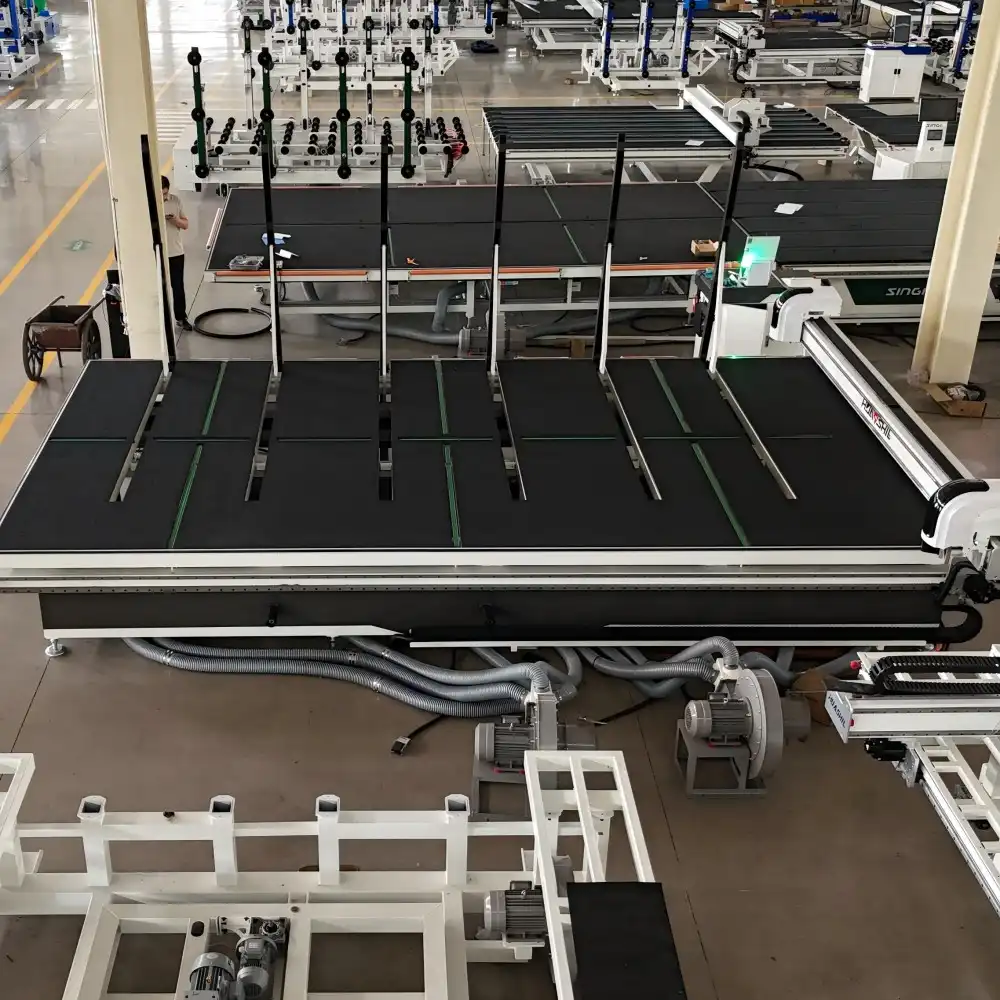
Professional installation services make sure that the equipment works as planned from the very first production run. Technicians who work for manufacturers know about important assembly limits, calibration processes, and integration needs that general installation workers might miss. The extra cost of factory installation services is usually between 5 and 8 percent of the value of the equipment, but it saves money by avoiding expensive repairs and longer activation times.
For new automation systems to work with old ones, equipment suppliers and plant engineering teams need to work together. Standardised methods must be used for machines to talk to upstream loading systems and downstream edge processing equipment. It's easier to integrate the HSL-YTJ2721 model because it works with popular industrial transmission standards. Existing operations don't have to be interrupted when integration functionality is tested during installation instead of during production start.
Conclusion
To choose the right glass cut-out machine, you have to weigh the technical specs against your business's wants and your budget. Automated systems like the HSL-YTJ2721 offer measured advantages in production regularity, labor efficiency, and material usage that support their investment for operations processing significant daily amounts. Long-term production results are directly affected by key selection factors such as accuracy, speed, safety compliance, and the ability to be customised. Thorough source evaluation, skilled installation, and regular upkeep practices ensure equipment provides expected returns throughout its service life. With this information, procurement teams can safely choose and set up equipment to gain long-term economic benefits in markets for glass fabrication.
FAQ
1. What glass thickness range should my cutting machine handle?
Most uses for building and furniture glass have thicknesses between 3 mm and 12 mm. Industrial-grade CNC cutters and other machines that can handle thicknesses between 2 and 19 mm can work with both thin artistic glass and thick structural panels without the need for multiple specialised machines. This adaptability saves your investment as the mix of products changes.
2. How does cutting machine precision affect my production costs?
When it comes to material output and additional processing needs, precision has a direct effect. Accuracy levels of ±0.1mm on machines stop edges from being ground too sharply, stop glass from breaking while being handled, and make sure parts fit correctly when they are put together. Better yield usually gets 3–5% more useful product from each glass sheet, which saves a lot of money over the course of a year's worth of material purchases.
3. Can smaller factories justify automated cutting equipment?
When an operation processes more than 200 square meters of space every week, it usually pays for itself in 24 to 30 months through reduced labour costs and higher yields. The choice is based less on the total volume and more on the need for consistency in production and the supply of labour. No matter how big or small a factory is, automation helps those who are having trouble keeping quality standards with human methods.
Partner with HUASHIL for Advanced Glass Cutting Solutions
HUASHIL offers tried-and-true glass cut outs machines that make it easier for architectural glass makers, curtain wall manufacturers, and furniture manufacturers all over North America to make more with less. Our HSL-YTJ2721 automatic cutting system has CE and ISO 9001 certification and smart features like automatic loading, pressure optimisation, and advanced edge recognition. It is controlled by a precise CNC system. The Optima software makes the best use of the material, and the air float system keeps the top-quality glass surfaces from getting scratched.
As a reputable manufacturer of glass cut-out machines, we offer full help, from the initial consultation to installation and ongoing expert support. Our engineering team can change the way your equipment is set up to fit your production needs, available floor space, and connection needs. To keep your production going easily and reduce downtime, we keep a large stock of spare parts in the United States.
Email our technical sales team at salescathy@sdhuashil.com to talk about how our automatic glass cutting solutions can help your business with its specific problems. We'll set up a thorough technical meeting to go over your production volumes, quality needs, and operating goals in order to suggest the best way to set up your equipment. Ask for specs, price information, and client references to feel confident in your choice to buy.
References
1. Glass Processing Industry Association (2023). "Automation Trends in Architectural Glass Fabrication." Annual Industry Report on Manufacturing Technology Adoption.
2. Chen, W., & Liu, M. (2022). "Comparative Analysis of Glass Cutting Technologies for Industrial Applications." Journal of Manufacturing Systems and Technology, 45(3), 287-301.
3. National Glass Association (2023). "Safety Standards and Best Practices for Glass Processing Equipment." Technical Guidelines for Equipment Procurement and Operation.
4. Robinson, D. (2021). "Total Cost of Ownership Analysis for Glass Cutting Equipment." Industrial Equipment Management Quarterly, 18(2), 45-62.
5. International Association of Glass Processors (2022). "Maintenance Protocols for Automated Glass Cutting Systems." Equipment Longevity and Reliability Study.
6. Martinez, S., & Thompson, R. (2023). "Integration Strategies for Automated Glass Processing Lines." Manufacturing Automation Technology Review, 31(4), 112-128.