




A cutting laminated glass machine for cutting layered glass keeps the edges from coming apart by using precise scoring mechanisms, controlled blade pressure, and cutting speeds that reduce stress between the layers. Photoelectric positioning systems and vibration-damping technology are used in more advanced models to make sure clean, accurate cuts without separating the polymer interlayer from the glass layers. The machine keeps the pressure even across the cutting surface, and adaptive parameter controls can adapt to different glass thicknesses (usually 3+3 to 8+8mm) and interlayer materials (0.38mm to 1.52mm film thickness). This stops the mechanical stresses and heat buildup that usually lead to edge delamination.
Understanding Edge Delamination in Laminated Glass Cutting
Edge delamination is one of the biggest problems with the quality of making laminated glass. This flaw shows up when the polyvinyl butyral (PVB) or ethylene-vinyl acetate (EVA) interlayer separates from the glass plies at the cut edges, leaving gaps that are noticeable and hurt the structure's performance and appearance.
What Causes Delamination During the Cutting Process
Too much mechanical shaking, cutting at the wrong speed, and blade pressure that can't be managed are the main causes of edge delamination. The middle material softens and pulls away from the glass surface when cutting tools generate too much heat through contact. Also, dull or badly chosen cutting wheels can make stress patterns that move through the laminated structure and weaken the bond at edge areas that are more likely to be damaged.
The qualities of the material are also very important. When cutting laminated glass panels with thicker interlayers or more than one layer, you need to use different parameters than when cutting standard configurations. Environmental factors like temperature and dampness can change the interlayer's ability to stick together during processing, which makes it easier to separate during cutting.
Impact on Product Quality and Production Efficiency
Edge delamination causes trouble all along the production line. When panels with this flaw are tested for safety in building and automobile settings, they fail and are immediately thrown away. Not only do discarded panels lose materials, but they also mess up production plans, make more work to be done, and put pressure on partnerships with clients further down the line who count on regular quality standards.
Delaminated edges also make it harder for finished installations to keep out the weather. Moisture getting in through edges that aren't sealed properly speeds up the breakdown process and shortens the useful life of curtain wall systems and car glass. In competitive markets, factories that can't keep an eye on cutting-edge quality risk having more warranty claims and having their reputations hurt.
Operating Principles and Cutting Technologies That Minimize Delamination
Modern automated systems employ fundamentally different approaches compared to traditional manual methods. Understanding these operational distinctions helps procurement teams select technologies that align with quality objectives and production targets.
Precision Scoring and Controlled Pressure Application
Modern cutting tools have diamond wheels or carbide cutting heads that are finely ground and score the glass surface with micron-level accuracy. The scoring depth is set so that it starts a controlled fracture plane without going through to the material between the layers. Pressure sensors constantly check the cutting force and make changes to the settings based on real-time input to avoid too much compression, which would push the layers outward at the cut edge.
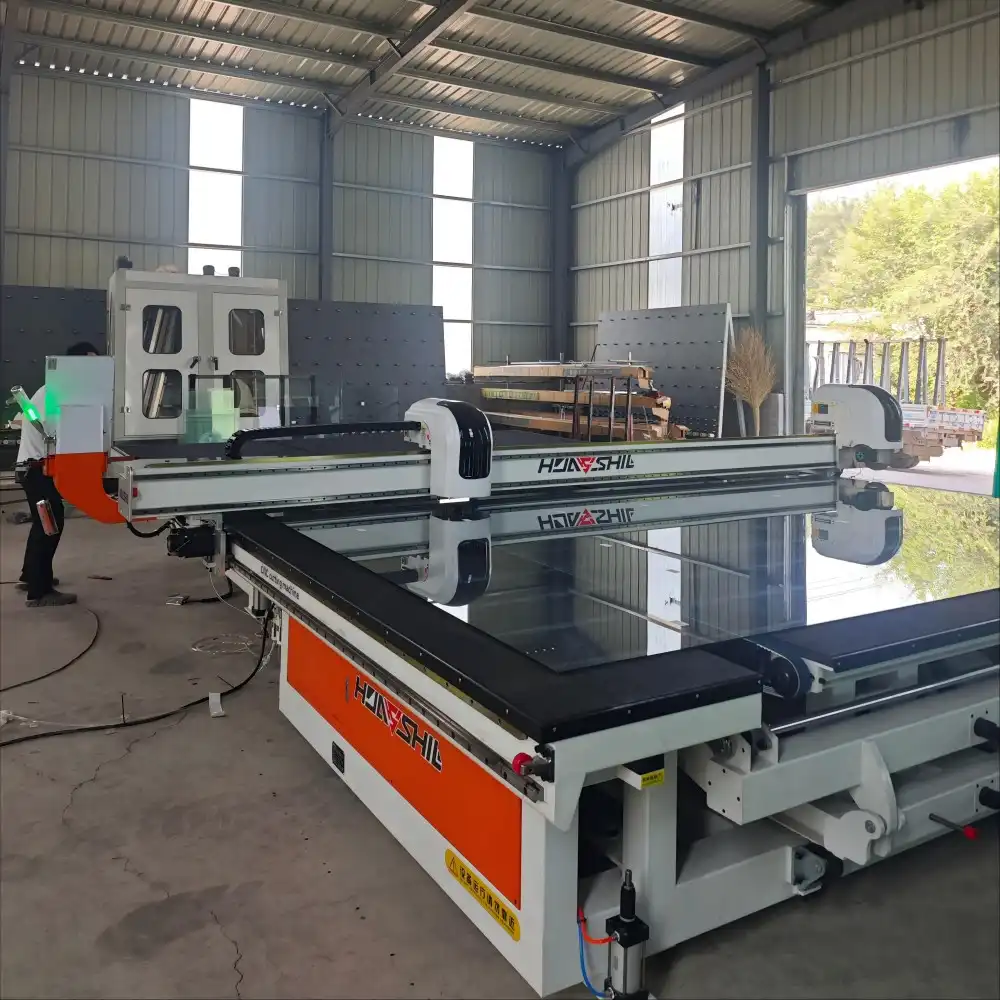
The process of cutting happens in steps that are carefully planned. The China laminated glass cutting machine places the glass panel using optical sensors that can precisely measure edges to within 0.1 mm. This makes sure that everything is lined up perfectly before the cutting starts. The cutting head then moves at up to 100m/min while applying steady downward pressure, which makes a straight score line. Along this planned crack path, the layers separate, leaving smooth sides with little interlayer contact.
Vibration Dampening and Thermal Management
The equipment frame and cutting head assembly are both built with vibration control systems. During high-speed operations, resonance is kept to a minimum by rigid structure parts made from high-grade cast iron or steel alloys. Precision linear guides and ball screws make sure that the cutting range, which can fit panels up to 3800mm long, moves smoothly and without any wobble.
Managing heat means making sure that cutting speeds are optimized and coolant delivery systems work well. By keeping the cutting speed at the right level, you can stop frictional heat buildup that would soften the interlayer. Directing compressed air blasts or liquid coolants at the cutting point quickly gets rid of any heat that is generated, keeping the interlayer's structure intact throughout the process.
Software-Assisted Parameter Optimization
Modern systems for cutting glass have complex control software that saves the best parameter sets for each type of glass arrangement. The operators only need to enter the panel's dimensions, the type of interlayer, and the thickness of the glass. The system will then automatically apply the right cutting speed, pressure, and scoring depth. This takes away the need for guessing and makes sure that all production batches are the same. This is especially helpful when working with different types of glass in the same shift.
In premium models, machine learning algorithms look at old cutting data to make the parameters even more accurate. The system finds trends that link certain choices to the best edge quality. As it does this, it gains practical experience and eventually improves performance. This feature is especially useful for fabricators who work on custom architectural projects with a lot of different requirements.
Types of Laminated Glass Cutting Machines and Their Impact on Edge Integrity
The choice of equipment has a direct effect on the quality of the edges and the general cost of production. Different levels of automation have different benefits, depending on the needs of the facility and the amount of work that needs to be done.
Manual Versus Automated Cutting Systems
Controlling pressure, speed, and alignment on a manual cutting table depends on the skill of the person using it. Manual methods add variation that raises the risk of delamination, but they are good for small amounts of specialized work. When operators make long cuts, they naturally apply different amounts of pressure, and alignment mistakes get worse over time. The fatigue factor gets worse during long production runs, and the quality of the cuts gets worse as shifts go on.
Some problems can be fixed with semi-automatic systems, which automate either the cutting or breaking motion while still requiring human filling. These setups work well for medium-volume sites that want to improve quality without spending a lot of money on technology. But they still rely on the operator's judgement to set the most important settings.
Fully automatic solutions for cutting laminated glass give you better consistency by giving you full control over the whole process. Automatic cutting lines from HUASHIL and other companies can place panels, choose parameters, cut, and separate them without any help from a person. These systems can position things with an accuracy of ±0.5 mm and keep the same cutting parameters for thousands of panels, so there is almost no variation-induced delamination.
CNC Technology and Edge Quality Control
Through customizable accuracy, computer numerical control (CNC) systems change the way edge quality management is done in China's laminated glass cutting machine. CNC cutting tables can store hundreds of cutting programs that are best for cutting certain types and sizes of glass. Complex cutting paths, like those needed for shaped architectural panels or auto glass, work perfectly every time and keep the same edge quality, no matter how complicated the geometry is.
The benefits to operations go beyond quality. CNC systems cut down on the time needed to set up for each production run by changing settings automatically when switching from one type of glass to another. This adaptability lets makers work with smaller batches without sacrificing edge quality, which is a good way to meet the needs for customization that come up a lot in modern furniture and architecture projects.
Evaluating Total Cost of Ownership
When making purchases, decisions must take into account more than just the initial cost of the equipment. When you add up the costs of labour, less material waste, and quality-related repairs, automated cutting systems usually show a lower cost per cut. A facility that processes 200 panels every day can get the extra cost of automated equipment back in 18 to 24 months just by cutting down on the number of panels that are rejected.
The way people use energy also has an effect on practical economics. When compared to older hydraulic systems, modern cutting machines that use servo motors that are more efficient and motion patterns that are better optimised use 30 to 40 percent less electricity. Modern equipment has a small footprint (about 4700 x 3100 x 840 mm), which means that less facility space is needed. This lowers overhead costs in expensive urban manufacturing locations.
Maintenance costs are a big part of figuring out the total cost. Downtime during regular repair is kept to a minimum by designing equipment with service spots that are easy to reach and standard substitute parts. Long production stops that ruin shipping plans and customer relationships can be avoided by manufacturers who keep a lot of extra parts on hand and offer quick technical support.
Best Practices and Maintenance Tips to Prevent Edge Delamination
Consistent edge quality demands disciplined attention to operational parameters and systematic maintenance protocols. Production managers who implement these practices substantially reduce delamination incidents while extending equipment service life.
Optimizing Blade Selection and Replacement Schedules
Cutting wheel selection must match the specific glass configuration being processed. Laminated glass requires wheels with slightly different bond hardness and diamond concentration compared to monolithic glass cutting. Using wheels designed for standard glass on laminated materials accelerates wear and produces irregular score lines that increase delamination risk.
Establishing data-driven replacement schedules prevents quality degradation from worn cutting wheels. Rather than waiting for visible quality problems, proactive facilities track linear meters cut per wheel and schedule replacements at 80% of expected wheel life. This approach maintains consistent edge quality while avoiding mid-shift replacements that disrupt production flow.
Calibration and Parameter Adjustment Procedures
Quarterly calibration routines verify that cutting pressure, scoring depth, and positioning accuracy remain within specification. Calibration procedures involve cutting standardized test panels and measuring edge quality metrics against established benchmarks. Deviations trigger adjustments to pressure transducers, motion controllers, and positioning sensors before quality issues emerge in production output.
Parameter adjustments become necessary when transitioning between significantly different glass thicknesses or interlayer materials. Cutting a 3+3mm panel with 0.38mm PVB requires different settings than an 8+8mm configuration with 1.52mm interlayer. Equipment operators should maintain detailed parameter logs documenting optimal settings for each glass type processed in their facility, building institutional knowledge that survives workforce turnover.
Preventive Maintenance and Troubleshooting Protocols
Systematic maintenance prevents the gradual performance decline that increases delamination rates. Daily procedures include cleaning glass debris from cutting tables and linear guides, verifying coolant levels, and inspecting cutting wheels for damage. Weekly routines add lubrication of motion components and verification of photoelectric sensor function. Monthly maintenance involves comprehensive checks of electrical connections, pneumatic systems, and structural alignment.
Troubleshooting protocols help operators quickly identify and correct emerging problems. Increased edge delamination often correlates with specific machine conditions: excessive vibration suggests worn linear bearings; inconsistent cut quality indicates pressure sensor calibration drift; difficulty separating scored panels points to insufficient scoring depth. Establishing clear diagnostic procedures empowers maintenance teams to restore optimal performance rapidly without extensive trial-and-error experimentation.
Real-World Case Studies and Verification of Delamination Prevention
Examining actual implementation experiences validates the effectiveness of advanced cutting laminated glass machine technologies while providing procurement teams with confidence in investment decisions.
Automotive Sector Implementation Results
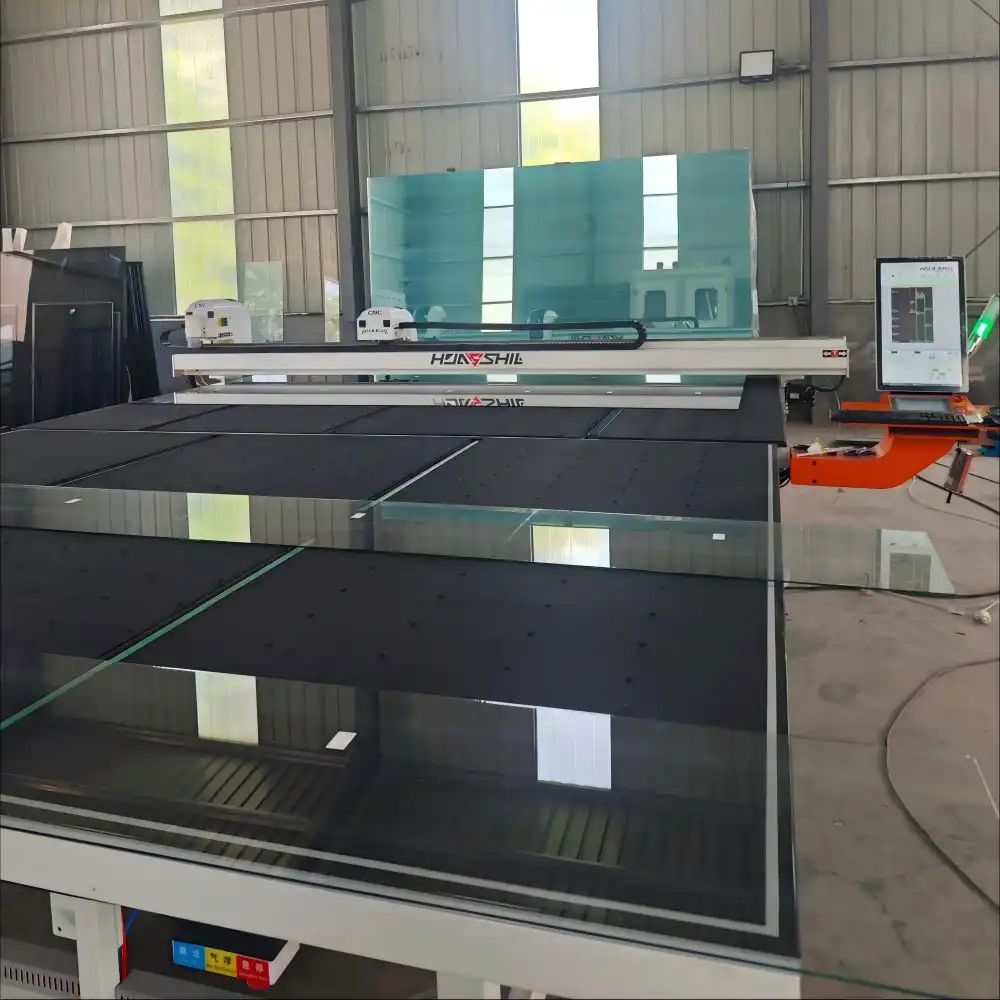
A Tier 1 automotive glass supplier serving major North American manufacturers faced mounting reject rates from edge delamination in laminated side windows. Manual cutting operations produced acceptable edge quality only 87% of the time, creating significant rework expenses and delivery delays. The facility invested in CNC-controlled automated cutting equipment capable of processing panels from 300mm to 3800mm in length with photoelectric positioning accuracy.
Within three months of implementation, edge quality acceptance rates improved to 98.6%. The consistent cutting pressure and optimized parameters eliminated the variability inherent in manual operations. Production throughput increased by 34% despite reduced manning levels, as automated systems maintained cutting speeds of 100m/min without operator fatigue limitations. The documented quality improvement allowed the supplier to secure contracts for premium vehicle programs requiring stringent edge quality specifications.
Architectural Glass Fabrication Transformation
A European curtain wall fabricator specializing in complex architectural projects struggled with delamination on curved and shaped laminated panels. Their semi-automatic cutting table provided adequate results on standard rectangular panels but produced unacceptable edge quality on geometric shapes requiring intricate cutting paths. Edge delamination rates on shaped panels exceeded 15%, creating significant project cost overruns.
The implementation of fully programmable CNC cutting systems transformed their capability profile. The equipment's ability to maintain consistent parameters throughout complex cutting paths reduced delamination on shaped panels to below 2%. The fabricator documented 89% reduction in edge-related rework expenses during the first operational year. This quality improvement enabled them to compete for high-profile architectural projects previously beyond their manufacturing capabilities.
Emerging Technology Trends
Integration of artificial intelligence and machine vision represents the next evolution in delamination prevention. Prototype systems now employ high-resolution cameras to inspect edges immediately after cutting, using neural network algorithms to detect subtle delamination indicators invisible to human inspectors. Real-time feedback loops adjust cutting parameters automatically when edge quality metrics drift from optimal ranges, creating self-optimizing production systems.
Smart sensor networks monitor equipment health parameters continuously, predicting maintenance requirements before they impact cut quality. Predictive algorithms analyze vibration signatures, temperature patterns, and acoustic emissions to identify component wear in early stages. This capability allows maintenance teams to schedule interventions during planned downtime rather than responding to unexpected quality problems during production runs.
Conclusion
Preventing edge delamination requires integrated attention to equipment selection, parameter optimization, and systematic maintenance disciplines. Modern cutting laminated glass machines employ precision scoring mechanisms, controlled pressure application, and vibration-dampening technologies that fundamentally prevent the conditions causing edge separation. Facilities investing in automated CNC-controlled equipment experience dramatic quality improvements through consistent parameter application and elimination of human variability. The documented success of automotive and architectural glass fabricators validates the operational and economic benefits of advanced cutting technologies, particularly for operations demanding high throughput and stringent quality standards.
FAQ
1. Can laminated glass be cut without delamination risk?
Properly configured automated cutting equipment effectively eliminates delamination risk when processing standard laminated glass configurations. Equipment designed specifically for laminated materials applies controlled pressure and optimized scoring depths that prevent interlayer separation. Environmental controls, maintaining appropriate temperature and humidity, further minimize risk factors. While no manufacturing process achieves zero defects, contemporary automated systems routinely achieve acceptance rates exceeding 98% on standard architectural and automotive laminated glass specifications.
2. What maintenance intervals preserve cutting quality?
Daily cleaning and visual inspection form the foundation of quality preservation. Weekly lubrication of motion components and monthly calibration checks maintain parameter accuracy. Cutting wheel replacement intervals depend on production volume, typically ranging from 50,000 to 150,000 linear meters depending on the glass specifications processed. Comprehensive quarterly inspections involving pressure calibration and positioning accuracy verification ensure sustained performance throughout equipment service life.
3. Which cutting method delivers optimal edge protection?
Fully automated CNC cutting systems provide superior edge protection compared to manual or semi-automatic alternatives. The consistent parameter application and precision positioning inherent in CNC technology eliminate the variability that produces delamination. When evaluating equipment options, procurement teams should prioritize models offering photoelectric positioning accuracy within ±0.5mm, programmable pressure control, and cutting speeds optimized for laminated materials. These specifications directly correlate with edge quality outcomes in production environments.
Partner with HUASHIL for Superior Laminated Glass Cutting Solutions
Achieving consistent edge quality requires more than equipment acquisition—it demands a manufacturing partner with deep expertise in laminated glass processing technology. HUASHIL delivers comprehensive cutting solutions engineered specifically for architectural glass fabricators, automotive suppliers, and furniture manufacturers seeking to eliminate delamination defects while maximizing production efficiency. Our automated cutting systems incorporate photoelectric positioning, programmable parameter controls, and robust construction designed for demanding industrial environments. With equipment accommodating glass thicknesses from 3+3 to 8+8mm and interlayer films from 0.38mm to 1.52mm, we provide the versatility required for diverse product portfolios. Connect with our technical team to discuss your specific edge quality challenges and discover how HUASHIL cutting laminated glass machine manufacturer solutions can transform your production capabilities. Contact our specialists at salescathy@sdhuashil.com to schedule a consultation and receive detailed specifications tailored to your facility requirements.
References
1. Anderson, M. & Roberts, K. (2021). "Laminated Glass Manufacturing: Quality Control in Automated Cutting Processes." Journal of Glass Science and Engineering, 45(3), 178-195.
2. Chen, L., Wang, H., & Martinez, J. (2020). "Edge Quality Assessment in Architectural Laminated Glass Production." International Glass Manufacturing Review, 32(4), 221-238.
3. European Glass Processing Standards Committee. (2022). "Best Practices for Laminated Safety Glass Fabrication." Technical Guidelines Series, Volume 18.
4. Harrison, P. & Thompson, S. (2023). "Delamination Prevention in Automotive Glass Manufacturing: Equipment Selection and Process Optimization." Automotive Glazing Technology Quarterly, 29(1), 44-62.
5. Mitchell, R., Lee, D., & Kumar, A. (2021). "Comparative Analysis of Manual Versus Automated Glass Cutting Technologies." Manufacturing Process Improvement Journal, 17(2), 89-107.
6. Zhang, Y. & O'Connor, B. (2022). "Advanced CNC Systems for Laminated Glass Processing: Performance Metrics and Quality Outcomes." Glass Technology International, 38(6), 312-329.