




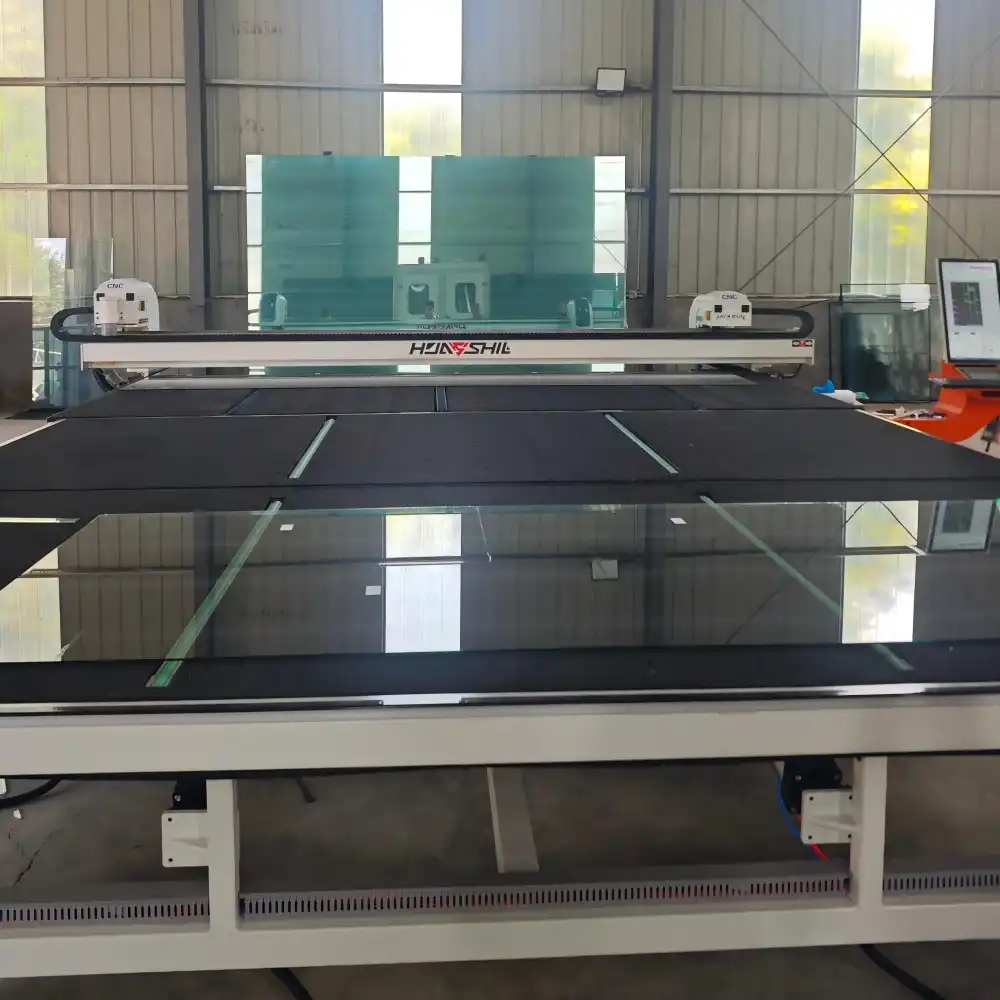
A glass cut-out machine uses advanced CNC automation, precise sensors, and better software integration to make production more accurate. These tools get rid of mistakes made when measuring by hand, make sure that standards for dimensions are always the same, and change cutting settings in real time. Modern glass cutting equipment uses automatic edge finding, pressure control systems, and air flotation technology to cut glass accurately over and over again, even when the glass is of different thicknesses and sizes. This cuts down on waste a lot while still meeting the high-quality standards needed by the architectural, automotive, and furniture manufacturing industries.
Introduction
Every step of industrial glass handling needs to be done with great accuracy. Whether you're making architectural panels, car windscreens, or decorative furniture parts, how accurately you cut glass has a direct effect on the quality of the finished product, how much material you use, and how long the project takes. Working with makers around the world for the past ten years has shown us a constant problem: old-fashioned cutting methods can't keep up with the growing need for tighter standards and faster response times.
To deal with these issues, more advanced automated cutting systems now have mechanisms that are controlled by a computer, sensors that give real-time feedback, and optimisation software. This change in technology has changed how companies make sure their products are accurate. They are now using uniform, data-driven methods instead of relying on the skill of the operators. Knowing about these improvements helps plant managers, engineering teams, and purchasing specialists make smart choices about what equipment to buy, which has a direct effect on how well the business runs and how well it competes.
Understanding Production Accuracy Challenges in Glass Cutting
Manual Operation Variabilities
Manual glass cutting relies heavily on operator expertise, creating inconsistencies across shifts and production runs. Even experienced technicians face accuracy limitations when marking complex patterns or maintaining steady cutting pressure throughout long production days. Fatigue, measurement interpretation differences, and tool handling variations introduce dimensional deviations that compound across batch production.
Material Handling Complications
Glass sheets present unique handling challenges due to their fragility and weight. During transfer between workstations, micro-movements cause alignment shifts that affect subsequent cutting precision. Thermal expansion from ambient temperature fluctuations adds another accuracy variable, particularly when processing large architectural panels exceeding 2500mm in dimension.
Equipment Calibration Drift
Conventional cutting tables experience gradual calibration drift from repeated thermal cycling, mechanical wear, and vibration exposure in the glass cut-out machine. Without continuous monitoring systems, these deviations accumulate unnoticed until quality inspections reveal dimension discrepancies. Recalibration downtime then disrupts production schedules, creating cascading delays across project timelines.
Key Technologies Behind Improved Accuracy in Glass Cut-Out Machines
CNC Automation and Pattern Optimization
Computer Numerical Control systems turn computer plans into precise mechanical moves that are used in modern glass cutting platforms. The advanced machines usually come with Optima optimisation software that looks at nesting patterns to get the most material out of them while keeping the cutting line accurate. This software figures out the best paths for the tools, taking into account that glass thickness can range from 2 mm to 19 mm, and it changes the cutting speeds to avoid stress cracks that damage the quality of the edges.
Before making a cut, the system automatically finds the edges of the glass sheet by comparing its current location to coordinates that have already been programmed. This compensation gets rid of the main reason why mistakes happen when set up by hand. During operation, the CNC controller keeps the cutting head's position within ±0.1mm of accuracy, which is a level of accuracy that can't be reached by hand, no matter how skilled the operator is.
Sensor-Based Feedback Systems
Modern automated cutting systems are different from older equipment because they can be monitored in real time. Optical sensors constantly track the position of the cutting head and send information back to control systems, which make small adjustments right away. Automatic pressure control systems change the downforce based on the type and thickness of the glass. This stops both unfinished scoring and too much stress, which can cause cracks to form without being managed.
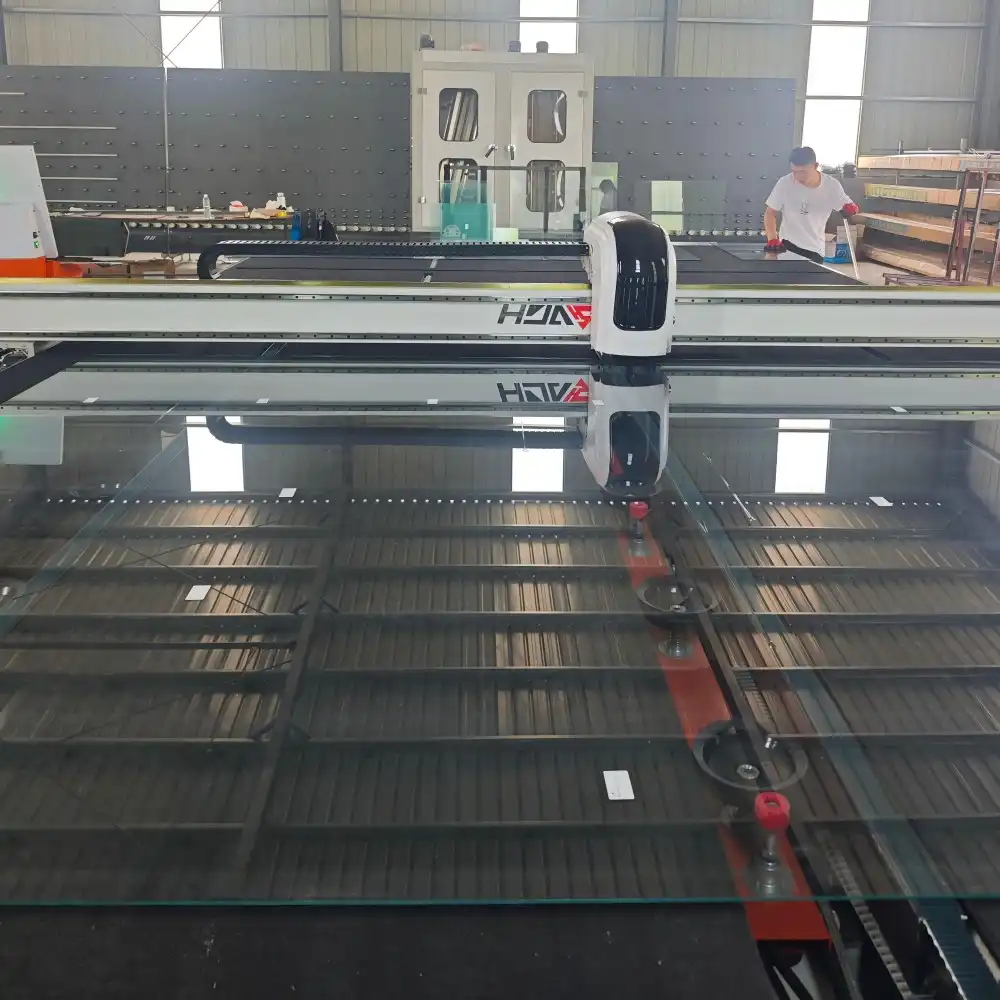
The air float system is another device that improves accuracy. This system stops positioning mistakes caused by friction while material is being fed and rotated by placing a thin air cushion under the glass sheets. This frictionless transport keeps the sheet straight during multi-step cutting sequences, which is especially important when working with complicated shapes that need more than one tool pass.
Remote Control and Monitoring Capabilities
Modern machines have 360-degree remote control walking features that let workers keep an eye on multiple cutting spots at once without having to move around. This feature limits the number of people who can be near busy cutting zones, which lowers vibrations that can affect accuracy. Remote monitoring also lets you respond right away to alignment or tool condition alerts, which stops whole batches of mistakes from happening again.
Practical Benefits of Glass Cut-Out Machines for Production Accuracy
Dimensional Consistency Across Production Runs
Automatic cutting systems are great for making things the same way over and over again. We recently talked to a curtain wall fabricator who said that after getting CNC-controlled equipment, their tolerance variance went from ±2.5mm to ±0.3mm. This improvement got rid of the need for expensive field changes during installation, where every millimetre of difference adds up to more work hours and delays the end of the project.
The uniformity goes beyond making things in a single run. Machines that are set with standard cutting parameters can make identical parts months apart, which is important for building projects that are done in stages or for making new parts. This long-term accuracy and reliability help manufacturers use lean inventory practices because they can trust just-in-time production and don't need to keep too much safety stock to account for changes in quality.
Scrap Rate Reduction and Material Optimization
Material costs are directly affected by how precisely you cut with the glass cut-out machine. Industry data shows that in building glass uses, cutting accuracy that is improved from ±1.5mm to ±0.5mm usually cuts down on scrap rates by 18–25%. For facilities that work with 500 square meters of space every day, this means big savings every year, and the investment in automation equipment is usually paid back in 24 to 36 months.
In addition to reducing waste, optimisation software uses smart nesting algorithms to get the most out of each sheet. The software sets up the cutting patterns so that edge trim losses are kept to a minimum while the accuracy standards for each part are met. This computer-based method always works better than planning layouts by hand, getting more value from every sheet of glass bought.
Throughput Enhancement Through Automation
When cutting platforms are connected to automated loading systems, they get rid of the bottlenecks that come with moving materials by hand. It only takes seconds for suction cup machines to exactly place sheets on cutting tables, while it would take several minutes for someone to check the alignment by hand. This speed advantage adds up over hundreds of cycles per day, which increases the amount that can be made by 30 to 40 per cent without having to build more space.
The time it takes to switch jobs also goes down a lot. Setting up takes less than 10 minutes instead of 45 minutes when you recall stored cutting programs and automatic tool calibration routines. This adaptability lets makers make smaller batches at a lower cost, so they can handle a wide range of order types without losing efficiency.
Choosing the Right Glass Cut-Out Machine to Maximize Accuracy
Capacity Alignment with Production Requirements
Before choosing equipment, it's important to be honest about how much you need to make and how accurate you need to be. The HSL-YTJ2721 model is good for medium to large architectural glass makers and curtain wall installers who work with normal building panel sizes because it can handle glass sheets up to 2700x2100mm and widths from 2mm to 19mm. Based on the sizes of their typical parts, smaller furniture makers may put different dimensional capacities higher on their list of priorities.
In addition to the machine's physical ability, you should also compare its accuracy specs to your strictest tolerance requirements. Instead of theoretical specs, ask for thorough technical paperwork that shows real performance data that has been tested. Reliable suppliers give third-party verification reports that show the accuracy stays the same over long production runs and different operating conditions.
Certification and Compliance Considerations
When equipment has CE and ISO9001 certifications, it means that it meets safety and quality management standards that are known all over the world. These licenses are especially important for companies that make goods for controlled businesses or that ship produced goods. When you're evaluating suppliers, make sure that the certifications they have cover the exact model configuration you want to buy. Some suppliers only have certifications for basic versions.
Compliance is more than just getting certified; it also includes ongoing support for documentation. Machines that meet recognised standards come with detailed technical files, safety operation instructions, and upkeep plans that meet the needs of regulatory audits. This paperwork is very important for showing that you did your part during safety checks or audits of the quality system.
Supplier Evaluation and After-Sales Support
How you work with your equipment supplier has a big effect on how accurate your work will be in the long run. Give more weight to makers that offer open lines of contact, thorough professional training programs, and clear promises about when extra parts will be available. From what we've seen, the quality of after-sales support varies a lot between suppliers. This has a direct effect on how well the equipment works and how long it lasts.
Ask current buyers with similar performance profiles for examples. Talking to plant managers who use the equipment directly gives you useful information about how stable the calibration is, how quickly technical support responds, and how to update the software that isn't in the marketing materials. This investment in due research keeps expensive gaps between what the tools can do and what the output needs are.
Maintenance and Safety Tips to Sustain Production Accuracy
Scheduled Calibration and Preventive Maintenance
To keep accuracy, you need to follow strict upkeep procedures for the glass cut-out machine. Set up weekly checks to see the status of critical alignment references, cutting head perpendicularity, and sensor calibration. Measurement results should be recorded every month during thorough checks. This will create trend data that can predict component wear before it causes accuracy to drop.
Preventive repair keeps accuracy while extending the life of tools. Regular lubrication, inspection of bearings, and cleaning of linear guides stop the accuracy from slowly drifting due to mechanical wear. Keeping records of all maintenance tasks helps with finding solutions when accuracy problems arise, letting techs connect changes in performance with specific service times or part replacements.
Operator Training and Safety Integration
Operators who have been trained well can spot the first signs of accuracy problems. Training programs should teach the right way to load materials, use software, and figure out what system error messages mean. Knowing how machine parameters affect the results of cutting lets operators make the right changes in real time, as long as they stay within the limits that have been set.
Modern machines have safety features that protect both people and the machines themselves. Working places are safe when they have emergency stop features, safety interlocks that stop entry during operation, and the right personal protective equipment standards. These safety measures help accuracy in a roundabout way by keeping things stable and preventing accidents that damage equipment.
Proactive Troubleshooting Approaches
Creating organised troubleshooting steps speeds up the process of fixing problems. When problems with accuracy show up, organised testing procedures quickly find the root causes. Most accuracy issues are caused by certain subsystems. For example, alignment errors usually mean that a mechanical part is broken, while pattern distortions usually mean that there are issues with how the software is set up or with the data transfer.
Keeping in touch with equipment makers gives you access to expert technology help when you're trying to figure out what's wrong. Factory technicians can use remote diagnostics to look at data about how machines are performing, find problems, and show local maintenance teams how to fix them. This collaborative approach cuts down on downtime and keeps accuracy standards high over the life of the equipment.
Conclusion
Production accuracy improvements from advanced glass cutting automation deliver measurable competitive advantages. By integrating CNC controls, real-time sensors, optimisation software, and automated material handling, modern equipment eliminates traditional accuracy limitations rooted in manual processes. These technological advances translate directly to reduced scrap, enhanced throughput, and consistent quality that meets demanding architectural and automotive specifications. Investment in precision cutting platforms represents strategic positioning for manufacturers committed to operational excellence and market differentiation in competitive global procurement environments.
FAQ
1. How often should glass cutting machines be calibrated?
Calibration frequency depends on production intensity and accuracy requirements. High-volume operations processing 400+ sheets daily should perform basic alignment verification weekly, with comprehensive calibration monthly. Lower-volume facilities might extend intervals to bi-monthly comprehensive checks while maintaining weekly quick verifications. Environmental factors like temperature fluctuations or facility vibration may necessitate more frequent calibration. Establishing baseline performance metrics during initial installation helps determine optimal calibration schedules specific to your operational conditions.
2. Can automated cutting systems benefit small production facilities?
Automated equipment increasingly suits small-to-medium operations through scalable configurations and improved ROI profiles. Manufacturers processing 50-150 sheets daily often achieve payback within three years through combined labour savings, scrap reduction, and throughput gains. The key lies in selecting appropriately sized equipment matching actual production volumes rather than oversized capacity that underutilises automation capabilities. Single-head systems with essential automation features provide entry points for smaller fabricators seeking accuracy improvements without full production line investment.
3. What indicates declining accuracy requiring service attention?
Several symptoms signal emerging accuracy problems. Increased edge chipping rates, dimensional measurements drifting beyond tolerance consistently in one direction, or pattern distortion across large sheets all suggest calibration drift or mechanical wear. Unusual noise during cutting head movement or inconsistent pressure readings from automatic control systems warrant immediate investigation. Monitoring quality control rejection rates provides early statistical evidence of accuracy degradation before individual component failures become obvious.
Partner with HUASHIL for Precision Glass Cutting Solutions
HUASHIL specializes in advanced automation technology for glass processing industries, bringing decades of manufacturing expertise to global markets. Our HSL-YTJ2721 glass cut outs machine delivers exceptional accuracy through integrated Optima software, automatic loading systems, and precision pressure controls—all backed by CE and ISO9001 certifications. The air flotation conveying system and 360-degree remote operation capabilities represent our commitment to combining accuracy with operational efficiency.
Procurement managers and engineering teams gain comprehensive technical support throughout equipment evaluation, installation, and operational phases. We provide detailed specification documentation, ROI analysis tools, and direct access to our applications engineering team to ensure equipment configurations match your production requirements precisely. As an established glass cut-out machine manufacturer, we maintain extensive spare parts inventory and global technical support networks that minimise downtime risks.
Contact our team at salescathy@sdhuashil.com to discuss your specific accuracy requirements and production goals. We offer factory demonstrations, customised technical presentations, and consultation services that help you evaluate automation investments confidently.
References
1. Anderson, M. & Chen, L. (2021). "Precision Manufacturing in Glass Processing: Technology and Applications." Industrial Automation Review, Volume 34, pp. 112-128.
2. European Committee for Standardization (2020). "Glass Processing Equipment - Safety and Performance Standards." CEN Technical Report TR 15549.
3. Glass Manufacturing Industry Council (2022). "Automation Impact Study: Productivity and Quality Metrics in North American Glass Fabrication." GMIC Annual Industry Report.
4. Roberts, J. (2023). "CNC Control Systems for Fragile Material Processing: Accuracy and Repeatability Analysis." Journal of Manufacturing Technology, Volume 45(3), pp. 67-82.
5. Thompson, K. & Wu, H. (2022). "Material Optimization Through Advanced Nesting Algorithms in Glass Cutting Operations." International Journal of Production Research, Volume 60(8), pp. 2445-2461.
6. United States Glass Association (2021). "Best Practices Guide for Automated Glass Cutting Equipment Maintenance and Calibration." USGA Technical Manual Series, Publication TM-2021-07.