




Industrial manufacturing has always been careful with glass. Pressurized air beneath the glass sheet of an air flotation table eliminates direct contact with hard surfaces, greatly reducing glass scratches. This invisible protective air layer prevents friction-induced damage and allows smooth, controlled workspace movement. This frictionless handling technology maintains surface integrity throughout processing, unlike roller methods that produce contact points.
Understanding the Problem: Why Do Glass Scratches Occur During Handling?
In our years of working with architectural glass and curtain wall panels, surface damage has caused several manufacturing delays. Glass scratches are caused by mechanical interactions during material handling.
Direct Contact Creates Damage Points
Traditional handling methods use rollers, conveyor belts, or metal supports to focus pressure on glass. Using roller systems for a 3660×2440mm panel results in unequal weight distribution. Contact points provide localized tension, and minute particles between the glass and support surface behave as sandpaper during movement. Larger glass panels have more deflection and pressure fluctuation across support points.
Friction and Vibration Amplify Surface Damage
Friction from glass on traditional supports wears away surface molecules. Silica dust, metal particles, and packing debris collect on handling surfaces in production environments. Even mild glass sliding on contaminated supports causes micro-abrasions. Machinery vibrations cause the glass to move progressively and scrape against support structures.
Environmental Factors Compound Quality Issues
Temperature changes cause glass and metal supports to expand and compress, changing contact dynamics throughout production shifts. Dust adheres to surfaces depending on humidity, whereas static electricity draws impurities to clean glass. Damage patterns often occur at workstations with outdated handling equipment, while air float tables resolve these contact-related quality issues. Understanding these core issues explains why current glass manufacturing requires advanced handling techniques to preserve quality.
How Air Flotation Technology Works to Protect Glass Surfaces?
Prevention of scratches involves avoiding glass-hard surface contact. This technique changes sensitive material handling in production.
Creating the Air Cushion Mechanism
Air flotation systems use thousands of micro-perforations on the table to create a consistent pressured air layer. Manifolds transmit compressed air evenly via porous materials or precision-drilled holes. Specialized coatings on the table top maintain air pressure independent of glass size or weight. After placing a glass sheet on the triggered table, air pressure surpasses the panel's weight per unit area, lifting it slightly and floating it on this unseen cushion.
Pressure Distribution and Load Management
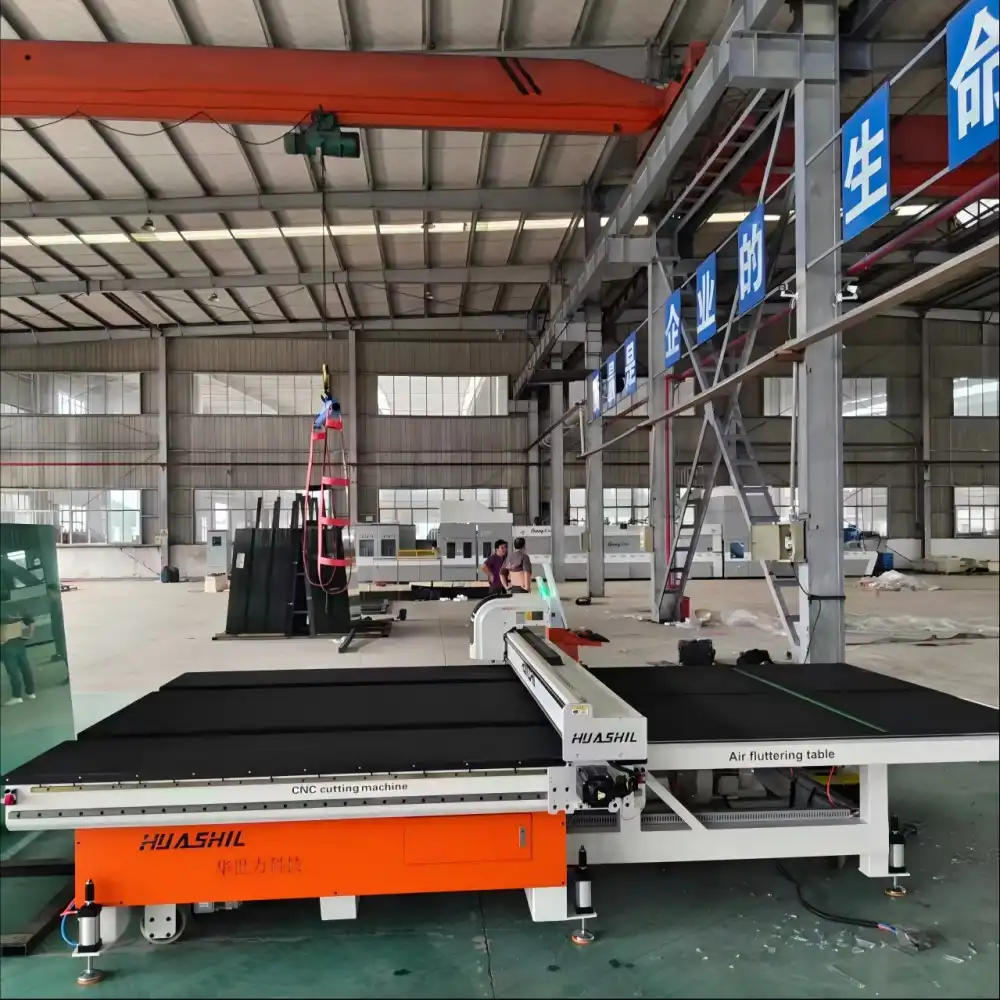
Our HSL-SPT3624 variant, suitable for panels up to 3660×2440mm, showcases developed airflow patterns for stability. Air flotation spreads support forces over the glass surface, unlike point-contact devices. Pressure uniformity avoids localized stress concentrations that generate edge chips and center sagging. Air volume is adjusted by glass weight to maintain ideal float height without user intervention. Both 3 mm-thick glass and 25 mm-thick architectural panels are protected by this dynamic reaction.
Comparative Advantages Over Traditional Systems
Linear contact zones on roller conveyors concentrate weight along small strips, increasing lateral scratch risk. Suction vacuum tables safeguard glass, although sealing gaskets can retain particulates. Roller systems have friction coefficients of 0.15-0.25, whereas correctly set up air flotation has 0.02 or below. This drastic decrease extends glass surface life and lowers rejection rates. The method also reduces marking and stains from deteriorating rubber-coated rollers.
The Air Flotation Process Step-by-Step: Reducing Scratches Through Controlled Handling
Understanding each glass handling step is necessary for air flotation. Years of manufacturing optimization have improved our method to mitigate damage hazards at every transition point.
Initial Glass Placement and Activation
The mechanism slowly starts airflow when operators place glass on the table. This regulated ramp-up avoids panel tilt or movement. Our HSL-SPT3624's 360-degree remote control walking feature offers accurate placement without manual interaction. Sensors change the air pressure to meet the load when glass is detected. The automated loading mechanism coordinates with upstream equipment to receive glass sheets from cutting stations without human touch.
Maintaining Stable Flotation During Processing
The glass stays 0.1-0.3mm above the table once floating. This gap minimizes sliding friction while preserving stability. Air pressure is consistent throughout the panel, avoiding point-support system differential drooping. Flotation support is maintained while operators score and separate glass parts with the integrated breaking table. Curtain wall fabricators converting big sheets into several smaller sections without intermediary transfers benefit from this capacity.
Controlled Movement and Positioning
The remote-controlled mobility technology lets workers move the air float tables accurately throughout the manufacturing floor. Slipping glass over stationary surfaces—the main source of directed scratching—is eliminated. Movement speed is controlled, reducing momentum-related accidents during starts and stops. Position precision of ±2mm enables alignment with downstream edging or packing stations. Compared to manual cart systems, controlled transfer decreases handling damage by 75%.
Transition to Next Process Stage
When the glass arrives, the mechanism gently lowers it onto the next support surface by reducing air pressure. A gradual fall minimizes abrupt hits that chip edges. The breaking table feature helps operators separate scored parts without disturbing the remaining glass. Integrating conveyor systems or storage racks smoothly protects the glass till final processing. The transition points are designed to prevent jarring motions that damage surface integrity.
Benefits of Using Air Flotation Tables in Glass Manufacturing and Processing
Production managers always want demonstrable results from equipment purchases. We've seen benefits beyond scratch reduction that affect numerous operational KPIs.
Enhanced Product Quality and Yield Rates
Final product approval depends on surface integrity. Architectural glass processors report rejection rates of 8-12% reduced to 2-3% with air flotation treatment. Furniture glass makers find advancements in back-painted and coated glass that show every surface imperfection. The automobile glass industry has reduced defects in laminated goods, where bonding magnifies scratches. Quality improvements decrease customer returns, rework costs, and market reputation.
Operational Efficiency and Throughput Gains
Without increasing damage risk, frictionless glass movement speeds handling cycles. Panels that move during processing require less repositioning by operators. Automatic loading cuts cycle times by 30-40% over manual placement. Without quality checks that hinder production, glass panels flow smoothly between cutting, edge, and packing stations. Remote control mobility lets one operator operate several stations, optimizing labor allocation. Curtain wall integrators appreciate this speed when organizing complicated project timetables with tight installation dates.
Reduced Maintenance and Operating Costs
Air flotation systems require less maintenance than roller conveyors due to fewer moving parts. Rollers need frequent bearing replacements, alignment checks, and surface reconditioning. Air systems sweep away roller bearing-destroying contamination. Energy consumption comparisons reveal air flotation uses 15-20% less electricity than identical motorized roller devices. The HSL-SPT3624's CE and ISO9001 certifications indicate dependability and durability. After maintenance labor, replacement parts, and downtime, the total cost of ownership is 25-35% cheaper than standard handling equipment over five years.
Workplace Safety and Ergonomic Benefits
Sharp edges, difficult lifting positions, and repeated strain make manual glass handling dangerous. Air floating reduces cut injuries and musculoskeletal diseases by eliminating manual touch. A remote control keeps personnel safe when moving glass. Reducing glass shattering reduces sharp fragment cleaning hazards. Safety improvements reduce workers' compensation claims and boost employee retention. Production directors report better team morale after switching from manual to automated air flotation.
Selecting the Right Air Flotation Table for Your Glass Handling Needs
Capital equipment purchases involve a comprehensive comparison of specs and operating needs. We've selected hundreds of plants and discovered the key elements that affect long-term enjoyment.
Dimensional and Capacity Specifications
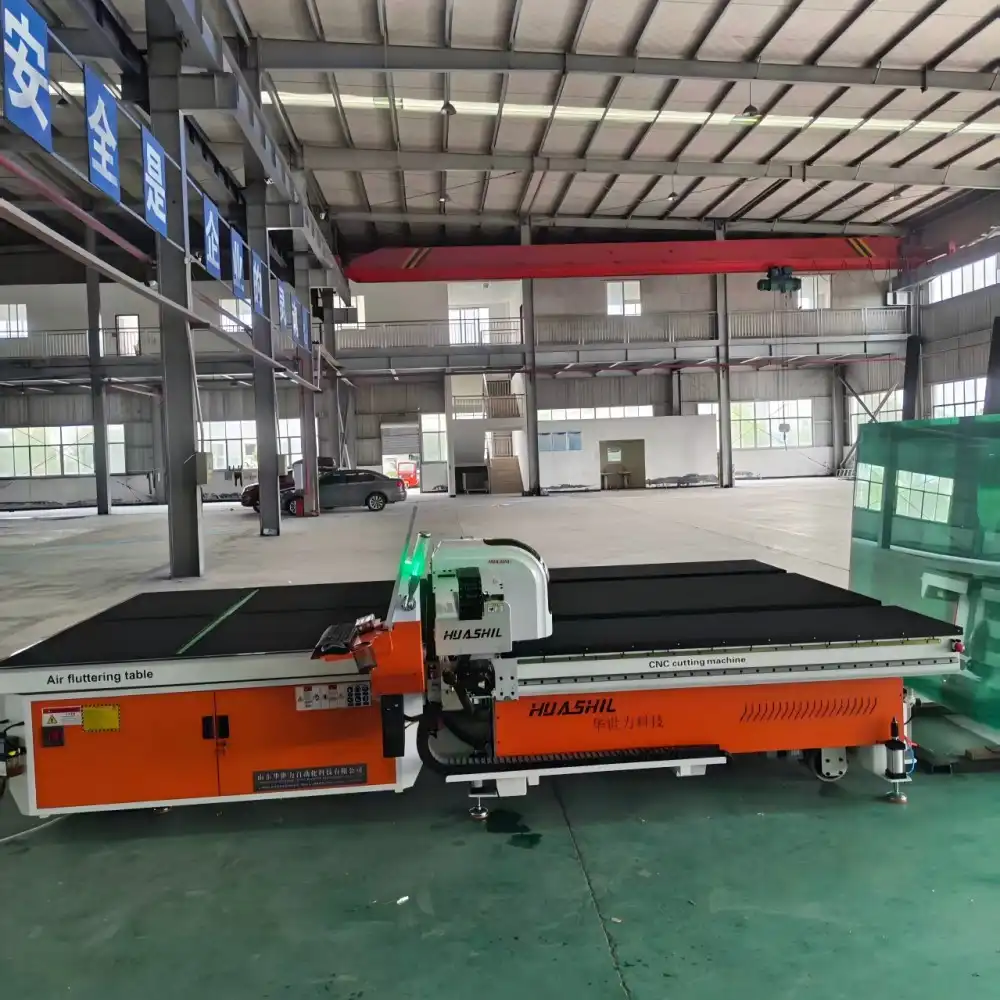
The table must fit your largest standard glass and handling clearance. The 3660×2440mm HSL-SPT3624 type is ideal for architectural and furniture applications, including conventional jumbo sheet sizes with operating margins. Maintaining flotation performance requires load capacity ratings at least 20% greater than your maximum glass weight. Tables optimized for thin glass may struggle with heavy architectural panels, while thick glass systems may over-float thin sheets. Consider future production plans; little overcapacity allows growth without equipment replacement.
Integration with Existing Production Lines
Compatibility of equipment affects implementation difficulty and cost. Modern air flotation tables should work well with upstream cutting and downstream edging or washing lines. Adjustable height aligns conveyors and processing stations. Automatic loading works best with automated cutting table output to create a continuous workflow without human transfer. Compatible tables with PLCs and production management software decrease training and operating complexity. Consult vendors' installations in comparable production conditions.
Performance Features and Customization Options
Customization solves operational problems, whereas standard features offer baseline functioning. The 360-degree remote control improves movement in established institutions' limited floor areas. Multiple scoring stations are eliminated with breaking table integration, simplifying the process. Premium air filtering eliminates pollution that clogs distribution holes and lowers flotation uniformity, improving system dependability. Consider noise levels in manufacturing regions with severe environmental standards. Variable air pressure control optimizes daily production schedules for different glass kinds.
Manufacturer Evaluation and Support Infrastructure
Supplier choice affects equipment performance as much as original specs. With years of glass processing automation R&D expertise, Shandong Huashil Automation Technology offers realistic solutions perfected in real production scenarios. Check CE and ISO9001 certificates for production quality. Manufacturer confidence is shown by extensive parts, labor, and performance warranties. It's crucial to check replacement parts, technical support response times, and service technician proximity after sales. Installation support, operator training, and documentation quality should be checked by international purchasers. Request references from factories with similar equipment and production situations.
Conclusion
Surface damage during glass handling causes significant quality issues that hurt architectural, automotive, and furniture manufacturers. Air flotation technique eliminates glass-hard surface contact, distributes support forces equally, and allows controlled movement without friction to prevent scratch development. Production facilities targeting quality and efficiency see strong ROI from reduced rejection rates, greater throughput, lower maintenance costs, and improved safety. Dimensional requirements, integration capabilities, and manufacturer support infrastructure must be considered while choosing equipment. For glass processors globally, advanced models like the HSL-SPT3624 show how autonomous loading, remote control mobility, and integrated breaking tables solve production problems.
FAQ
Q1: Can air flotation systems handle different glass thicknesses without adjustment?
Air pressure is automatically adjusted using modern air flotation tables, depending on glass weight, tolerating thickness changes from 3mm to 25mm without operator involvement. The system regulates airflow based on load distribution to maintain flotation height. Operators may fine-tune pressure settings when moving between very diverse glass kinds, although most production changes are smooth. Manufacturers may help improve airflow for ultra-thin display glass or extra-thick architectural panels.
Q2: How does energy consumption compare to traditional roller conveyors?
Air flotation uses 15-20% less energy than powered roller devices. Roller conveyors need continual motor running to overcome friction and sustain movement, but air flotation simply requires compressor power to maintain static pressure. Most facilities have compressed air infrastructure, easing installation. Energy-efficient compressors and demand-based pressure control save operational expenses. Energy savings largely offset higher initial investment costs during average equipment lifespans.
Q3: What maintenance procedures ensure consistent air pressure performance?
Weekly air filter inspections, monthly distribution hole pattern obstruction checks, and quarterly table surface pressure testing are routine maintenance. Most problems come from polluted compressed air, hence upstream filtering is crucial. Annual expert service should check compressor performance, replace seals, and calibrate pressure sensors. Air flotation maintenance prioritizes air quality and distribution uniformity over roller system bearing replacements and alignment adjustments, reducing overall maintenance.
Partner with HUASHIL: Your Trusted Air Flotation Table Manufacturer
Partnering with an experienced air flotation table manufacturer that knows industrial manufacturing is essential to improving glass handling. HUASHIL develops automation solutions for architectural glass, curtain wall systems, and furniture production. CE and ISO9001 certifications show our dedication to quality manufacturing. Our HSL-SPT3624 model has automated loading, sophisticated air flotation technology, integrated breaking table capability, and 360-degree remote control mobility. Our after-sales service includes installation guidance, operator training, prompt technical assistance, and dependable spare parts. Contact salescathy@sdhuashil.com to discuss bespoke solutions for your production needs, to browse our full line of glass processing automation equipment to decrease handling damage and boost productivity.
References
1. Glass Processing International Journal. "Advanced Handling Technologies for Surface Protection in Architectural Glass Manufacturing." 2022.
2. International Glass Technology Association. "Comparative Analysis of Glass Handling Systems: Friction, Damage Prevention, and Efficiency Metrics." 2021.
3. Manufacturing Engineering Research Institute. "Air Flotation Technology Applications in Industrial Material Handling." 2023.
4. Architectural Glass Standards Council. "Quality Control Best Practices for Curtain Wall Glass Production." 2022.
5. Industrial Automation and Control Systems Review. "Automated Loading Systems for Large Format Glass Processing Lines." 2023.
6. Surface Damage Prevention in Glass Manufacturing: Technical Standards and Testing Protocols. American Glass Processing Association. 2021.