




An automatic double glass processing machine transfers glass panes through an automated process of loading, cutting, washing, drying, spacer insertion, pressing, gas filling, and sealing to create insulated glass units (IGUs). Sensors read each pane, and a PLC with an HMI screen provides the correct settings to each station. Conveyors move the glass from one stage to the next, allowing operators to supervise instead of having to lift and position each sheet. This gives a uniformly sized sealed double-glazed unit, a clean cavity and a secure edge seal. This guide describes how each step works and what purchasers should look for.
How an Automatic Double Glass Processing Machine Works
The Core Working Principle
The premise is simple: regulate every variable that may destroy a sealed unit. Each pane is detected by sensors for location and size. The PLC then calls up a stored recipe that has the necessary dimensions, spacer width, and process speed. Servo drives and pneumatic parts do the actual motion, while the HMI displays alerts and tallies production. Settings are derived from a recipe, not from the judgment of an operator. And thus, the first unit and the five-hundredth unit go along the same road. Why this matters: An insulating glass unit can only achieve its best performance when the cavity remains clean, dry, and sealed. Windows account for around 25 to 30 percent of heating and cooling consumption in homes, according to the U.S. Department of Energy; thus, well-built units carry substantial weight with building owners.
Key Components That Keep Panes Moving
A typical line contains a loading and conveyor section, a washing and drying unit, a spacer assembly area, a pressing and gas filling module, and a sealing station. Contaminants such as dust and oil may damage the binding between the sealant and the glass surface and are removed using brushes and clean water. Spacer bars, with desiccant, establish the breadth of the air gap and absorb trace moisture. The panes are made to the required thickness by the press. Argon displaces air in the cavity when employed. The Department of Energy points out that gas fills such as argon limit heat transfer through the unit. Then the edge is sealed with a sealant. The specific arrangement will depend on the combination of products you have.
From Cut Glass to Sealed IGU: The Workflow
The procedure begins before the machine. A cut-and-edge automatic double glass processing machine comes with certified sizes, thicknesses, and coating side. Low-E glass requires special care. The coating should be on the right cavity side, and the brushes should be appropriate for coated sheets. The panes, when loaded, are cleansed, dried, and inspected. The spacer frame is put on the first pane, the second pane is inserted, and the cavity width is determined by the press. Filling with gas and sealing, inspection and curing before shipping. Standards like as ASTM E2190 provide performance and evaluation criteria for IGUs. Documenting each step allows you to trace an issue back to its source. Triple or special-shaped units often need additional stages and specific equipment.
Where the HSL-LSX5133 Fits in Your Glass Line
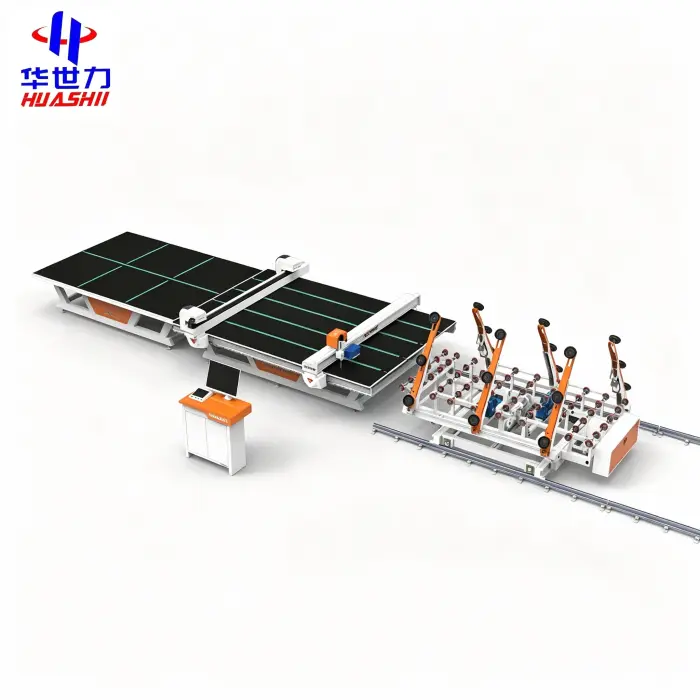
Every sealed unit begins with accurately cut glass, and that is the stage the HSL-LSX5133 handles.
Three Tables: Loading, Cutting, and Breaking
Three tables form the basis of glass handling on the HSL-LSX5133. The sheet is placed on the loading table. It is cut to the desired pattern on the cutting table. Cut parts are separated on the breaking table. This division of labor allows each table to specialize in one duty. When scoring glass, a shallow cut generates a weak line, and controlled pressure applied along that line results in a clean break. Clean-edged panes are simpler to edge, wash, and install, reducing problems later during the spacer and press phases. Good cutting quality upstream preserves downstream alignment for factories supplying double glazing.
Optima Optimization Software and Layout Planning
The line is operating using Optima optimization software. Such cutting software takes the requested pane sizes and lays them down on a raw sheet such that most of the sheet is used and the offcuts are smaller. For an IGU glass or window plant, this phase in the design is closely related to the cost of material, since glass is one of the key costs in every IGU. Where there are numerous various sizes in an order, automated layout design is most useful. This is often the case with double glazing. Ask any vendor, before you sign, to demonstrate to you how the program would manage your normal mix of orders, including small batches.
Rail Setup, Stations, and Maximum Glass Size
The HSL-LSX5133 has a rail that can be installed above ground or below, so you can customize the installation to your floor plan and foundation. The 2+2 station configuration may be selected with 5 grand arms on each side. The largest glass size is 5100 x 3300 mm or around 16.7 by 10.8 feet, ideal for large-format work such as curtain wall and façade projects. Measure your ceiling height, floor area, and the path of delivery of sheets, and match them with the layout drawings before purchase. Also compare your biggest usual order with the maximum size, since a line should be able to handle your normal work, not only occasional assignments.
Choosing and Budgeting for an Automatic Double Glass Processing Machine
Automatic vs. Semi-Automatic Equipment
Semi-automatic equipment is cheaper to get started with and is good for small businesses or for irregular orders. An automated line is more expensive, but it reduces the need for human handling, repeats settings correctly, and records production data. Plants producing medium to large volumes tend to benefit the most, since labor and rework costs increase with each unit. Compare constant output for a whole shift, not the maximum speed on a brochure. Compare automatic double glass processing machine breakage, sealant waste, rejected units, downtime, and training. A plant manager will want to see a payback calculation, so ask for cautious, standard, and high-demand scenarios. This provides the finance team a reasonable range to work with as opposed to a single best-case estimate.
Specifications and Total Cost of Ownership
We recommend that you ask for the minimum and maximum glass size, the range of glass thickness, installed power, air consumption, and alignment tolerance in writing. For an IGU line, include spacer compatibility, argon needs, and sealant type. Then look beyond the machine cost. Total Cost of Ownership includes freight, insurance, electricity, pressurized air, installation, commissioning, training, spare parts, and consumables. Procurement teams might also take into consideration delivery time, warranty terms and payment terms. For overseas orders, you may choose to pay a deposit and the balance or a Letter of Credit (L/C). Full production lines take three to six months to determine since they need technical assessment, site inspections, and finance approval, so get the paperwork started early.
Maintenance, Service, and Procurement Questions
Precision demands daily care. Clean glass contact areas. Check brushes & conveyors. Remove sealant residue. Confirm air & argon supply. Read alarms. Lubrication, sensor checks, and calibration are done weekly or monthly. Worn parts, unclean water, unstable pressure, or improper recipes may frequently be traced back to bad alignment, water marks, partial argon fill, and uneven sealant. Ask each provider how quickly replacement parts arrive, who answers technical calls, and if remote help is available before you purchase. You may order films, installation cases, or even a visit to the plant to determine the machine’s stability by yourself.
Conclusion
An automatic double glass processing machine makes insulating glass units by regulating all the steps from loading and washing to spacer placement, pressing, gas filling, and sealing using sensors, PLC, and recipe-based settings. The procedure is supported by accurate upstream cutting. This step is met by the HSL-LSX5133 with loading, cutting and breaking tables, Optima optimisation software, a 2+2 station configuration, five grand arms on each side and a maximum glass size of 5100 x 3300 mm. In purchasing, the greatest results come from evaluating reliable production, specifications, total cost of ownership, maintenance demands, and service terms, rather than just price. "Good planning means constant quality and less waste.
FAQ
1. What is an automatic double glass processing machine?
It is an integrated system that builds insulating glass units. It automates loading, washing, drying, spacer placement, pressing, gas filling, and sealing, using sensors, a PLC, and an HMI screen to keep each unit consistent. Depending on the configuration, it can also support triple glazing and Low-E glass.
2. Does the HSL-LSX5133 handle the whole IGU process?
No. The HSL-LSX5133 covers the cutting stage, with loading, cutting, and breaking tables and Optima optimization software. It prepares accurately sized panes for later IGU assembly. Send us your project details, and we will help you define the equipment you need.
3. How long does a purchase decision usually take?
A single machine often takes a few weeks to decide. A full production line commonly takes three to six months because of technical review, site visits, and financial approval.
Talk to HUASHIL About an Automatic Double Glass Processing Machine
HUASHIL, a high-tech manufacturer of automated glass equipment in Shandong, has years of production and export experience. If you want an automatic double glass processing machine manufacturer that listens to your glass sizes and output goals, send us your drawings and targets. Email salescathy@sdhuashil.com for details on the HSL-LSX5133. Our team will reply with technical data, a clear commercial proposal, and warranty terms.
References
1. U.S. Department of Energy, Energy Saver: Windows, Doors, and Skylights, 2024
2. Efficient Windows Collaborative, Window Technologies: Gas Fillings, 2023
3. ASTM International, ASTM E2190 Standard Specification for Insulating Glass Unit Performance and Evaluation, 2019
4. ASTM International, ASTM C1036 Standard Specification for Flat Glass, 2021
5. National Fenestration Rating Council, NFRC 100 Procedure for Determining Fenestration Product U-factors, 2020
6. Glass Association of North America, GANA Glazing Manual, 2008
