




If you manage a glass fabrication plant or run a curtain wall production line, you already know how much time and labor go into moving, sorting, and tracking glass panels before they reach the next processing stage. An intelligent glass storage system solves exactly that problem. It connects automated handling equipment, sensor-based positioning, and centralized control software to receive, classify, store, and retrieve glass panels with minimal human involvement — reducing breakage risk, cutting floor space consumption, and keeping production moving at a consistent pace.
What Is an Intelligent Glass Storage System?
Defining the Core Concept
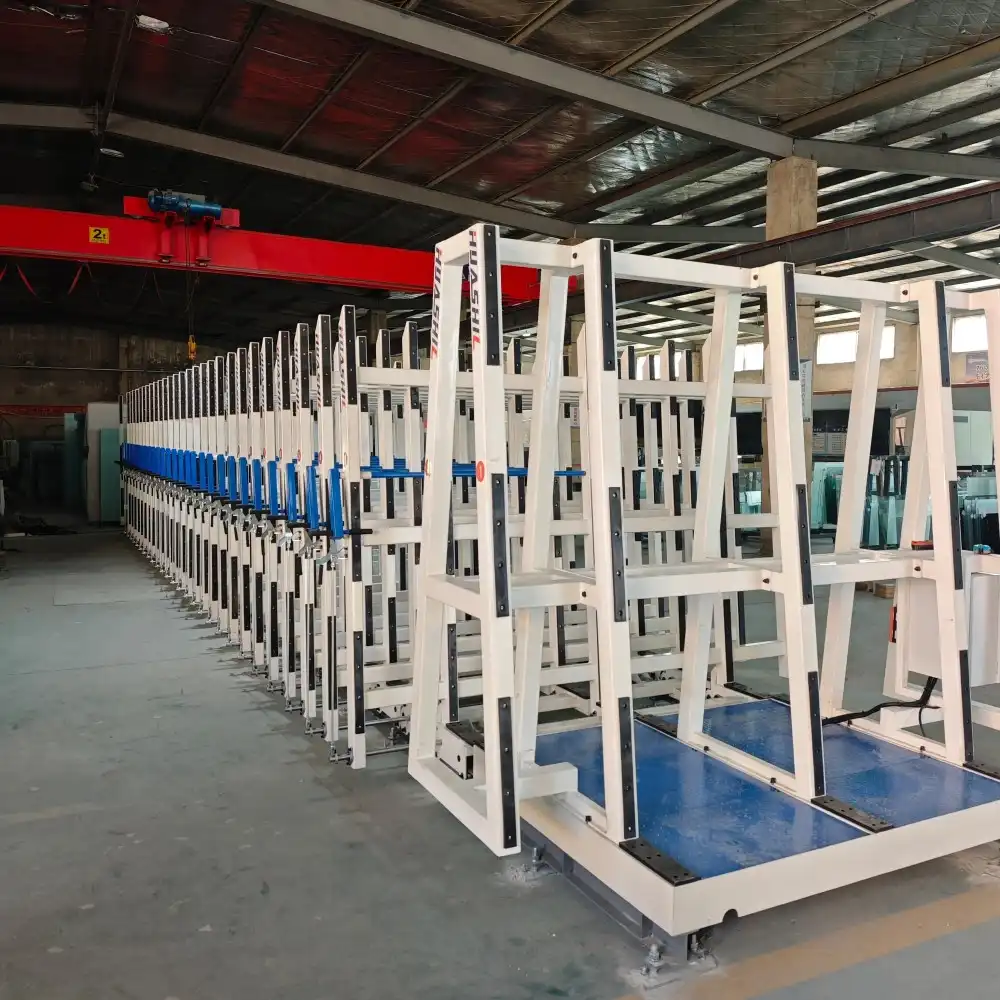
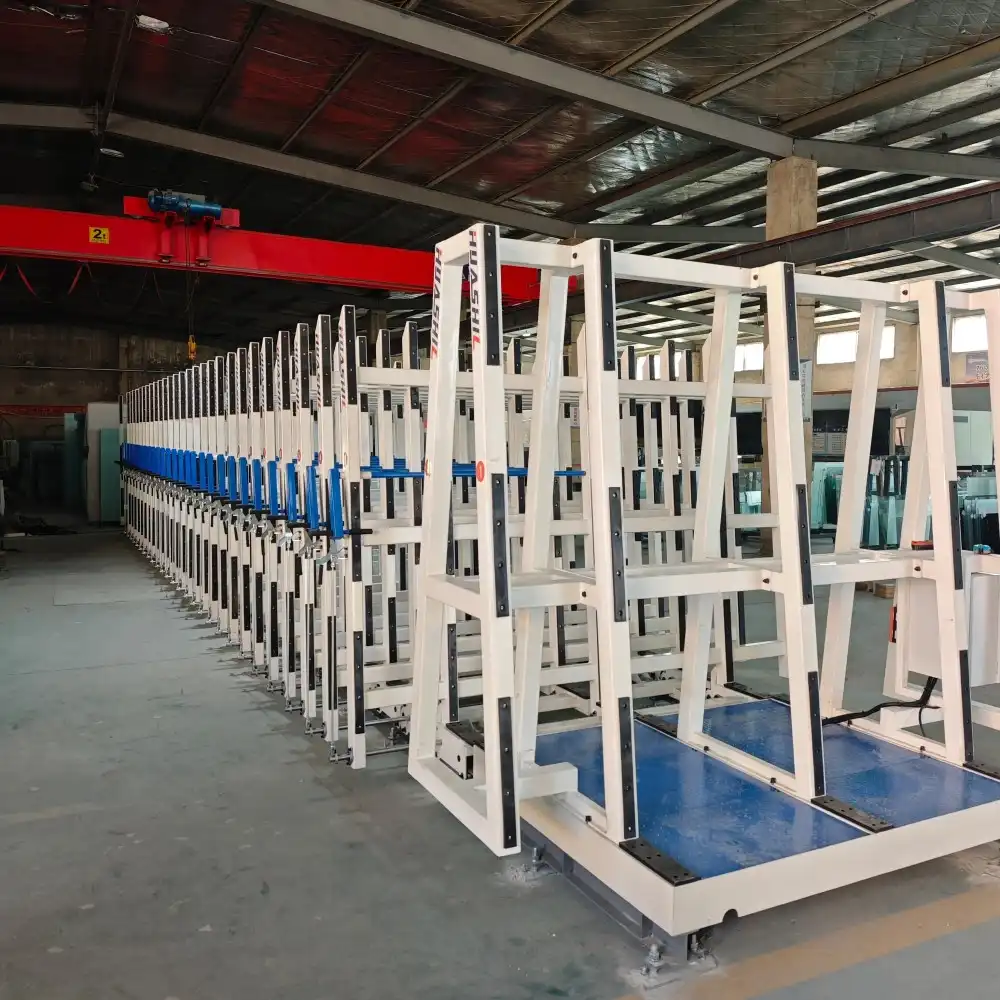
These days, a glass storage system is more than just a rack on wheels. These days, it's a network of hardware and software that works together to keep track of each panel from the time it comes into storage to the time it goes to the next step in the process, like film matching, edge cutting, or hardening.
Key Components That Make It "Intelligent"
Three layers work together to make it smart: automatic identification (reading barcodes or labels), position control (servo motors and encoders), and a management software layer that keeps track of all movements. They take the place of clipboards, searches that are done by hand, and guesses.
Where It Fits in a Production Line
Before hardening or insulating glass (IG) assembly, the glass panels that come off the cutting table need a place to wait that is well-organized. This system is that organized buffer; it makes sure that each panel is available at the right time when a process further down the line needs it.
How the System Works: A Step-by-Step Look
Step 1 — Rapid Inspection and Identification
When a cut glass panel gets to the entry station, its label or barcode is read by the system, which writes down the panel's size, thickness, and assigned order. This information is then stored in the control database. This only takes seconds and gets rid of the chance of mistaken identification, which often leads to expensive redo.
Step 2 — Accurate Positioning and Classified Storage
After recognizing the panel, the automated carrier moves it to a specific slot based on rules that have already been set. These rules can be based on the order number, the type of glass, or the next step in the process. Panels that need to be edge-ground are put in a different group than those that need to be IG hollow-assembled or sorted by film.
Step 3 — Intelligent Delivery and Retrieval
When a station further down the line sends a request, the intelligent glass storage system finds the right panel right away, picks it up without bothering panels nearby, and sends it to the station at the end of the line. This whole process doesn't require any time to be spent searching by hand, which is one of the most time-consuming parts of traditional storage.
Core Advantages Over Traditional Glass Racking
Manufacturers of glass in the US who switched from static A-frame racks to automated storage always say that their throughput and yield have gone up. Here are the main ways this type of system improves performance:
- Reduced manual handling links: The whole system cuts down the number of times workers physically touch a panel during classified storage. Fewer touches means fewer chips, cracks, and handling injuries — and a direct improvement in yield rates.
- Space efficiency: By storing panels vertically in tight, ordered slots, the system shrinks the floor footprint of semi-finished glass inventory by a significant margin compared to manual rack layouts. This frees up production floor space for other equipment or order staging.
- Consistent quality control: Because the system tracks every panel's history — entry time, storage duration, retrieval order — quality managers can trace defects back to specific batches or storage conditions, which is not practical with manual racking.
These benefits directly lead to a lower total cost of ownership over the life of the tools. Breakage reduction, shorter work hours, and faster order fulfillment all work together to quickly pay back the initial capital investment, which is faster than most plant managers expect.
Industry Applications: Where This System Performs Best
Architectural Glass and Window Fabrication
The method makes it safe for plants that make doors, windows, and curtain wall panels to work with large-format architectural glass and keeps panels sorted by project order. It helps with processes like film matching and storage before hollow (IG assembly, which are often slowdowns in high-volume window plants.
Hollow Door and Window Glass Processing
When glass for insulated units comes to the assembly line, it has to be in the right place and clean. The automated intelligent glass storage system keeps these panels clean and stable and releases them in the order that the IG line needs, so deliveries are never out of order.
Edge Grinding and Tempering Preparation
Sorting the panels in line for edge grinding or hardening makes sure that lots of the same size and thickness go through the machine together, which is the most efficient use of time and resources. This is done automatically by the classification storage logic, which puts panels into groups as soon as they log in.
Film Sorting and Film Matching
Using the right film on the right glass panel is important for making laminated glass. The system's sorting function connects film specs to panel records. This way, the right materials always show up at the laminating station without having to be checked by hand.
What to Evaluate Before Purchasing
Equipment Compatibility and Line Integration
The storage system should be able to connect to the control systems for your cutting line, tempering furnace, or IG line. It is important to do a technical study of the communication methods and mechanical entry/exit measurements before deciding on a configuration.
Customization and Glass Specifications
Glass of different shapes, sizes, and weights is handled by different machines. A good company that sells intelligent glass storage systems should be able to change the size of the slots, the maximum amount that each carrier can hold, and the software rules for sorting the glass into groups to fit your unique production needs.
After-Sales Support and Spare Parts
Service after the sale is just as important as the machine itself for any automated tooling. Make sure the seller has written warranty terms, a clear process for getting extra parts, and remote technical help so that if a part needs to be replaced, you don't have to wait a long time.
Conclusion
An automated intelligent glass storage system is not an extravagance; it is a necessity for any plant that works with a lot of architectural glass, hollow units, or laminated panels. Without it, the plant would lose production time, money, and yield because of having to handle the glass by hand. The system works by combining quick identification, accurate storage of position, and retrieval based on demand into a single controlled process. When purchasing managers and plant engineers are thinking about what tools to buy next, they should first understand how this technology works and where it fits in their line. Only then should they ask suppliers for offers.
FAQ
1. What types of glass can this system handle?
The system accommodates a wide range of glass types used in production environments: architectural flat glass for windows and curtain walls, hollow (insulating) glass units in progress, and panels staged for edge grinding, tempering, or film matching. Slot configurations are adjustable to handle different sizes and thicknesses.
2. How does the system prevent glass breakage during storage?
Panels are moved by servo-controlled carriers that follow programmed paths at controlled speeds. Sensors detect obstructions and stop motion automatically. The vertical storage format also distributes panel weight correctly, reducing stress compared to stacking.
3. Can the system connect to our existing ERP or production management software?
Most modern automated glass storage platforms support data exchange with external management systems through standard communication interfaces. Your supplier's engineering team should provide integration documentation during the technical review phase.
4. How long does installation and commissioning take?
Installation time varies by plant layout and system size, but a standard single-aisle configuration typically takes two to four weeks for mechanical installation plus software commissioning. Your supplier should provide a project schedule with clearly defined milestones.
5. What maintenance does the system require?
Routine maintenance includes lubrication of mechanical components, sensor calibration checks, and software log reviews — most of which follow a scheduled interval defined in the equipment manual. Predictive alerts built into the control software flag abnormal conditions before they become failures.
Get a Custom Configuration from HUASHIL
Shandong Huashil Automation Technology Co., Ltd. has been developing and making automated glass working equipment for companies all over the world for many years. As a specialist in making intelligent glass storage systems, HUASHIL can offer configuration options that are perfect for your glass sizes, production volume, and line layout. You can email our expert team at salescathy@sdhuashil.com to get project quotes, specs, or case studies.
References
1. Glass International – Glass Processing Technology Review, 2022.
2. Automation World – Automated Storage and Retrieval Systems in Manufacturing, 2021.
3. Glass Global – Production Efficiency Trends in Architectural Glass Fabrication, 2023.
4. Manufacturing Engineering Magazine – Sensor Integration in Industrial Storage Systems, 2020.
5. Construction Products Magazine – Curtain Wall Glass Supply Chain Management, 2022.
6. Industrial Automation Asia – Smart Material Handling in Glass and Stone Processing, 2023.