




If you run a glass fabrication plant or a sintered stone processing facility, you already know that production complexity keeps growing. Orders are more varied, quality standards are tighter, and labor costs keep rising. That is exactly where a manufacturing execution system (MES) earns its place on the shop floor. An intelligent manufacturing MES system connects your machines, people, and data in real time, giving managers and engineers a clear, accurate picture of what is happening at every stage of production. This guide walks you through everything you need to know heading into 2026.
Understanding Intelligent Manufacturing MES Systems
What an MES Actually Does
There's a system called a production execution system between your ERP software and the tools on your floor. It keeps track of work orders, records every step of the process so that everything can be tracked, and collects live production data. An MES, unlike a simple spreadsheet or a machine driver that works on its own, gives you a linked view of the whole production run, from receiving raw materials to sending out finished goods.
How Intelligent MES Differs from Traditional Platforms
MES systems that are used today record data after the fact. As data comes in, an intelligent system does something with it. It checks for quality problems, changes schedules in real time, and sends maintenance alerts before a breakdown happens by connecting to IoT sensors, AI-driven analytics engines, and ERP databases all at the same time. This means that glass cutting and edging lines will waste fewer panels and have less unplanned downtime.
The Role of Software for Storage and Cutting Machine Control
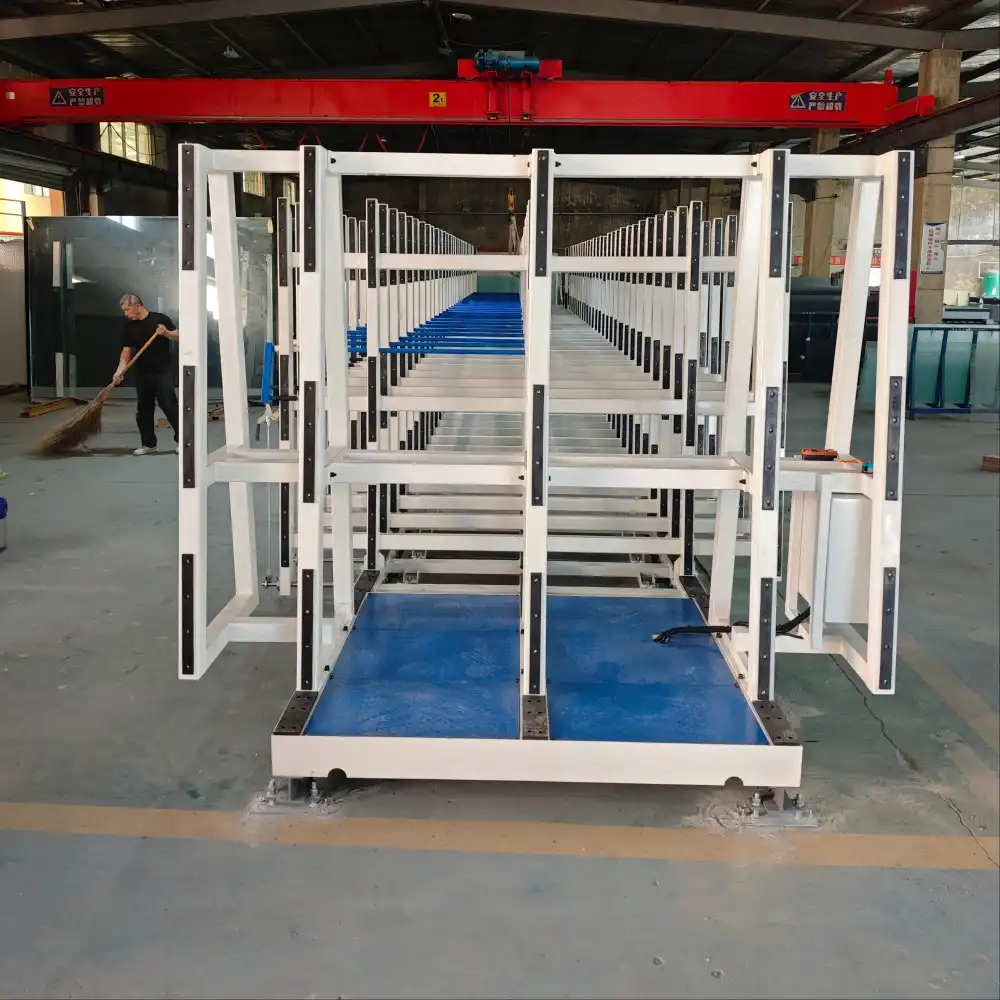
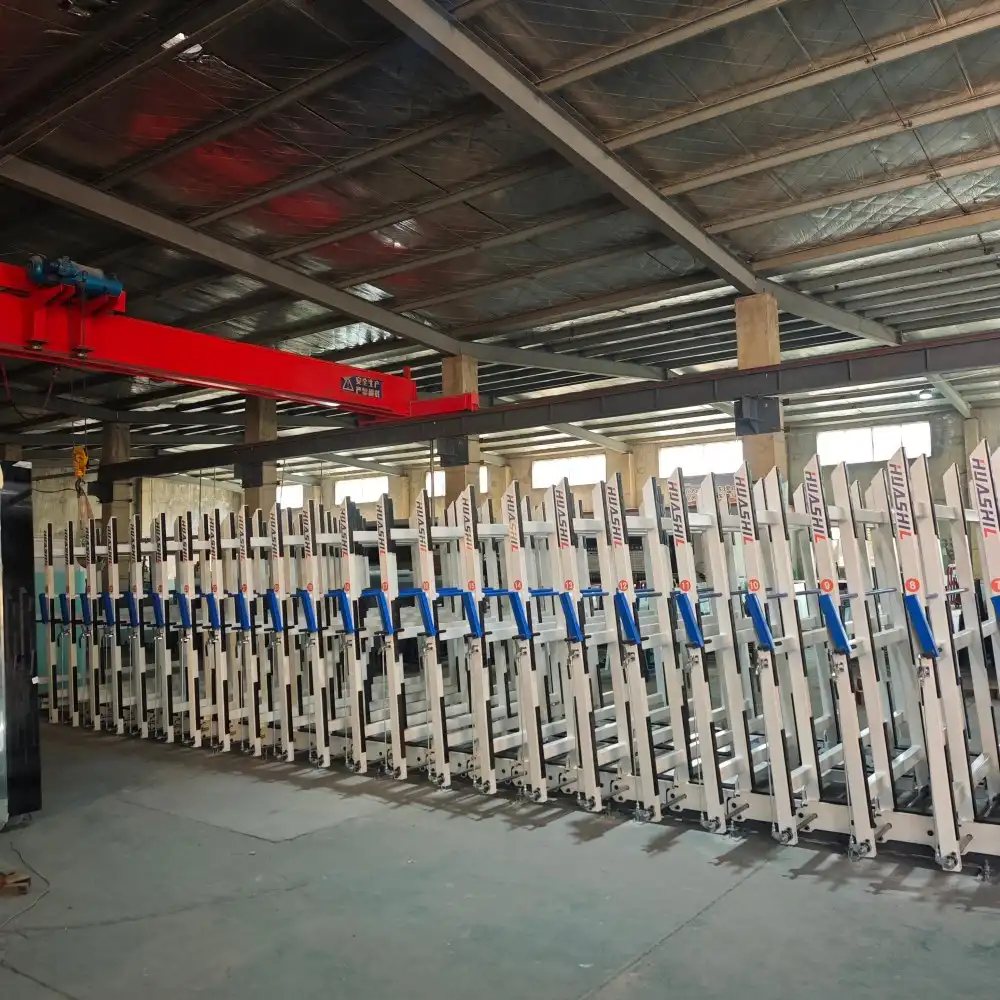
In the case of HUASHIL, the MES layer has software that controls and links storage and cutting tools. This software makes the cutting optimizer, the glass storage rack system, and the edging line all work together as a single unit. This makes sure that each cut sheet gets to the right station at the right time, which cuts down on waiting and mistakes made by hand in the whole production cell.
Benefits and Use Cases of Intelligent MES in Smart Factories
Measurable Efficiency Gains
A study released in the Journal of Manufacturing Systems in 2023 found that companies that used MES saw their production cycle times drop by 15–25% in the first year. This improvement means that glass plants that handle a lot of different orders can finish projects faster and pay their workers less per unit.
Here are the main benefits that glass and stone fabricators get from this kind of production management software:
- Real-time order tracking: Every work order is visible on one dashboard, so plant managers can spot bottlenecks instantly rather than walking the floor or making phone calls.
- Automated quality gates: The intelligent manufacturing mes system checks dimensional data from the cutting and edging machines against spec tolerances and flags out-of-range parts before they reach the next station, cutting rework rates.
- Reduced material waste: Cutting optimization algorithms within the MES calculate the most efficient layout for each glass sheet, which industry data shows can lower raw material waste by 8–12% on average.
These benefits fix the three production issues that floor managers in the U.S. glass fabrication market always talk about: uneven quality, rising scrap rates, and not being able to see what orders are coming in.
Industry Use Cases
An MES is useful for more than just managing glass production. Auto glass makers depend on MES to meet very tight size requirements for windshield fitting. Pharmaceutical companies use it to keep track of batches and file reports with regulators. It is used to keep track of the serial numbers of parts on electronics assembly lines. A modular MES lets companies that make furniture and shower doors set up jobs in a way that fits the needs of short-run orders for decorative glass. This wide range of uses proves that MES is the digital core of production in Industry 4.0.
Comparing Intelligent MES Systems and Making Procurement Decisions
Traditional vs. Intelligent MES: The Key Gaps
There are three problems with old MES platforms: they require a lot of data entry to be done by hand, they don't work well with new IoT devices, and they don't give you many options for how to report. Intelligent systems automatically record machine data instead of requiring people to enter it, they connect to existing PLCs and sensors using standard OPC-UA protocols, and they make reports that can be read by different departments without the need for IT help.
Leading Vendors in the Market
Siemens Opcenter, Rockwell Automation FactoryTalk, Honeywell Connected Plant, GE Digital Proficy, and Dassault Systèmes DELMIA are some of the well-known names in the corporate MES market. Each platform is made for large-scale process or discrete manufacturing. Siemens Opcenter is well-known for how well it works with CNC and automated cutting tools. This makes it a standard when looking at software for glass working settings. Enterprise platforms usually cost between $50,000 and several hundred thousand dollars, but this depends on how many modules you need and how many site licenses you need.
Procurement Criteria to Evaluate
Before a buy order is signed, the engineering and procurement teams should look at each possible system based on the points below:
- Integration capacity: Can the software connect directly to your cutting machines, tempering furnaces, and warehouse management system using standard communication protocols?
- Customization flexibility: Does the vendor support OEM or ODM configuration so the intelligent manufacturing mes system matches your specific production workflow rather than forcing you to adapt your process?
- Vendor support and spare parts: For automation equipment, response time for technical support and software patch delivery directly affects production uptime.
- Total cost of ownership: Factor in licensing, annual maintenance fees, training, and integration labor, not just the initial purchase price.
If you look at these factors early on, you can cut down on the 3–6 month buying process that most full production line investments need.
Implementation Considerations and Cost Insights
Typical Cost Breakdown
Costs to set up a MES vary a lot. A modular system for a medium-sized glass factory in the US usually includes software licensing ($20,000 to $80,000), work for putting the system together and starting it up ($15,000 to $40,000), training for operators ($5,000 to $10,000), and annual support contracts (15 to 20% of the license cost). More and more people are using cloud-based subscription models because they turn big upfront capital costs into predictable monthly operating costs. This makes it easier for finance teams to approve budgets.
Best Practices for a Successful Rollout
MES operations that go well all have one thing in common: careful planning before the installation. Before the system goes live, you should map out every step of the production process, check with your equipment vendor to make sure they follow the right machine communication protocols, and do a test run on one production cell before expanding to the whole floor. Phased integration lowers risk and gives operators time to get used to the new tools.
Common Challenges and How to Handle Them
Managing change is the most common problem that comes up in MES projects. People who work in production who are used to using paper or old computers don't like new platforms. Adoption rates are much higher when internal MES champions are assigned to each shift, digital training is combined with hands-on machine practice, and early wins are kept obvious on the shop floor.
Emerging Trends and the Future of Intelligent MES Systems
AI and Predictive Analytics Are Changing the Equation
AI-driven predictive maintenance is now a normal feature that MES RFQs ask for. The system can tell days in advance when bearings or blades will wear out by looking at vibration, temperature, and cycle count data from cutting and edging tools. This lets repair happen during planned downtime instead of during a production run.
Cloud and Edge Computing Expand Accessibility
Cloud distribution lets glass makers with multiple plants share production data between them without having to set up their own servers. On the other hand, edge computing keeps control data that is sensitive to latency close to the machine cell. This is important when the cutting optimizer needs to respond in milliseconds. Both systems work together, not against each other.
Modular Architecture Keeps Investments Adaptable
In 2026, modular MES investments will be the most ready for the future. A plant can start with modules for planning production and checking quality. As the business grows, it can add modules for managing inventory or keeping an eye on energy use. This method saves the original investment and keeps the system from needing to be replaced in big chunks every five to seven years.
Conclusion
In 2026, one of the best purchases a shop that makes intelligent manufacturing MES system or stone can make is a good MES. It links tools for storage, cutting, and finishing into a single managed process. This cuts down on waste and rework and gives all departments, from the shop floor to the finance office, accurate data they can use to make better choices. The technology is now advanced enough that even medium-sized fabricators can use it without breaking the bank by subscribing to it in the cloud or in modules. Plants that make investments now will have a clear performance edge for the next ten years.
FAQ
1. What industries benefit most from an MES in 2026?
Any process-intensive manufacturing sector benefits, including architectural glass, automotive glass, curtain wall fabrication, sintered stone processing, furniture glass, pharmaceuticals, and electronics assembly. The common requirement is high product variety combined with strict quality standards.
2. Can an MES integrate with our existing ERP and cutting machines?
Yes. Modern MES platforms use standard protocols such as OPC-UA, REST API, and ODBC to connect with ERP systems like SAP or Oracle, and with CNC cutting machines, tempering furnaces, and edging lines. Your equipment vendor should confirm the available communication interfaces before purchase.
3. How long does it take to see a return on investment?
Most mid-size plants report measurable ROI within 12–18 months of going live, primarily through reduced scrap rates, lower labor hours per unit, and fewer unplanned stoppages. Larger, more complex deployments may require 24 months to reach full payback.
4. Does HUASHIL's MES software work with third-party machines?
HUASHIL's software for controlling and connecting storage and cutting machines is designed with an open communication architecture. Compatibility with specific third-party equipment should be confirmed directly with the HUASHIL technical team before finalizing your order.
Ready to See How HUASHIL's MES Can Work for Your Plant?
HUASHIL is a trusted intelligent manufacturing MES system manufacturer with years of experience supplying automated glass and stone processing solutions to clients across North America and beyond. Our production management software connects directly to our cutting and storage machines for proven, tested performance. Contact our specialist team today for a customized consultation or equipment demonstration. Reach us at salescathy@sdhuashil.com to learn more.
References
1. Kletti, J. (2021). Manufacturing Execution Systems – MES. Springer.
2. Mesa International / MESA Alliance. (2023). Global MES/MOM Market Study. MESA International.
3. Rockwell Automation. (2024). The State of Smart Manufacturing Report. Rockwell Automation.
4. Journal of Manufacturing Systems, Vol. 68 (2023). Elsevier.
5, Gartner. (2024). Magic Quadrant for Manufacturing Execution Systems. Gartner Research.
6. International Society of Automation. (2022). ISA-95 Enterprise-Control System Integration Standard, Part 1–6. ISA.