




Manufacturing plants today face mounting pressure — tighter deadlines, higher product complexity, and rising labor costs. If you manage a glass fabrication line or a sintered stone production facility, you already know the pain of tracking orders manually or chasing down quality defects after the fact. That's exactly where an intelligent manufacturing MES system steps in. A Manufacturing Execution System (MES) bridges the gap between shop-floor operations and enterprise-level decision-making by collecting real-time data, automating workflows, and flagging quality issues before they become costly. It's not just software — it's the operational backbone that makes smart manufacturing actually work.
Understanding Intelligent Manufacturing MES Systems
What Exactly Is an MES?
A Manufacturing Execution System is a piece of software that keeps an eye on and manages production from the time raw materials are received until finished goods are sent out. An MES works directly at the machine level, getting real-time data from things like cutting machines, edge grinders, and tempering furnaces. This is different from basic ERP modules.
How Intelligent MES Differs From Traditional MES
Most MES systems keep track of what happened. An intelligent manufacturing MES system knows ahead of time what will happen. IoT sensors, AI-driven analytics, and SCADA interfaces are all linked together so that plant managers can get useful production information right away, instead of hours later. That's what makes management "intelligent": moving from being reactive to being proactive.
Connection to ERP and Shop-Floor Equipment
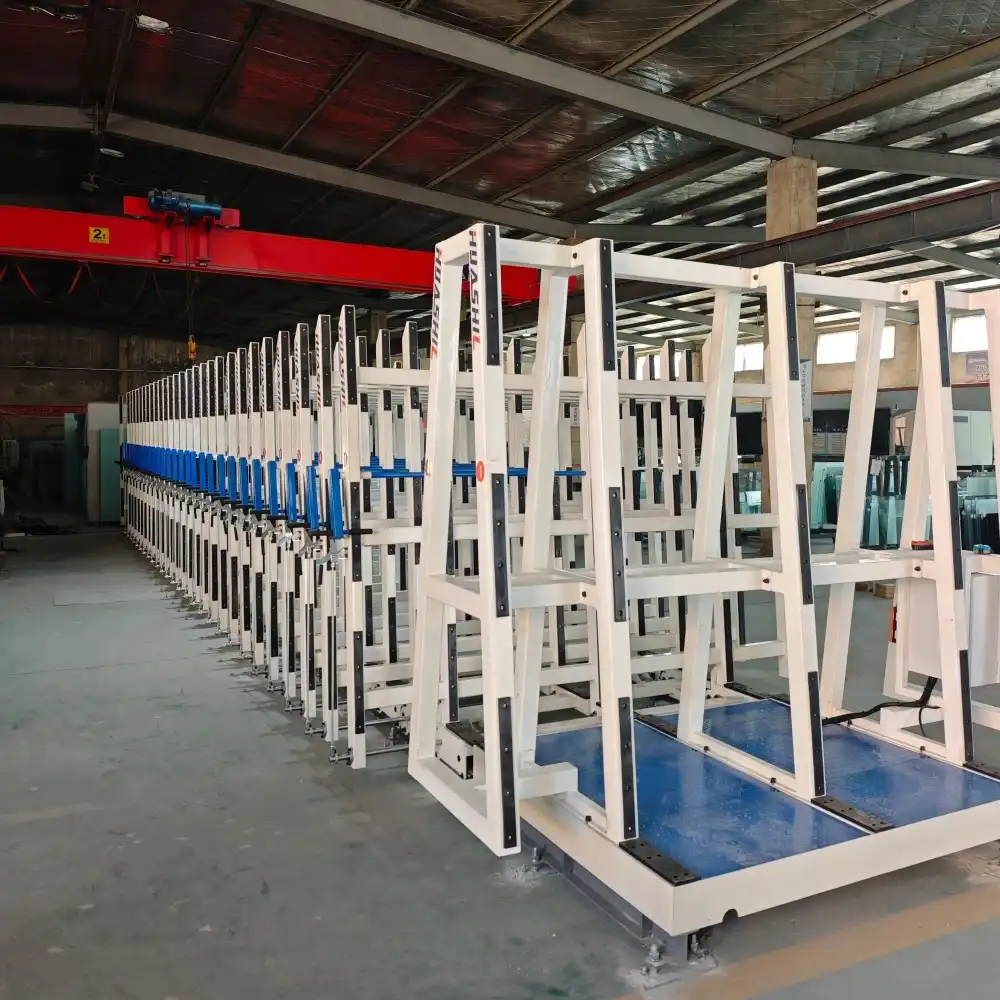
These days, MES platforms help with communication in both directions. For scheduling and cost reports, data moves up to ERP systems. Machine directions flow down to cutting stations and storage systems. This means that for glass and stone fabricators, the software that controls and links storage and cutting machines is no longer separate; it becomes a part of a single production data network.
Why MES Matters in Smart Manufacturing: Key Benefits and Use Cases
The business case for using MES is well backed up by facts. A report from 2022 by LNS Research says that within the first year of using MES systems, manufacturers cut unplanned downtime by an average of 17%. For industries that need a lot of capital, like architectural glass processing, that number means money coming back into the business.
These are the main benefits that make it worth it for manufacturing plants to use MES:
- Real-time production visibility: Every order, cut sequence, and machine status is visible on a single dashboard. Plant managers can spot bottlenecks the moment they form, rather than discovering them at end-of-shift reviews. This real-time awareness shortens response time considerably and prevents small delays from cascading into missed delivery deadlines.
- Quality compliance tracking: MES intelligent manufacturing mes systems log dimensional tolerances, material batch data, and inspection results at every production stage. For architectural glass or curtain wall projects, where a single out-of-spec panel can stall an entire installation, this traceability is non-negotiable. It also simplifies audit preparation and client documentation requirements.
- Predictive maintenance support: When integrated with machine sensors, an MES can detect abnormal vibration, temperature drift, or cycle-time deviation on cutting lines before equipment failure occurs. This shifts maintenance from a scheduled calendar event to a data-driven decision, reducing unnecessary parts replacement and emergency repair costs.
These benefits can help glass and stone makers solve their most common production issues, such as inconsistent output, reactive repair plans, and trouble tracking down orders. MES data is used for more than just manufacturing. It is also used in buying and finance reports, which give budget approvers the cost-per-unit information they need to support spending money on new lines.
Comparing Intelligent MES Systems: Making Informed Decisions
Cloud vs. On-Premise Deployment
Cloud-based MES tools are good for businesses that have more than one location because they have lower start-up costs and can be accessed from anywhere. But on-premise deployments give you more control over your data, which is important for companies that work with secret glass recipes or make a lot of fused stones and are very concerned about intellectual property (IP). Which option is best for you depends on your IT setup and security needs.
Key Evaluation Criteria
When technical managers and procurement supervisors look at MES options, they should think about four things: functional coverage (does it handle your specific production workflows?), integration depth (can it talk to your current cutting and storage equipment?), vendor support response time, and the total cost of licensing and maintenance over the next five years.
Matching MES to Production Scale
A tool made for businesses isn't necessary for all glass shops. Small to medium-sized businesses that make furniture glass or shower doors might get more out of a modular MES that starts with tracking production and adds quality management tools as the company grows. Scalable deployment models let you match the amount of money you spend on software to the amount of work you're already doing without spending too much.
Navigating Challenges and Future Trends in Intelligent MES Implementation
Integration With Existing Infrastructure
Often, the hardest part of deployment is getting the new MES to work with older ERP or SCADA systems. Protocol mismatches, data format inconsistencies, and communication gaps between machines need to be carefully checked before deployment. Phased rollouts, which begin with one production cell and then spread to the whole plant, lower the chance of interruptions to operations during the changeover time.
Change Management and Workforce Training
Adopting new software fails most of the time not because of the technology but because of the people who use it. Operators who are used to using paper job cards or logging jobs by hand need structured, hands-on training. Setting clear performance benchmarks before and after implementation helps teams see improvements that can be measured and gets everyone in the company on board.
Future Directions: AI, Digital Twins, and 5G Connectivity
There will be more in the next generation of intelligent manufacturing mes systems for managing production. AI-driven scheduling will change the cutting order automatically if the order changes in real time. With digital twins, engineers can test a change to a production line before moving the equipment around physically. And a 5G connection will let edge devices on the shop floor talk to each other with no latency at all. This is especially useful for high-speed glass cutting lines that need to be very precise with their timing.
Leading Intelligent MES Vendors and Solutions to Consider
Siemens Opcenter
Siemens Opcenter is one of the most comprehensive platforms on the market. It can be used to schedule production, control quality, and keep track of materials all in one place. It works well with Siemens' own automation hardware and is especially good at discrete manufacturing. This makes it a natural fit for plants that already use Siemens PLCs.
Rockwell Automation FactoryTalk
Rockwell's FactoryTalk suite is made for medium- to large-sized manufacturers who need flexible pricing and strong expert help in North America. Its best features are that it can receive data in real time and connect to Allen-Bradley computer systems. For fabrication plants in the US, Rockwell's local support network is helpful during the installation and troubleshooting stages.
Honeywell and GE Digital Proficy
Honeywell's MES products are known for being able to be used in manufacturing environments with multiple sites. It has a lot of analytics power and has been used for a long time in process-heavy industries by GE Digital. Before signing a full contract, plant engineers can use the testing programs that both suppliers offer to see how the system works with real production data.
Conclusion
Smart manufacturing isn't management by guessing if it doesn't have real-time output data. Glass makers, curtain wall installers, and stone processors can cut down on waste, keep quality high, and meet customer needs more quickly with an intelligent manufacturing mes system. MES software connects all the parts of the production floor into a single, manageable picture. It does this by keeping track of cutting sequences and storage systems. The investment pays off with less waste, lower labor costs, and more trust from clients. Now is a good time to look at what a production management system can do for your output if your business is going to move a line or fully automate it.
FAQ
1. What does MES stand for in manufacturing?
MES stands for Manufacturing Execution System. It is software that monitors and controls production processes between the shop floor and enterprise management systems like ERP.
2. Is MES the same as ERP?
No. ERP handles business-level functions such as finance, procurement, and inventory. MES operates at the production level, tracking machine output, quality data, and work orders in real time. The two systems are complementary and often integrated.
3. Which industries benefit most from MES?
Glass fabrication, automotive, electronics, and stone processing plants see strong results from MES adoption. Any industry where product traceability, quality consistency, and production speed matter will benefit.
4. How long does MES implementation take?
For a single production line, basic deployment can take four to eight weeks. Full plant-wide implementations with custom integrations typically run three to six months, depending on system complexity and existing infrastructure.
5. Can small manufacturers afford MES?
Yes. Modular and cloud-based MES options have lowered the entry cost considerably. Small and mid-sized producers can start with core tracking features and add modules as their operations grow.
Connect With HUASHIL for Intelligent Manufacturing Solutions
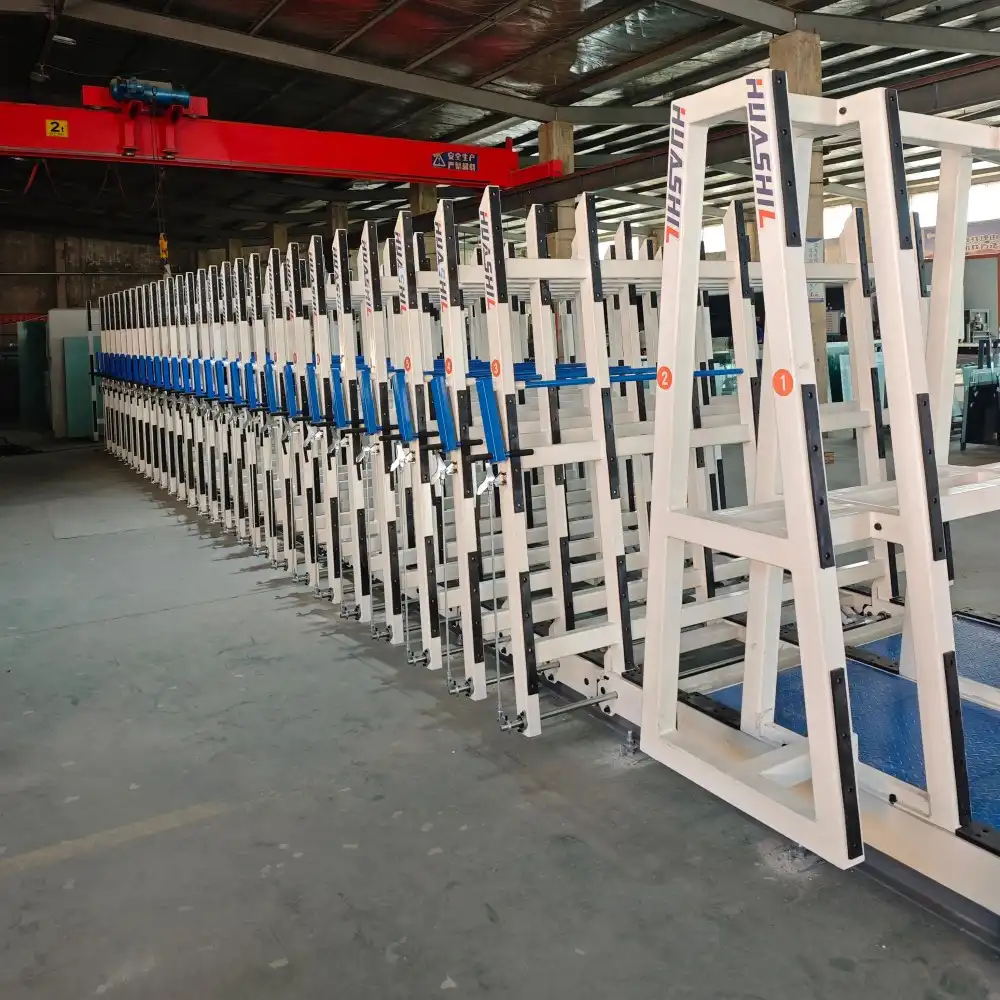
HUASHIL plans and builds production systems for glass and solid stone makers who need large-scale dependability. Our skills as an "intelligent manufacturing mes system supplier" don't end with machines; we also offer software for managing and linking storage and cutting machines, which means that your production line will have full digital visibility from the start. Full-line automation projects in the US are always done with HUASHIL because they have years of experience exporting and a strong technical support team. To get a technical consultation, email us at salescathy@sdhuashil.com.
References
1. LNS Research. (2022). MES and Manufacturing Operations Management: Driving Results in Smart Manufacturing.
2. MESA International. (2021). MES/MOM Metrics That Matter: Connecting Shop Floor to Top Floor.
3. Gartner. (2023). Market Guide for Manufacturing Execution Systems.
4. Manufacturing Engineering Magazine. (2020). How MES Systems Support Industry 4.0 Adoption in Discrete Manufacturing.
5. International Journal of Production Research. (2022). Real-Time Data Integration in Intelligent Manufacturing Systems: A Review.
6. ARC Advisory Group. (2023). Manufacturing Execution Systems Worldwide Outlook: Market Analysis and Forecast.