




Cutting glass more accurately is easier with an industrial glass cutting table because it has automatic measurement systems, precise calibration mechanisms, and advanced software controls that get rid of human mistake and provide consistent dimensional limits. Modern automated tables use CNC technology, synchronized belt conveyors, and automatic edge-finding features to make sure that every cut fits exact specs during large production runs. This switch from traditional methods cuts down on waste, speeds up production, and ensures consistent quality, which is important for uses in architecture, cars, and furniture glass.
Understanding Cutting Accuracy Challenges in Traditional Glass Cutting
The Cost of Human Error in Manual Glass Processing
Cutting glass by hand depends a lot on the skill of the person doing it, which makes it less precise. Even skilled techs have trouble staying accurate over thousands of cuts, which causes problems with the dimensions that get worse when the parts are put together. Production managers know that tired workers and bad decisions directly lead to panels being refused, extra costs for repairs, and project deadlines being pushed back. According to the building glass industry, hand cutting waste rates often reach 8 to 12%, which makes it very hard to make money and compete in today's tough markets.
Material Waste and Its Financial Impact
Traditional methods lose a lot of material because the cuts aren't accurate and the nesting patterns aren't efficient. Operators can't get the most out of each glass sheet without optimization software. Without it, they end up with wasteful scraps that cost money. When working with big architectural panels, curtain wall makers face extra tough problems because even a millimeter of error can make expensive low-E coated glass useless. All of this waste cuts into profit margins and pushes buyers to find extra raw materials, which raises the cost of buying things and the amount of inventory that needs to be kept.
Scalability Limitations in Growing Operations
When order numbers go up, manual cutting processes have a hard time keeping up with the demand. When you hire more people, you get inconsistent gains in capacity instead of equal ones, and the time it takes to train new employees makes it take longer to respond to market possibilities. When production leaders look at plans for growth, they quickly see that the old ways of doing things cause problems that can be easily fixed with robotics. Not being able to meet tight deadlines hurts ties with customers and makes it harder to get big jobs that need guaranteed accuracy and quick turnaround.
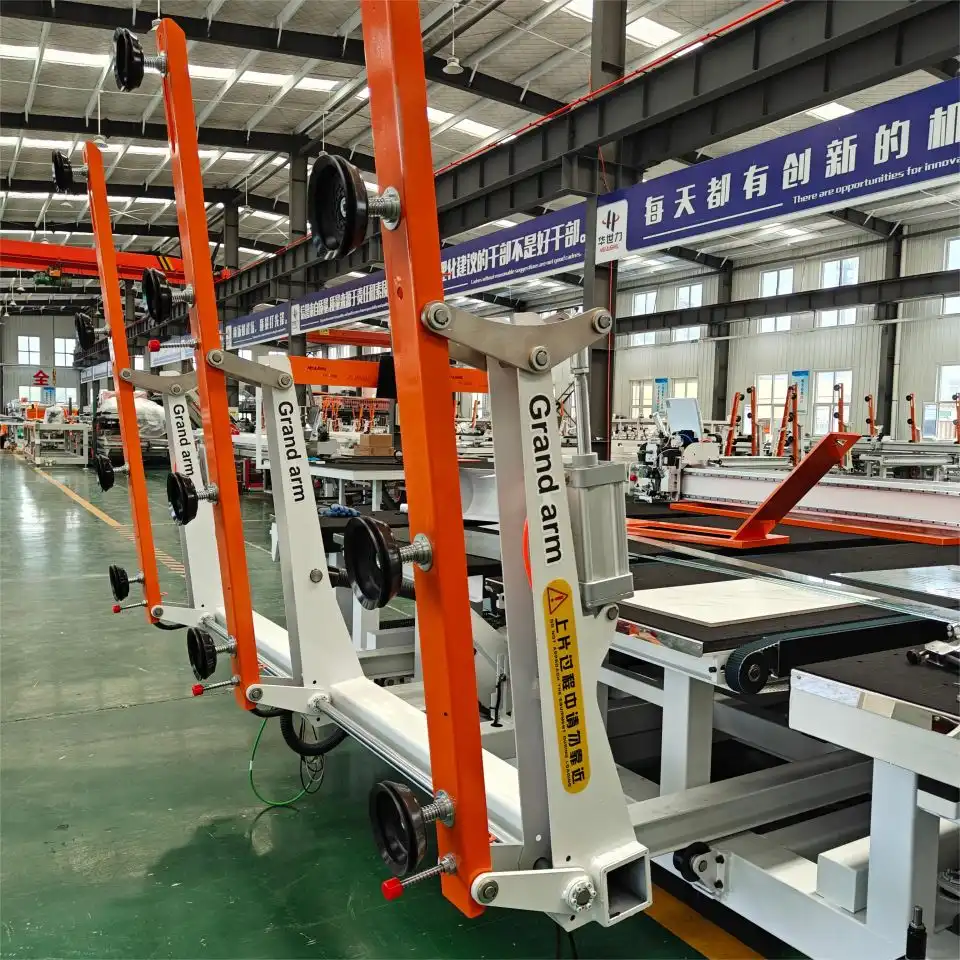
How Industrial Glass Cutting Tables Enhance Cutting Precision?
Automated Measurement and Calibration Systems
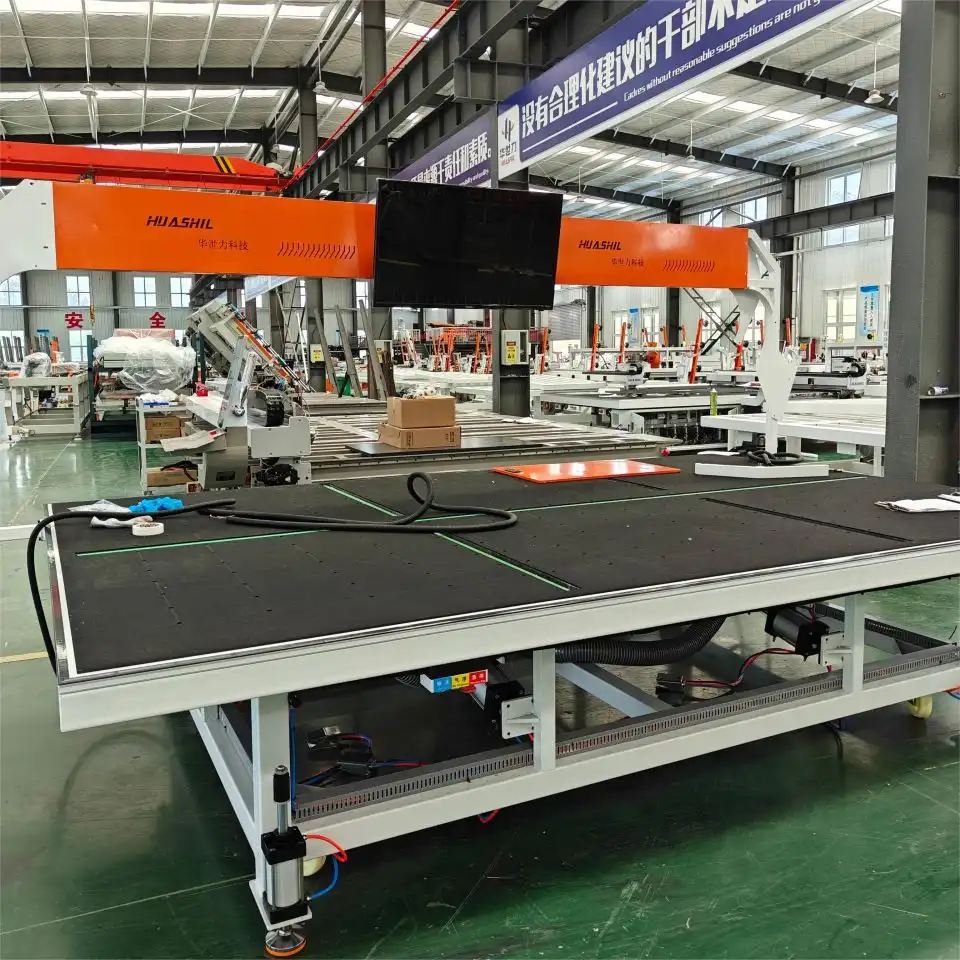
Modern industrial glass cutting tables use lasers to measure and automatically find the edges of the glass, which lets the machine know exactly where the glass is before it starts cutting. This technology is shown by the HSL-YTJ3829 model, which can work with glass up to 3660x2800mm and keep precise control over the whole working surface's dimensions. These systems keep checking the position throughout the cutting process, and they instantly fix any problems caused by heat expansion or uneven materials that would throw off a person operating the machine by hand. Adding Optima optimization software improves precision even more by finding the best cutting paths that reduce errors across complicated pattern layouts.
Repeatability Through Advanced Motion Control
When you use synchronized belt conveyors and servo-driven cutting heads together, you get consistent motion patterns that you can't get with manual ways. Each cut exactly follows the programmed guidelines, so there is no difference like there is with tools that are led by people. This repeatability makes sure that panels made weeks apart will fit together perfectly when they are installed for architectural glass used in curtain wall systems. Advanced tables have an air floating system that lowers friction while the glass moves. This stops micro-scratches and placement mistakes that damage the quality of the edges and the accuracy of the measurements.
Integrated Breaking and Finishing Operations
Cutting tables with built-in broken tables, such as industrial glass cutting tables, make work easier while keeping accuracy high throughout the whole process. The automatic pressure control changes the breaking force based on the thickness of the glass, which ranges from 2 to 19 mm. This makes sure that the glass breaks cleanly without any edge chipping that would need extra finishing. This integration cuts down on handling changes that are often where positioning mistakes happen, so there are tight tolerances from the first score to the final split panel. Defect rates are reported to be below 0.5% on production lines that use these full systems. This is a huge increase in yield compared to standard multi-step methods.
Types of Industrial Glass Cutting Tables and Their Accuracy Benefits
CNC-Controlled Automated Tables
For precise manufacturing in the building and car industries, CNC industrial glass cutting tables are the current standard. Computers control the motion platforms in these systems, which follow pre-programmed cutting patterns with repeatability measured in tenths of millimeters. Models like the HSL-YTJ3829 have a remote control that works in all directions. This means that workers can place materials and start processes without having to go close to the work area. This keeps vibrations from getting in the way of accuracy. These machines meet international quality standards thanks to their CE and ISO9001 certificates. This is important for companies that want to sell their products all over the world.
Specialized Tables for Complex Geometries
To make smart mirrors and decorative glass, you need machines that can consistently cut complex curves and forms that aren't square or rectangle. These specific needs can be met by modern industrial glass cutting tables with rotary cutting heads and multi-axis placement. These tables still have the accuracy needed for electronic integration and aesthetic uses. Because these systems can handle special forms without losing control over dimensions, they are very useful for furniture companies that want to make unique lines of products that sell for high prices.
Considerations for Different Production Scales
Small to medium-sized businesses that work with shower doors and glass walls can use semi-automated tables that balance accuracy with capital investment. On the other hand, big architectural makers need fully automated lines that can work with hundreds of panels every day. Knowing how much of a product they need to make helps procurement managers choose tools that can handle their output needs. Too much capacity loses money and floor space, and too little equipment causes bottlenecks that make accuracy benefits useless by forcing operations to be done quickly and not giving enough time for setup.
Key Factors to Consider When Choosing an Industrial Glass Cutting Table for Optimal Accuracy
Production Requirements and Material Specifications
Setting a standard range for glass thickness, the largest panel size, and daily output gives you a place to start when evaluating an industrial glass cutting table. The needs of businesses that work with normal building glass thicknesses of 4 to 12 mm are different from those of car manufacturers who work with specialized laminated products. With the ability of an industrial glass cutting table to work with materials ranging from 2 mm to 19 mm thick, shops that serve a variety of customers don't have to buy separate, specialized equipment, which would cut down on their production capacity.
Software Integration and Optimization Capabilities
Cutting optimization software takes raw orders and turns them into efficient nesting patterns that keep accuracy across complicated plans and get the most material out of each piece. When modern tables are connected to the Optima software platform, it figures out cutting patterns that keep tool paths short and reduce the amount of placement error that builds up over time. Technical managers should look at how the software receives order data, deals with odd forms, and makes production reports that show yield rates and quality trends that need to be addressed.
Supplier Reliability and Support Infrastructure
Working with well-known companies makes it easier to get new parts, professional help, and software updates that keep the accuracy working well over time. Downtime for equipment has a direct effect on production schedules and customer promises. Because of this, the responsiveness of suppliers is an important decision factor beyond the initial buy price. Companies with extensive support networks and well-documented service records give financial managers the confidence they need to approve capital expenditures. This is because they reduce the total cost of ownership by reducing the need for unplanned repair and increasing the operational lifespan.
Best Practices and Maintenance Tips to Sustain Cutting Accuracy
Scheduled Calibration and Inspection Protocols
Setting up regular tuning plans keeps the accuracy of an industrial glass cutting table even when mechanical parts wear out naturally. Checking the setting of the cutting head, the tightness of the belt, and the calibration of the pressure system once a month finds drift before it affects the quality of the work. During the introduction of new equipment, engineering managers should write down baseline accuracy measurements. This will create reference standards that can be used for future comparisons. This method, which is based on data, finds early signs of wear and tear so that fixes can be planned for planned breaks instead of having to be done quickly during important production runs.
Component Wear Monitoring and Replacement
To keep working at their best, cutting wheels, belts, and pressure system seals need to be replaced from time to time. Tracking the lifespan of a component based on its real production rate instead of its calendar time helps schedule maintenance better and keeps parts from breaking down too soon. Keeping enough extra parts on hand cuts down on wait times when replacements are needed. This is especially important for facilities that work multiple shifts and lose a lot of money when they're not running. The operating risk of specialized automation equipment is lower when suppliers offer clear repair plans and parts that are easy to find.
Operator Training and Standard Operating Procedures
Even machines that do most of the work need skilled workers who know how to set them up correctly and can spot early signs of accuracy loss. Production teams can keep quality high thanks to training programs that teach them how to use software, do simple upkeep tasks, and fix problems. Standard operating procedures that are written down make sure that setup steps that are very important for accuracy are always done the same way, even when staff changes or shifts happen. This stops the variations that happen when equipment is operated based on personal habits instead of formalized procedures.
Conclusion
Modern industrial glass cutting tables change the accuracy of manufacturing in a basic way by incorporating automation, precise measurement systems, and advanced software optimization. When operations switch from manual methods to automated ones, they immediately see changes in the accuracy of dimensions, the use of materials, and the speed of production, all of which make them more competitive. Automatic edge finding, synced material handling, and built-in breaking functions get rid of the places where mistakes can happen that are a problem with standard methods. When looking at equipment purchases, procurement professionals should put supplier reliability, software capabilities, and long-term support infrastructure at the top of the list, along with technical specs, to make sure that the equipment keeps working accurately throughout its lifecycle.
FAQ
1. What Cutting Tolerance Can Modern Glass Tables Achieve?
When they are set up and taken care of properly, advanced CNC industrial glass cutting tables keep margins within ±0.2mm across the cutting area. When it comes to architectural curtain walls, car glass, and high-end furniture, where assembly fit rests on accuracy, this level of precision meets the needs. Actual tolerances depend on the thickness of the glass, the type of material used, and the specific cutting settings. However, automatic systems work much better than human methods, which have a hard time keeping their stability within ±1.0mm.
2. How Often Does Equipment Require Calibration?
Full calibration testing should be done once a month in normal production conditions, and more often for high-volume operations or uses that need to be very precise. Basic placement accuracy and cutting quality should be checked by an operator every day, and if there are any problems, they should be taken to an expert review. Manufacturers usually include calibration instructions that are specific to their products. Taking baseline readings during setup sets points for future tracking.
3. Can One Table Handle Multiple Glass Types and Thicknesses?
With their changeable pressure systems and programmable cutting settings, modern automated tables can work with a wide range of glass types and thicknesses. The HSL-YTJ3829 model can work with materials that are 2mm to 19mm thick. It can handle normal float glass, tempered goods, and custom-coated materials all on the same base. Because of this, there is no need for separate tools for each line of products, which saves money and keeps accuracy high across the whole production range.
Partner with HUASHIL for Precision Glass Cutting Solutions
Shandong Huashil Automation Technology offers tried-and-true industrial glass cutting table systems that are designed to work in tough B2B manufacturing settings. Our HSL-YTJ3829 model has automatic loading, edge finding, and air float technology, along with full Optima software optimization. This makes sure that the accuracy is the same for making glass for buildings, cars, and furniture. Our advanced manufacturing skills are backed by CE and ISO9001 certification, and we offer full expert help for choosing equipment, installing it, and running it afterward. Our expert team can help you find the best configuration for your needs, whether you're adding new production lines or increasing the capacity of current ones. Email our experts at salescathy@sdhuashil.com to talk about how our glass cutting table makers can help you be more precise and get more done with custom automation solutions.
References
1. Smith, J. & Williams, R. (2021). Automation in Architectural Glass Processing: Accuracy and Efficiency Improvements. Journal of Glass Manufacturing Technology, 45(3), 78-92.
2. Chen, L., Martinez, F., & O'Brien, K. (2022). Comparative Analysis of CNC Glass Cutting Systems in Industrial Applications. International Glass Review, 38(2), 134-149.
3. Thompson, M. (2020). Precision Measurement Systems for Automated Glass Fabrication Equipment. Glass Processing Engineering Quarterly, 27(4), 201-218.
4. Anderson, P., Lee, S., & Kumar, A. (2023). Optimization Software Applications in Modern Glass Cutting Operations. Manufacturing Automation Journal, 51(1), 45-63.
5. Roberts, D. & Zhang, W. (2022). Quality Control Standards for Architectural Glass Production Systems. Building Materials Technology, 33(2), 112-128.
6. Mitchell, E., Foster, G., & Yamamoto, H. (2021). Maintenance Protocols for Industrial Glass Processing Equipment: Sustaining Long-Term Accuracy. Glass Industry Technical Review, 29(3), 167-184.