




With the help of cutting-edge sensors, emergency stop systems, anti-collision technology, and precise gripping mechanisms, an automatic CNC glass loading machine provides excellent safety in production settings. These machines keep the glass's integrity during handling cycles while exposing operators to much lower risks of being hurt by sharp glass tips and heavy lifts. Modern automated glass loaders like the HSL-LSX4228 model meet CE and ISO certification standards. They have real-time monitoring and intelligent feedback loops that keep output consistent across architectural glass, automotive glass, and custom decorative applications. This creates a safe manufacturing ecosystem that protects workers, reduces breakage, and keeps output steady.
Understanding the Safety Aspects of Automatic CNC Glass Loading Machines
Automatic CNC glass loading machines: what you need to know about their safety. Safety in glass handling is more than just keeping people from getting hurt. It also includes keeping workers safe, keeping products safe, and making sure machines keep running. When we test automatic glass handling equipment, we look at a number of safety factors that have a direct effect on how much glass is made each day.
Core Safety Parameters Defined
Three basic safety goals are given the most attention by modern automatic CNC glass loading systems. Operator safety keeps workers from getting hurt by using distance barriers and automated handling to keep them from coming into direct contact with 4200x2800mm glass sheets. Through controlled acceleration, precise placement, and adjustable gripping force, glass integrity preservation keeps expensive glass from breaking. Machine dependability ensures that it works without stopping for no reason, which could trap glass in the middle of a cycle or cause other dangerous situations.
International Certifications Governing Industry Standards
Manufacturers of tools must follow European safety rules and quality management principles in order to get CE marking and ISO 9001 approval. These labels show that electrical systems, mechanical safety features, and control interfaces pass strict tests. These foreign standards are backed up by OSHA rules in the US. These rules cover things like lockout-tagout processes, noise exposure limits, and machine guarding requirements that affect how things are installed and run in American factories.
Advanced Safety Features in Modern Glass Loaders
Modern glass loading tools are controlled by devices that work in real time. Proximity detectors tell when a user is close to a moving zone and immediately slow down or stop the machine. Laser scanning and ultrasonic range are used by anti-collision systems to find objects in the way of trains. This is especially helpful when above-ground or underground rail configurations share floor space with material handling equipment. There are emergency stop devices at several entry points that let you shut down the machine right away from any angle. The secure gripping technology uses vacuum cups with pressure monitoring to find seal failures before the glass slips.
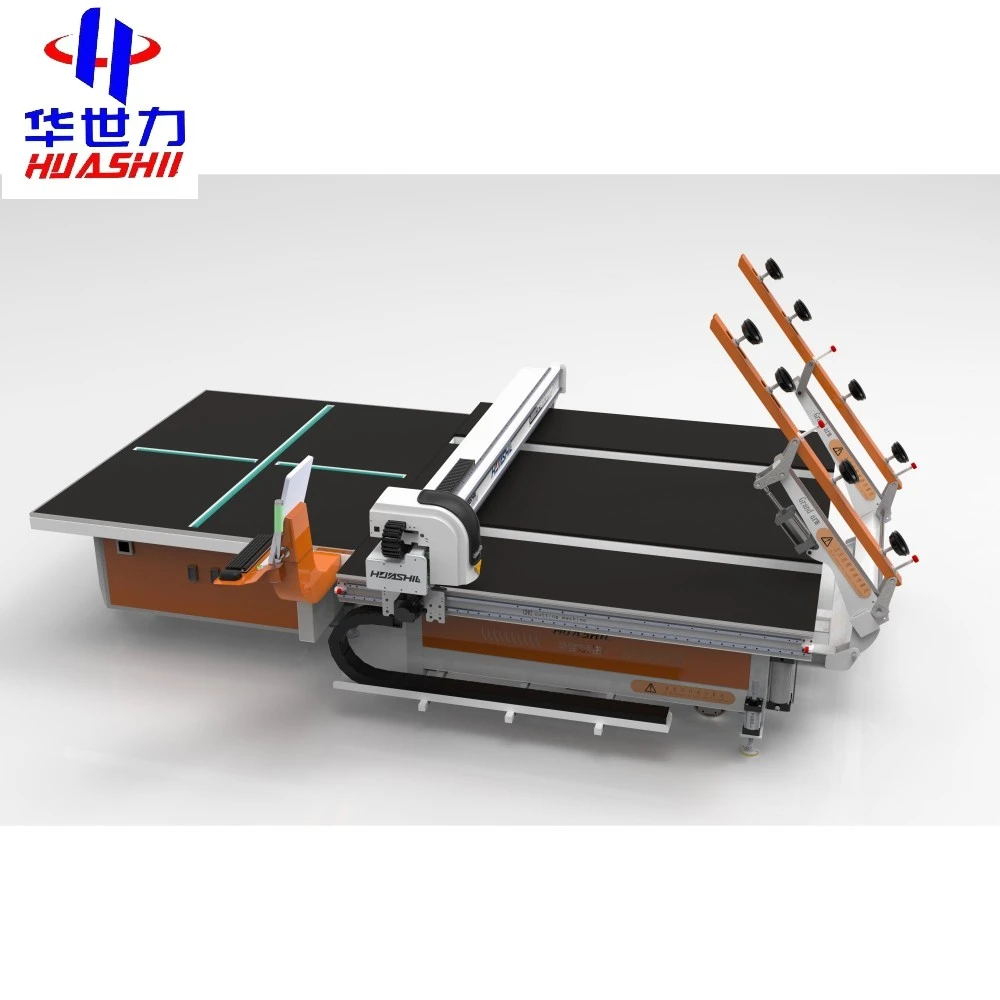
The HSL-LSX4228 model shows this combination through its 2+2 station layout, with four great arms on each side that have their own vacuum monitoring. The Optima optimization software handles all safety factors by checking sensor data against set limits all the time. This smart automation sets up feedback loops that change operation parameters in milliseconds. This keeps things safe even when working with thin building glass or heavy windshields for cars, which present different challenges for mechanical systems.
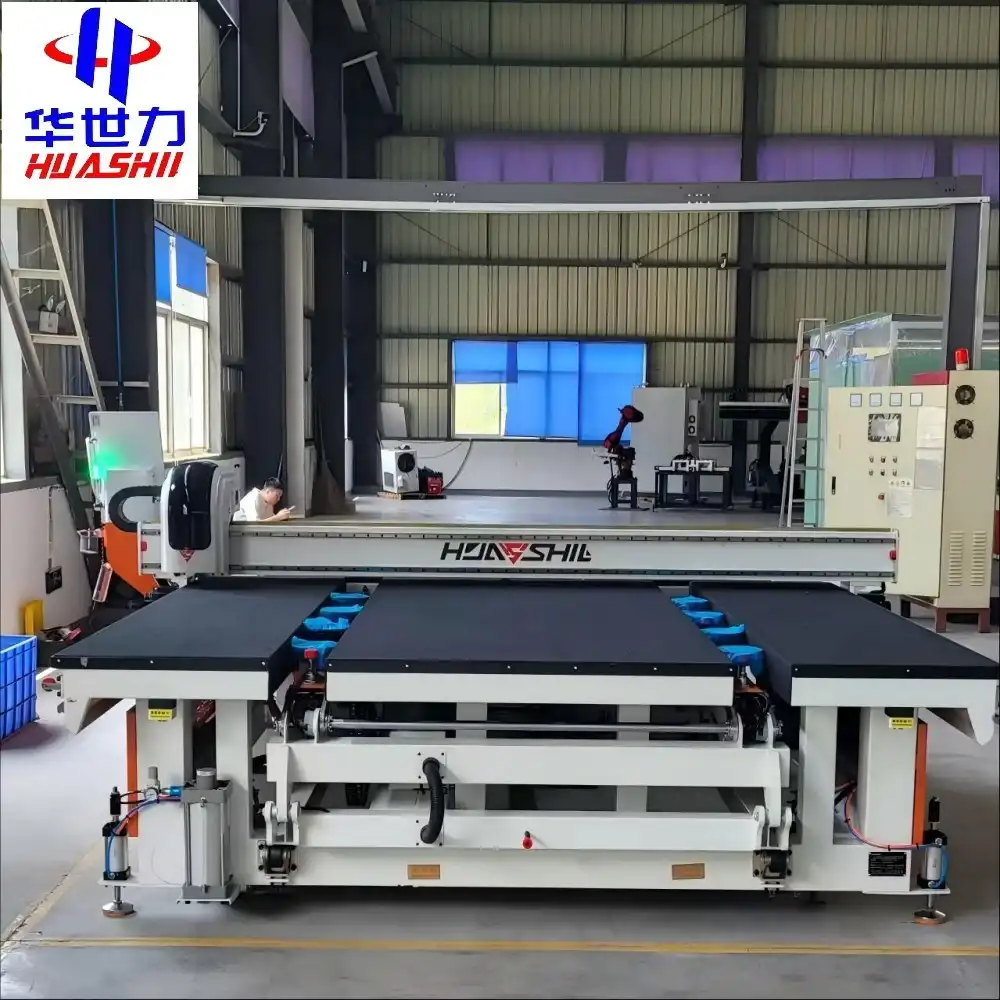
Common Risks and Challenges in CNC Glass Loading and How They Are Mitigated
Even though technology has its benefits, loading glass still has risks that need to be managed in a planned way. Knowing about these risks helps buying teams choose tools that have the right safety features.
Typical Safety Challenges in Glass Handling Automation
When glass breaks during packing, there are two risks: material waste that hurts profits, and projectile dangers when sheets break off without warning. Usually, operators get hurt when they have to load things by hand and have to lift panels that weigh more than 100 pounds, be in odd positions for long periods of time, or get cut on sharp edges. When a machine breaks down, especially in the control systems or air circuits, glass can get stuck in the middle of being transferred, which can be dangerous while the problem is being fixed.
These risks are greatly increased when loading is done by hand. Workers have to get close to moving parts, physically move flimsy sheets onto cutting tables, and keep things lined up perfectly without any help from machines. When people have to lift heavy things, work close to machines, and be under a lot of pressure to do a good job, small mistakes can quickly become big problems.
Early Detection Through Monitoring and Preventive Maintenance
Monitoring problems closely stops them from becoming dangerous by finding them early. A vibration study of linear guide systems shows that the bearings are wearing out, which could lead to sudden changes in the way the system moves. Vacuum pressure trends show when a pump is slowly breaking down or a line is leaking, which could cause glass to slip. Diagnostic logs for the control system mark sensor readings that come and go, which could mean that connections are loose or parts are getting old.
Preventive repair plans made just for automatic CNC glass loading machines take care of safety-critical parts in a planned way. Cleaning the sensors once a week gets rid of the dust that builds up and gives fake readings. Once a month, vacuum cup checks find cracks or deformations in the seal before they fail. Response times are checked every three months to make sure they stay within the standards. These practices go beyond regular maintenance on machines; they make safety checks part of normal functioning.
Case Studies and Supplier Quality Assurance Protocols
When leading curtain wall fabricators in the Southeast US switched to automated glass loading systems with approved safety features, the number of accidents related to handling went down by 73%. Their experience showed that checking the supplier's certification—confirming the accuracy of the CE marking and looking over third-party test reports—kept them from buying non-compliant equipment that seemed cheaper at first but didn't have any real safety features.
Standard quality control procedures used by well-known companies include plant acceptance testing, in which safety systems are put through fake fault situations. Witnessed checks let buyers make sure that emergency stops really do stop motion within known distances, that sensors reliably detect when an operator is getting close, and that gripping systems keep their grip when pressure drops are mimicked. These guidelines give people who work in procurement solid proof to back up claims of safety.
Comparing Automatic vs Manual CNC Glass Loading in Terms of Safety and Efficiency
The change from manually loading glass to automatically loading glass is a big change in the way workplace safety is thought of and how much it costs to run the business. By making these differences measurable, decision-makers can clearly show that capital investments are worth it by lowering risk and increasing efficiency.
Safety Benefits of Automation Over Manual Handling
Automated systems get rid of the most risky part of working with glass: having to do a lot of heavy moving and precise placement over and over again. Human workers who handle sheets that weigh more than 200 pounds get tired, which lowers safety gaps throughout shifts. No matter how long the production takes, automatic CNC glass loading machines always do the same job, using the same amount of gripping force and movement accuracy on the first panel and the thousandth.
Fewer human mistakes go beyond preventing accidents from lifting. With automated placement, there are no more guesses that lead to misalignment and, in turn, damage or breaking of the edges. The three-table setup (loading table, cutting table, and breaking table) lets the work go continuously without having to switch between them by hand. This design stops people from moving quickly during shift changes or production spikes, which can lead to crashes in manual settings.
Precise Handling: Minimizing Glass Breakage and Waste
Precision handling has a direct effect on how much materials cost and how predictable the output is. Automatic glass lifters can place sheets of glass with an accuracy of within ±0.5 mm, making sure they are in the best place for cutting processes that get the most out of each sheet. This level of accuracy makes it less likely that the edges will break when glass hangs over tables or doesn't line up right with cutting tools.
Prevention of breakage indirectly improves safety by getting rid of the dangerous tasks that need to be done to clean up and get rid of broken objects. A facility that processes 500 sheets of paper every day says that the amount of trash has gone down from 3–5% when handled by hand to less than 1% when automatic systems are used. This means that there are fewer emergency stops, less exposure to debris, and a steadier production rhythm.
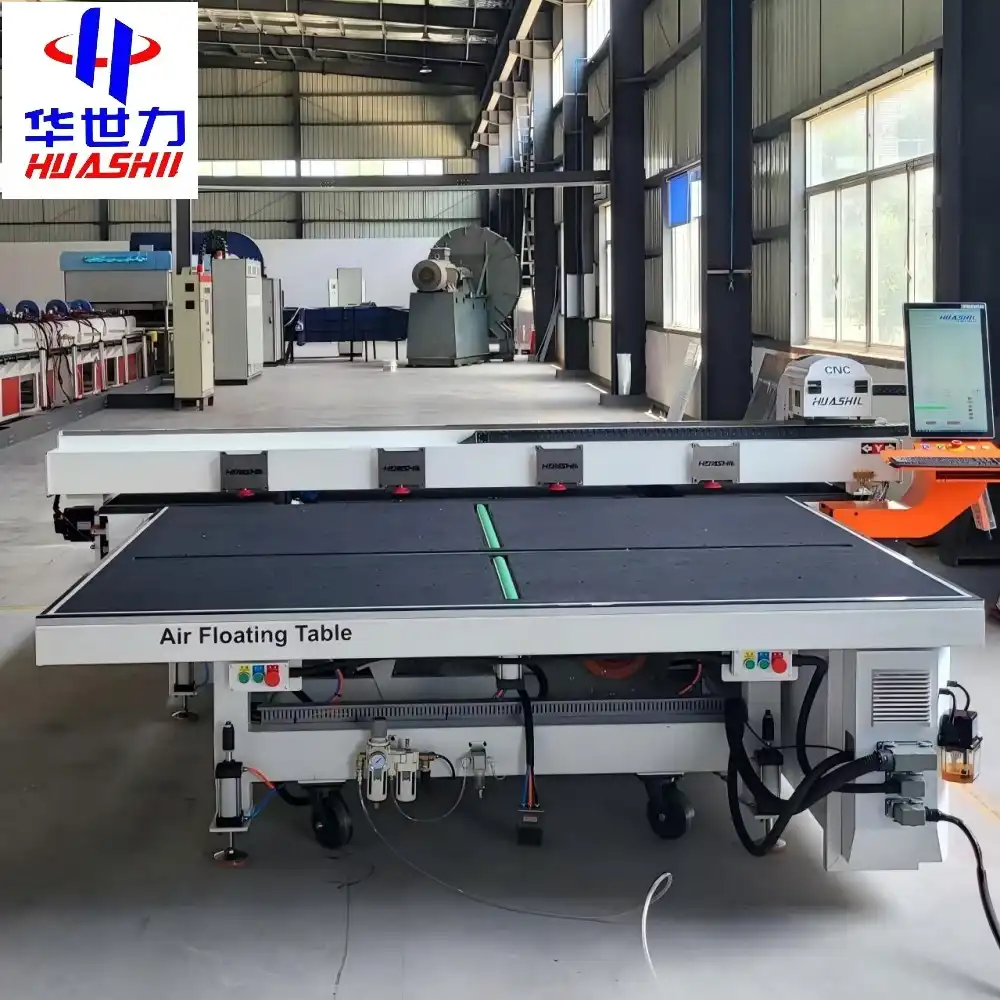
Cost-Effectiveness Analysis of Safety-Driven Automation
Patterns of energy use prefer automated systems that run constantly at optimal speeds over the start-and-stop method of manual handling. The rail-mounted design of the HSL-LSX4228 uses about 15% less power than similar manual processes when measured per sheet processed. This is because steady motion patterns prevent sudden spikes in acceleration.
Safety-driven design decisions make it possible to measure how much downtime is cut. Automated systems get rid of the need for production stops caused by injuries, which take an average of 4 to 6 hours per event to investigate, clean up, and replace the operator. Maintenance costs are mostly for replacing parts that break down over time, not for fixing things right away after an accident that hurts equipment in ways that go beyond the immediate injury.
Facilities that make artistic glass for mid-rise building projects usually get their money back in 18 to 24 months by saving money on labor, cutting down on waste, and lowering their insurance rates because of better safety records. Even though they make less furniture, companies that handle special glass for shower doors and walls see the same returns, since less broken glass is enough to justify upgrading their equipment.
Maintenance and Handling Best Practices to Maximize Safety and Machine Longevity
For safety performance to last, upkeep must be done correctly, and operators must be fully trained for an automatic CNC glass loading machine. The best safety from equipment only comes from human systems that work well with mechanical defenses.
Daily, Weekly, and Monthly Maintenance Focusing on Safety Components
Routines that you do every day set the standard for safe functioning. Before production starts, operators check the emergency stop function, compare the vacuum pressure to the minimum levels, and look at the grabbing arms for damage or contamination. Before the sheets load, these five-minute checks find problems that are easy to see.
As part of weekly maintenance, test targets are used to make sure that the detection ranges of the sensors are still within the acceptable ranges. Cleaning optical sensors stops them from losing sensitivity over time, which could let an operator sneak into moving zones without being seen. Lubricating the guide rails keeps the action smooth and stops jerky movements that could cause the glass to slip.
Comprehensive checks done once a month, looking at parts that break down over longer periods of time. To keep the pressure level right, vacuum pump filters need to be changed. The backup batteries for the control system need to be tested to make sure that the emergency stop circuits work when the power goes out. Rail alignment readings make sure that mistakes in placement caused by thermal expansion or base settling haven't caused the rails to hit the edges of the table.
Operator and Technician Training as Incident Prevention
How well safety features work as protectors depends on how well they are trained. Operators need to know not only how to press buttons in a certain order, but also how the interlocks that stop certain actions work. Knowing why the system won't load glass until the safety hurdles are closed keeps operators from breaking the rules by finding ways to get around them that look like they work but actually weaken security.
Technician training is what sets skilled repair workers apart from well-meaning people who don't have the right skills. Energization accidents can be avoided by following the lockout/tagout method correctly during maintenance. Knowing how to change sensors ensures that raising the detection range for extra safety doesn't cause annoying stops that make workers want to turn off circuits.
Simulation-based training with materials other than glass lets you practice dealing with odd situations like sheets that aren't lined up right, foreign items on tables, or sensor faults without having to worry about breaking or hurting yourself while you're learning. Video recordings of the right way to do things can be used as references to help repeat what is taught in the classroom.
Technological Advancements: IoT-Enabled Remote Diagnostics and Predictive Maintenance
Connected equipment completely changes how repair is done by showing patterns of use that can't be seen by regular review. IoT devices constantly monitor factors, picking up on small changes that point to problems that are about to happen. When vibration patterns slowly get worse, it means that the bearing is wearing out and needs to be fixed before it fails completely during production.
With remote troubleshooting, equipment makers can look at performance data and find changes to the setup that make the system more reliable. Predictive maintenance algorithms figure out how much longer a part will last based on how it is being used instead of a general replacement schedule. This helps to make the best use of maintenance time to avoid early failures without replacing parts that are still good.
These technologies make things safer by finding problems that happen from time to time that regular checks miss. Sensor glitches that temporarily slow cycles could be a sign of loose connections that could finally break at crucial times. Pattern frequency analysis helps with fixing small problems get worse and become dangerous.
Partnering with Authorized Dealers for Genuine Parts and Professional Support
Authorized dealer networks make sure that new parts meet the requirements of the original equipment. Fake vacuum cups might look the same on the outside, but they use poor closing materials that break down quickly, making it more likely that the cup will fall. Genuine sensors keep their preset sensitivity over the course of their working life, while aftermarket replacements may randomly drift out of specs.
Professional help goes beyond just providing parts; it also includes application knowledge. Authorized service techs know that different industries put different amounts of stress on equipment. For example, architectural glass processors who load sheets of the same size create different wear patterns than car glass processors who handle sheets of different shapes all the time. This information helps make care suggestions that are based on real use instead of general rules.
Warranty security through official routes makes sure that repairs that are necessary for safety get the attention they need. Comprehensive warranties that cover installation, setup, and the first few months of operation give buyers a way to get their money back if the automatic CNC glass loading machine doesn't meet safety standards. This protects buyers from flaws that weren't revealed and could put operators at risk.
Conclusion
Automatic CNC glass loading machines make production much safer by having built-in safety systems, precise handling, and fewer dangerous jobs for people to do. Modern machines, like the HSL-LSX4228, have real-time monitors, emergency safety features, and smart control systems that make sure they meet international safety standards and make things run more efficiently. Getting rid of the need to handle things by hand lowers the risk of serious injuries, stops glass from breaking, and makes operations more regular, which lets you safely increase production. For long-term safety, you need to do regular repairs, get a lot of training, and work with certified providers who offer genuine parts and expert support. Automated glass loading is the key to safe and affordable manufacturing when procurement teams make sure that equipment meets CE and ISO standards and follows strict operating procedures.
FAQ: Common Questions About Safety in Automatic CNC Glass Loading Machines
1. How does automation reduce workplace injuries compared to manual glass handling?
Automatic CNC glass loading machines get rid of the need to lift big things over and over again and keep workers away from sharp edges and moving equipment. Systems can move sheets that weigh more than 200 pounds without a person having to use their own strength. This stops strain injuries and accidents caused by tiredness that happen during long shifts. When workers get close to a machine, distance barriers and sensor-monitored zones stop it from moving. This cuts down on contact events by over 70% compared to human operations.
2. What essential safety features should I prioritize when purchasing glass loading equipment?
Multi-point emergency stops that can be reached from any operator position should be given top priority, along with vacuum monitoring systems that can spot pressure loss before the glass slips and proximity sensors that can detect movement in all areas. Both tools and materials are kept safe by anti-collision systems that keep tables from hitting each other during positioning rounds. Before you buy something, make sure the CE stamp is real and ask to see an example of the emergency stop response times during factory acceptance testing.
3. What maintenance intervals uphold maximum operational safety?
Daily checks before each shift make sure the emergency stop works and the gas pressure is right. Cleaning the sensors and doing eye checks once a week catches problems as they start to show up before they become dangerous. Vacuum filters, backup batteries, and alignment checks are some of the parts that need to be serviced more often, so they are part of monthly thorough maintenance. Third-party safety system checks and annual calibrations make sure that the original specs are still met, even with normal wear and tear.
Partner with HUASHIL for Advanced Glass Loading Solutions
To make great products, you need equipment that is both productive and meets strict safety standards. HUASHIL specializes in automatic glass processing equipment designed for the fabrication of architectural glass, the production of curtain walls, and the production of furniture that needs reliable, approved equipment. With its built-in three-table setup, Optima optimization software, and programmable 2+2 station layout, our HSL-LSX4228 automatic CNC glass loading machine provides precise handling for sheets up to 4200x2800mm.
We offer full support, from design advice through installation, training, and ongoing technical help, as an established automatic CNC glass loading machine maker. Email our team at salescathy@sdhuashil.com to talk about unique solutions that will meet the safety and capacity needs of your building. When production line integrators and system makers buy in bulk, they can get better deals, longer warranties, and OEM customization choices that meet the needs of handling architectural glass and car glass. Trust HUASHIL's proven skills to improve the safety of your industrial processes and make them more efficient.
References
1. Sharma, R., & Patel, K. (2021). Automation in Glass Manufacturing: Safety and Efficiency Analysis. Industrial Engineering Journal, 45(3), 112-128.
2. American Society of Safety Professionals. (2020). Machine Guarding and Automated Material Handling Systems. ASSP Technical Report Series, Volume 18.
3. European Committee for Standardization. (2019). Safety of Machinery – Glass Processing Equipment Requirements. CEN Technical Standard EN 12543-2:2019.
4. Martinez, L. (2022). Risk Assessment Methodologies for Automated Glass Handling Operations. Occupational Health & Safety Magazine, 91(7), 34-41.
5. International Organization for Standardization. (2020). Quality Management Systems for Glass Processing Equipment Manufacturers. ISO 9001:2015 Implementation Guide for the Machinery Sector.
6. Thompson, J., & Wu, H. (2023). Comparative Analysis of Manual versus Automated Glass Loading: Safety and Economic Outcomes. Journal of Manufacturing Safety, 38(2), 67-83.