




Selecting a cutting machine for stained glass windows requires careful evaluation of production capacity, precision standards, and long-term operational costs. For architectural glass fabricators and curtain wall integrators serving the U.S. market, the right equipment directly impacts production efficiency, material waste reduction, and profitability. Understanding machine specifications, automation capabilities, and supplier reliability helps procurement teams make informed investments that align with project demands and budget constraints.
Understanding the Basics of Stained Glass Cutting Machines
What Defines a Professional Glass Cutting System
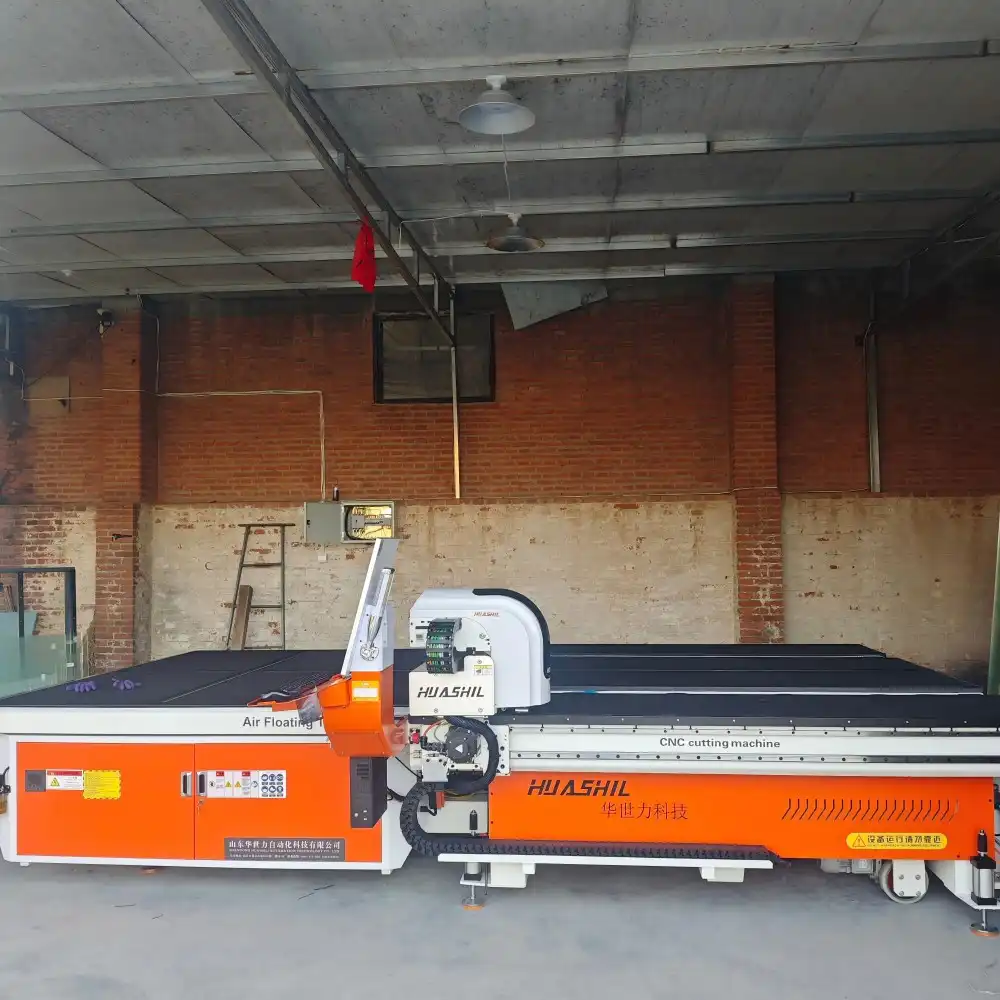
An automated stained-glass window-cutting machine slices, splits, and smooths raw glass sheets to manufacture precise pieces. However, industrial systems utilise computer-controlled positioning and mechanical pressure to provide uniformity in high-volume manufacturing. Progress continues with the HSL-YTJ3829 model. It can handle glass pieces up to 3660x2800mm and 2mm to 19mm thick, covering most architectural and artistic glass applications.
Modern systems employ Optima optimisation software to discover waste-free cutting patterns. When dealing with pricey stained glass, this program considers project demands and designs cuts to maximise material use. The system reduces human labour while maintaining 0.2mm cut precision per construction regulations.
Core Components That Drive Performance
Loading large glass sheets electronically is safer than by hand. Synchronous belt conveyors of the HSL-YTJ3829 transport items smoothly without scratching. Its air flotation mechanism suspends glass on cushioned air pressure. Prevents micro-cracks that weaken the structure.
Cutting routes may be modified in real time using automatic edge detection technology that discovers glass edges without measurement. Pressure control systems adjust cutting force by material thickness. This ensures smooth cuts via 2mm decorative panels and 19mm insulation packages. The built-in breaking table controls stress along score lines, making it easier to separate parts without much manual labour. Their combined manufacturing rates are 300–400% quicker than previous approaches.
Advantages Over Traditional Hand Tools
The major advantage of automated cutting over manual cutting is consistency. Human operators naturally adjust pressure and angle during hand-held cuts, increasing rejection rates by 5–8%. Machine-controlled methods remove this difference by producing edges of the same quality, reducing the need for further cutting.
Increased safety affects workers' compensation and compliance expenses. Workers avoid hazardous zones during cutting sequences with the HSL-YTJ3829's 360-degree remote control. CE accreditation indicates that a corporation respects European safety requirements, which are increasingly employed in U.S. working regulations. ISO9001 accreditation verifies the quality management system, which purchasing teams use to convince financial approvers to fund capital projects.
Speeding up manufacturing reduces project response times. One person can perform what three technicians used to do with hand-held cutters with automated equipment. Labour cost reduction pays off in 18–24 months for two-shift firms.
Core Criteria for Choosing the Right Cutting Machine
Matching Capacity to Production Volume
Curtain wall fabrication operations that make decorative glass for commercial buildings require systems that can function constantly for eight hours without diminishing performance. Industrial machines like the HSL-YTJ3829 fit in production zones with a 5780 x 4925 mm footprint. Smaller establishments may pick smaller designs for multipurpose rooms.
The project's interoperability depends on glass thickness. Curtain wall builders use 15–19mm insulated glass, whereas shower door makers use 6–12mm. A stained glass window cutting machine with lengths from 2mm to 19mm provides architectural and ornamental clients with many alternatives as their demands evolve.
The biggest sheet measurements determine operational restrictions. You don't have to field-join smaller panels since the 3660x2800mm dimension fits current building facades' large glass sizes. Bidding on large corporate or educational projects that need clear sightlines requires this competence.

Precision Requirements and Quality Control
Architectural work must meet higher criteria than art. For optimal gasket sealing, structural glazing systems need straight edges within ±0.15mm. However, art glass projects may accommodate deviations of up to ±0.5mm. Knowing these variances helps match machine talents to consumer needs.
Repeatability indicates how frequently and precisely the same equipment cuts various manufacturing batches. High-quality systems don't require recalibration after thousands of cycles to maintain position accuracy. When replacing panels months after installation, reliability is crucial since the new parts must fit exactly.
Compared to human layout methods, automated measuring functions reduce operator error. Edge-finding sensors automatically locate material edges, eliminating tape measure errors in complex cutting patterns. Businesses that build intricate geometric ornamental walls benefit from this technique.
Maintenance Demands and Operational Continuity
Contract-based firms lose money when equipment breaks down. Routine maintenance is quicker on machines with easy service locations, reducing production downtime. The HSL-YTJ3829's modular design enables workers to replace cutting wheels and sensors without disassembling big pieces.
Spare part availability affects long-term operational planning. Suppliers with U.S. distribution networks can deliver parts in days instead of weeks, which is crucial for project deadlines. Cutting wheels and drive belts wear out rapidly, so have spares on hand to minimise expensive downtime.
The entire cost of ownership for a cutting machine for stained glass windows depends on energy utilisation. Commercial customers increasingly prioritise energy-efficient solutions because they cut energy costs throughout shifts and enhance organisational sustainability. Motor efficiency solutions may save $3,000 to $5,000 per year compared to outdated machinery.
Comparing Popular Types and Brands for B2B Buyers
Manual Versus Automated Cutting Technologies
Specialty shops may still create tiny bespoke items using manual straight cuts. These instruments are portable and inexpensive, but qualified specialists must utilise them to produce consistent results. Skilled workers can produce 40–60 square feet per hour.
Electric handheld devices combine manual and automated processes. Makita makes portable equipment for on-site repairs and adjustments. These instruments cut quicker than humans, but they're neither accurate nor reproducible for high-volume contract production.
Architectural glass specialists use fully automated CNC cutting machines for stained glass windows. These tools can process 200–300 linear feet of material each hour by cutting, breaking, and moving. For operations that manufacture more than 10,000 square feet of items annually, the initial expenditure requires careful financial planning, but the time and effort savings make it worthwhile.
Evaluating Supplier Credentials and Support Networks
When procurement teams lack the technical competence to assess requirements, brand awareness might replace long-term reliability. HUASHIL, a decades-old company, has product development polish that smaller organisations lack.
The manufacturer guarantees the equipment's durability with a warranty. Standard one-year warranties cover manufacturing defects, while extended warranties that cover replacement parts indicate superior construction quality. Before buying, compare guarantee conditions to identify reliability difficulties.
Equipment difficulties might delay production until technical support is provided after the sale. In contrast to email-only help from offshore operations, 24/7 phone support with U.S. professionals reduces downtime expenses. Asking for client references from similar firms provides you a better picture of performance than marketing.
Understanding Total Cost of Ownership
After five years of installation, training, maintenance, and energy usage, the purchase price accounts for 40–50% of the overall cost of ownership. A $50,000 machine with $8,000 annual maintenance costs more than a $65,000 device with $4,000 annual maintenance during a seven-year operational life.
Installation difficulty affects start-up costs and timetables. If systems require foundation reinforcement or power upgrades, deployment costs rise by $5,000 to $15,000. Factory visits during tool reviews demonstrate that initial bids typically overlook installation requirements.
Investment in operator training preserves tool safety and efficiency. Full programs that teach software usage, maintenance, and problem-solving reduce errors and boost output. Providing 40–60 hours of initial training ensures worker readiness before full production.
Tips and Best Practices for Maximizing Cutting Machine Efficiency
Operational Protocols for Consistent Results
Daily starting steps standardise performance before production. Technicians should evaluate air pressure, cutting wheel sharpness, and edge recognition accuracy using waste material. Ten-minute inspections prevent costly glass material from being wasted due to quality issues.
Good material handling protects glass quality and worker safety. Place sheets with factory sides aligned with machine reference points for accurate measurements. The HSL-YTJ3829's automated loading system eliminates lifting injuries from large panels when operators follow the approved loading procedures.
Software optimisation requires knowing the project's top priorities. Prioritising material yield for pricey speciality glass and maximising cutting speed for tight production schedules work effectively. Experienced personnel optimise profiles for a stained glass window cutting machine for repeating project types to save setup time between operations.
Preventive Maintenance Schedules
Weekly maintenance on a cutting machine for stained glass windows sharpens the cutting between major repairs. Cleaning the air float system's micro-perforations prevents uneven glass support and setup errors. Lubricating linear rail systems per the manufacturer's specifications keeps wagons running smoothly for straight cuts.
Monthly calibration checks ensure that measurement accuracy hasn't changed. Run test patterns and compare actual measurements to programmed results to determine what calibration is needed before quality issues arise. Tracking calibration results creates ISO-compliant quality records.
Annual professional servicing prevents worn parts from breaking. Factory-trained experts inspect electrical systems, pneumatic seals, and software. Maintenance done on schedule is easier than fast repairs during hectic project periods.
Troubleshooting Common Performance Issues
Most break quality issues are caused by improper cutting pressure, not dull wheels. Testing on waste material gently increases pressure to find the ideal settings for various glass kinds. The HSL-YTJ3829's automated pressure control reduces this trial-and-error procedure, although it may be overridden manually for rare materials.
Edge chipping frequently results from misaligned cutting and breaking. Make sure broken tables follow score lines to address most chipping issues. Replace broken or damaged parts immediately to prevent quality issues from spreading to new batches.
Software failures that interrupt automatic procedures typically result from corrupted optimisation files or network difficulties. Keeping backups of trusted cutting applications allows you to resume work quickly following software issues. Equipment makers often update software to repair bugs and speed up performance, preventing many technical issues.
How to Finalize Your Purchase Decision: Matching Needs to Solutions
Defining Your Production Requirements
Semi-automated systems may be sufficient for small furniture glass producers that produce 500 to 1,000 square feet of glass per month while allowing for development. Curtain wall contractors working on multi-building projects require fully automated lines that can manage over 5,000 square feet of work each week to remain on time.
Design complexity determines technological needs. Architectural glass with repetitive rectangular panels can be machined, while ornamental glass with curved cuts and detailed designs requires more complicated software. Our HSL-YTJ3829 stained glass window cutting machine's Optima optimisation software can handle complex nesting algorithms to maximise the use of pricey art glass.
Your project portfolio's materials impact machine design objectives. Architectural glass businesses require systems for heavier materials, whereas decorative glass shops need systems for 2–3mm sheets without breaking.
Evaluating Supplier Partnerships
Asking for specific technical documentation during the evaluation shows how skilled the supplier is and how mature the product is. Comprehensive guides that cover operation, upkeep, and fixing show that the equipment is well-developed, while a lack of paperwork shows that the product development is not yet finished.
Factory demos give you a realistic look at speed that you can't get from just reading the specs. Watching tools work with materials that are similar to those you need to use shows you any possible problems before you make a buying decision. A lot of suppliers, like HUASHIL, let potential customers tour their facilities and see how their equipment works in real-world production settings.
When U.S. buyers buy equipment from around the world, payment terms and coordinating foreign operations are very important. Customs clearance is easier when suppliers are familiar with Letter of Credit transactions and shipping paperwork. Making it clear who is responsible for overseeing the installation and helping with the initial setup helps avoid confusion after delivery.
Investment Decision Checklist
For production capacity research, the throughput of machines is compared to present amounts and growth forecasts for the next three years. Scaling equipment efficiently as a business grows keeps replacement costs from happening too soon and keeps initial budgets from being drained by capacity that isn't being used.
The ability to ensure quality determines whether technology meets customer needs without any extra work. When machines deliver finished edges that are within tolerance, grinding isn't needed, which saves time and money on labor.
As part of its supplier stability assessment, a company's longevity, industry certifications, and financial health signs are looked at. Partnerships with well-known manufacturers make sure that parts and technical support are always available for equipment that has a service life of 10 to 15 years.
The return on investment is calculated by comparing the cost of the investment with its operating costs and the amount of labor that is saved. Most procurement offices aim for capital tools to have payback times of 24 to 36 months in order to get executive approval.
Conclusion
Choosing the right cutting machine for stained glass windows for projects means combining technical requirements with budget and operating needs. Automated systems like the HSL-YTJ3829 improve accuracy, safety, and speed, which changes the cost of production for companies that make ornamental glass and curtain walls. By looking at the capacity of the equipment, the reliability of the provider, and the total cost of ownership, investments can be made that meet both present needs and plans for future growth. When procurement teams use structured selection criteria, their companies have a competitive edge in markets where quality, speed, and dependability are becoming more important.
FAQ
1. What machine type works best for intricate stained glass designs?
Cutting systems that are handled by CNC and have advanced optimization software are best for cutting shapes that are not simple. When professional machines are connected to the Optima software, it figures out the best way to cut so that the least amount of material is wasted while still being precise in complex shapes. With complex patterns that are hard to cut by hand, automated edge detection and pressure control make sure that the quality is always the same.
2. How often should I schedule maintenance for glass cutting equipment?
Visual checks every day, cleaning schedules every week, and monthly calibration checks make sure that everything works at its best. A professional service for your cutting machine for stained glass windows, once a year by factory-certified experts, takes care of worn-out parts before they break. This preventative method cuts down on unexpected downtime and increases the service life of equipment beyond ten years if it is used consistently as directed by the maker.
3. Are automated cutters safe for operators with limited experience?
Modern systems with safety certifications like CE approval and remote control operation keep everyone safe, no matter how much experience they have. Safe practices are set up through comprehensive training programs that cover how to use machines, what to do in an emergency, and how to use safety gear. By keeping your hands away from cutting tools and heavy glass sheets, automated processes actually lower the risk of getting hurt compared to cutting by hand.
Ready to Upgrade Your Glass Cutting Capabilities with HUASHIL?
Shandong Huashil Automation Technology Co., Ltd. has been making things for decades and can help with architectural glass processing. Our supplier credentials for our cutting machine for stained glass windows include CE and ISO9001 certifications, which show that our quality management systems are ones that fabricators all over the world trust. The HSL-YTJ3829 model is a production system made for the U.S. market that blends intelligent edge recognition, automatic loading, and air flotation technology. Email our team at salescathy@sdhuashil.com to talk about your particular needs and get proposals that take capacity, budget, and schedule into account.
References
1. Anderson, K. (2021). Industrial Glass Processing: Technologies and Applications for Architectural Markets. Manufacturing Technology Press.
2. Chen, L. & Williams, R. (2022). "Automation in Specialty Glass Fabrication: Cost-Benefit Analysis for Small and Medium Enterprises." Journal of Manufacturing Systems, 58, 142-156.
3. Glass Association of North America. (2023). Glass Processing Equipment Standards and Best Practices Manual. GANA Technical Publications.
4. Martinez, J. (2020). Precision Cutting Technologies for Architectural Glass: A Buyer's Guide. Industrial Equipment Review.
5. Thompson, S. (2022). "Total Cost of Ownership Analysis for CNC Glass Cutting Systems." Building Materials Procurement Quarterly, 34(3), 78-92.
6. United Glass Manufacturers Council. (2023). Safety Standards and Operational Guidelines for Automated Glass Processing Equipment. UGMC Industry Standards Publication.