




Industrial manufacturing demands precision, efficiency, and consistency—qualities that glass processing equipment delivers with remarkable reliability. From architectural glass fabrication to automotive components, modern manufacturers face mounting pressure to reduce labor costs, minimize material waste, and accelerate production cycles. Glass processing equipment addresses these challenges through automated cutting, grinding, polishing, and tempering technologies that transform raw glass into finished products meeting exact specifications. These advanced machines eliminate human error, enhance workplace safety, and integrate seamlessly into production workflows, making them indispensable for manufacturers competing in today's global marketplace.
Understanding Glass Processing Equipment and Its Role in Manufacturing
In order to convert raw glass sheets into exact components, modern production facilities rely on advanced gear. Cutting tables, edge grinding systems, polishing units, and tempering furnaces are examples of glass processing equipment that function in automated production lines.
What Defines Modern Glass Processing Technology
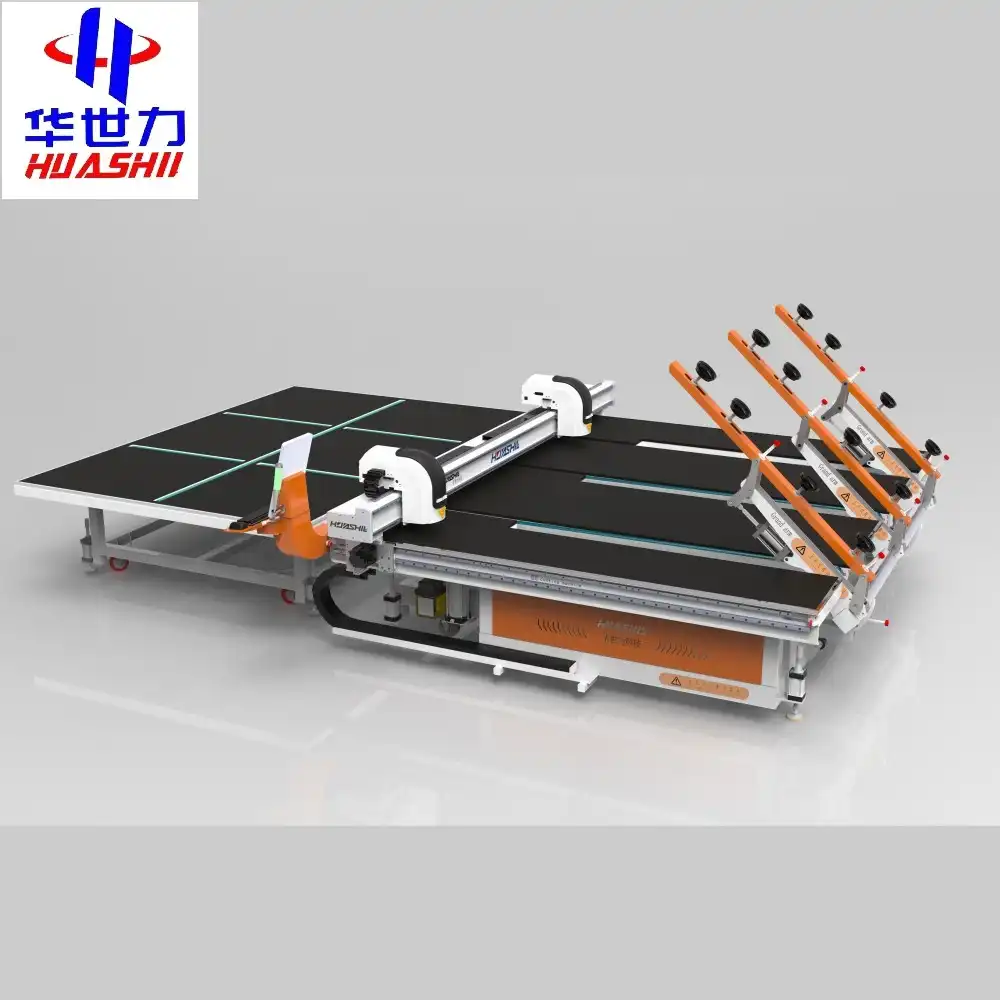
Modern glassmaking equipment combines sophisticated software optimization platforms with CNC automation. Consider our HSL-LSX5133 model, which operates via above-ground or subterranean rail systems and has three specialized work surfaces (loading table, cutting table, and breaking table). These elements are coordinated by the Optima software, which determines the best cutting patterns to save waste and increase throughput.
How Equipment Enhances Production Quality
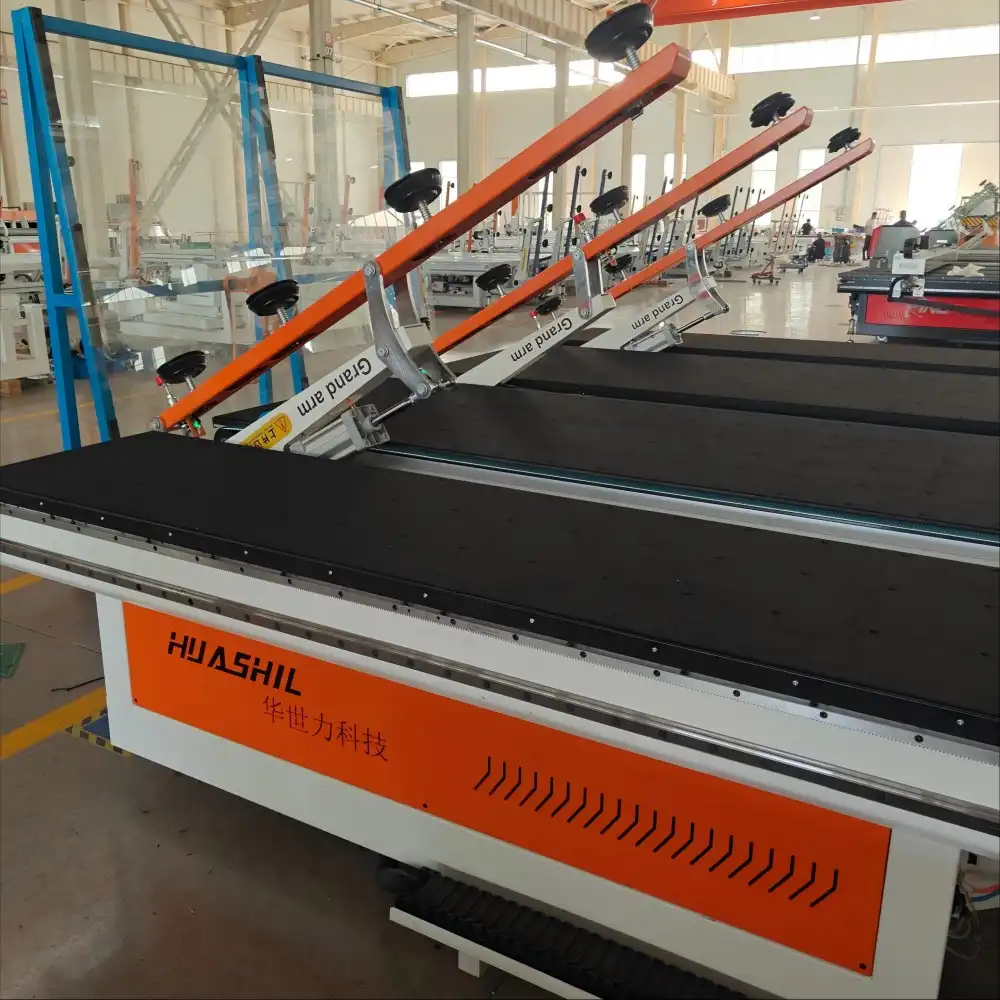
Manual procedures are unable to reliably maintain dimensional precision within microns, whereas automated systems do. With five grand arms on each side, the HSL-LSX5133 can handle glass sheets up to 5100x3300mm, guaranteeing reliable material handling during the cutting process. Microcracks and edge chipping that jeopardize structural integrity and aesthetic appeal are avoided by this arrangement.
Safety and Ergonomic Improvements
Workers who cut glass by hand are vulnerable to heavy lifting risks, repetitive strain injuries, and sharp edges. Automated machinery keeps exact control over the movement of materials while removing workers from hazardous areas. Operators may load and unload materials in specified safe zones while the machine performs autonomous cutting operations thanks to the 2+2 station layout.
The Evolution and Innovation in Glass Processing Technologies
Over the past 20 years, the glass sector has seen a dramatic transition in glass processing devices. Production floors used to be dominated by manual scoring wheels and hand-guided cutting equipment, which led to bottlenecks and inconsistent quality.
From Manual Methods to Automated Systems
Skilled artisans who could accurately score and snap glass were crucial to the early fabrication facilities. However, this method caused serious safety hazards, reduced manufacturing speed, and produced inconsistent quality results. By immediately converting digital blueprints into machine motions with repeatability not feasible with manual operation, CNC technology revolutionized the industry.
Industry 4.0 Integration
Smart sensors that track cutting pressure, blade quality, and material location in real-time are increasingly a feature of modern processing equipment. Throughout manufacturing runs, these systems maintain optimal performance by automatically adjusting settings. Regenerative braking systems and energy-efficient motors save operating costs while promoting environmental programs that are important to corporate procurement departments assessing total cost of ownership.
To remain competitive, top firms throughout the globe have embraced this technology. Businesses like Bystronic and Saint-Gobain show how automation leads to improved production quality and decreased downtime, which are important considerations for production directors when assessing capital equipment expenditures.
Software Optimization Breakthroughs
Cutting optimization software is a further advancement. In order to reduce material waste, platforms such as Optima evaluate incoming orders, determine the best cutting patterns, and sequence tasks. Profitability is strongly impacted by this capacity, especially for large businesses that process hundreds of glass sheets per day. The program takes into account variables that human planners find difficult to concurrently optimize, such as form complexity, production schedule limitations, and edge quality standards.
Key Types of Glass Processing Equipment and Their Industrial Applications
Specialized machinery setups are needed for various industrial scenarios. Procurement teams may define equipment that complies with operational needs by having a thorough understanding of these categories.
Glass Cutting Technology Options
Semi-automatic scoring tables and fully automated CNC assembly lines are examples of glass process solution cutting systems. While automated technologies like the HSL-LSX5133 serve high-throughput facilities making architectural glass, automotive components, and furniture panels, manual methods are better suited for low-volume specialty operations. The decision is based on needs for quality consistency, form complexity, and manufacturing volume.
Grinding and Polishing Machines
Both safety and aesthetics are impacted by edge quality. While polishing systems offer optically smooth edges for display applications, grinding machines eliminate sharp edges and produce bevels. These devices are crucial for suppliers in the building sector because architectural glass for curtain walls needs exact edge profiles to guarantee adequate sealing within frame systems.
Tempering and Strengthening Equipment
Shower doors, car windows, and building facades are examples of safety glass applications that call for either chemical or thermal strengthening procedures. Compared to annealed glass, tempering furnaces enhance impact resistance five times by heating glass to certain temperatures before carefully cooling it. Although this technology requires a significant financial investment, it allows producers to cater to regulated markets with stringent safety requirements.
How to Choose the Right Glass Processing Equipment for Your Industrial Needs
A thorough examination of present operations and plans for future expansion is necessary when choosing the right machinery. During cycles of equipment replacement or facility growth, production directors frequently have to make this choice.
Assessing Production Volume and Precision Requirements
While establishments processing more than 500 units require fully automated lines, small-scale enterprises generating 50–100 pieces per day may find semi-automatic equipment enough. Decorative glass may withstand greater dimensional variation than automotive applications, which require precise tolerances for correct fit.
The adjustable 2+2 station architecture of the HSL-LSX5133 accommodates various production sizes. Manufacturers may safeguard their initial capital investment while retaining upgrade routes by starting with a basic setup and increasing capacity by adding stations as production volumes rise.
Evaluating Automation Levels
Although they need expert operators and limit output speed, manual machines save upfront expenses. Fully automated lines optimize efficiency for high-volume producers, whereas semi-automated systems strike a balance between cost and increased throughput. Labor expenses, production capacity, waste reduction, and quality consistency across equipment lifespan—typically 10 to 15 years for industrial glass processing equipment—should all be taken into account when calculating total cost of ownership.
Partnering with Established Manufacturers
Production continuity is directly impacted by equipment dependability. Reputable manufacturers offer extensive warranties, readily available spare parts, and technical assistance that is essential for reducing downtime. When manufacturing delays cost thousands of dollars every day, companies like Bottero, Hegla, and Bavelloni have gained notoriety in the industry for their consistent quality and fast customer service.
Engineering managers should ask for factory inspections, reference installations, and comprehensive technical requirements when assessing vendors. Specification documents by themselves are unable to represent the true cutting speeds, accuracy levels, and simplicity of operation that are shown by machinery demonstrations.
Best Practices and Safety Tips in Industrial Glass Processing
Comprehensive procedures and continuous training are necessary for the safe operation of complex machinery. In addition to their moral duty to safeguard employees, production facilities must comply with regulations.
Recognizing Common Operational Hazards
Without enough ventilation, the small particles produced by glass cutting can be harmful to the respiratory system. When handling materials, sharp edges can cause cuts, and automated equipment can cause pinch points and crush zones. Heat from grinding and polishing processes may burn people, and if tempering equipment breaks down, glass pieces might turn into missiles.
Implementing Protective Measures
The first line of defense is personal protective equipment, such as safety glasses, cut-resistant gloves, and hearing protection. While emergency stop mechanisms enable quick shutdown in the case of a hazard, machine guarding restricts access to moving parts while the machine is operating. The safety interlocks on the HSL-LSX5133 eliminate crush dangers during loading operations by preventing table movement when access doors open.
Frequent maintenance plans maintain equipment performance and avoid malfunctions that might lead to hazardous circumstances. Before severe wear results in irregular breakage, cutting wheels need to be replaced on a regular basis. Sensor calibration guarantees precise material placement, and rail systems require lubrication to sustain smooth motion. While preserving safe working conditions, these routine operations increase the longevity of machinery.
Training and Competency Development
Regular maintenance, emergency protocols, and regular operation are all included in thorough operator training. Before working freely, new hires should finish monitored operating periods. As equipment advances, refresher training offers new safety protocols and emphasizes correct processes. Facilities can prove compliance during safety audits by using documentation systems that track training completion.
Conclusion
The future of industrial production lies in establishments that prioritize efficiency, accuracy, and automation. By lowering labor costs, increasing production capacity, and improving quality consistency, glass processing equipment turns these ideas into real competitive advantages. Whether producing ornamental panels, automotive parts, or architectural glass, contemporary producers need dependable equipment that produces consistent results throughout thousands of production cycles. By reducing waste, increasing throughput, and improving quality, the technology has advanced past experimental phases to become established systems that yield quantifiable returns on investment.
FAQ
1. What factors determine glass processing equipment pricing?
The level of automation, manufacturing capacity, brand reputation, and technical specifications are all reflected in equipment prices. While fully automated CNC assembly lines, such as the HSL-LSX5133, run from $150,000 to $400,000 depending on configuration, entry-level manual systems start at about $15,000 to $30,000. Installation, training, inventory of spare parts, and maintenance contracts are all included in the total cost of ownership. Because they are more efficient and use fewer workers, higher initial investments frequently result in lower manufacturing costs per unit.
2. Can glass processing equipment handle custom specifications?
In order to handle certain industrial applications, modern machinery enables a great deal of customisation. Maximum glass size, cutting speed, edge profile choices, and automation levels are examples of configurable parameters. Custom cutting patterns for unique forms may be accommodated by Optima software, and the HSL-LSX5133's adaptable station layout can handle various production workflows. When manufacturers collaborate with equipment providers, they may design adaptations to meet specific production needs.
3. What are typical lead times for equipment procurement?
Production, quality testing, and shipment usually take six to ten weeks for a single unit. Customized production lines take three to six months to complete, including engineering approval, manufacturing, installation, and operator training. Orders from overseas take longer to ship; ocean freight to North American ports usually takes four to six weeks. Prior to equipment installation, site preparation, electrical infrastructure, and compressed air systems should all be considered in project planning.
Partner with HUASHIL for Advanced Glass Processing Solutions
Selecting a glass processing equipment provider who is aware of your production issues and growth goals is the first step towards achieving manufacturing excellence. At HUASHIL, we specialize in automated equipment made especially for furniture makers, curtain wall integrators, and architectural glass fabricators looking for dependable, high-performing solutions. Our HSL-LSX5133 CNC cutting assembly line blends tried-and-true technology with adaptable configuration choices to meet your changing production needs. Our extensive technical assistance, availability of replacement parts, and operator training maximize production uptime while safeguarding your capital investment. Contact our team today at salescathy@sdhuashil.com to see how our manufacturing experience in glass processing equipment can improve your production capacity and competitive positioning.
References
1. Glass Processing Technology Fundamentals and Applications, International Journal of Manufacturing Engineering, 2022.
2. Automation in Architectural Glass Fabrication: Industry Trends and Best Practices, Building Materials Research Institute, 2023.
3. Safety Standards for Industrial Glass Processing Equipment, Occupational Safety and Health Administration Guidelines, 2021.
4. CNC Technology Integration in Modern Glass Manufacturing, Advanced Manufacturing Technology Review, 2023.
5. Total Cost of Ownership Analysis for Glass Processing Machinery, Industrial Equipment Procurement Journal, 2022.
6. Energy Efficiency and Sustainability in Glass Fabrication Equipment, Green Manufacturing Technology Report, 2023.