




Connecting automated glass processing systems to Manufacturing Execution Systems (MES) represents a critical challenge for plant managers and production directors across architectural glass, curtain wall fabrication, and furniture glass manufacturing sectors. These systems—encompassing cutting, edging, polishing, and tempering equipment—must communicate flawlessly with MES platforms to deliver real-time production visibility, quality control, and operational efficiency. When integration fails, manufacturers face costly downtime, data inconsistencies, and missed production targets. Understanding the seven most common pitfalls helps engineering managers, technical buyers, and procurement professionals make informed decisions that protect their capital investments and ensure seamless factory floor operations.
Understanding the Integration Challenge Between Automated Glass Processing Systems and MES
For specialised tasks, automated glass processing systems must cooperate closely with bigger plant management systems. The brains of contemporary glass manufacturers are MES platforms. They organise manufacturing using machine data. How effectively these two levels function together determines whether a plant accomplishes efficiency targets or struggles with dispersed information and reactive problem-solving.
Manufacturing Execution Systems manage work orders, tools, quality, and data to help firms improve. When glass cutting lines, edge machines, and tempering furnaces are linked to MES, production supervisors may examine cycle times, material use, and equipment performance. Openness improves timeliness, waste reduction, and delivery dependability, which B2B customers consider when calculating total cost of ownership.
Glass processing methods vary, making the issue more difficult. Building glass CNC glass cutting assembly lines need different data points than furniture glass ones. Distinct manufacturers' equipment may have distinct control, transmission, and data formats. These variances may make integration difficult if not planned, lowering the value of both the processing equipment and the MES investment.
Pitfall 1: Incompatible Communication Protocols Between Glass Processing Systems and MES
The Protocol Mismatch Problem
Communication standards tell computers and apps how to share data. Depending on the maker and model, automated glass processing systems may use OPC UA, Modbus TCP, PROFINET, or their own protocols. MES systems also handle a number of different communication standards. When standards don't match up, data either doesn't get sent or gets sent in pieces, which makes it impossible to watch production.
Protocol mismatches show up as progress updates that are late, production counts that are missing, or contact that stops completely. The MES might record that an edge machine finished a job, but it might not do so for a few minutes, if it does so at all. This latency messes up scheduling algorithms and makes it impossible to respond to quality problems in real time. These issues are found by engineering managers during commissioning, which is already a busy time for budgets and timelines for integration.
Strategic Solutions for Protocol Compatibility
By interpreting between different communication standards, middleware fills in the gaps between protocols. Between processing equipment and MES, these software layers change data formats and handle handshakes. Choosing hardware with flexible built-in protocols makes you less reliant on middleware. More connectivity options are available for machines that handle more than one communication standard, especially OPC UA, which has become a standard for industrial automation.
When choosing tools, procurement teams should be clear about the protocol standards. It should be very clear in technical documents which protocols are enabled, how often data is refreshed, and what data points are available. Implementation risk is lower when vendors offer systems that are ready to be integrated and have been shown to connect to MES. Working with established automated glass processing systems suppliers who know what MES needs saves time and money on expensive upgrades.
Pitfall 2: Underestimating Software Integration Complexity
The Hidden Software Challenge
Hardware connections are only one part of the equation for integration. It's important to carefully set up and test the software layers, such as the PLC code, control interfaces, and MES connections. When machine control software and MES systems don't work with each other's APIs, it makes integration harder. When different pieces of software don't have the same version, bugs show up that can only happen in certain situations.
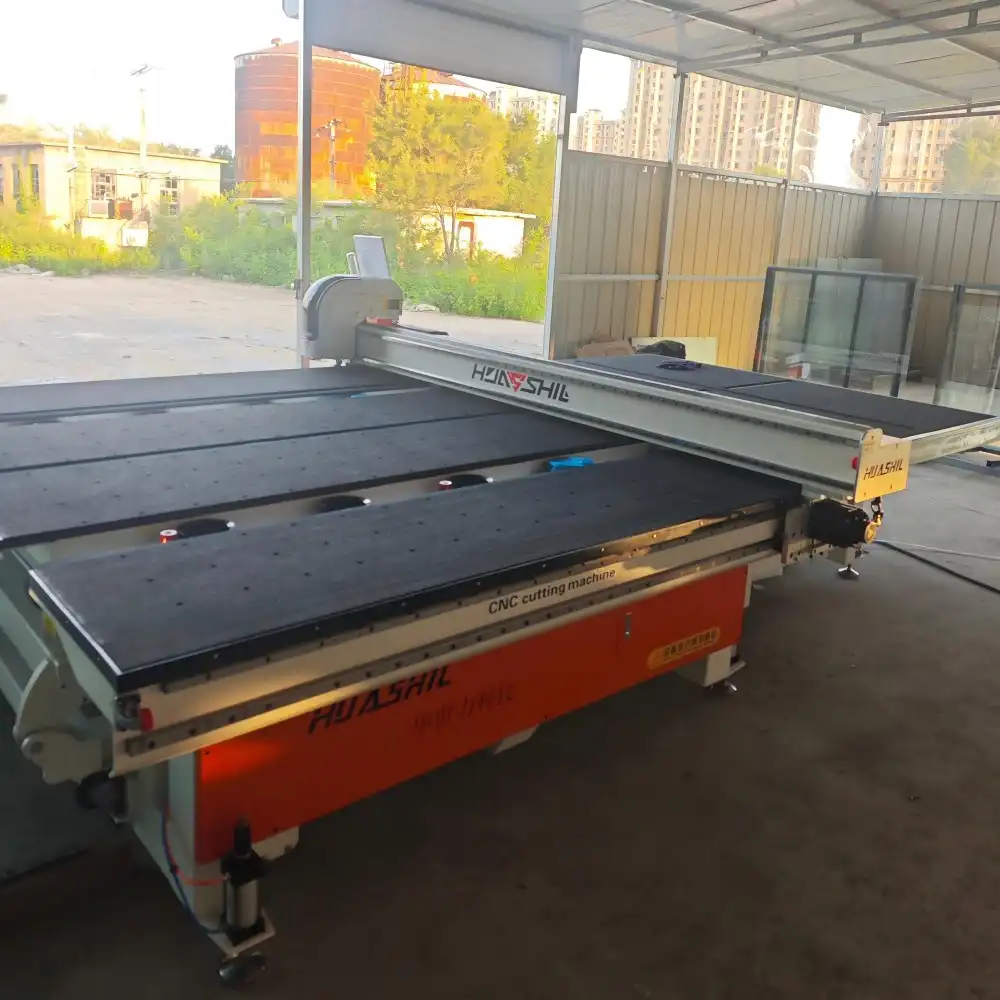
Optimization software like Optima is built into glass cutting systems like the HSL-LSX4228. This software figures out the best cutting patterns to get the most material out of the system. For correct costing and tracking of materials, this program needs to share cutting plans, real cuts, and waste data with MES. Without proper integration, the benefits of optimization stay within the cutting system, and important information is missing from planning for the whole factory.
Building Robust Software Integration
Full testing in environments that are like production settings is the first step to successful software integration for an automatic stone processing machinery manufacturer. Before the equipment gets to the factory floor, simulation testing finds API conflicts, timeout issues, and data validation issues. Structured software update processes make sure that changes to either processing equipment or MES don't mess up the way they normally talk to each other. When problems happen, troubleshooting is easier when API specs, data dictionaries, and error-handling methods are written down.
In addition to learning how to run a machine, operators are also taught how to fix basic communication problems. Technicians need to know how data moves between systems and how to spot problems with software interaction. As both equipment and MES platforms change, vendors who offer detailed technical support and regular software maintenance help manufacturers maintain the reliability of their integration.
Pitfall 3: Neglecting Real-Time Data Accuracy and Synchronization
The Data Quality Imperative
Production choices rely on having correct information at the right time. When sensors on automated glass processing systems are not calibrated correctly, they give wrong readings that are sent through MES reporting. Network latency causes gaps between what actually happens and when the MES is updated, which causes time problems that affect schedules. When the rate of data creation is faster than the rate of communication, buffer leaks happen, and information about production events or quality factors is lost.
When working with glass, real-time synchronization is especially important for quality control. MES needs to get temperature data from tempering furnaces, cutting precision measurements, and edge quality metrics right away so that problems can be fixed quickly. When data is delayed, broken glass goes further through the production process before it is found. This increases the cost of trash and repair.
Ensuring Data Fidelity
Automated testing loops look for differences between data from different sources. Edge devices that can do processing locally can filter and check sensor data before sending it to MES. This lowers the load on the network and makes the data more accurate. Regular plans for sensor tuning keep measurements accurate. Having a network infrastructure that can handle high data loads keeps things from getting backed up during times of high production.
Monitoring tools that keep an eye on communication health let you know right away when performance is going down. Message delay, packet loss, and synchronization mistakes are some of the metrics that help tech teams find and fix problems before they affect production. Setting standards for data quality and audit processes makes sure that both equipment sellers and MES providers know what is expected of them and who is responsible for what.
Pitfall 4: Overlooking Customization Needs for Different Glass Processing Types
The Diversity of Glass Processing Operations
Cutting glass requires a different MES than drilling, moulding, or heating. A CNC cutting line with a loading table, cutting table, breaking table, above-ground rail systems, and 2+2 stations generates different sheet positioning, cutting path, and breakout success data than an edge machine. Architectural glass plants that create conventional window sizes must monitor tasks differently than furniture glass plants that make small quantities.
Generic merge approaches overlook process-specific data that improves operations. A universal MES connection would monitor machine runtime and output counts, but not cutting accuracy or edge quality trends. Production directors can't enhance procedures or convince finance management to acquire new equipment without this thorough information.
Tailoring Integration to Process Requirements
MES data models are linked to specific equipment parameters by effective integration strategies. This mapping process figures out which machine settings give useful production information and makes sure that the MES records those data points. Machines that work with panels up to 4200x2800mm need different job setup data than machines that work with panels that are smaller. Systems with four grand arms on each side let loading and dumping happen at the same time, which should be reflected correctly in MES cycle time estimates.
When you work with providers who understand the unique needs of your application, the integration process goes more smoothly. The vendors that work with architectural glass, curtain wall, and furniture glass know which data points are most important for each use case. Customizable MES connectors can be used with different processes without needing a lot of custom code. With modular integration architectures, producers can start with simple connections and add more complex data collection as their processes get better.
Pitfall 5: Ignoring Ongoing Maintenance and Support Requirements Post-Integration
The Long-Term Support Challenge
Integration success on the day of commissioning doesn't mean that it will work reliably in the long run. When automated glass processing systems or MES software is updated, it can mess up communication that has already been set up. Changes to the core of a network affect how well it works. When operators leave, new employees don't know how the integration architecture works. Integrated systems slowly break down without planned maintenance, which lowers the quality and dependability of the data they hold.
To troubleshoot integrated systems, you need to know how to work with industrial networking, business software, and mechanical tools. Many places that make glass don't have workers with this wide range of skills. When there are problems with communication, it takes longer to figure out what's wrong, and work stops while teams work through a set of steps to fix the problem. If a communication hardware or software component fails, you need to act quickly to keep downtime to a minimum.
Establishing Sustainable Support Frameworks
Communication system health checks in preventative maintenance programs detect issues. Regular software patch checks and controlled updates keep all interconnected systems operating. Vendors and internal IT personnel may diagnose issues without visiting the site, speeding response times. Integration design documentation, like network diagrams and data flow guidelines, helps diagnose issues.
Internal integration technology training reduces the need for outside aid. Cross-training operations, IT, and maintenance teams helps the organization solve integration issues. Service agreements with equipment suppliers that incorporate integration assistance offer specialised expertise for complex issues. These support and maintenance infrastructure expenditures preserve the operational advantages that justified MES and automation initiatives.
Pitfall 6: Failure to Address Security Concerns in Network Integration
The Cybersecurity Risk
When automated glass processing systems are linked to MES networks, cyber threats may be able to get in. People who aren't supposed to be there could stop operations, steal secret cutting optimization methods, or damage customer data that is stored in job specs. A lot of machines used to work with glass were made before cybersecurity was a big deal, so they don't have the latest security features. These weaknesses are made public by network interaction.
Data leaks have effects that go beyond the instant loss of business operations. Losing knowledge about an order from a customer hurts the company's relationships. Theft of intellectual property, like secret patterns for cutting glass or ways to make things, hurts a company's ability to compete. In many places, regulations demand that business data be kept safe, and people who don't follow the rules can be fined.
Building Secure Integration Architectures
Segmenting production tool networks from other corporate systems reduces attack risk. Firewalls with rigorous access restrictions regulate network traffic. Data between machines and MES is encrypted in transit. Role-based access restrictions and user authentication restrict live system access and configuration changes to authorised users.
Regular security checks reveal integration architectural flaws. Patch management ensures software security updates are executed. Physical security protects plant-floor network equipment. Working with MES and equipment vendors that prioritise security and corporate best practices reduces risk. Security frameworks shouldn't hinder operations; they should reassure users that coupled systems can manage outside threats and internal errors.
Pitfall 7: Underplanning for Future Scalability and Technology Evolution
The Innovation Challenge
Glass production technology advances rapidly. Better than normal procedures, AI systems optimise cutting patterns. Increasing energy efficiency decreases company costs. New glass varieties and usage arise periodically. MES systems evolve to incorporate web connectivity, enhanced analytics, and mobile interfaces. Integration designs that function today may hinder future-helping technology.
Rigid integration approaches prevent you from switching tools or upgrading your MES without spending a lot of money to reintegrate. Different communication protocols and data formats prevent newer systems from communicating with older ones. Plants discover these limitations when the market requires them to create something their systems can't manage. Upgrades are challenging to justify when integration costs are equal to or greater than equipment expenses.
Designing for Future Flexibility
With open APIs and modular MES designs, new equipment and features may be added without replacing the system. Communication standards like OPC UA allow present and future products to operate together. Cloud-ready designs enable enhanced analytics and remote monitoring as they become increasingly popular. Judge firms by their openness and interoperability to safeguard long-term freedom.
Purchase specifications should explain upgrades and expansion. Understanding how integrated design expands manufacturing lines helps financial decision-makers evaluate the investment. Suppliers that invest in R&D and upgrade their goods make it easier to get new technologies. Planned evolution in the original integration design is cheaper than changing later and better positions producers to take advantage of competitive opportunities.

Conclusion
To successfully connect automated glass processing systems to MES, you need to think about communication protocols, software complexity, data accuracy, process-specific customization, ongoing maintenance, security, and the ability to grow in the future. Plant managers and engineering teams who are aware of these seven mistakes are better able to choose the right tools, create better relationships with suppliers, and complete integration projects that have long-lasting operational benefits. Putting time and money into good integration planning pays off in the form of higher production efficiency, less downtime, and the ability to quickly adopt new technologies. Integration should be a strategic goal for manufacturers, not just a technical afterthought. This will help them compete in the tough building glass, curtain wall, and furniture glass markets.
Frequently Asked Questions
1. What communication protocols should I specify when purchasing glass processing equipment?
Due to its security features and ability to work on any platform, OPC UA has become the standard for connecting industrial automation and MES. The most freedom is provided by equipment that supports both OPC UA and other standard protocols, such as Modbus TCP. Make sure that vendors offer detailed protocol documentation and have experience connecting to the most common MES platforms in the U.S. market.
2. How long does typical MES integration take for a glass cutting line?
Integration times depend on how complicated the system is and how well it was prepared. It might take two to four weeks to complete basic integration for a single glass-cutting machine with simple data needs. Usually, it takes eight to sixteen weeks to finish production lines with many stages of processing, specific data needs, and thorough testing. Integration times are cut down by a lot when there is good planning, clear specifications, and experienced vendors.
3. What ongoing costs should I budget for maintaining MES integration?
Maintenance costs each year are usually between 5 and 10% of the initial investment in integration. This includes software updates, regular checks on the health of the system, and technical help for fixing problems. When employees leave and new operators need to be trained, it costs more to train them. When they're offered, remote tracking services lower support costs by making it faster to find and fix problems.
Ready to Discuss Your Glass Processing Integration Project?
HUASHIL has a lot of experience helping companies that make architectural glass, curtain walls, and furniture glass connect their automated glass processing systems to the tools they use to run their production. Our HSL-LSX4228 cutting line has a design that makes it easy to integrate. It has configurable rail systems, works with Optima optimization software, and has a number of communication options that make connecting to MES easier. As an experienced automated glass processing systems manufacturer, we make sure that your equipment investment works as well as it can by giving you technical paperwork, help with integration, and ongoing service.
Our tech team knows how hard it can be to integrate new and old parts when you're planning a new production line or upgrading old ones. We work closely with your technical managers and IT teams to make sure that your processing equipment and MES platform can talk to each other without any problems. Get in touch to talk about your particular needs and find out how HUASHIL equipment solves the problems with merging that were listed above. Email salescathy@sdhuashil.com to learn more about our full range of glass processing solutions that are made for reliable, scalable MES integration.
References
1. Smith, J. and Williams, R. (2022). "Manufacturing Execution Systems in Glass Processing: Integration Strategies and Best Practices." Journal of Industrial Automation, 45(3), 128-147.
2. Thompson, M. (2021). Connected Manufacturing: MES Integration for Discrete Industries. Manufacturing Technology Press.
3. European Glass Manufacturing Association (2023). "Technical Guidelines for MES Integration in Automated Glass Processing Facilities." EGMA Technical Report Series, Volume 18.
4. Chen, L., Anderson, P., and Martinez, S. (2022). "Communication Protocol Selection for Factory Floor Integration: A Comparative Study." International Journal of Manufacturing Systems, 38(2), 67-89.
5. Roberts, K. (2023). "Cybersecurity Considerations in Industrial Network Integration." Manufacturing IT Security Quarterly, 12(1), 34-52.
6. National Glass Association (2022). "Production System Integration: A Guide for Glass Fabricators." NGA Technical Documentation Series.