




If your plant cuts glass at moderate or changing volumes, a semi automatic glass loading machine usually fits best. It reduces manual lifting, keeps capital cost under control, and adapts to different sheet sizes and order mixes. An automatic system makes more sense when volumes stay high and steady, loading steps repeat all day, and the layout supports full integration. I wrote this guide for plant managers, engineers, and buyers who want to compare both options on real production needs: glass size, throughput, labor, floor space, support, and total cost of ownership. I also explain how our HUASHIL model is built.
Semi-Automatic vs. Automatic Glass Loading: Core Differences
How a Semi-Automatic System Works
A semi-automatic glass loading machine divides the work between the user and the machine. The person in charge puts the sheet down and starts the loop. The machine does the hard, repetitive work. It's important that someone stays in charge of positioning when sheet sizes and cutting patterns change from one order to the next. It's usually easier to set up than with a fully automatic line because the machine doesn't need a linked storage system or complicated line communication. Workers also learn faster because they keep an eye on the sheet the whole time. In return, the user's speed affects the output. This means that cycle times can change more than they would on an automatic machine.
Where Automatic Loaders Fit Best
A machine that fills glasses automatically does most of the work while you do other things. It can talk to things like storage racks, conveyor belts, and cutting tools. It can also follow production orders with software. Set up that way works well for plants with strict cycle-time goals, multiple shifts, and high numbers that can be predicted. It needs more as well, like more money for big projects, stable infrastructure, safety zones, and people who know how to fix things and can use sensors and controls. If your products change often or your orders are small, a lot of that space will go to waste. You should find out how often your system really needs to be loaded before you set it to fully automatic. This is because an automatic system only makes money when it keeps running.
Cost, Labor, and Layout Compared
The purchase price does not always tell the whole story. Ellram discussed this perspective in her 1995 work on cost management. Total cost of ownership also includes freight, installation, training, spare parts, maintenance, and downtime. A semi automatic glass loading machine generally costs less upfront and requires less floor space. Fully automatic equipment can reduce manual labor further but requires careful setup and more technical support. A simple cost comparison can help. For low-volume production or frequent size changes, semi-automatic equipment may offer a faster payback than an automatic loader that frequently sits idle. If the equipment needs to operate almost continuously throughout each shift, further automation may be worth considering.
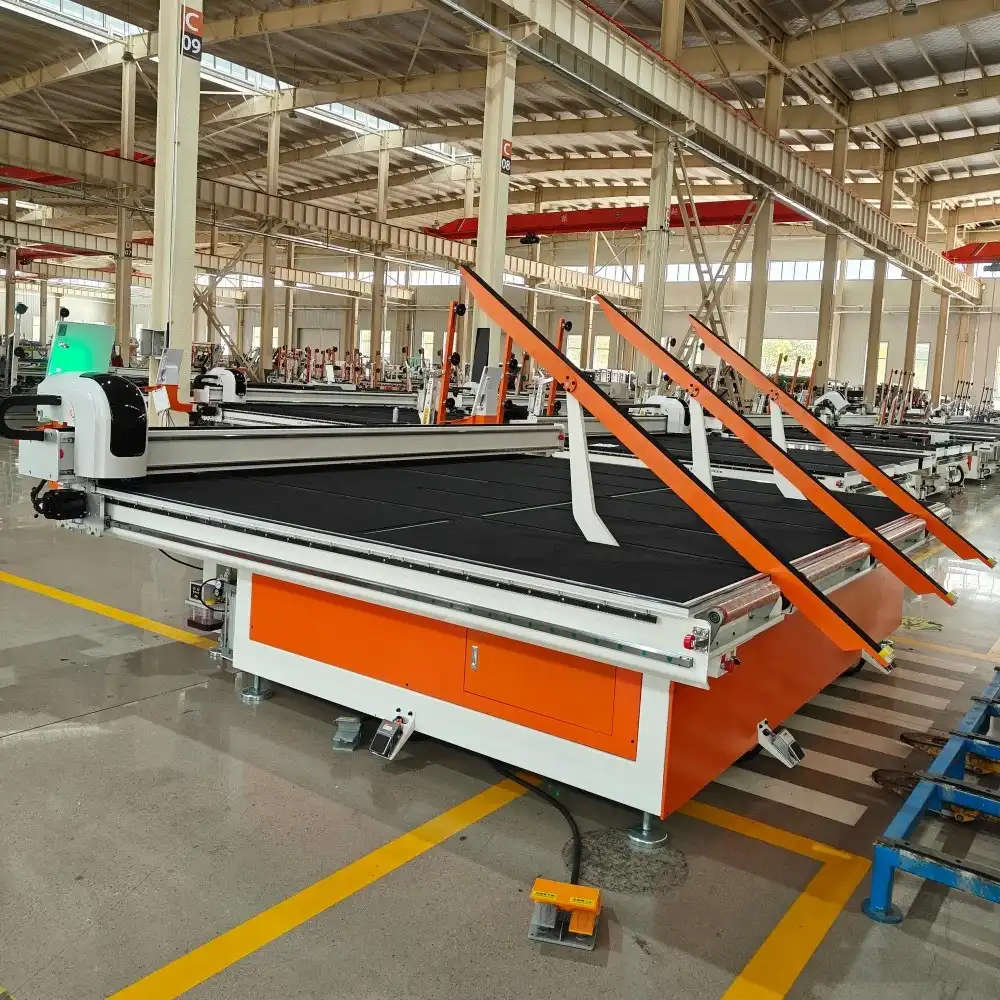
HUASHIL Semi-Automatic Glass Loading Machine Features
Flip-Up Cutting Table with Manual Loading
Our machine's cutting table flips over, so the person running it has to load the glass by hand. This plan lets your team decide how to arrange each sheet on the table and makes it easy for everyone to work together. Cutting things in different sizes helps during the day because no one has to wait for a machine to change its mind. It's also simple to learn how to use the gear. People who are new to the job can learn how to load quickly, and supervisors can see the whole process at a glance. When you load sheets by hand every day, you can put them down right away, handle mixed orders better, and do maintenance with fewer technical issues.
Three Ejector Rods and No Breaking Table
The machine doesn't need a breaking table as it already has three ejector rods built into its supporting frame. Taking away the breaking table makes the set-up smaller and gets rid of something that needs to be bought, set up, and kept. That works for plants that don't have a lot of floor space or lines that split at a different stop. Send us your line drawing so that our engineers can make sure the rods and table work with your process. Each plan is unique. Things won't go wrong during installation and testing if you do a clear check before you order.
Walking, Optima Software, and 3660*2440 mm Capacity
We can add hand-pushed walking wheels if your floor plan calls for them, even though the machine can walk on its own. Software called Optima Optimization makes it work. This software sets up cutting routines to cut down on waste and scraps. The biggest piece of glass is 3660 mm x 2440 mm. I used the standard 2.5 kg per square meter per millimeter of thickness to find out that a 6 mm sheet that size covers 8.93 square meters and weighs 134 kg. A 10 mm sheet weighs about 223 kg. There is a formula from NIOSH that says the safest weight to lift is 23 kg, which is a lot less than those weights.
How to Choose the Right Loading System for Your Plant
Match the Machine to Glass Size and Volume
Not brochures, but facts should come first. Note down the names of your thickest and largest sheets, as well as the number of sheets you use each day and the weeks when you have the most work. It's important to get a machine that's the right size for the job. If your largest sheets are around 3660 mm x 2440 mm, make sure they can hold that much weight first. It is important that the things you send meet the quality requirements set by ASTM C1036, which is for flat glass. You won't be caught off guard at the table if the surface or size changes. Then, think about how long you can wait for sheets to load and how many sheets you print every day. A steady, high volume points to automation, whereas a modest volume with frequent size changes points to a semi automatic glass loading machine.
Check Support, Safety, and Total Cost
Ask all of your sellers the same things about their guarantees, how long it takes to get extra parts, how to get trained, and how to get help from a professional. If it takes weeks to get a new part, getting a low price is no longer helpful. For safety's sake, ask for an ISO 12100 risk assessment. In U.S. plants, make sure the machine fits with how you handle ANSI B11.0 machinery safety. ASME B30.20 talks about vacuum lifting tools if you use them in your process. Last, make sure you know what kind of electricity the country you're shipping to has before you ship it. Not only should you look at how much the machine costs, but also how much it costs to set up, train, manage, and shut down.
Plan the Purchase by Role and Timeline
Everybody has a different opinion about the same machine. Engineers look at specs and how well they work with other things, buyers look at price, delivery, and insurance, and financiers look at return on investment. For engineers, you should put together a package with technical data and layout drawings. For people who want to buy or get a loan, you should make a clear proposal. It takes about a week for someone to place an order when they ask about a single machine. Because of budget approval, site visits, and expert review, fully customized or full lines can take three to six months. Most of the time, you can pay with a Letter of Credit for international orders or a deposit along with the final payment.
Conclusion
You can choose between an automatic loader and a semi automatic glass loading machine based on your plant's operating needs. Automatic systems are generally better suited to high-volume production lines with steady demand. Semi-automatic equipment may be more suitable when budgets and floor space are limited, or production volumes and glass sizes change frequently. Beyond price, compare glass dimensions and weight, loading frequency, labor costs, safety, technical support, and total cost of ownership. The HUASHIL machine features three ejector rods, a flip-up cutting table with manual loading, a breaking table, remote-free movement, Optima software, and a maximum glass size of 3660 × 2440 mm. The final choice should depend on whether these features meet your requirements for sheet weight, size, and daily production volume.
FAQ
1. What is the main difference between the two systems?
On a semi-automatic dishwasher, someone has to put the glass down and start each turn. A line automatic loader hooks up to other machines and runs the process with little help from the user.
2. What is the largest glass this HUASHIL machine handles?
The biggest piece of glass is 3660 mm x 2440 mm. Get in touch with us with your thickness and weight so we can confirm the full setup.
3. Does the machine need a remote control to walk?
There's no need for a remote to make it walk. We can add walking wheels that can be pushed by hand if we need to.
4. Does the setup include a breaking table?
There's no need for a breaking table for the machine to work. Our techs can check out your line to make sure it fits.
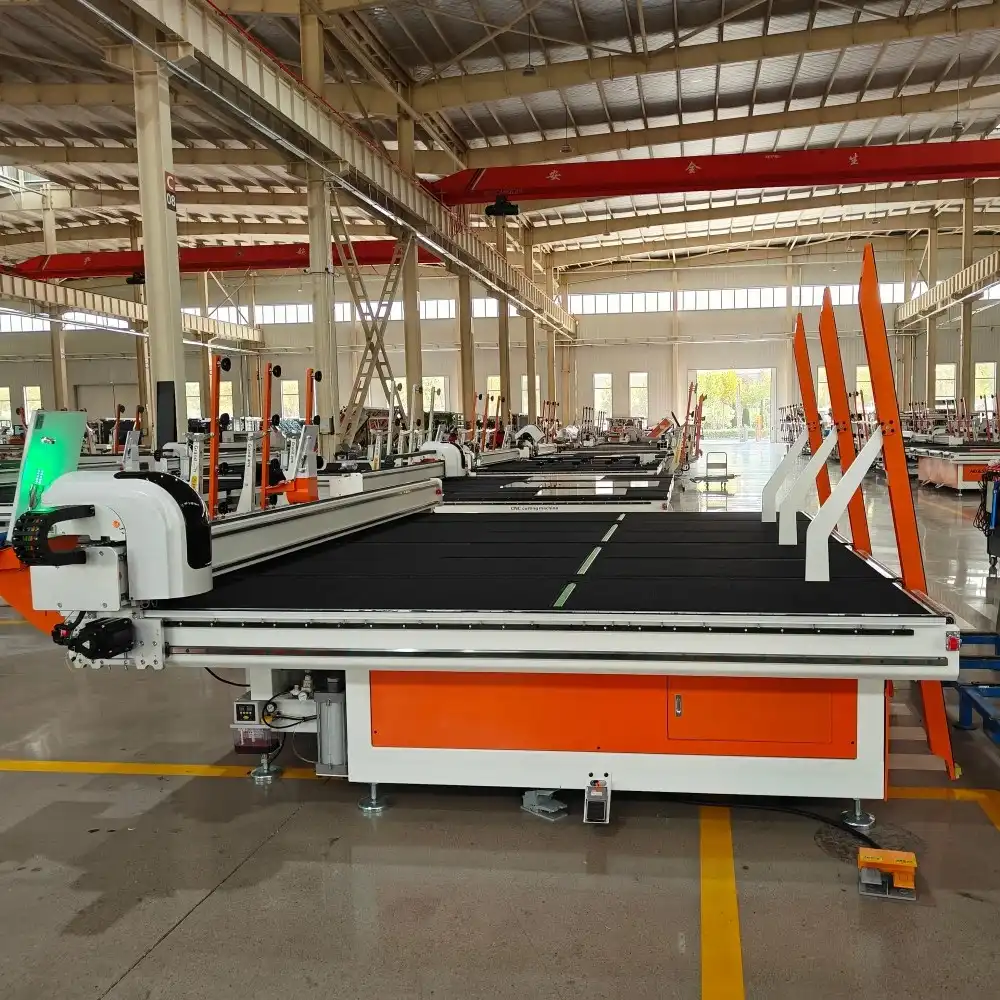
Request a HUASHIL Semi-Automatic Glass Loading Machine Quote
To fit your cutting line, HUASHIL, a manufacturer of semi automatic glass loading machines, can customize one. You can email salescathy@sdhuashil.com the sizes, thicknesses, daily volume, and layout drawing of the glass you need. Our team will check the specs, wait time, guarantee, and customer service for spare parts to make sure they are all right.
References
1. Ellram, L. M., International Journal of Physical Distribution & Logistics Management, Total Cost of Ownership: A Key Concept in Strategic Cost Management Decisions, 1995.
2. National Institute for Occupational Safety and Health (NIOSH), Applications Manual for the Revised NIOSH Lifting Equation, 1994.
3. ASTM International, ASTM C1036 Standard Specification for Flat Glass, 2021.
4. International Organization for Standardization, ISO 12100 Safety of Machinery: General Principles for Design, Risk Assessment and Risk Reduction, 2010.
5. American National Standards Institute, ANSI B11.0 Safety of Machinery, 2020.
6. American Society of Mechanical Engineers, ASME B30.20 Below-the-Hook Lifting Devices, 2018.