




Choosing a reasonable price glass loading table starts with understanding what you actually need on your production floor. Price alone should never drive the decision. The right table balances load capacity, material durability, automation compatibility, and long-term support costs. Whether you run an architectural glass plant, a curtain wall fabrication shop, or a furniture glass line, the goal is the same: get consistent output without overpaying for features you won't use or underpaying for equipment that breaks down too soon.
Understanding Glass Loading Tables: Key Features and Benefits
Before comparing prices, it helps to know what separates a well-built glass loading table from a mediocre one. The core function is straightforward — support large glass sheets safely during loading, cutting, and processing. But the engineering behind that function varies significantly between models.
What a Glass Loading Table Actually Does
A glass loading table holds and positions glass sheets so workers or automated arms can handle them without breakage or injury. Air flotation technology is often built into the surface, reducing friction so large panels glide rather than drag. This protects glass integrity and reduces scratch risk during movement.
Core Design Attributes to Look For
Construction materials matter enormously. Steel frames with precision-welded joints carry heavier loads and last longer under daily factory conditions. Aluminum components reduce overall weight but may sacrifice rigidity on larger tables. Ergonomic height adjustability helps operators work comfortably and reduces fatigue over long shifts.
Industrial Applications Across Key Sectors
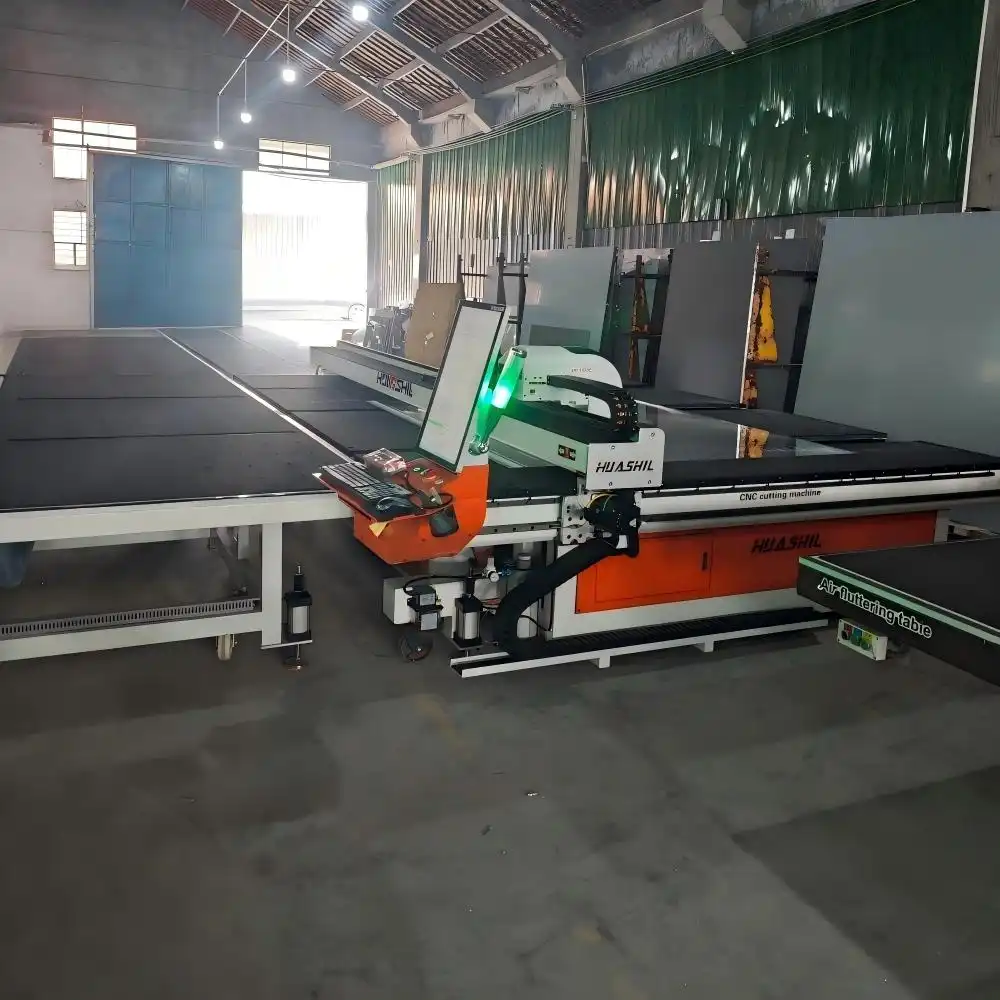
Glass loading tables appear across architectural glass fabrication, curtain wall production, shower door manufacturing, and furniture glass lines. In each setting, the table must handle different glass sizes, thicknesses, and processing speeds. A table designed for architectural panels up to 5100×3300mm, like the HUASHIL HSL-LSX5133, serves significantly different demands than a compact unit built for decorative glass shops.
Criteria for Choosing a Reasonable Price Glass Loading Table
It takes more than just looking at a price list to get a fair deal on something. Before you call any suppliers, I think you should make a structured list.
Assess Your Production Volume and Glass Size
Start with your daily output and the biggest reasonably priced glass loading table size that you can use. Either way, a reasonably priced glass loading table that is too small or too big for the panels you need to move wastes money. If it's too small, it causes problems, and if it's too big, you pay for space that you don't use. For instance, the HSL-LSX5133 can handle reasonable priced glass loading table that is up to 5100x3300mm, making it perfect for high-volume building and curtain wall work.
Evaluate the Station Configuration
Station planning has a direct effect on how well a line works. A 2+2 station layout is used by the HSL-LSX5133, which can be changed to fit your needs. There are five grand arms on each side, and the system can work with both above-ground and underground rail. This level of adaptability is worth the money because it means the table can fit into the way your floor is set up now instead of making you redo the whole thing.
Factor in Total Cost of Ownership
Price is only one factor. Include the cost of installation, training for the user, spare parts, and regular upkeep. Over five years, a mid-range table with good technical documentation and quick access to spare parts will often cost less than a cheap unit with bad customer service. Before you sign anything, ask the sellers for paperwork that breaks this down.
Comparison of Popular Glass Loading Tables by Price and Features
Not every way of cutting and loading glass works for every job. It's easy to see how the different market groups stack up against each other.
Budget-Range Tables: What You Get and What You Give Up
Basic glass loading tables usually have frames that stay at the same height, simple surface protection, and ways to change the height by hand. For low-volume shops or secondary processing stations, these work well. But they don't always work with optimization tools, which makes them less useful in automatic lines. Less often maintenance is needed, and it might be harder to find new parts in other countries.
Mid-Range to Premium Models: Performance That Justifies the Cost
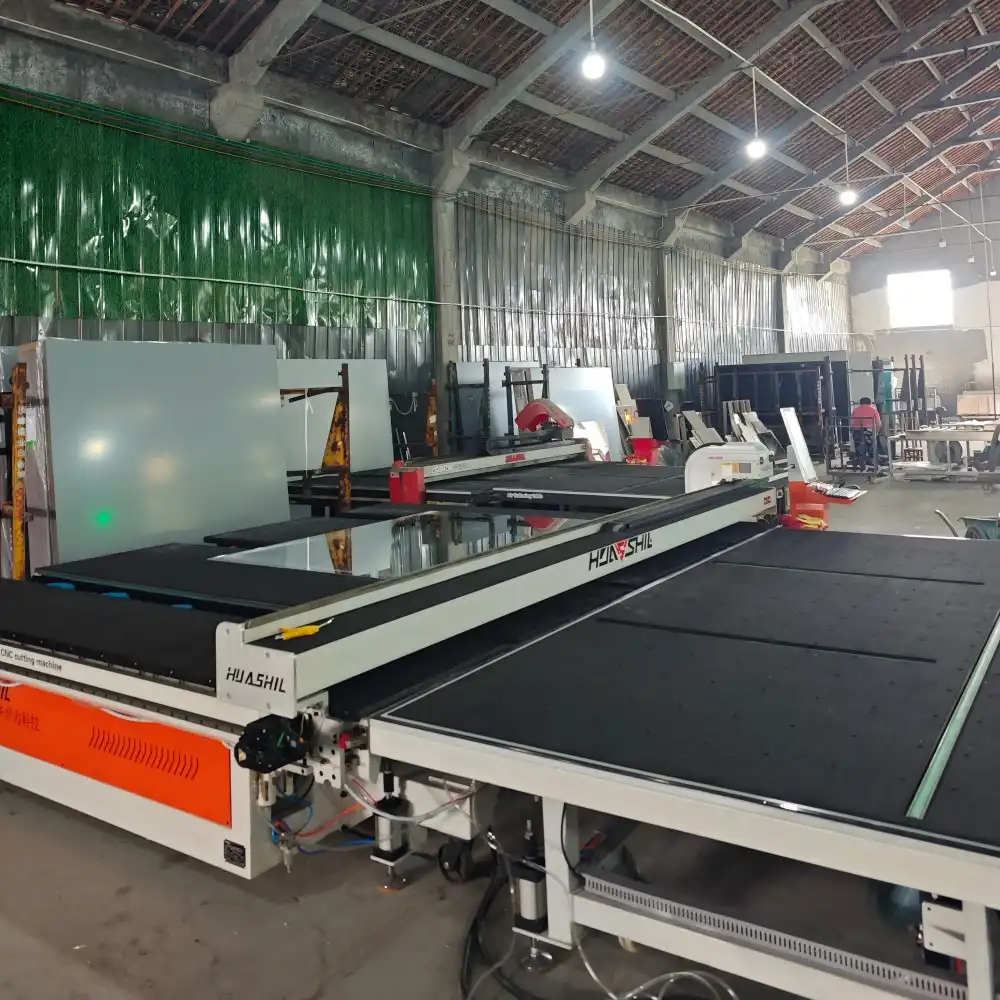
High-end tables like the HUASHIL HSL-LSX5133 combine a reasonably priced glass loading table, a cutting reasonable priced glass loading table, and a broken table into a single line that works well together. The built-in Optima optimization software figures out the best way to cut glass so that as little material is wasted as possible. This type of merging lowers the cost of raw materials directly, which adds real financial value above and beyond the cost of buying the equipment.
This kind of combined system is very helpful for output in the following ways:
- Reduced glass waste: Optima software generates cutting plans that lower offcut rates, which directly improves material yield per sheet.
- Higher throughput: The 2+2 station setup with five grand arms per side allows simultaneous loading and cutting operations, keeping the line moving without manual bottlenecks.
- Flexible installation: Above-ground and underground rail options mean the system fits both new-build facilities and existing production floors without major structural changes.
- Scalable configuration: Station count can be adjusted as your production volume grows, protecting your initial capital investment.
Higher throughput: The two-plus-two station layout with five grand arms on each side lets loading and cutting happen at the same time, keeping the line going without any human slowdowns.- Flexible installation: The system can be put in both new buildings and industrial floors that are already there, since it has both above-ground and underground rail choices.
Adjustable vs. Fixed Height: Which Makes More Sense?
Even though they cost more up front, adjustable-height tables make it easier for operators to work with different thicknesses of glass and complete different handling jobs. When working with a single product and the size of the glass and the flow of work don't change often, fixed tables work well. Adjustable setups are the better long-term choice for stores that sell more than one thing or that take a lot of unique orders.
Where and How to Buy Glass Loading Tables Reasonably Priced
You need to carefully check out suppliers, not just compare catalog numbers, in order to find a good glass loading table at a fair price.
How to Identify Credible Suppliers
Look for companies that have a history of exporting, installation cases that can be checked, and a presence at industry trade shows. Shandong Huashil Automation Technology Co., Ltd. has been making and exporting goods for many years and has users in many countries. You can tell if a supplier is reliable by looking at their factory visit records, video demonstrations, and published installation cases.
Bulk Orders and Custom Configurations
For projects that need a full production line, search for OEM and ODM help. Custom configurations, like changing the number of stations or the way the rail systems work, usually take longer to get (3–6 months), but they deliver equipment that is built just for your floor layout. When you buy in bulk, you can often get better prices and faster expert help. For international orders, the usual payment terms are a deposit and the final payment, or a Letter of Credit.
Online Research and Direct Sourcing
B2B platforms and company websites are good places to start when looking at prices and specs. You can find full product pages, technical specs, and case studies at huashil.com. Also, getting prices directly from manufacturers is often more accurate than using third-party listings, especially for systems that are already set up or customized.
Maintenance, Safety Tips, and Best Practices for Glass Loading Tables
A glass loading table that is well taken care of lasts a lot longer and works better all the time than one that only gets repairs when they break.
Routine Maintenance Procedures
Cleaning the air float surfaces once a week keeps dirt and other things from building up and scratching the glass panels. Lubricating mechanical arms and train systems once a month keeps the working parts from wearing out. Check the electrical controls and sensor calibration every three months to find problems before they cause downtime.
Safety Protocols for Daily Operation
Operators should always wear safety shoes and gloves that won't cut. Never put more glass on the table than it can hold. Before starting a cycle on a system with automatic grand arms like the HSL-LSX5133, make sure that no one is in the working zone. Every shift should start with a test of the emergency stop buttons.
Operator Training and Ergonomic Practices
Before they can work on their own with automatic loading lines, new workers should get hands-on training. Using good posture and positioning while placing glasses lowers stress on the muscles and bones. Training materials from the equipment's maker, which can be found in this case through HUASHIL's after-sales support team, help make sure that everyone on the shift knows how to use the machine correctly.
Conclusion
The right reasonably priced glass loading table is chosen by comparing the equipment's specs to your actual production needs and then checking to see if the total cost is worth it in the long run. Reasonably priced glass loading tables aren't always the cheapest ones on the market. Instead, they are the ones that work well, fit your floor plan, and have reliable support when you need it. With its built-in three-reasonable priced glass loading table system, Optima software, and flexible station setup, the HUASHIL HSL-LSX5133 is the kind of investment that pays off in lower waste and higher output.
FAQ
1. What glass size can the HUASHIL HSL-LSX5133 handle?
The HSL-LSX5133 can handle glass sheets up to 5100x3300mm in size, so it can be used for large-format building glass, curtain wall panels, and artistic glass sheets that are too big to fit on a standard printer.
2. What does the Optima software do?
For cutting, the HSL-LSX5133 system comes with a program called Optima. It figures out the best way to cut each sheet of glass, so less material is wasted, and every production run has a higher output.
3. How long does it take to receive a custom-configured system?
It usually takes 3–6 months from the time an order is confirmed until it is delivered for custom or full production line orders. This time includes technical review, manufacturing, and testing before shipping.
4. Can the station count be changed after installation?
The usual setup is a 2+2 station layout, but this can be changed during the ordering process to fit your unique production workflow needs.
5. Is this equipment suitable for a small-to-medium glass shop?
The HSL-LSX5133 is made for operations with a lot of data. Smaller shops should talk to HUASHIL directly to find out if this type or a different setup will better meet their needs for throughput better.
Get a Quote for a Reasonable Price Glass Loading Table from HUASHIL
HUASHIL makes reasonably priced glass loading table processing tools that producers in a wide range of areas accept. Our company is a trusted source for affordable reasonable priced glass loading tables, and the HSL-LSX5133 is one of them. We offer full technical support, OEM choices, and low prices for both single units and full line sales. To get a free quote that fits your production needs, email our team at salescathy@sdhuashil.com.
References
1. Glass Processing Technology and Equipment – Glass Industry Journal, 2022
2. Ergonomics in Industrial Workstation Design – Journal of Occupational Safety and Ergonomics, 2021
3. Automation Trends in Flat Glass Manufacturing – Glass International Magazine, 2023
4. Total Cost of Ownership in Capital Equipment Procurement – Industrial Purchasing Review, 2020
5. Air Flotation Technology in Glass Handling Systems – International Journal of Manufacturing Engineering, 2019
6. B2B Procurement Decision-Making in the Construction Materials Sector – Supply Chain Management: An International Journal, 2022