




Choosing the correct stone cutting machine will directly affect your factory’s efficiency, product quality and profitability. An autonomous stone cutting machine, such as an automatic stone cutting machine, replaces conventional fabrication methods with constant accuracy, drastically lowering the need for human labour and allowing scalable production capacity. Whether your business is focused on sintered stone slabs, ceramic tiles, architectural glass components or anything else, choosing the right equipment for your material requirements, production volume and budget limitations guarantees that your competitive edge is durable. This complete book will educate decision-makers through key assessment criteria, technological comparisons and procurement tactics to enable you to confidently invest in equipment that aligns with your operational objectives and maximises long-term return on investment.
Understanding the Key Decision Scenarios When Choosing a Stone Cutting Machine
Identifying Your Production Requirements
The material profile of your production is a basic determinant in the choice of equipment. Sintered stone needs different criteria for cutting than the manufacture of typical granite or marble. Volumes need to range widely by company type – wholesalers serving many projects require more throughput than speciality shops that handle bespoke orders. Understanding these differences will make sure that machines are not mismatched with operational requirements at a high cost.
Core Performance Metrics That Matter
Cutting accuracy is still the heart of great production. Modern CNC machines can attain tolerances of 0.1mm, which is critical in architectural applications where dimensional precision impacts installation efficiency. The speed is usually represented in meters per minute and has a direct influence on the production capacity. The operating cost of equipment during its life cycle is greatly affected by energy consumption. That is why efficiency ratings are important considerations along with initial purchase price when you are evaluating the equipment.
Balancing Investment with Long-Term Value
Purchasing capital equipment requires a detailed financial study that goes beyond the sticker price. Factors such as installation complexity, training needs for operators, projected maintenance schedules, and risk of downtime all contribute to the total cost of ownership. Availability of after-sales assistance, especially in terms of access to replacement parts and responsiveness of technical service, safeguards continuity of production. This is a consideration that must be considered by factories looking to expand operations or replace ageing equipment against budget limits and predicted ROI timeframes.
Comparing Automatic Stone Cutting Machines: Types, Features, and Technologies
CNC-Based Cutting Systems
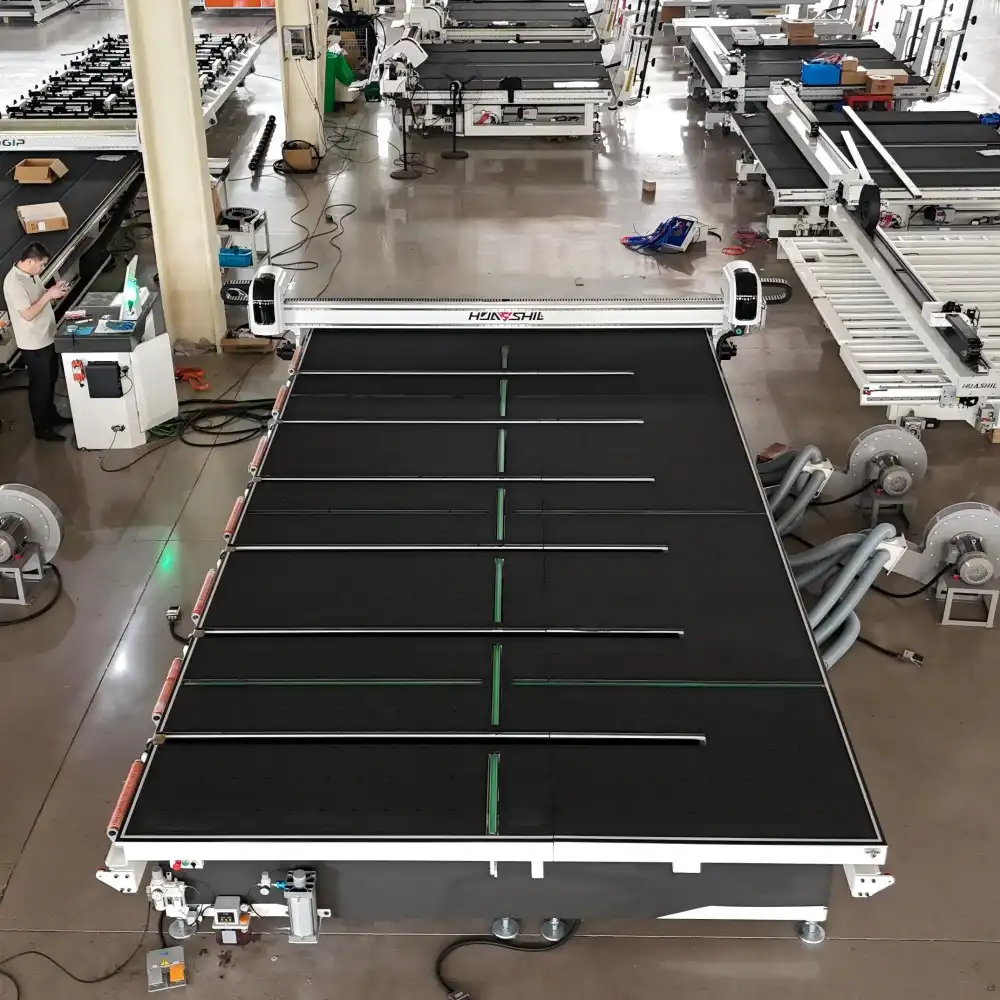
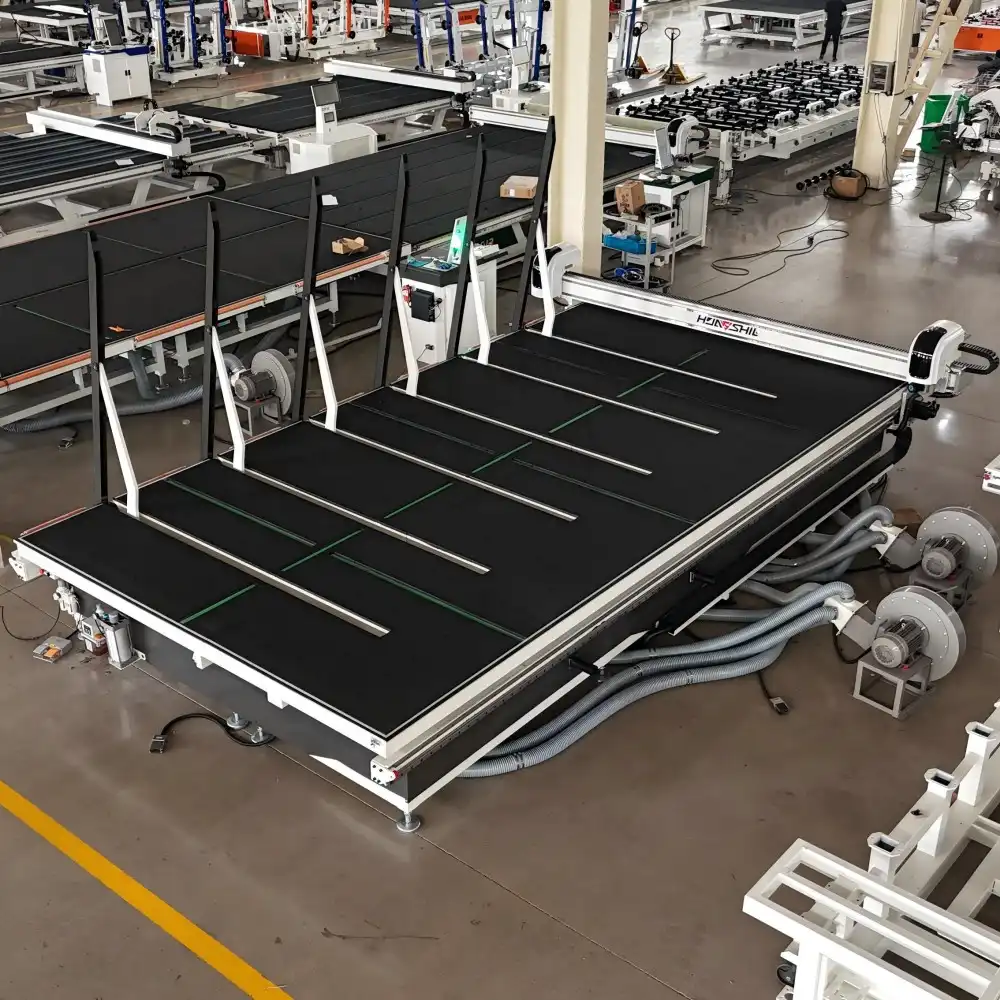
Computer numerical control technology revolutionised stone fabrication by enabling programmable precision cutting. The HSL-CNC2716 model exemplifies this category, processing materials up to 2700 x 1600 mm with thickness ranging from 3 to 18 mm. Its Eos-CNC control system coordinates automatic pressure adjustment, edge detection, and air flotation systems that reduce friction during cutting operations. CNC machines excel at repetitive production runs, maintaining dimensional consistency across thousands of pieces while minimising material waste through optimised cutting patterns.
Bridge Saws and Wire Cutting Systems
Bridge saws use overhead gantries to hold diamond-tipped blades that are ideal for straight cuts through large slabs of stone. Wire saws are wires covered with abrasives running between pulleys and are suitable for quarrying and cutting irregular forms. An automatic stone cutting machine combines advanced automation features with precise cutting performance, making it a suitable option for improving efficiency in modern stone processing. They all have their merits. Bridge saws are great for quick, straight-line cuts. Wire systems can do intricate geometries and very hard materials. Your application decides the best technology pick.
Automation Advantages Over Manual Operation
“Automated cutting systems have measurable productivity advantages over manual processes. The labour cost savings happen right away since you are not doing hands-on cutting, just running many automated machines with one operator. Consistency in quality removes the variation of human processes and reduces reject rates and customer complaints. The safety gains are significant. Automated systems keep workers out of the way of blade contact dangers and help to decrease repetitive strain injuries. All these reasons together would support investing in automation for anything more than basic production levels.
Evaluating Performance, Maintenance, and Safety Factors
Material Compatibility and Cutting Components
Sintered stone and ceramic tiles need a different cutting method than raw stone. Sintered materials are very hard and need particular diamond blade compositions and optimised cutting speeds to avoid chipping or breaking. The air flotation system in sophisticated machines decreases the friction between the workpiece and the cutting table, helping to maintain the surface finish quality. Blade life significantly impacts operating costs, and frequent changes of blades increase downtime and prices of consumables.
Maintenance Protocols for Reliability
Preventative maintenance routines help keep machines accurate and prolong their life. Daily checks should include checking coolant levels, inspecting blade quality, and clearing away debris from guide rails. Weekly lubrication of moving parts is necessary to avoid premature wear. Monthly calibration tests keep the cutting accuracy within requirements. Setting these processes in place decreases the chances of unexpected problems that might interrupt production schedules and damage consumer trust.
Safety Standards and Compliance
Today’s stone-cutting equipment is equipped with several safety measures that safeguard the operator and the facility. An automatic stone-cutting machinery supplier can provide machines with integrated safety systems, including emergency stop devices that are placed where they may be reached easily to provide quick shutdown under dangerous conditions. Dust extraction devices are used to trap silica particles formed during the cutting process because of the considerable danger to respiratory health from inhaling the particles. The enclosed cutting zones reduce noise and exceed OSHA criteria for noise abatement in the workplace. CE certification is proof of European safety compliance, and ISO standards are proof of industrial quality controls. These certificates are important for risk management and help with the acquisition of equipment abroad.
Procurement Considerations for B2B Buyers
Pricing Structures and Financial Options
Equipment cost is based on the complexity of the capabilities, the production capacity, and the features offered. You can get an entry-level manual machine for around $15,000 or go all auto with a CNC like the HSL-CNC2716, which runs anywhere from $50,000 to $120,000 depending on customisation. Warranty periods are generally 12-24 months for main components (not consumables). Leasing agreements distribute capital needs across operating budgets, boosting cash flow for growing enterprises. Letters of credit may be paid in instalments, which makes it easier to do foreign business, and both parties are protected.
Delivery and Installation Services
Lead times range from 4-8 weeks for typical setups to 3-6 months for complex manufacturing lines with several machines. Professional installation includes appropriate levelling, power connection, and initial calibration, all crucial for long-term performance. The learning curve is shortened by operator training courses. It usually takes 3-5 days to know the system well and thoroughly. They help reduce delays in commissioning and avoid expensive mistakes in operation. This justifies charging a premium for the services.
Supplier Selection Criteria
Good manufacturers might be asked to provide proof of their manufacturing facilities, quality certificates, and references from customers in many sectors. OEM and ODM capabilities demonstrate the technical flexibility to customise solutions for specific manufacturing needs. Providing responsive technical assistance across time zones helps you avoid protracted downtime. Defined delivery promises for spare parts availability are a protection against protracted production disruptions. These are the attributes that Shandong Huashil Automation Technology has shown over years of supplying worldwide equipment with ISO-certified production processes.
Making the Final Decision: Matching Solutions to Your Factory's Needs
Buyer Profile Segmentation
For small workplaces producing 50-200 pieces per month, semi-automatic systems provide a good compromise between cost and performance improvements. A fully automated machine is needed for mid-size fabricators producing between 500 and 1,000 pieces to provide consistent quality throughout long runs. Big industrial operations for architectural projects need integrated production lines with many cutting stations, automated material handling, and quality checking systems. Equipment sizing should be based on the volume, budget, and operational complexity for each profile.
Application-Specific Recommendations
In the manufacture of architectural glass for curtain walls, the focus is on accuracy of dimensions and quality of edges within the installation tolerances. Furniture makers looking to cut ornamental glass panels demand versatility in handling a variety of forms and sizes economically. Applications for sintered stone countertops and floors need machinery that can handle the hardness of the material without damaging the surface. As an automatic stone cutting machinery supplier, the company understands that these different requirements of the HSL-CNC2716 are satisfied by means of programmable cutting settings, automated pressure management to avoid material stress, and precise edge finding for dimensional accuracy.
Decision Checklist for Confident Purchasing
Cutting precision parameters vs your quality criteria. Check the maximum material dimensions to ensure they will fit your normal workpiece sizes. Please confirm that the thickness range is suitable for your material uses. Evaluate the user interface complexity of the control system related to the operator skill level. Check energy consumption ratings to get an idea of how much it will cost to run. Check into the warranty coverage and replacement parts availability. Request customer references to verify the supplier's technical support response. Estimate the total cost of ownership (including installation, training and maintenance) over a five-year horizon. This methodical strategy minimises the purchasing risks and matches equipment capabilities with operational needs.
Conclusion
When it comes to choosing the right stone-cutting machine, it’s a matter of balancing the technical, economic and supplier trust factors. Robots like the HSL-CNC2716 provide real benefits such as accurate cuts, decreased labour expenses and uniform quality. A thorough examination of material compatibility, manufacturing volume requirements, maintenance needs and safety standards will preserve your investment and allow for company development. We work with reputable manufacturers, providing full support, customisation and proven dependability for long-term success in operation. The choice you make about your equipment will have a major impact on production efficiency and product quality for years to come. Taking the time to make an educated selection will pay huge dividends in better productivity and customer happiness.
FAQ
1. How does an automatic stone cutting machine improve factory productivity?
Automation increases throughput by enabling continuous operation with minimal supervision. CNC control systems execute complex cutting patterns faster than manual methods while maintaining dimensional consistency. One operator manages multiple machines simultaneously, reducing labour costs per unit produced. Automated edge finding and pressure control minimise material waste and reject rates, improving overall equipment effectiveness.
2. What maintenance practices extend machine lifespan?
Daily coolant checks, blade inspections, and debris removal prevent premature wear. Weekly lubrication of guide rails and moving components reduces friction-related damage. Monthly calibration verification maintains cutting accuracy. Annual comprehensive inspections by qualified technicians identify potential issues before causing failures. Following manufacturer-specified maintenance schedules typically extends equipment service life beyond ten years.
3. How can buyers verify supplier authenticity and warranty reliability?
Request factory audit reports confirming production capabilities and quality management systems. Review customer references from similar industries in your geographic region. Verify certifications, including ISO 9001 for manufacturing quality and CE marking for safety compliance. Examine warranty documents detailing covered components, service response times, and spare parts availability. Reputable suppliers provide transparent documentation and welcome facility visits or video tours demonstrating operational capabilities.
Partner with HUASHIL for Reliable Stone Cutting Solutions
HUASHIL stands as your trusted automatic stone cutting machine manufacturer, combining advanced engineering with comprehensive customer support. Our HSL-CNC2716 model delivers precision cutting for sintered stone, ceramic slabs, and tiles through intelligent automation, including pressure control, edge detection, and air flotation systems. We provide complete procurement support from equipment selection through installation and operator training, ensuring seamless integration into your production workflow. Our technical team offers responsive assistance addressing operational questions and maintenance guidance, protecting your investment long-term. Contact our specialists at salescathy@sdhuashil.com to discuss your specific application requirements and receive detailed specifications matching your factory's needs.
References
1. Stone Fabrication Equipment Selection Criteria for Industrial Applications, Industrial Machinery Research Institute, 2023.
2. Comparative Analysis of CNC Stone Cutting Technologies in Manufacturing Environments, Journal of Advanced Manufacturing Systems, Vol. 22, Issue 3, 2024.
3. Total Cost of Ownership Models for Automated Stone Processing Equipment, B2B Capital Equipment Procurement Quarterly, 2023.
4. Safety Standards and Regulatory Compliance in Stone Cutting Operations, Occupational Safety and Health Administration Technical Manual, 2024.
5. Maintenance Best Practices for Industrial Cutting Machinery, Association of Equipment Manufacturers Technical Report, 2023.
6. Market Analysis of Stone Processing Equipment for Architectural and Furniture Applications, Global Manufacturing Trends Report, 2024.