




Over the last several decades, stone cutting has radically changed from labour-demanding manual methods to precision-driven mechanised operations. Today's autonomous stone-cutting machine technology, including advanced automatic stone cutting machine solutions, allows fabricators to attain levels of precision never before possible while reducing production time and labour costs. The sophisticated technologies use CNC controls, hydraulic mechanisms, and clever software to regulate anything from sintered stone to ceramic slabs with exceptional uniformity. Whether you’re repairing ageing equipment or setting up a new production line, knowing how automated cutting technology works helps you make wiser investment choices that directly influence your bottom line.
Understanding Automatic Stone Cutting Machines: How They Work and Why They Matter?
The modern preparation of stone requires a precision that cannot be reliably achieved by manual processes. Automation in cutting is the heart of competitive fabrication processes for architectural glass factories, curtain wall integrators, and makers of sintered stone. A look at the fundamentals of how these machines work helps to explain why they’ve become must-haves for production-minded purchasers.
The Core Technology Behind Automated Stone Cutting
The automatic cutting equipment combines many technology levels functioning in unison. Digital designs are converted into exact movement instructions by CNC control systems like the EOS-CNC platform. Necessary force to move cutting heads across vast expanses of material is provided by hydraulic and electrical driving systems. The real separation of the material is obtained by high-pressure water jets or diamond-tipped cutting wheels, servo-driven to keep the positioning precision within a few tenths of a millimetre.
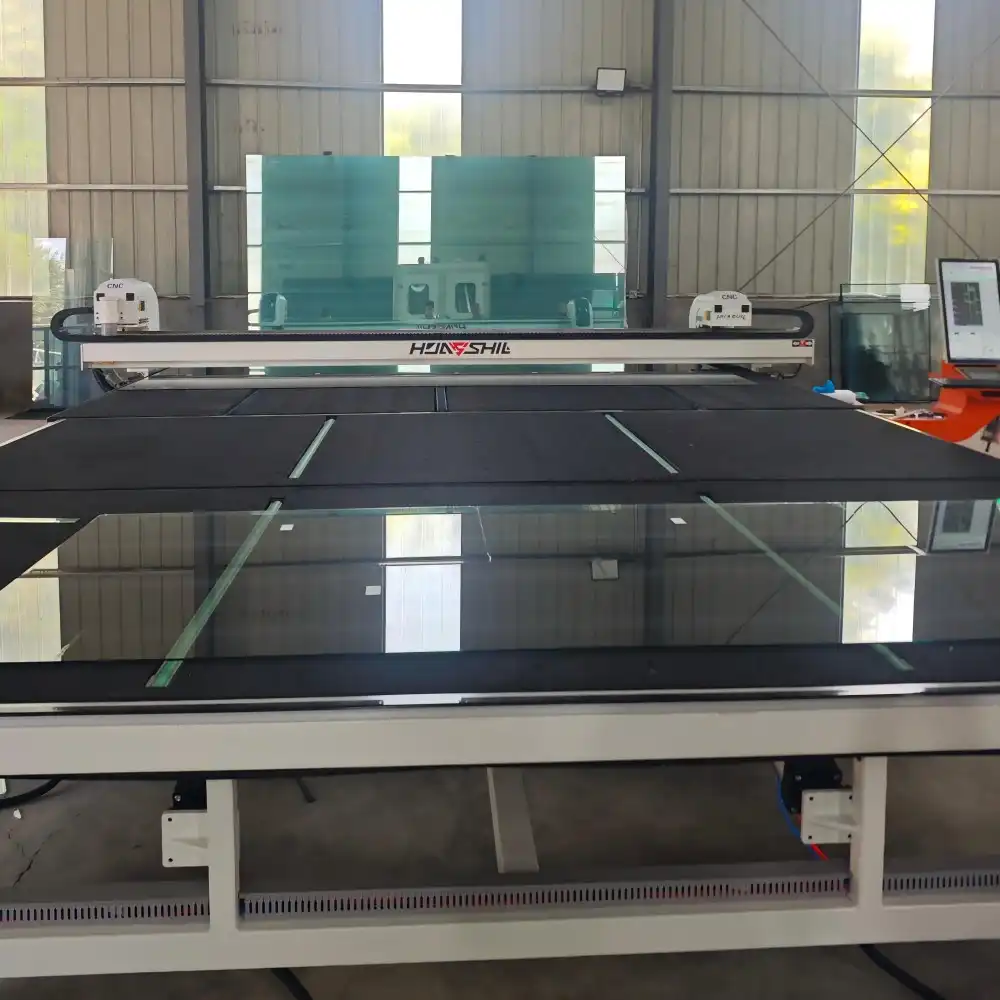
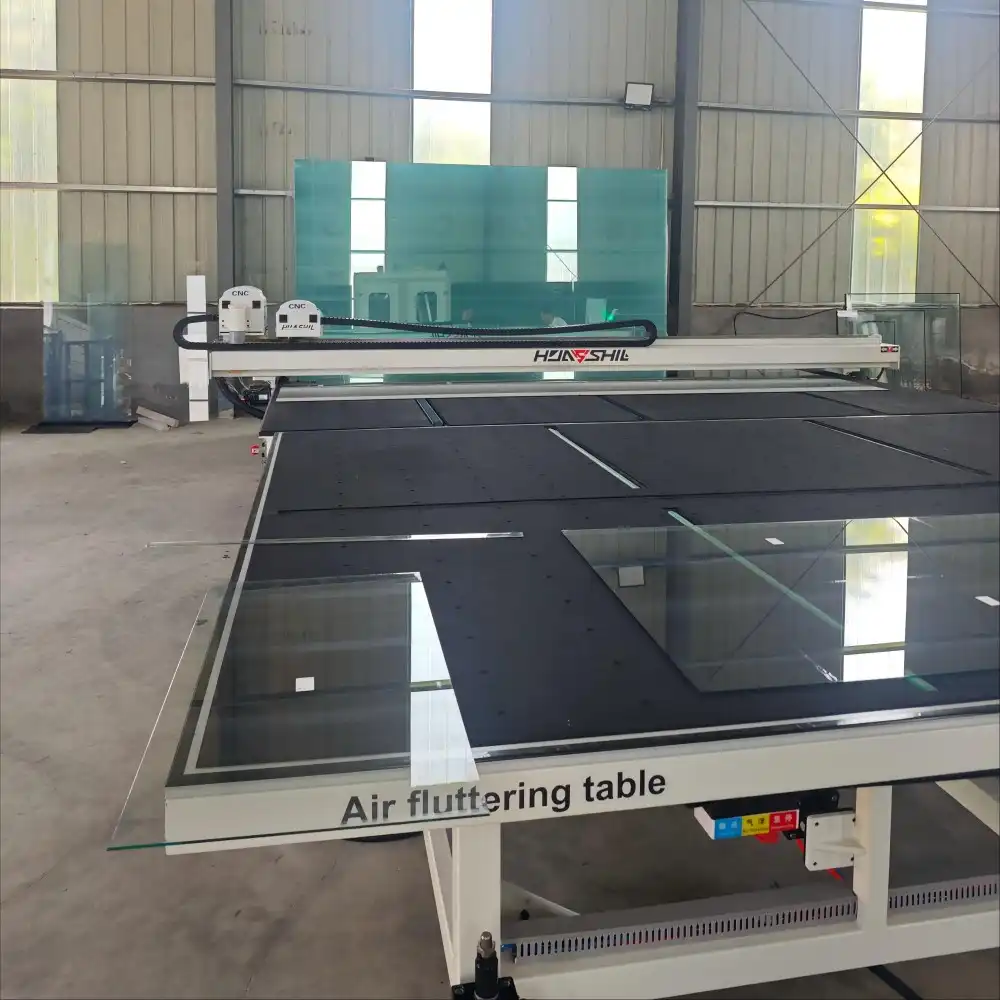
One example of this integration is the HSL-CNC2716 model with automated pressure control, which automatically changes the cutting force according to the density of the material. Its automatic edge-detecting feature cuts down on setup time by automatically scanning material boundaries before cutting. An air flotation system minimises the friction between the workpiece and the machine table, avoiding surface scratches and enabling workers to move large slabs easily. These capabilities together help to solve the biggest problems production managers encounter: setup time, wasted material from bad cuts, and surface quality.
Material Compatibility and Application Range
The cutting obstacles are different for different stone materials. Sintered stone needs steady pressure and regulated feed rates to avoid chipping along cut edges. Sharp tools and management of the depth of cut on ceramic slabs may prevent subsurface cracking. Traditional natural stones such as granite and marble need varying speeds based on the mineral composition and grain structure.
Such variety is made possible by the customisable settings of the advanced cutting technologies. With a thickness range of 3- 18 mm, the machine can process architectural glass, ornamental panels and structural components in one manufacturing shift. This flexibility is especially beneficial for fabricators who serve different market segments or have bespoke project specs. The flexibility to convert between different kinds of materials with little retooling lowers downtime and enhances machine utilisation rates.
Why Precision Matters in B2B Stone Fabrication?
If you’re a procurement professional looking at cutting equipment, understanding how accuracy directly impacts downstream processes is key. Cascading issues during installation arise with deviations as little as 0.5mm from specification. Out-of-place curtain wall panels necessitate field changes, which increase labour costs and project schedules. Problems in assembly and customer complaints are caused by furniture components with different dimensions.
CNC-controlled cutting takes the human element out of the equation. Machines are programmed once and then cut thousands of the same parts. This consistency allows fabricators to bid competitively on high-volume projects with the quality guarantees of no manual operation. Engineering managers evaluate equipment on repeatable specs, understanding that the narrower the tolerance, the fewer rejected items and the better the customer satisfaction ratings.
Advantages of Switching to Automatic Stone Cutting Machines: Efficiency, Safety, and Quality
It is a large capital commitment to go from manual to automated cutting. The production supervisors want to see hard proof that this spending produces demonstrable results in a variety of areas of operation. Here’s how automation changes the economics and performance of stone manufacturing at its core.
Quantifiable Efficiency Gains
Manual cutting requires trained specialists to mark patterns, position guides, and cut via physical effort. This procedure is quite time-consuming per item and presents bottlenecks for big-volume manufacturing runs. The digital files are imported and eliminate marking stages for automated systems, and cutting time is reduced by 60-75% over manual processes.
An average architectural glass project requires 200 custom-sized panels. Manual manufacturing could require three workers on two full shifts. With one operator looking after numerous machines, the same amount is processed in one shift using an automated line with a cutting area of 2700x1600mm. The decrease in labour cost has a direct impact on project margins but also releases qualified people to do higher-value duties, such as quality inspection and machine programming.
Besides speed, automation greatly decreases waste of material, too. An automatic stone cutting machine uses nesting software to help optimise the arrangement of sheets and arrange the patterns of cutting so as to maximise the useful output from each raw slab. Manual cutting may give you 75-80% material utilisation, while automated systems may give you over 90% as a matter of course, converting material savings into pure profit on every operation.
Enhanced Workplace Safety and Risk Reduction
Cutting stone has inherent hazards: heavy materials, sharp edges, high-speed cutting instruments and repetitive action. Manual procedures expose workers to injury hazards from material handling, tool contact and ergonomic strain. These events lead to direct expenses from workers’ compensation claims and indirect costs from production interruptions and regulatory compliance problems.
Automated cutting systems keep the operator physically away from the cutting zone. Material loading and unloading is done at safe stations. Cutting is done in enclosed spaces with interlock switches to prohibit access during operations. Sensors identify obstacles and immediately stop movement when safety zones are violated. Such designed precautions lead to a significant reduction in accident rates as compared to manual workplaces.
And then there are maintenance procedures. Regular inspection routines are used to predict wear parts before failure. Lubrication systems eliminate mechanical jamming and abrupt motions. The emergency stop controls are available from many locations around the machine. Plant managers like how these safety measures help cut their insurance costs and preserve their most precious asset: their experienced staff.
Consistent Quality That Meets Industrial Standards
Consistency in quality enables fabricators to provide demanding sectors such as automotive glass or high-end architectural projects. Manual cutting adds variables such as operator skill level, weariness after lengthy shifts, measurement mistakes, and differences in cutting style. This leads to quality variations, which need a lot of inspection and rework.
Automated systems execute programmed instructions in exactly the same manner every time they go through a manufacturing run. “The edge quality is the same from the first to the thousandth piece.” Dimensional accuracy is maintained within defined tolerances, independent of manufacturing volume or time of day. This consistency allows fabricators to adopt statistical process control and capture quality measures that fulfil ISO certification standards and client quality agreements.
The ramifications are more than just for individual initiatives. Reputation capital is consistent excellence. For projects with tight installation deadlines when delays are expensive, contractors and project managers pick suppliers with a reputation for dependable production. Automated cutting fabricators are establishing themselves as premium suppliers that can charge a greater price given customers’ faith in their quality.
Choosing the Right Automatic Stone Cutting Machine for Your Business
Equipment selection involves balancing multiple factors against operational requirements and budget constraints. Production directors and engineering managers must evaluate specifications systematically to identify solutions delivering optimal long-term value. The following considerations guide this evaluation process.
Assessing Your Production Requirements
Start by quantifying current and projected production volumes. Small furniture manufacturers processing 20-30 pieces daily have different needs than curtain wall fabricators running 200+ panels per shift. Maximum cutting dimensions matter significantly—a machine with a 2700x1600 mm capacity accommodates standard architectural glass sizes but may prove limiting for large-format sintered stone slabs popular in commercial interiors.
Material types influence equipment configuration. Shops specialising in natural stone need robust frames handling vibration from hard materials. Facilities focused on ceramic slabs prioritise precision over raw power. Operations serving diverse markets require flexible systems handling multiple material categories without extensive changeover procedures, which is why partnering with an efficient stone cutting machine manufacturer can help businesses select equipment configurations that match their specific material requirements.
Thickness range capabilities determine project eligibility. The 3- 18 mm range suits most architectural and decorative applications, covering standard glass, thin porcelain panels, and mid-range stone tiles. Projects involving structural glass or thick stone countertops require equipment rated for heavier materials.
CNC Control Systems and Automation Features
Control system sophistication directly impacts operational efficiency. Entry-level controllers execute basic cutting patterns but require manual programming for each job. Advanced CNC platforms like Eos-cnc import CAD files directly, automatically generating tool paths and optimising cutting sequences. This difference matters substantially for shops handling custom work where programming time represents significant overhead.
Look for automation features addressing specific production pain points. Automatic pressure control adjusts cutting force dynamically, preventing material damage while maintaining speed. Automatic edge-finding eliminates measurement steps, reducing setup time from 10-15 minutes to under two minutes. Air flotation systems enable single-operator material handling for slabs that would otherwise require two people. These features don't just improve efficiency—they change the fundamental economics of stone fabrication.
Remote monitoring capabilities increasingly separate basic machines from advanced systems. Network-connected equipment transmits production data, maintenance alerts, and performance metrics to management dashboards. This visibility enables production planners to optimise scheduling, maintenance teams to perform predictive servicing, and finance departments to calculate accurate equipment utilisation rates for capital planning.
Evaluating Total Cost of Ownership
The purchase price represents only one component of equipment investment. Technical managers must calculate the total cost of ownership across the machine's operational lifespan. Installation expenses vary depending on facility requirements for power supply, compressed air systems, and water recycling infrastructure. Complex machines may require foundation work or facility modifications, adding to initial costs.
Training investments ensure operators and maintenance staff can maximise equipment capabilities. Comprehensive training programmes accelerate proficiency, reducing the learning curve period where production runs below capacity. Ongoing technical support availability protects production schedules when issues arise. Manufacturers offering 24-hour support hotlines, readily available spare parts, and regional service technicians minimise costly downtime.
Warranty coverage and service agreements warrant careful review. Standard warranties typically cover one year, but extended programmes offering two or three years provide budget predictability for maintenance expenses. Understand what components are covered, response time commitments, and whether service includes on-site visits or requires shipping parts. These details significantly impact operational risk and should influence supplier selection as much as initial pricing.
Maintenance and Troubleshooting: Keeping Your Automatic Stone Cutting Machine Performing Optimally
Equipment reliability depends on systematic maintenance and rapid problem resolution. Plant managers overseeing multiple production lines need standardised protocols ensuring machines maintain peak performance between major service intervals. Implementing these practices protects capital investments while sustaining production commitments.
Establishing Preventive Maintenance Routines
Daily maintenance tasks take minutes but prevent hours of downtime. Operators should inspect cutting tool condition, checking for wear or damage requiring replacement. Lubrication points need attention according to manufacturer specifications—some systems require daily greasing of linear guides and bearings. Water systems used with wet cutting methods need reservoir level checks and filtration inspections to prevent pump damage.
Weekly protocols go deeper. Clean precision components like linear encoders and optical sensors that accumulate dust affecting measurement accuracy. Inspect hydraulic hoses and pneumatic fittings for leaks indicating impending failures. Test emergency stop functions and safety interlocks, ensuring protective systems remain operational. Document these inspections using checklists that create maintenance records useful for troubleshooting and warranty claims.
Monthly maintenance addresses wear items and system calibration. Replace water filtration cartridges before saturation reduces flow rates. Check cutting table levelness, which affects material flatness and cut quality. Verify CNC positioning accuracy using calibration fixtures, adjusting mechanical components if measurements drift outside tolerance. These proactive measures identify degradation before it impacts production quality.
Diagnosing Common Technical Issues
Even well-maintained machines occasionally experience problems requiring technical troubleshooting. Recognising symptoms helps operators communicate effectively with service technicians and implement temporary workarounds, minimising production disruption. Rough or chipped cut edges often indicate dull cutting tools needing replacement or incorrect feed rate settings overloading the cutting element. Dimensional inaccuracy across multiple pieces suggests mechanical looseness in the gantry system or encoder calibration drift.
When machines exhibit intermittent issues appearing and disappearing unpredictably, electrical connections deserve attention. Vibration during operation can loosen terminal screws, creating intermittent opens that disrupt control signals. Temperature cycling causes expansion and contraction that weakens connections over time. An efficient stone cutting machine manufacturer understands the importance of reliable electrical systems and applies proper inspection methods to ensure stable machine performance. Systematically inspecting and retightening electrical connections resolves many mysterious problems without expensive parts replacement.
Control system errors displayed on operator interfaces provide diagnostic starting points. Modern CNC platforms log error codes indicating specific fault conditions. Consulting the manufacturer's troubleshooting guide matches codes to probable causes, streamlining repair processes. Maintaining contact with the equipment supplier's technical support team provides access to expertise handling complex issues beyond typical maintenance staff capabilities.
Recognising When Upgrades Become Necessary
Production requirements evolve as businesses grow and market demands shift. Equipment purchased for initial operations may eventually limit expansion possibilities. Recognising upgrade timing protects competitive positioning while maximising existing equipment utilisation. When production volumes consistently approach machine capacity, bottlenecks emerge, affecting delivery schedules. Adding capacity through equipment upgrades or additional machines prevents losing business to competitors with available production slots.
Technology advancements sometimes justify replacing functional equipment with newer systems offering superior capabilities. CNC control systems evolve rapidly, with recent generations providing features like AI-assisted tool path optimisation and predictive maintenance algorithms. Cutting technologies improve, delivering better edge quality or faster processing speeds. Calculating the ROI on technology upgrades requires comparing productivity gains and quality improvements against investment costs and installation downtime.
Component-level upgrades extend machine lifespan cost-effectively. Retrofitting older machines with modern CNC controllers preserves mechanical investment while gaining software advantages. Upgrading vacuum systems or adding automatic tool changers enhances capability without full equipment replacement. Engineering managers should consult equipment suppliers about upgrade options before assuming complete replacement is necessary.
Conclusion
Mastering stone cutting in today's competitive fabrication environment demands embracing automation technology that delivers precision, efficiency, and safety. Automatic stone-cutting machines transform production economics by reducing labour costs, minimising material waste, and ensuring quality consistency that manual methods cannot achieve. Strategic equipment selection requires balancing technical capabilities against operational requirements, evaluating suppliers based on reputation and support infrastructure, and negotiating comprehensive agreements protecting long-term interests. By implementing proper maintenance protocols and leveraging supplier partnerships, fabricators position themselves to meet demanding project specifications while maintaining competitive advantages.
FAQ
1. How does automatic stone cutting compare to manual methods in precision?
Automated systems achieve positioning accuracy within ±0.1mm consistently across thousands of cuts, while manual methods vary based on operator skill and fatigue. CNC control eliminates human measurement errors and ensures identical replication of programmed dimensions. This precision proves critical for architectural applications where panels must align perfectly during installation without field adjustments.
2. What maintenance practices keep cutting machines reliable?
Daily inspections covering cutting tools, lubrication points, and safety systems prevent most operational issues. Weekly cleaning of precision components and monthly calibration checks maintain accuracy. Following manufacturer-specified service intervals for major components like hydraulic systems and replacing wear items proactively avoids unexpected downtime during production runs.
3. Can one machine handle both granite and ceramic materials?
Advanced systems with adjustable cutting parameters accommodate multiple material types through programmable settings. Operators select appropriate cutting speeds, pressure levels, and tooling configurations matched to material characteristics. Machines with sufficient structural rigidity and control system flexibility handle materials ranging from soft ceramic tiles to dense natural stone without requiring separate specialised equipment.
Partner with HUASHIL for Your Stone Cutting Automation Needs
Elevating your fabrication capabilities requires partnering with an experienced automatic stone-cutting machine manufacturer who understands both technology and your production challenges. At HUASHIL, we've spent years developing solutions specifically designed for architectural glass plants, sintered stone processors, and custom fabrication operations. Our HSL-CNC2716 model combines proven CNC technology with practical automation features—automatic pressure control, edge finding, and air flotation systems—addressing the real operational pain points production managers face daily.
We invite you to explore how our tailored cutting solutions can transform your production efficiency and quality consistency. Contact our expert team at salescathy@sdhuashil.com for personalised consultations that evaluate your specific requirements and demonstrate how our automatic stone cutting machine for sale delivers measurable ROI through reduced labour costs, minimised waste, and enhanced throughput. Reliable after-sales support and readily available spare parts protect your investment for years ahead. Let's discuss how HUASHIL technology positions your operation for competitive success.
References
1. Stone World Magazine (2023). "Advanced CNC Technologies in Stone Fabrication: Industry Performance Benchmarks."
2. International Journal of Manufacturing Engineering (2023). "Automation Impact on Stone Processing Quality and Production Economics."
3. Architectural Glass Systems Quarterly (2024). "Precision Cutting Requirements for Modern Curtain Wall Applications."
4. Industrial Machinery Maintenance Handbook, 5th Edition (2023). "Preventive Maintenance Protocols for CNC Stone Processing Equipment."
5. Global Stone Processing Technology Report (2023). "Market Analysis of Automated Cutting Systems in Architectural and Decorative Applications."
6. Manufacturing Safety Council (2024). "Risk Reduction through Automated Stone Fabrication Equipment: Comparative Safety Analysis."