




Glass processing equipment stands at the intersection of architectural innovation and manufacturing precision, serving as the backbone of modern construction's glass components. In contemporary building design, glass transcends its traditional decorative role, becoming a structural necessity that demands exacting standards. Automated cutting lines, CNC edge processors, and specialized machinery transform raw glass sheets into precisely engineered components that define curtain walls, energy-efficient windows, and architectural facades. This guide addresses procurement managers, plant directors, engineering teams, and system integrators seeking to understand how advanced glass machinery directly influences project outcomes, production efficiency, and long-term operational costs within the U.S. construction sector.
Understanding Glass Processing Equipment and Its Role in Construction
Glass components used in modern construction must be produced with tolerances measured in millimeters. Glass processing equipment includes the specialized apparatus that uses cutting, edging, drilling, tempering, and laminating procedures to turn raw materials into products ready for building. These systems range from standalone machines handling specific activities to integrated production lines controlling whole workflows.
Types of Core Machinery in Glass Fabrication
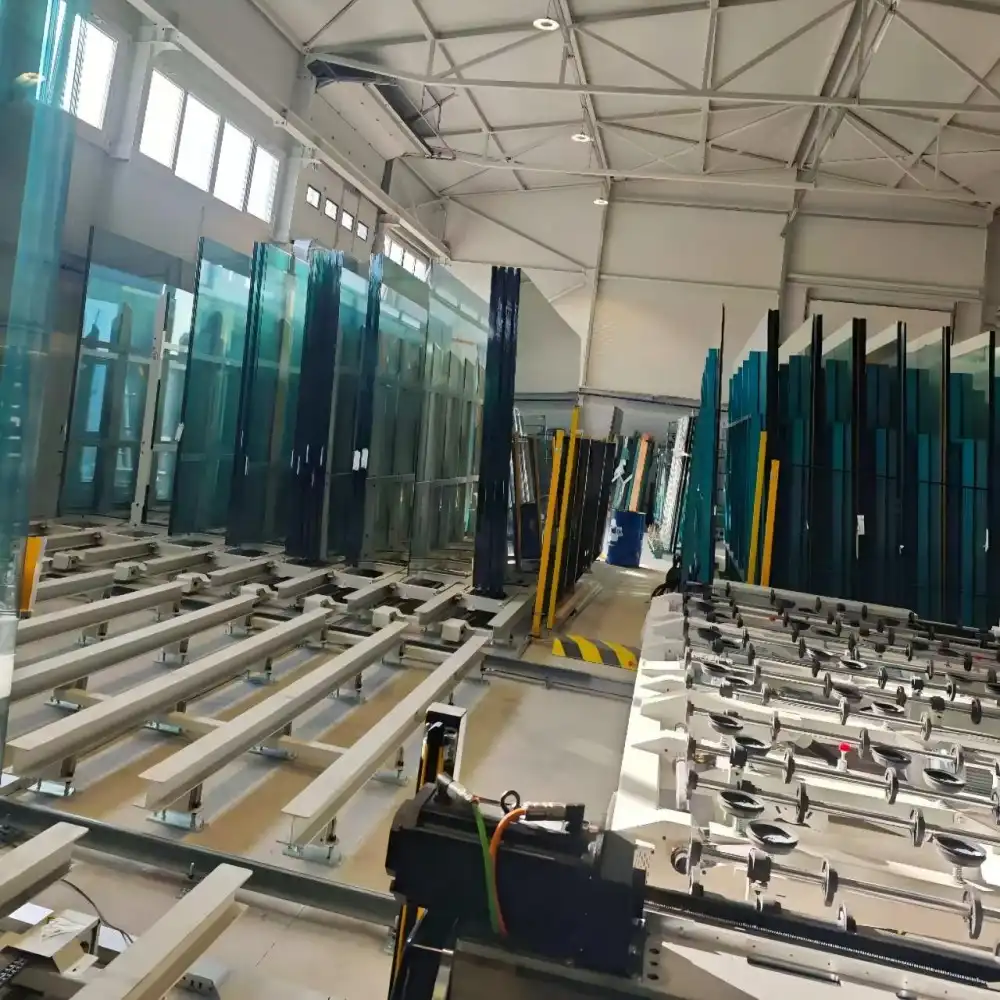
CNC glass cutting technologies constitute the cornerstone of automated glass manufacture. This category is best represented by the HSL-LSX5133 model, which has three integrated stations—loading, cutting, and breaking tables—that process large-format glass in a sequential manner. With a maximum glass size capacity of 5100×3300mm, this configuration accommodates the oversized panels increasingly specified in commercial construction projects. The Optima optimization software minimizes material waste by calculating optimal cutting patterns, directly impacting project material costs and environmental footprints.
After cutting operations, edge processing equipment produces finished edges that adhere to safety regulations and aesthetic standards. Straight edges, bevels, and custom profiles are all concurrently polished by automated edging lines with many grinding heads. Hardware mounting points and cutouts for locks, handles, and ventilation components are added by drilling and milling stations. Tempering furnaces then heat-treat glass to quadruple its strength, meeting building code requirements for safety glazing in high-traffic areas and overhead applications.
Integration Within Construction Workflows
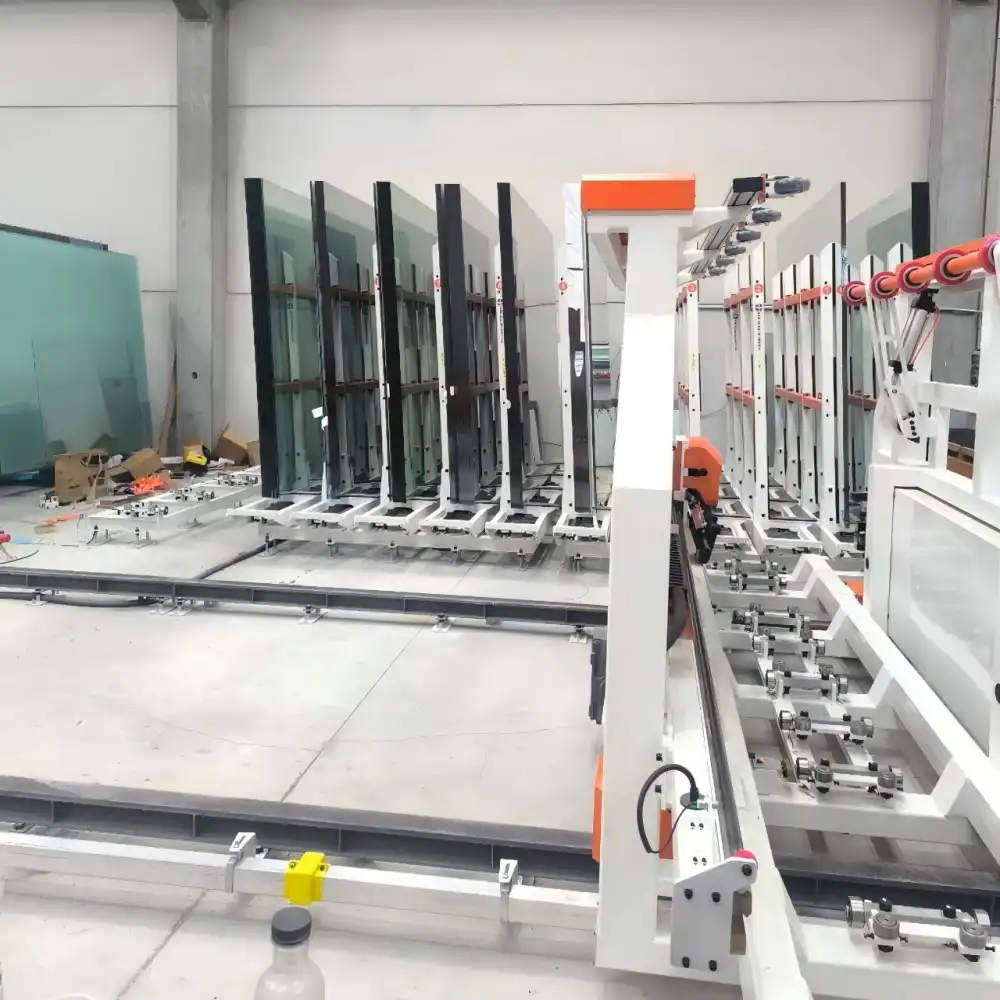
Glass fabrication equipment fits into wider building supply chains through careful coordination between fabricators, curtain wall contractors, and general builders. Production lines equipped with above-ground or subterranean rail systems provide variable material flow, adjusting to facility layouts while maintaining efficient throughput. Fabricators can balance production between basic architectural glass and specialty applications like furniture components or ornamental partitions thanks to the 2+2 station layout with configurable settings. Five grand arms on each side of cutting systems offer robust support for huge, heavy glass sheets, preventing micro-fractures that undermine structural integrity.
Advantages of Using Glass Processing Equipment in Construction Projects
Investing in contemporary glass manufacturing equipment from advanced processing technology machine wholesale gives quantitative benefits across productivity metrics, quality control, and safety performance. These gains accumulate across equipment lifecycles, justifying capital expenditures through greater operational efficiency and market competitiveness.
Precision and Dimensional Accuracy
The unpredictability of hand glass processing is eliminated by automated equipment. Glass panels fit exactly into curtain wall frames without field changes thanks to CNC cutting techniques that achieve positional precision within ±0.1mm. This accuracy avoids weather intrusion, lowers installation effort, and eliminates costly rework. Studies from the Glass Association of North America reveal that automated cutting decreases dimensional mistakes by 94% compared to manual scoring techniques, thus translating to fewer rejected panels and increased project margins.
Performance is equally impacted by edge quality. In big facade projects, automated grinders provide regular edge profiles that reinforce glass perimeters and enhance visual homogeneity. By preventing chipping during handling and installation, properly treated edges lower breakage rates, which often account for 3–7% of material expenditures on building projects.
Production Speed and Scalability
Glass is processed by automated manufacturing lines at speeds that are not achievable with human techniques. In contrast to 8–12 cuts per hour for manual operations, a well-constructed cutting line can handle 40–60 cuts per hour. When producing the hundreds of panels needed for huge commercial buildings or high-rise construction, this throughput advantage becomes crucial. Fabricators can achieve the condensed project dates that define contemporary construction timescales by operating long shifts with continuous quality.
Scalability is more than just speed. Fabricators can gradually increase capacity on modular manufacturing lines by updating components or adding stations as order quantities increase. For mid-sized fabricators looking to pursue larger contracts without overcommitting financial resources, this flexibility is very helpful.
Material Waste Reduction
Material usage economics are transformed when cutting equipment is combined with optimization software. By calculating nesting patterns that maximize glass sheet usage, systems like Optima reduce waste from industry averages of 15-20% to below 8%. On a project utilizing 50,000 square feet of glass, this innovation saves roughly $15,000-20,000 in material costs at current U.S. prices, while lowering landfill load and fulfilling environmental objectives increasingly sought by commercial building owners.
Enhanced Safety Standards
Automated machinery lessens repetitive motion injuries brought on by human handling by removing personnel from direct touch with glass edges. Automated loading systems remove the ergonomic strain of lifting large glass sheets, and safety interlocks stop machines from operating when guards are open. By cutting insurance costs and shielding fabricators from OSHA infractions, these characteristics lessen the rate of occupational injuries. Documented equipment safety characteristics are a competitive difference during contractor selection, as construction projects increasingly demand supplier safety certificates.
Comparing Glass Processing Equipment: Choosing the Right Solution for Your Project
Matching equipment capabilities to production needs, facility limitations, and corporate growth objectives is necessary when choosing the right machinery. This choice strikes a compromise between long-term operational flexibility, cost concerns, and technological standards.
Automation Levels and Production Volume
For small-scale specialized fabricators making unique designs in limited quantities, manual glass cutting is still feasible. Glass is physically broken along score lines after being scored using hand cutters. This method restricts throughput and consistency but needs little capital expenditure. Manual techniques are only appropriate for enterprises processing less than 500 square feet per day since production rates seldom surpass 10 pieces per hour with limited use of a glass processing machine.
Systems that are semi-automated combine automated efficiency with manual flexibility. While manual loading and material handling are necessary, these machines automate cutting or breaking operations. They provide better accuracy without the expense of a fully automated manufacturing line, making them suitable for fabricators handling 1,000–3,000 square feet per day. Investments in fully automated systems usually comprise 40–60% semi-automated equipment.
Large construction projects are supported by high-volume fabricators using fully automated lines, such as integrated CNC cutting systems. With no operator involvement, these systems handle more than 5,000 square feet per day. The labor savings and production capacity allow for competitive bidding on projects requiring thousands of glass panels, even though capital requirements for complete lines start at $150,000–250,000. This degree of automation is necessary for fabricators that target big architectural glass distributors or curtain wall contractors in order to fulfill delivery deadlines and quality standards.
Energy Efficiency Considerations
Energy consumption is another aspect of operating expenses that goes beyond manpower, especially for tempering furnaces that use a lot of electricity. When compared to previous technology, modern equipment with variable-frequency motors and improved heating cycles uses 20–30% less energy. For a mid-sized fabrication business, these savings can amount to $50,000–100,000 over the course of a ten-year equipment lifespan, increasing profitability while lowering environmental impact. To effectively determine total ownership costs, energy usage data should be included in procurement requirements.
Technical Support and Parts Availability
Manufacturer support infrastructure has a major role in equipment dependability. Fabricators should assess supplier performance in terms of technician training programs, spare parts inventory locations, and technical help responsiveness. Support quality is just as crucial as equipment specifications since machinery downtime directly affects project delivery obligations. Reputable producers provide remote diagnostics capabilities that cut repair response times from days to hours and preserve U.S.-based parts delivery.
Maintenance and Safety Best Practices for Glass Processing Equipment
Maximizing equipment performance and lifetime involves systematic maintenance processes and safety practices integrated into everyday operations. These methods preserve capital expenditures while assuring constant product quality.
Preventive Maintenance Protocols
Cutting tables must be cleaned every day to get rid of waste and glass fragments that affect precise alignment. Lubrication regimens for rail systems and cutting head assemblies avoid premature wear, with inspection intervals generally ranging from 100-200 operation hours. Suction cup arrays used in automated loading systems need regular inspection, as even single cup failures might drop panels and create safety risks.
Operator Training Requirements
Skilled operators who comprehend production parameters and troubleshooting techniques are necessary even for fully automated equipment. Initial training on equipment operation, regular maintenance, and basic troubleshooting is usually provided by manufacturers. Operators stay up to speed on software changes and sophisticated features through ongoing education. To maintain competency and optimize equipment capabilities, facilities should provide 40–60 hours per operator each year for training.
Safety Compliance Standards
OSHA machine guarding regulations and industry-specific standards from groups like the National Glass Association must be followed by glass fabricating equipment. Frequent safety audits confirm that personal protective equipment is regularly utilized, emergency stops are still available, and interlocks operate as intended. Due diligence in liability assessments and insurance evaluations is demonstrated by the documentation of safety protocols and incident reports.
Procurement Strategies: How to Buy and Integrate Glass Processing Equipment for Your Construction Business
In order to minimize interruption and maximize return on investment, strategic Glass processing equipment procurement includes vendor evaluation, financial structure, and integration planning.
Supplier Selection Criteria
Assessing manufacturing experience and industry reputation is the first step in selecting equipment providers. Businesses with a wealth of automated glass machinery experience, such as Shandong Huashil Automation Technology Co., Ltd., provide technical expertise that directs appropriate equipment selection. Request reference contacts at similar fabrication plants and evaluate supplier portfolios for installations meeting comparable production needs. Technical requirements are important, but long-term satisfaction is often determined by support infrastructure. Examine the terms of the warranty, the cost of replacement parts, and the availability of technical support. Compared to suppliers who must ship components overseas or send technicians, companies that maintain U.S. service networks respond more quickly. To accurately budget for the total project expenses, get comprehensive documentation including installation requirements, utility specifications, and facility preparation requirements.
Financial Planning and Budgeting
Buying equipment requires a thorough financial study that goes beyond the purchase price. Installation costs, which comprise electrical work, compressed air systems, and facility improvements, usually add 10–15% to machinery charges. Budgets for the first year should account for startup inefficiencies, spare parts inventories, and training costs. Direct purchase, equipment lease, and manufacturer finance schemes are some of the available financing choices. Although overall expenditures are higher than those of direct purchases across equipment lifecycles, leasing offers tax benefits and saves working capital. Fabricators contemplating facility expansions have the opportunity to negotiate since some suppliers provide volume discounts or delayed payment arrangements for numerous machine acquisitions.
Installation and Integration
Expert installation guarantees that equipment meets safety regulations and operates according to specifications. To reduce income interruption, plan installations in accordance with production schedules; this may include arranging work during quiet seasons. After delivery, allow two to four weeks for maximum production capacity, taking into consideration operator training, installation, and calibration. When connecting with existing machinery, production schedule and material flow must be taken into account. Cutting systems must be synchronized with downstream edging and tempering equipment in order to maintain efficient operations. The design of the facility should allow for future growth, providing room for more stations or complementary equipment as the company grows.
Conclusion
Glass processing equipment is a strategic investment that has a significant influence on fabricator competitiveness and construction project outcomes. Modern automated technology provides the precision, efficiency, and safety performance demanded by today's architectural standards and reduced project timeframes. When selecting the appropriate equipment, it is essential to assess automation levels in proportion to output volumes, compute total ownership costs, including energy and maintenance, and work with suppliers that offer robust technical support. When procurement decisions align equipment capabilities with business goals, fabricators gain the operational foundation to take on larger projects, boost revenues via waste reduction, and differentiate themselves through consistent quality. Fabrication technology will continue to be essential to project success and business expansion due to the construction industry's constant push toward larger glass components and more complex facades.
FAQ
1. How do I select the right glass processing equipment for small to medium enterprises?
While taking development trajectories into account, small and medium-sized fabricators should match equipment automation levels to current production volumes. Semi-automated equipment may be appropriate for operations processing less than 1,000 square feet per day, providing better uniformity than human methods without the costs associated with fully automated systems. Determine if your project mix promotes custom shapes that require manual flexibility or standard sizes appropriate for automated cutting. Determine payback periods by comparing labor cost savings to equipment purchases, typically aiming for returns of 18 to 36 months. In order to prevent both under-investment that limits growth and over-investment that strains cash flow, take into consideration modular solutions that allow for incremental capability improvements as order quantities increase.
2. What operational benefits do energy-efficient machines provide?
By using less electricity, energy-efficient glass technology reduces running costs, which is crucial for large cutting systems and tempering furnaces. Modern equipment with variable-frequency motors and improved heating cycles uses 20–30% less energy than older technology, saving average users $5,000–10,000 annually. Over the length of equipment lifecycles, these savings accumulate to support environmental sustainability goals, which are becoming increasingly essential to commercial construction clients. Energy efficiency also shows overall equipment quality as manufacturers who engage in creative power management frequently demonstrate superior engineering across their industrial designs.
Partner with HUASHIL for Advanced Glass Processing Equipment Solutions
HUASHIL offers advanced glass processing equipment designed specifically for architectural fabricators and curtain wall manufacturers in the construction industry. Thanks to three integrated stations and Optima optimization software, our HSL-LSX5133 CNC cutting machine reduces material waste while accurately processing glass up to 5100 x 3300 mm. Station layouts and rail systems may be tailored to your facility's requirements, whether you're establishing a new production line or enhancing existing capabilities. As a seasoned manufacturer of glass processing equipment, we provide full support from equipment selection to installation and operator training, backed by a spare part inventory and technical assistance. Contact our team at salescathy@sdhuashil.com to discuss your exact production requirements and receive detailed specifications that demonstrate how our equipment boosts output, reduces costs, and positions your company for success in the construction sector.
References
1. Glass Association of North America. (2023). "Fabrication Technology Standards for Architectural Glass." Technical Publication Series, Volume 18.
2. National Glass Association. (2022). "Automated Glass Processing: Impact on Production Efficiency and Quality Control." Industry Research Report.
3. American Architectural Manufacturers Association. (2023). "Curtain Wall Component Manufacturing Standards and Best Practices." AAMA Technical Manual TM-2023.
4. Construction Industry Institute. (2022). "Material Waste Reduction in Commercial Construction: The Role of Precision Fabrication." Research Summary 347-1.
5. Occupational Safety and Health Administration. (2023). "Machine Guarding Standards for Glass Fabrication Equipment." OSHA Publication 3170.
6. Building Enclosure Technology and Environment Council. (2023). "Glass Processing Technology Trends in High-Performance Building Envelopes." Annual Technical Review.