




Evaluate your facility's production needs, material handling capacity, and operational workflow while choosing an air flotation table. Important factors include equipment that can handle glass up to 3660×2440mm, remote control, safety measures, and interoperability with current manufacturing lines. These variables ensure worker safety and long-term durability while matching equipment specifications to your factory's throughput needs. CE and ISO 9001 certifications indicate quality assurance and worldwide manufacturing methods, giving procurement teams confidence when evaluating vendors.
Introduction
Architectural glass, curtain wall, and furniture manufacture depends on material handling efficiency. By lowering friction to practically nil, air flotation technology changes how companies handle delicate, heavy glass sheets and stone panels. This handbook helps plant managers, engineering directors, and procurement experts choose air flotation systems that meet operational goals, including cycle times, breakage, and labor costs. Equipment selection affects productivity, maintenance costs, operator safety, and future scalability. Choosing between manual-assist tables and fully automated loading systems requires clarity on technical specifications, integration needs, and supplier reliability to make profitable investments.
Understanding Air Flotation Technology and Its Role in Glass Factories
How Air Flotation Systems Work in Material Handling
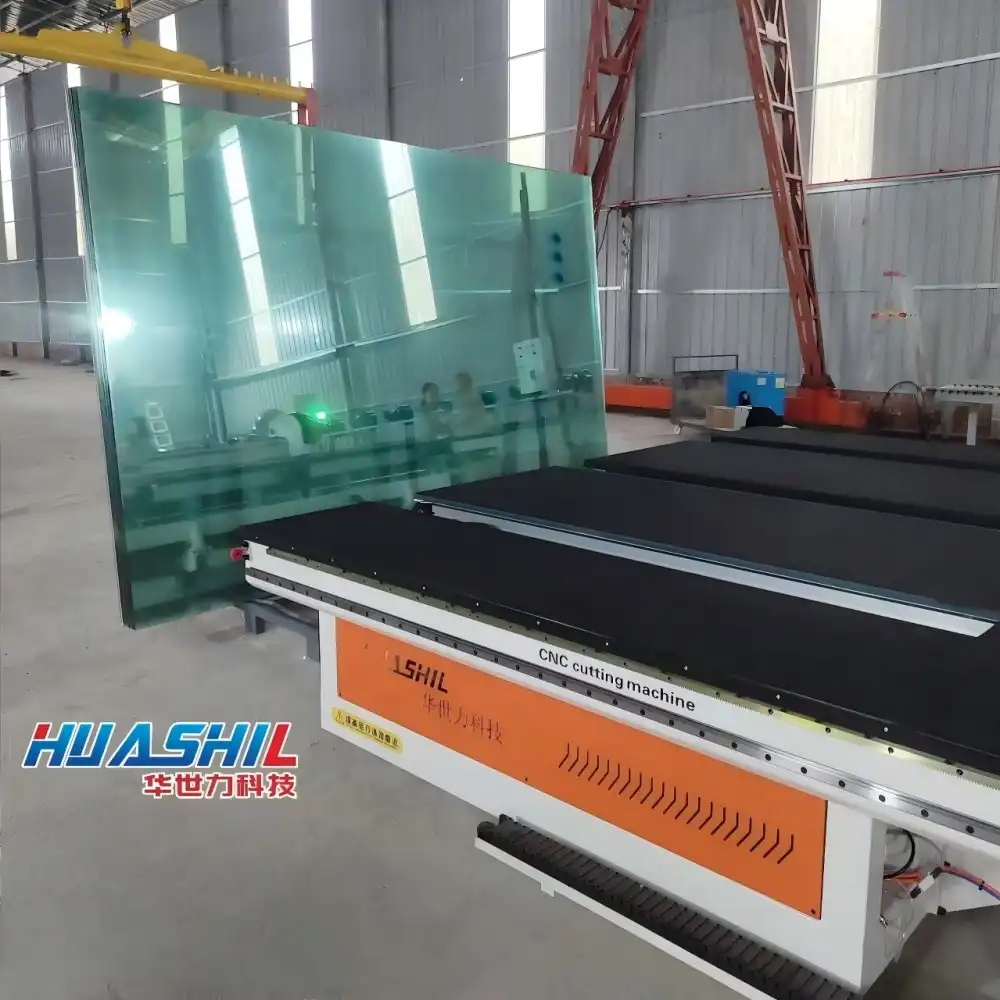
Under glass sheets or stone slabs, air flotation tables produce a thin cushion with compressed air through precision-machined surface perforations. This virtually frictionless support lets operators position multi-ton panels without much effort, eliminating scratches and edge chipping. Traditional roller conveyors may create stress points or surface damage when handling huge architectural glass panels like 3660×2440mm. This technology is extremely useful. Modern systems use sensors to dynamically change air pressure based on material weight to maintain float under different load circumstances.
Core Components and Their Functions
Integrating multiple components makes air flotation systems effective. The compressor unit delivers clean, oil-free air at regulated pressure, while distribution manifolds distribute air uniformly across the table. Precision-drilled flotation plates provide hole designs for different materials—tighter for thinner glass, broader for heavier stone. Advanced air volume control systems may be remotely operated via portable transmitters for 360-degree production floor navigation. For equipment assessment, procurement teams must check OSHA and CE safety regulations. Safety interlocks prohibit table movement when personnel approach forbidden zones.
Applications Across Manufacturing Sectors
Beyond glassmaking, air flotation technology serves other sectors. Tables at cutting stations in architectural glass facilities boost production and decrease rework by being placed precisely. Curtain wall integrators use them to rotate and examine panels without lifting equipment during assembly sequencing. Furniture makers who prepare shower door glass or ornamental panels save time. In sintered stone manufacture, ultra-thin large-format slabs need a delicate transit from cutting to finishing. Table size, load capacity, and automation depend on your application.
Key Criteria for Choosing the Right Air Flotation Table
Matching Table Capacity to Production Volume
Start sizing by examining daily material throughput and maximum panel dimensions. Different specs are needed for a factory manufacturing 50 3660×2440mm glass sheets daily and a bespoke shop handling occasional bigger orders. Consider peak load scenarios, not simply average output, to prevent bottlenecks during peak demand. Vertical capacity is important; glass thickness from 3mm architectural panels to 19mm tempered units impacts air pressure and structural stability. The HSL-SPT3624 type was intended for panels up to 3660×2440mm, with optimum air dispersion for this size range. Engineering management should seek load testing data showing continuous maximum rated capacity performance.
Automation Level and Integration Capabilities
Manual air flotation tables are cost-effective for low-volume applications, but operators must direct panels. With motorized conveyors or rotating mechanisms, semi-automated systems save physical work while preserving operator control. Fully automated loading tables with sensor-guided placement and remote control work well in high-throughput applications where speed and repeatability justify increased capital expenditure. Assess how planned equipment interacts with cutting tables, edging machines, and washing systems. Standardized control protocols ease integration, whereas proprietary systems require specific programming and commissioning. Procurement teams should seek integration requirements and installation technical help.
Safety Features and Operator Protection
Material handling equipment must meet regional safety requirements, especially in the US, where OSHA regulates mechanical operation. Tables with emergency stop controls at numerous entry points allow quick shutdown from any approach angle. When objects block the travel route, anti-collision sensors stop operation, and edge barriers or light curtains prevent panel contact. U.S. industrial insurers recognize CE certification as proof that equipment satisfies European safety requirements. Check that manufacturers offer English-language safety documents, operator training materials, and maintenance procedures to ensure compliance and worker safety. Get third-party proof of safety system reliability under fault situations.
Maintenance Requirements and Long-Term Reliability
Consumables, spare parts, and maintenance are operating costs beyond the purchase price. Change air filtration elements regularly to prevent pollutants from blocking the flotation holes—one failure might damage an entire glass panel during movement. Ask domestic distributors for maintenance intervals and replacement parts. Modular tables provide quick part interchange, reducing downtime compared to welded systems needing specialist maintenance. ISO 9001 certification shows firms have quality management systems for production control, calibration, and traceability, which affect equipment reliability. Control electronics and air valves are high-wear components; engineering managers should carefully analyze warranty conditions.
Evaluating Air Flotation Table Suppliers and Technical Specifications
Comparing Technology Approaches Among Manufacturers
Different supplier engineering philosophies affect performance and cost. Some manufacturers use heavy-duty steel for durability in harsh situations, while others use lightweight aluminum frames for installation and relocation. Passive systems use continuous airflow, whereas pulsed designs cycle pressure to save energy. Simple directional buttons to advanced joystick interfaces with configurable placement are remote controls. Compare energy efficiency standards, usually measured in CFM of compressed air required at rated capacity, while considering proposals. A system that uses 20% less air saves money over five years, especially in multi-unit settings.
Assessing Supplier Capabilities and Support Infrastructure
Reliable manufacturers give customer references, excellent technical documentation, and attention to specification queries. Request case studies from architectural glass factories, furniture makers, and curtain wall facilities with successful installations. The supplier's U.S. technical support, spare parts inventory, and field service should be assessed. Remote diagnostic companies may fix difficulties via the internet, responding faster than on-site models. During installation, check operator training to avoid warranty voiding or equipment damage. Procurement managers should verify industry payment terms—typically 30% deposit and 70% upon delivery or commissioning—and foreign shipping obligations.
Understanding Certification and Compliance Documentation
Beyond safety, equipment certifications include quality and performance. CE certification verifies compliance with European machinery safety, electromagnetic compatibility, and low-voltage equipment rules, which are globally recognized. Manufacturers with ISO 9001 certification document design control, production monitoring, and continuous improvement methods. Automotive glass fabricators may require IATF quality processes, whereas food-grade glass makers need sanitation-compliant equipment. Request comprehensive load capacity test results, noise emission measurements, and electricity consumption standards. This documentation helps engineers design the compressed air, electrical, and floor space configurations required for air float tables.
Matching Air Flotation Tables to Specific Factory Requirements
Industry-Specific Considerations for Glass Fabrication
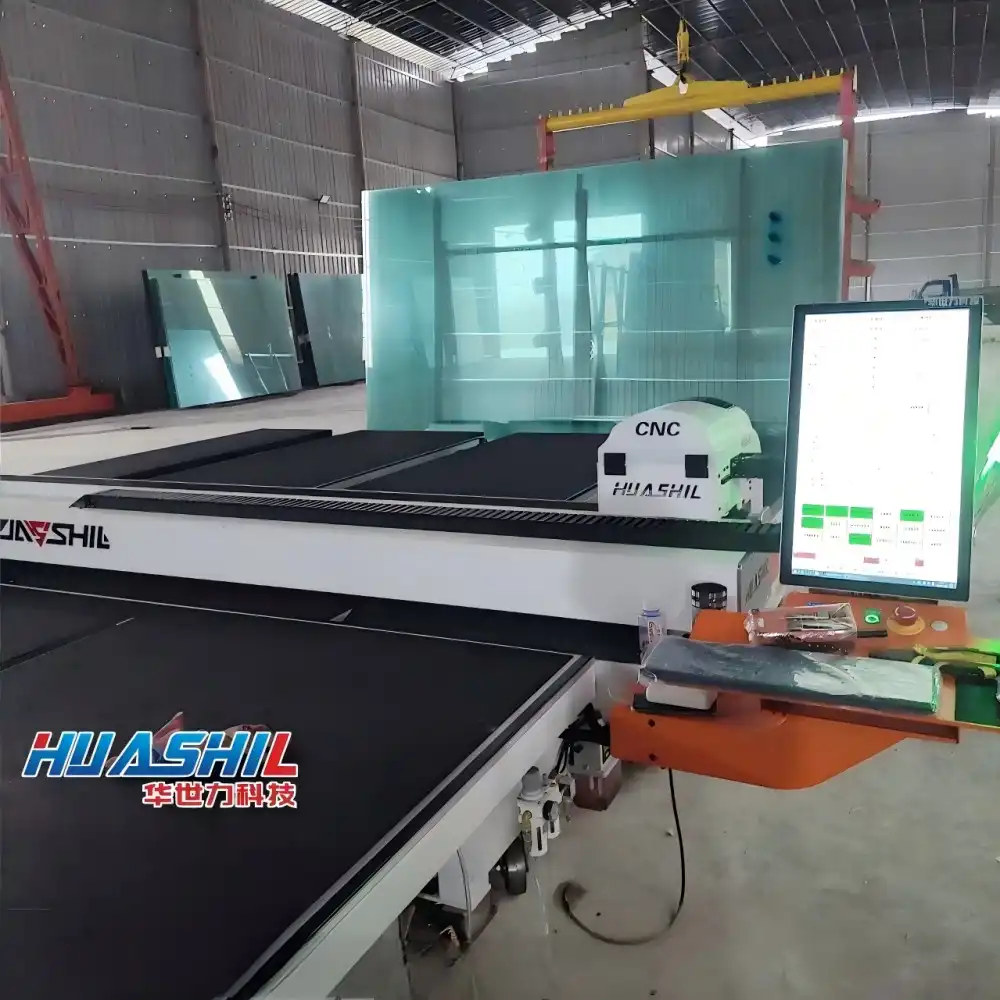
Architectural glass plants for huge building panels emphasize large tables and sturdy construction. The HSL-SPT3624 supports materials up to 3660×2440mm, addressing the trend towards larger glazing systems in current architecture. Integrating breaking tables lets workers score and separate glass on the floating surface, avoiding intermediary handling. Rotational capabilities help curtain wall fabricators examine and install gaskets without flipping large assemblies. Furniture makers making smaller shower doors or tabletops may prefer compact versions with faster positioning speeds to optimize cycle times for higher-volume manufacturing. If your business needs multi-zone flotation, independently regulated areas that can handle different-sized particles on one table, consider it.
Adapting Equipment to Production Scale and Growth Plans
Expanding facilities must choose between independent devices and integrated automation systems. Individual tables can be moved when processes change, but they need manual transfer between processing stations. Although they lose speed for versatility, automated loading systems with conveyor integration work well on specialized manufacturing lines processing standard sizes. Some manufacturers provide modular extension channels for remote control, load capacity, and dimension expansion using bolt-on parts. This technique preserves original investment and allows development without replacing equipment. Finance managers assessing proposals should calculate the total cost of ownership across the equipment lifecycle, balancing productivity increases with capital and operational costs.
Integration With Existing Manufacturing Equipment
Analyzing how the air flotation table interacts with subsequent manufacturing phases is necessary for successful deployment. For a panel overhang during rotation, a 3660mm panel needs more floor space than the table dimensions. Check compressed air supply capacity; adding flotation systems to existing lines may require compressor improvements if plant demand approaches maximum output. Manual tables use less electricity for control circuits, but motorized systems use a lot. Work with equipment makers and plant engineers to establish utility connections, safety zone markings, and operator access approaches. Production managers should arrange installations during planned downtime for commissioning and operator training without affecting deliveries.
Real-World Performance and ROI Analysis
Quantifying Productivity Improvements
Manufacturing case studies show air flotation's benefits. After implementing automated loading tables, a mid-sized architectural glass fabricator reduced panel handling time by 35%, allowing two operators to handle tasks previously requiring four. Eliminating overhead cranes and vacuum lifters cut energy costs and improved operator ergonomics and safety. Smoother material movement reduced edge chip breakage by 60% for one furniture glass maker. When assessing ROI, add labor cost savings, rework reductions, and insurance premium reductions from improved safety records. Suppliers can provide production simulation data for engineering managers to estimate throughput increases for certain operating situations.
Addressing Common Implementation Challenges
Planning helps air flotation facilities overcome expected challenges. Compressed air quality is crucial because moisture and particles clog flotation holes, creating uneven support and panel damage. Dedicated filtration and drying systems upstream of air float tables prevent these difficulties but cost more. Operator training is needed to adjust to air flotation's softer touch. Panel placement may overcorrect until workers adjust to near-frictionless movement, according to certain manufacturers. Performance depends on floor levelness; changes above manufacturer standards create uneven flotation, necessitating installation shimming. The procurement team should specify who prepares the site and funds for concrete grinding or structural strengthening.
Conclusion
Technical parameters, operational needs, and budget must be considered while choosing air flotation equipment. Production managers must assess table size, load capacity, and automation to fit existing throughput and projected growth. Integration complexity, maintenance, and supplier support infrastructure are evaluated by engineers. Pricing, warranty conditions, and delivery dates are negotiated by procurement specialists to meet project deadlines. The HSL-SPT3624 shows how specialist designs meet industry demands, in this case, large-format glass handling with remote operation. Certification criteria guarantee quality, while supplier response throughout implementation affects long-term satisfaction. Successful equipment selection requires rigorous needs analysis, supplier research, and ROI forecasts based on productivity measures.
FAQ
Q1: What distinguishes air flotation tables from traditional conveyor systems?
Air flotation tables reduce roller conveyor scratches and edge damage by eliminating mechanical contact between the material surface and transport mechanism. The air cushion uniformly supports the panel, preventing stress concentration spots that might break tempered glass or thin stone. Its 360-degree rotation and accurate placement make it ideal for panel reorientation inspection and assembly procedures that fixed-direction conveyor belts cannot do.
Q2: How do I determine the required compressed air capacity for flotation systems?
Calculate air consumption in cubic feet per minute at a particular pressure (CFM at PSI) using the table surface area and manufacturer requirements. During continuous operation, a 3660×2440mm table may need 40-60 CFM at 80 PSI, depending on load weight and usage frequency. Make sure your compressed air system can meet peak demand without harming other pneumatic equipment. To get appropriate size recommendations, discuss air infrastructure and anticipated equipment expansions with suppliers early in the evaluation process.
Partner With HUASHIL for Advanced Glass Handling Solutions
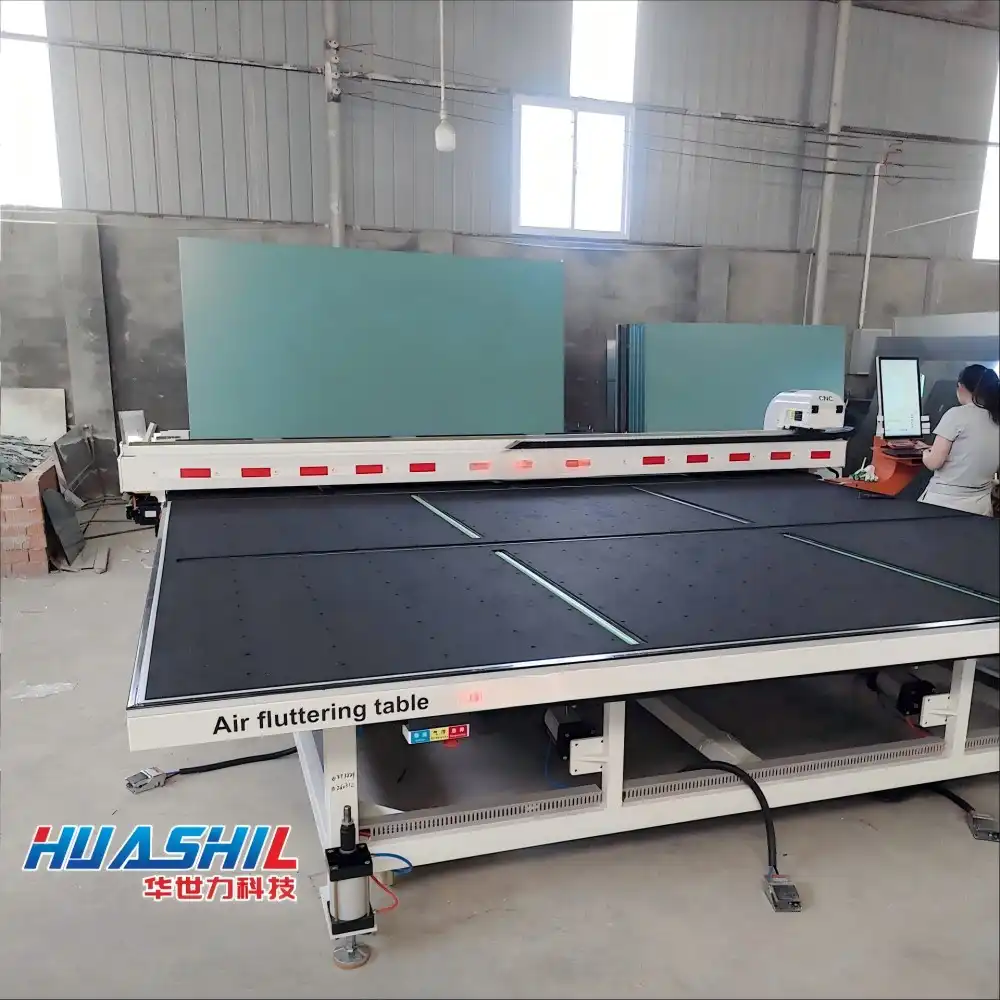
HUASHIL builds air flotation tables for harsh industrial situations using engineering and manufacturing skills. Our HSL-SPT3624 model allows for panel handling up to 3660×2440mm, including automatic loading, an integrated breaking table, and 360-degree remote control, covering the whole material handling workflow from cutting to final inspection. We are certified by CE and ISO 9001 for safety and quality management systems recognized worldwide. As a renowned air flotation table provider, we provide technical documentation, installation help, and replacement parts to minimize downtime. Talk to salescathy@sdhuashil.com about your facility's needs. To optimise configurations, we will analyse production volume, integration demands, and budget. Discover how our proven automation technology lowers labor costs, improves safety, and boosts throughput.
References
1. Glass Magazine, "Automation Advances in Architectural Glass Fabrication: Equipment Selection and Implementation Strategies," National Glass Association Technical Journal, 2022.
2. International Journal of Advanced Manufacturing Technology, "Comparative Analysis of Material Handling Systems for Large-Format Brittle Materials," Springer Publishing, 2021.
3. American Society of Mechanical Engineers, "Safety Standards for Industrial Material Handling Equipment: Design and Operation Guidelines," ASME B20.1-2023.
4. Modern Materials Handling, "ROI Analysis of Automated Loading Systems in Glass and Stone Processing Facilities," Peerless Media, 2023.
5. Occupational Safety and Health Administration, "Machinery and Machine Guarding Standards for Manufacturing Operations," OSHA Publication 3170, U.S. Department of Labor, 2022.
6. Glass Processing Days Conference Proceedings, "Innovations in Non-Contact Transport Systems for Architectural Glazing," Tampere, Finland, 2023.