




Manufacturers under pressure to achieve precision, speed, and consistency will benefit from automated glass processing. Modern manufacturing facilities use integrated systems to cut, edge, drill, and inspect using computer-controlled workflows instead of labor-intensive manual activities that cause waste and safety issues. The methods solve long-standing issues such as dimensional discrepancies, material losses above 15%, and occupational accidents from sharp edges and hard lifting. Architectural fabricators, curtain wall integrators, and furniture manufacturers can meet exacting specifications while reducing operating costs and improving worker safety across every production shift with automated glass processing.
Understanding Automated Glass Processing Lines
What Defines Modern Glass Automation
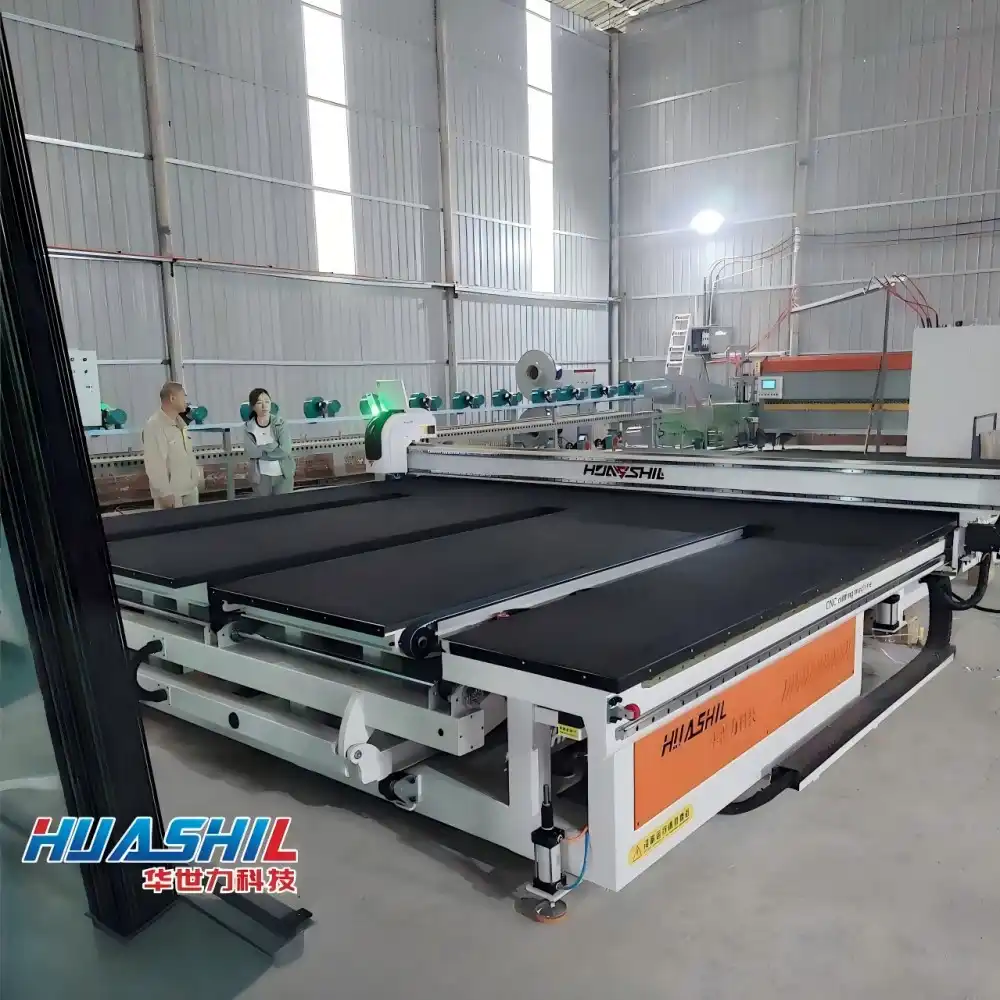
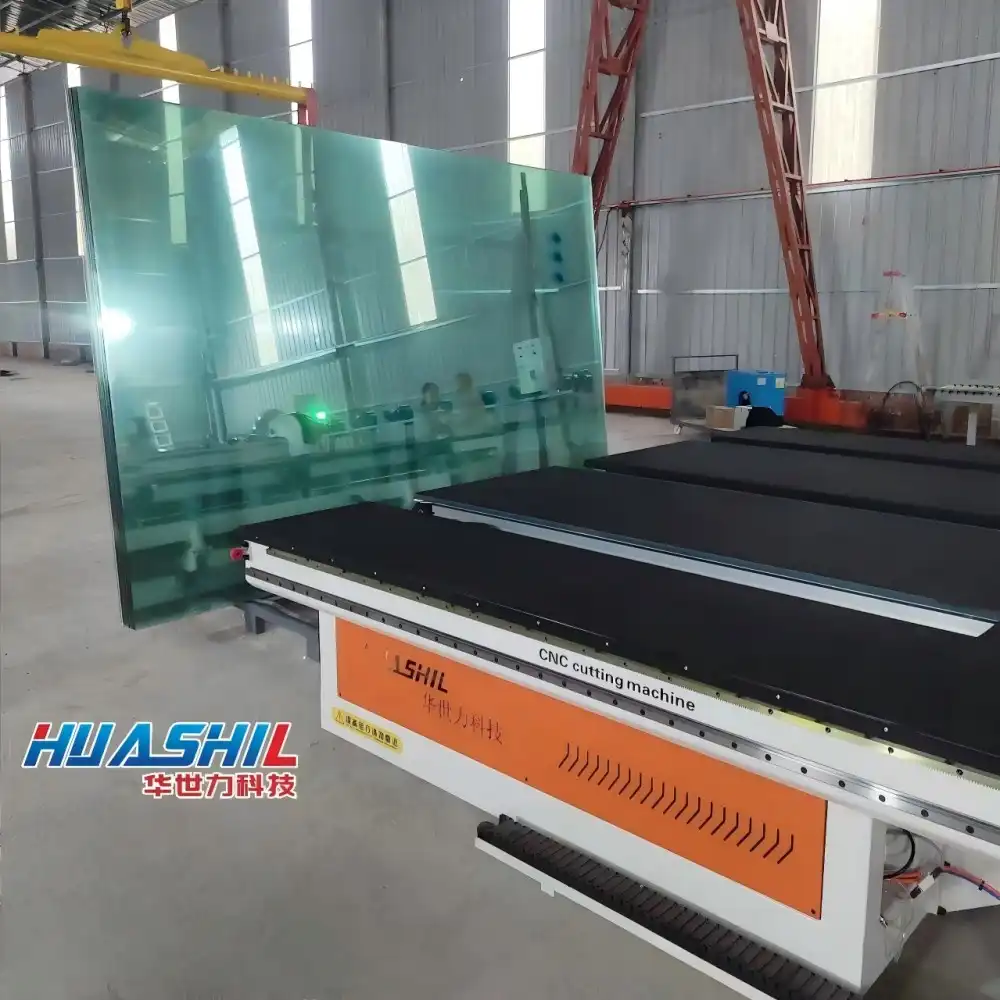
Automated glass processing lines use precision machinery and clever software to complete difficult operations. The process usually includes loading mechanisms, CNC-controlled cutting tables, edge grinding stations, drilling modules, and automated inspection cameras. Each transition point is handled faster and without human mistakes with this integration. To process glass sheets up to 4200×2800mm, the HUASHIL HSL-LSX4228 model uses three specialized tables (loading, cutting, and breaking) in synchronized succession.
Core Technologies Driving Performance
Optima determines the best cutting patterns before the blade meets the glass. This program reduces offcuts and maximizes yield by analyzing sheet dimensions, project requirements, and material properties. The system uses adjustable above-ground or recessed rail systems with 2+2 stations to accommodate production quantities. Four grand arms on each side stabilize massive architectural panels, decreasing vibration and preserving 0.1mm cutting precision throughout several shifts.
Evolution From Manual to Digital Control
Each piece was measured, marked, cut, and transported by many operators in traditional glass operations, adding unpredictability. Sensor feedback and digital accuracy replace subjective judgment in modern automated processes. Real-time monitoring detects micro-cracks and edge faults that manual inspection cannot identify. Temperature controls optimize cutting conditions. This move has been especially helpful for curtain wall projects, where thousands of panels must match identical requirements and a single dimensional inaccuracy can cause significant installation delays.
Key Advantages of Automated Glass Processing Lines
Precision and Quality Consistency
Automation provides dimensional precision that human methods cannot. CNC cutting tables ensure architectural panels fit exactly during installation by maintaining tolerances within fractions of a millimeter across manufacturing runs. Because grinding settings are consistent, operator tiredness and technique discrepancies do not affect edge quality. Shower door and glass furniture makers need this uniformity since obvious seams or misaligned edges alert buyers to quality issues.
Automatic lines cut fault rates by 68% compared to human processes, according to Glass Processing Industry Association research. After automating cutting and edge processing, automotive glass providers claim scrap reductions of 22%, improving material usage and lowering raw material costs. Software optimization and mechanical precision work together to repeatably cut, grind, and drill.
Production Throughput and Scalability
Automated glass processing speeds up cycle times without sacrificing quality. One operator supervising an automated line may process the same amount as four to six trained personnel. The HSL-LSX4228 setup can process architectural glass panels at around 120 square meters per hour, depending on intricacy and edge finishing. Fabricators can take larger contracts and satisfy shortened delivery timelines that would overwhelm human operations due to throughput.
Scalability is another important feature for developing enterprises. Modular station designs allow baseline setups and additional capacity as order quantities rise. A curtain wall integrator might start with two stations and add four or six without changing essential equipment. This flexibility helps companies manage capital expenditures and sustain competitive manufacturing throughout market cycles.
Enhanced Workplace Safety
Sharp edges, high loads, and repetitive motions make glass processing dangerous, with occupational safety data showing 7.2 occurrences per 100 workers per year in manual operations. Enclosing cutting zones, automating material handling, and preventing human interaction with sharp edges reduce these risks in automated systems. Safety sensors stop operations immediately if protective barriers are violated, while automated loading arms minimize chronic back problems from human lifting.
Automated operator-protected equipment simplifies CE and OSHA compliance. Automation reduces injury rates by over 80%, decreasing insurance prices and preventing worker absences. Safety technology reduces liability and boosts employee retention in competitive labor markets.
Long-Term Return on Investment
Automated glass processing systems offer significant returns over their operating lives despite greater initial capital costs. As facilities cut staff or move them to quality assurance and specialized project management, labor costs drop instantly. Modern cutting systems consume 30% less power than manual processes due to better motor controls and reduced idle time.
Reduced material waste saves money across thousands of production cycles. Optimizing sheets with software like Optima turns trash into useful bits for smaller projects. Depending on production volume, architectural glass fabricators estimate payback periods of 18 to 36 months, after which the automation investment generates 12 to 18 percentage points greater profit margins than human operations. This financial success attracts private equity and allows expansion investments to boost competitiveness.
Real-Time Quality Control and Data Integration
Integrated inspection systems measure dimensions, evaluate edge quality, and detect surface defects at production speed. Digital cameras and laser sensors detect deviations from requirements before tempering or laminating each panel. Real-time feedback permits process modifications rather than finding entire batches of bad panels at final inspection, saving resources and manufacturing time.
Processing data feeds enterprise resource planning systems, giving plant managers access to equipment use, maintenance, and quality trends. Engineering teams use this data to find bottlenecks and optimize workflows. Production data helps procurement managers predict material needs, lowering inventory costs and preventing stock shortages. This connection integrates glass processing with important business processes from the production phase.
Comparing Automated Glass Processing with Traditional Methods
Quality and Dimensional Accuracy Benchmarks
Comparisons show that automated glass processing and manual glass production have significant quality disparities. Traditional techniques depend on operator talent and attention, causing differences in big tasks. A manual cutter may be 1mm accurate while fresh, but drift to 2-3mm after long shifts due to tiredness. Automated CNC systems process the thousandth panel with the same 0.1mm precision.
Similar differences exist in edge finishing. Manual grinding causes pressure and angle irregularities that show up when panels are put together. Automated edge processors maintain perfect angles and pressure throughout manufacturing runs, providing invisible seam alignments. Glass furniture producers seek this uniformity because dining tables and storage units show edge quality to buyers assessing craftsmanship.
Operational Cost Analysis Over Time
Initial investment comparisons favor manual operations, but TCO assessments reverse this within two years. Automated lines require little oversight, whereas manual facilities require trained operators at premium salaries in tight labor markets. A mid-size architectural glass fabricator processing 50,000 square meters yearly found that manual processes cost $4.23 per square meter compared to $2.87 for automated processing after labor, materials, energy, and overhead allocation.
Energy usage trends boost automation's profitability. Manual processes require continual lighting, heating, and cooling of greater floor expanses for worker mobility and material staging. In climate-controlled facilities, automated lines concentrate processing in small footprints with optimum environmental controls, cutting utility costs by 35%. Over five to ten years, these savings from multi-shift operations running 250+ days per year add up to significant bottom-line implications.
Flexibility for Custom and High-Volume Production
One-time unique creations needing creative interpretation or strange forms beyond equipment capabilities are best done manually. Automated systems are flexible enough for 95% of commercial glass processing applications while preserving efficiency. Modern CNC controllers use simple software updates to accommodate complicated cutting patterns, changeable edge profiles, and accurate drilling positions, saving setup time for each new specification.
High-volume production highlights manual processing limits. Curtain wall projects with thousands of similar panels exceed manual capability, prompting fabricators to forgo valuable contracts or outsource to competitors. Automated lines provide quality and speed throughout big runs, helping manufacturers gain commercial building market share. The HSL-LSX4228's adaptable station design batch processes standardized units during peak demand and switches to bespoke configurations when project needs change.
Selecting the Right Automated Glass Processing System
Critical Decision Criteria for Buyers
Plant managers considering automated glass processing investments must weigh output capacity against floor space and budget. Residential shower door manufacturers have distinct requirements from architectural glass fabricators, making curtain wall panels for business structures. Supplier alternatives are limited by baseline equipment parameters for maximum glass diameters, edge finishing complexity, and throughput.
Project timeframes and prices depend on infrastructure compatibility. Facilities with overhead cranes may choose above-ground rail, while those with floor-level material handling may prefer sunken track. Software integration determines how well the new line works with ERP, CAD, and inventory management systems. Technical managers should ensure that prospective systems implement industry-standard communication protocols and provide documented API access for bespoke integrations.
Evaluating Manufacturers and Suppliers
Supplier reputation and after-sales service often outweigh equipment price. Extended downtime when components fail might outweigh automation gains for manufacturers with insufficient spare parts inventories or delayed technical response times. Engineering teams should examine supplier maintenance networks, parts availability assurances, and service call response times. Feedback from customers using comparable equipment might shed light on dependability and assistance.
Research, production, and quality control are centralized at HUASHIL, assuring component quality and warranty service. For overseas clients, the firm has strategically situated spare parts stocks with crucial component supply obligations. This infrastructure ensures dependability for continuous production operations when equipment downtime affects revenue and customer delivery.
Financial Structures and Ownership Models
Beyond pricing comparisons, capital equipment buying requires complicated financial calculations. Many manufacturers provide deferred payments, lease-to-own, and performance-based plans that match equipment prices to output income. These methods help firms manage cash flow throughout deployment and get automated glass processing advantages immediately.
Installation, operator training, maintenance, and software licensing must be included in total cost of ownership calculations. A detailed financial model throughout the equipment's estimated lifespan—typically 10 to 15 years for excellent automated glass processing systems—reveals investment needs and allows reliable ROI estimates. Finance directors should also consider tax depreciation schedules and energy efficiency incentives that offset initial capital costs in many jurisdictions.
Future Trends and Innovations in Automated Glass Processing
Artificial Intelligence and Machine Learning Integration
Next-generation automated glass processing automation uses AI algorithms to improve cutting patterns beyond geometric calculations. Machine learning methods anticipate blade angles, cutting rates, and cooling parameters for different glass kinds and thicknesses using past production data. Through continual parameter adjustment, these adaptive controls minimize tool wear, prolong maintenance intervals, and improve edge quality.
AI-powered predictive maintenance is another trend in automated facilities. Sensors monitor vibration, temperature, and power usage to identify component degradation before failure. When bearing wear, belt tension changes, or cooling system inefficiencies are detected, maintenance staff schedule repairs during planned downtime rather than emergency breakdowns. This proactive technique boosts equipment availability from 85-90% to above 95%.
Sustainable Manufacturing Practices
Corporate sustainability and environmental standards stimulate energy-efficient processing technology adoption. Modern automated lines use variable-frequency motor drives to fit immediate load requirements rather than running at full capacity. Water recycling systems filter cutting coolant, lowering usage by 70% compared to once-through cooling technologies utilized in prior equipment generations.
Material waste reduction through optimal cutting patterns saves money and the environment. Increased sheet use from 75% to 92% using software algorithms reduces raw material extraction, transportation, and production impacts. Automation that separates clean offcuts from contaminated waste streams improves glass recycling rates and reduces landfill disposal across the industry supply chain.
Modular Design and Market Adaptability
As market needs change, firms may reorganize manufacturing with modular equipment. Architectural glass fabricators may incorporate drilling stations for automobile glass or automated packing systems for export quantities. This flexibility protects capital expenditures from market instability and technical obsolescence by permitting gradual updates rather than system replacements.
Due to labor cost pressures and quality requirements in construction and automotive, experts expect automated glass processing adoption to approach 60% of worldwide production capacity by 2027. Modular, upgradeable systems allow clients to participate in this shift while controlling financial risks. Mid-size fabricators traditionally priced out of automation markets may now use sophisticated processing by starting with baseline automation and expanding across numerous budget cycles.
Conclusion
Automated glass processing lines improve quality, throughput, safety, and profitability. Architectural, automotive, and furniture manufacturers use CNC controls, optimization software, and integrated inspection systems to achieve strict criteria and cut costs. The HSL-LSX4228 shows how smart engineering—flexible station designs, clever material handling, and durable construction—solves plant managers' daily problems. For organizations devoted to industry leadership and sustained growth, the switch from manual techniques demands rigorous consideration of production requirements, supplier capabilities, and financial structures, but the efficiency and competitiveness gains justify the effort.
FAQ
Q1: How Does Automation Reduce Material Waste in Glass Processing?
Optimization software develops cutting patterns to maximize usable glass sheet pieces based on project requirements. In seconds, the Optima algorithm selects thousands of configurations that reduce offcuts and reuse leftovers for smaller components. Intelligent nesting increases material usage from 72-78% with human design to 88-94% with automated optimization, lowering raw material and waste disposal costs.
Q2: Can Automated Systems Handle Small Production Runs Economically?
Quick-change tooling and software-driven setup help modern automated glass processing lines adjust to changing production levels. The changeable station architecture of systems like the HSL-LSX4228 lets manufacturers handle minor bespoke orders between major production runs without reconfiguration delays. High-volume batches have lower per-unit costs, but quality consistency and decreased labor make automation economically viable for runs as small as 50-100 pieces, depending on complexity.
Q3: What Safety Features Are Built Into Modern Glass Processing Equipment?
Physical barriers around cutting zones, emergency stop controls from several places, and sensor arrays that stop activities in dangerous regions are part of comprehensive safety systems. Using automated material handling reduces musculoskeletal injury hazards by eliminating heavy glass sheet lifting. CE and OSHA-compliant equipment is rigorously tested to ensure protective measures work reliably in all working situations, giving plant managers certified compliance and reduced liability.
Partner With HUASHIL for Advanced Glass Processing Solutions
Your manufacturing processes need precision, throughput, and dependability from automated glass processing equipment from reputable manufacturers. HUASHIL maintains spare parts stocks and technical service capabilities to reduce downtime at worldwide locations with decades of engineering knowledge and extensive after-sales support. The modular, scalable HSL-LSX4228 automated cutting line enables architectural fabricators, curtain wall integrators, and furniture makers to compete in quality-driven industries.
Features such as 4200×2800mm glass capacity, Optima software, and customizable station combinations meet different glass processing needs. Our engineering team advises on system design, facility integration, and operator training for manual equipment upgrades and new market prospects. Discuss your production needs and schedule automated glass processing equipment demos with our sales team at salescathy@sdhuashil.com. Expert suppliers know that successful automation projects start with needs assessment and last through technical cooperation.
References
1. Glass Processing Industry Association. (2023). "Automation Impact Study: Quality and Efficiency Metrics in Modern Glass Manufacturing." Industry Research Report, Vol. 17, pp. 45-73.
2. Chen, M. & Williams, R. (2022). "Comparative Analysis of Manual versus Automated Glass Fabrication: A Total Cost of Ownership Perspective." Journal of Manufacturing Systems Engineering, Vol. 34, No. 3, pp. 112-128.
3. International Safety Standards Organization. (2023). "Occupational Injury Rates in Glass Processing Facilities: A Ten-Year Longitudinal Study." Workplace Safety Quarterly, Vol. 29, No. 2, pp. 88-104.
4. Zhang, L., Thompson, K. & Rodriguez, A. (2024). "AI-Driven Optimization in Glass Cutting Operations: Machine Learning Applications and Performance Outcomes." Advanced Manufacturing Technology Review, Vol. 41, No. 1, pp. 203-219.
5. European Glass Manufacturing Federation. (2023). "Sustainability in Glass Processing: Energy Efficiency and Waste Reduction Through Automation." Environmental Impact Assessment, Technical Report Series No. 18.
6. Patterson, D. & Kumar, S. (2022). "Modular Equipment Design and Market Adaptability in Capital-Intensive Manufacturing Sectors." Industrial Engineering Economics, Vol. 28, No. 4, pp. 156-174.