




Choosing among pv glass double edging machine suppliers comes down to three things: edge quality, service after the sale, and cost over the machine's full life. A good supplier states the grinding setup, control system, and working range in plain numbers. It also offers installation, training, spare parts, and customization. I wrote this guide for plant managers, engineers, and buyers who need a clear way to compare suppliers. I also share the specifications of the HUASHIL double edging machine, so you can see what a clear answer looks like.
How a PV Glass Double Edging Machine Works
What the Machine Does
A PV glass double-edging machine grinds two edges of a piece of glass at the same time. The sharp corners are taken care of, and both edges are shaped the same before the modules are washed, tempered, coated, or put together. Cracks can start from small chips on the edge, so it's important to keep an eye on it. Most module glass is between 2 mm and 3.2 mm thick, which means that the machine needs to be careful when it comes to big, thin panels. The steps needed to handle them are also fewer when you process both sides at once instead of working with one edge or by hand. Another report from Fraunhofer ISE, the Photovoltaics Report, tracks the rise in module production, which is what makes this equipment so popular.
How the Process Flows
The glass comes in on a moving belt and rests between two sides that are being used. Grinder wheels take things away on each side. The water cools the glass and flushes out the small pieces of glass. Setting up a PLC with a tablet is easy for the person running it. The glass should be checked for size, thickness, coats, and flaws that can be seen before it is worked on. As soon as the sheet is edged, check it for chips, strange grinding, and changes in size. Then, wash and temper it. ASTM C1048 is a good guide for the next type of glass, which is heat-treated glass.
Maintenance and Records
The quality of the edge stays the same if you take care of it regularly. The grinding wheels, rollers, and filters should all be checked every so often. You can find the cause of a problem if you keep track of batches. Ask each company how they put the glass, what electricity standards they follow, and if their machines can handle US power needs when you are shopping around. These questions will help your engineers plan ahead for things like utilities, floor space, and drains, so there aren't any problems when the building is put together.
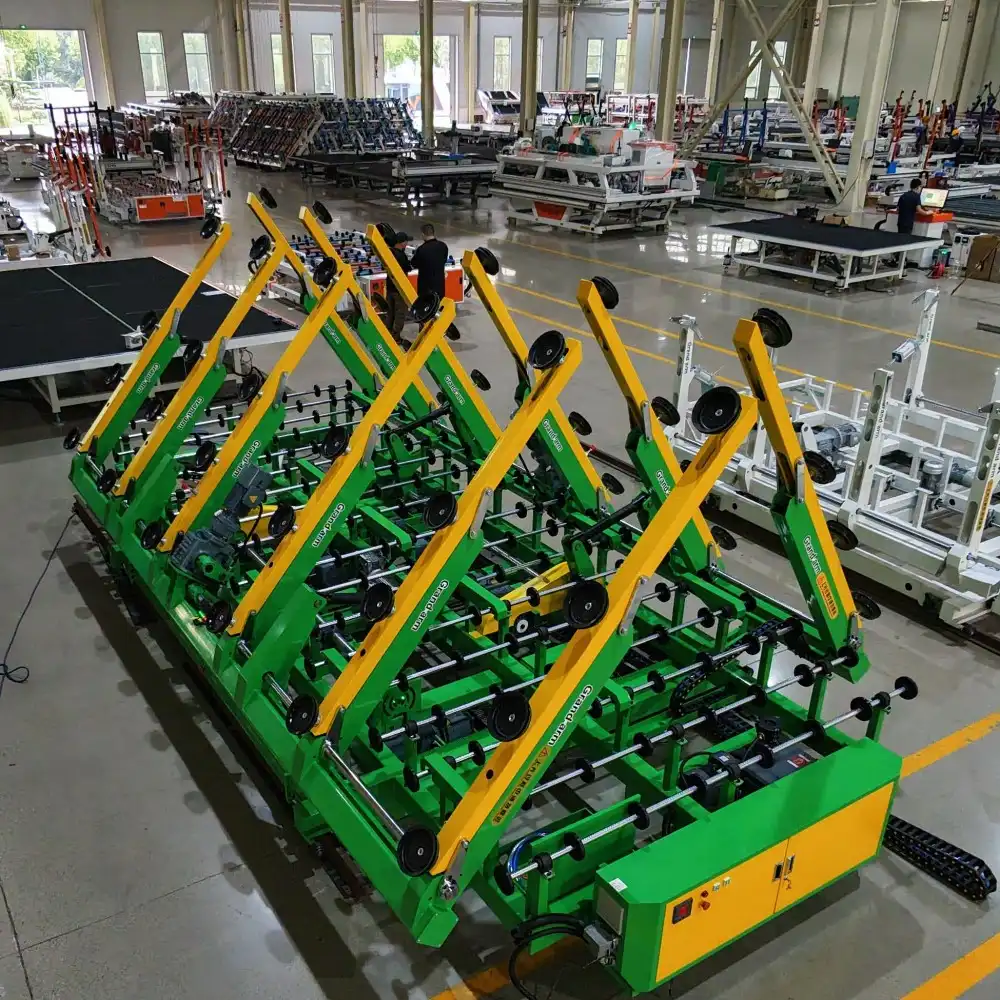
HUASHIL Double Edging Machine Specifications
Shandong Huashil Automation Technology Co., LTD comes up with new ideas for mechanical equipment, makes it, and sells it. They've been making and selling tools for a long time.
Twelve Grinding Wheels on Each Side
The HUASHIL machine features 12 grinding stones on each side. The kit includes 8 flat grinding wheels, 2 upper chamfer wheels, and 2 lower chamfer wheels. The chamfer wheels perform their work at the top and bottom, while the flat wheels do theirs on the edge face. The edges of the glass on the two sides match, as they flow into one another. This makes it easy to manipulate between phases. When you obtain quotes from multiple persons, be sure they are all writing down the same wheel breakdown.
Servo-Controlled Opening, Closing, and Conveying
One servo motor is used to open and shut the door automatically, and another servo motor is used to transport the products from one area to another. When servo control moves a part to a set position, it remains put. That implies the findings are consistent from sheet to sheet. The doors shut and open automatically, and you may alter the glass size by hand. "And the people that work with the PLC, they do these adjustments on the displays. Engineers need to ask their suppliers, while talking to multiple vendors, which parts use servo drives and which ones use ordinary motors. The motors you choose will determine how long it takes to move pieces and transition from one to another.
Working Range and Customization
It can be opened and closed from a distance of between 0.35 and 2.5 meters. In American terms, that’s between 13.8 and 98.4 inches. Check these against the widths of your glass before you ask for a price. You may also modify the machine. If you have different pv glass double edging machine suppliers, line arrangement, or power requirements than the regular model, please tell us. We notify developers and OEM clients what can be changed before we start producing things. This assists them when they are planning out whole lines.
How to Compare PV Glass Double Edging Machine Suppliers
Manufacturer, Distributor, or Integrator
Direct manufacturers, local distributors, and full-line integrators are some of the locations individuals purchase from. The creator may speak to the building and offer adjustments. A distributor could help you reach people in your region better. A puller may provide you with an entire line. You have to question each application. Who produces the machine, sends it out, and repairs it if anything goes wrong? Most of the work is done in only a few countries, as the IEA’s 2022 research on solar PV supply chains finds. Always think about where a merchant is truly making their items. Be aware of any formal quality system that the supplier has in place, such as ISO 9001.
Automatic or Semi-Automatic
Semi-automatic machines may be utilized in smaller factories, in test projects, and in runs of mixed product, although they have to be manually loaded and emptied more regularly. A lot of items need to be handled fast and with minimal support from individuals. This is the ideal place for automated machines. Use the cycle time, changeover time, shift hours, and scheduled maintenance to figure out what the true output is, instead of the peak speed. Imagine the planet becoming larger in the future. With machines that open and shut automatically like ours, it is simple to make modifications when the size of the machine has to be modified.
Total Cost and Quotation
This is merely a fraction of the entire cost. Ask each business to estimate a different price for the pv glass double edging machine suppliers, any accessories, tools, replacement parts, delivery, setup, and training. All quotations you get should be based on the same glass sizes, same production objectives, and identical end destinations. If you get an order from abroad, check the Incoterms regulation. The ICC’s Incoterms 2020 define who is responsible for transport, insurance, and risk at each stage. Consider the cost of water, power, grinding wheels, and downtime. People usually pay using a Letter of Credit or a deposit with the final installment.
Service, Customization, and Common Mistakes
After-Sales Support to Request
There are a lot of initiatives that work or don’t function at the service level. Before you sign, go over the guarantee, the list of spare parts, when the parts are likely to arrive, and how to seek professional advice. Ask the vendor what they provide in terms of installation, operator and maintenance training, and setup. Call a US facility, learn the hours of operation and how online assistance works. With documented service terms, it’s easier for your finance staff to understand the long-term cost.
OEM and Production-Line Projects
OEM customers and integrators typically require more than a basic model and ask for it. You may adjust the style, operating range, wheel design, loading structure, and HMI language according to your demands. First, be sure the concept is doable. Then, get the plans and drawings approved. Finally, start to make it. The methods for testing, the criteria for acceptance, the objectives, and the person in authority for installation should be included in the contract. If your engineers test your own glass samples at the plant, they will have evidence before the shipment goes out. Please begin sending over papers ASAP. The normal time from expert assessment to approval for a full-line position is three to six months.
Mistakes to Avoid
I keep seeing the same error. The first error is choosing the lowest price without verifying that it includes equipment, setup, training, and packaging to ship overseas. You can't know how quick it should be unless you try it. The third one: the machine does not examine the size, thickness, coatings of the glass to the range it has. 4. Not reading the restrictions after the sale, which might cause a plant to wait for parts. And last but not least, don’t forget electricity, water for cooling, drainage, and access for maintenance. Write out a list of things to accomplish before the contract is signed. This will help you to prevent complications after the delivery. This offers your team a clear starting point for the negotiation.
Conclusion
The easiest method to pick amongst vendors of pv glass double edging machine suppliers is to look at quality, service, and overall cost all at once. One machine will grind two edges at once. This evens out the edges and speeds up the fitting them together and tempering process. This machine can travel from 0.35 meters to 2.5 meters. It has 12 grinding wheels on each side. It opens, shuts, and moves items automatically using servo control. It may be modified too. When checking out a provider, you should look at the history of the manufacturer, the level of automation, precise estimates, Incoterms, the guarantee, replacement parts, training, and acceptance testing. That is why you should choose the equipment that meets your glass sizes and servicing demands. The majority of errors occur when scope elements are missing, or speed claims have not been validated.
FAQ
1. What does a PV glass double edging machine do?
To get rid of any sharp edges and make the sides the same shape, the edges of two pieces of glass are ground together. This is done before they are washed, toughened, or put together in a module.
2. What are the main HUASHIL specifications?
Two of the 12 wheels on each side have top chamfers, two have lower chamfers, and eight are flat. Squeeze motors make it possible to open, close, and move things. From open to closed, it's between 0.35 and 2.5 meters.
3. Can the machine be customized?
Yes. You send us the plan, output goal, and glass sizes. We'll look them over and let you know what changes can be made.
4. What should I send for a quotation?
Give the glass's length, width, thickness, weight, and edge needs. Also give the factory's location, the utilities, the final destination, and the level of automation you want.
5. How do I verify a supplier?
Make sure you get records from the factory, examples of how the product was made, technical drawings, warranty terms, and information on how to get replacement parts.
Contact HUASHIL for a PV Glass Double Edging Machine Quotation
Send an email to salescathy@sdhuashil.com with information about your glass sizes, thicknesses, output goals, and layout. We go over every project and come up with a design, making changes as needed, since we are a manufacturer and one of the PV glass double-edging machine suppliers. The information, plan drawings, and service terms that our team shares make it easy for your buyers and engineers to compare different options.
References
1. International Energy Agency, Special Report on Solar PV Global Supply Chains, 2022
2. International Electrotechnical Commission, IEC 61215 Terrestrial Photovoltaic Modules – Design Qualification and Type Approval, 2021
3. ASTM International, ASTM C1048 Standard Specification for Heat-Treated Flat Glass, 2018
4. International Chamber of Commerce, Incoterms 2020 Rules, 2019
5. International Organization for Standardization, ISO 9001 Quality Management Systems – Requirements, 2015
6. Fraunhofer Institute for Solar Energy Systems, Photovoltaics Report, 2024