




To compare a high quality mirror processing machine, start with your own product list. Then check accuracy, glass handling, automation level, total operating cost, safety documents, and supplier support. Ask every supplier for the same data, test the same sample, and score each offer on one sheet. A low price means little if the machine breaks sheets, wastes glass, or sits idle for weeks. I wrote this guide for plant managers, engineers, and buyers in the United States who want a fair way to judge competing equipment before signing a contract.
Start With Your Own Production Needs
Define Your Mirror Products and Sizes
Before I compare quotes, I write down what the plant really makes. A machine has to work hard to make mirrors for bathrooms, chairs, walls, and large pieces of paper for decorations. Write down the largest sheet size, the thinnest and thickest glass, the coating type, and the sheet's weight. Then look at those numbers and see how they compare to what each machine says it can handle. Should the machine not be able to hold your largest sheet, orders will not go through. A thick one that you never use is a waste of money. Everything on this list is the same, so all suppliers can use it to make their quotes.
Set Output and Labor Targets
Next, I decide how many operators the line can use and set a daily output goal. A lot of U.S. plants buy automation to cut down on lifting that has to be done by hand, work hours, and the difference in quality between shifts. Right now, how many sheets do you need for each shift? In two or three years, how many do you think you'll need? If orders change every day, it's more important to have layouts that can be changed every day than to be fast. With a lot of sales at once, it's more important than ever to be stable and load quickly. Your goal will tell you if a simple cutting table, a semi-automatic unit, or a machine that loads itself will work.
Prepare a Standard Inquiry Sheet
All quotes are the same because they are on the same question sheet. I ask each provider the same things: what setup they offer, what tools they provide, how they set it up, how they teach operators, how long their guarantee lasts, how long it takes to deliver, and how they get spare parts. Other things I ask about are software, freight, and setup. When providers answer line by line, it's easy to compare them. When suppliers send only a brochure, they often leave gaps that cost more than they thought they would. Send all of the makers you've picked the same sheet with your range of sheet sizes and thicknesses.
Compare Machine Types and Technical Performance
Match Your High-Quality Mirror Processing Machine to the Process
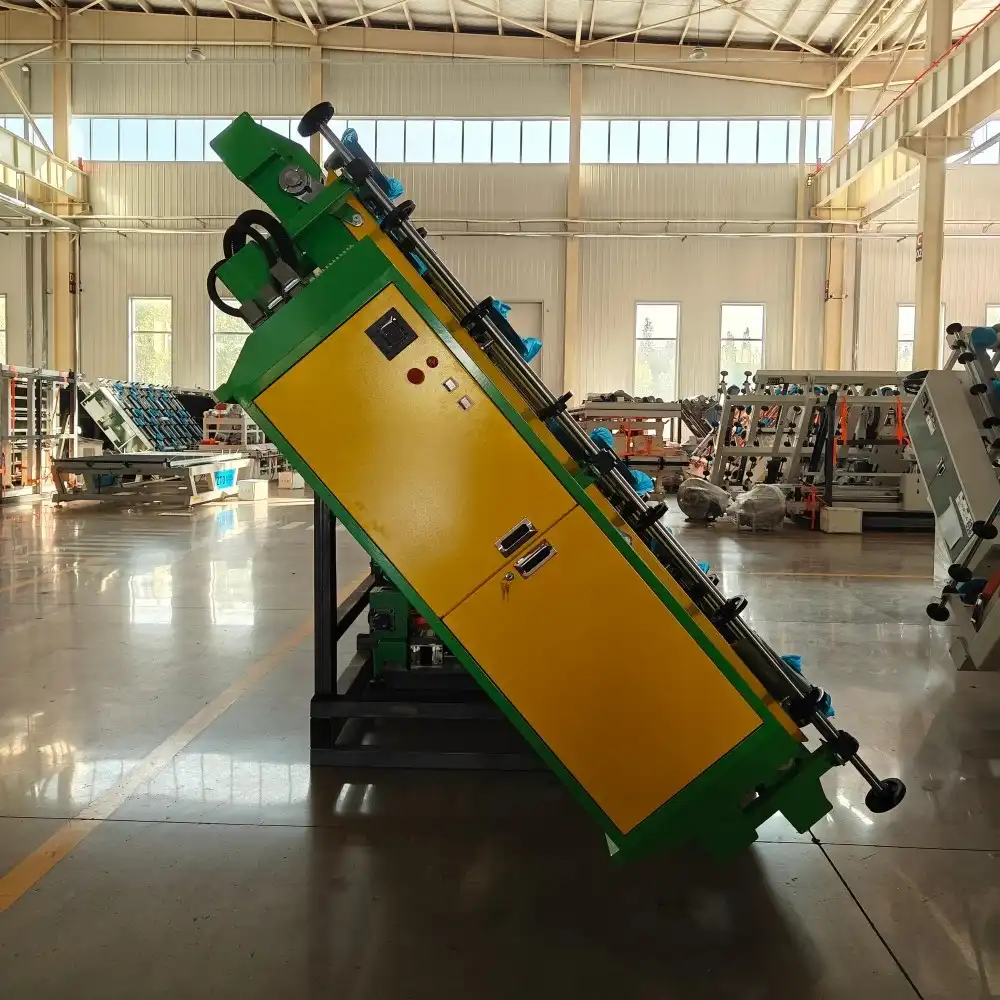
Steps that are often taken when making a mirror are cutting, edge work, drilling, and handling. Cutting machines prepare the sheet by making it the right size. Polishing and beveling machines finish the edge, and CNC machines work with forms that don't fit the norm. There are built-in lines that connect these steps and let materials move automatically, which works best for bigger businesses. One cutting machine might be enough for a small shop that makes shower doors or furniture. Get the new high quality mirror processing machine you need for the step that is stopping you right now, and make sure it can connect to the areas where you will wash, check, and pack later.
Check Accuracy, Controls, and Glass Handling
Don't ask for slogans; ask for results that you can track. Find out about the cutting tolerance, how well it works every time, and get some sample sheets that have already been cut the way you want them. You should check out the frame, guide system, motors, and control software before you use the machine a million times. The machine stays stable thanks to these parts. Flaws in the machine are different from flaws in the glass if you compare the new glass to the standards in ASTM C1036 flat glass. Check out how the machine holds and moves the glass. Sensors that find edges, air flotation tables, and suction cups can all make moving a large, thin, or coated sheet safer. Scratch and crack the cut edge to make sure it's in good shape.
Compare Automatic and Semi-Automatic Setups
Tools that are only partly automatic work better in small shops that need to do a lot of different jobs. They work better and cost less. When you use automatic tools to load, place, and cut, you don't have to do as much by hand. Also, this makes it easy to do again in plants with medium- to high-volume. It is easier to work with odd forms when you use CNC options, but the user needs more training. They can still be useful for straight cuts when they are simple. Think about the room size, the time for training, and the chance of having some free time. When you buy a machine that can do a lot of things, it looks good, but you end up paying for things you don't use. It's not always best for your business to choose the option with the most features.
Compare Cost, Safety, and Supplier Support
Look at Total Cost of Ownership
The price you paid for it is only one part of the bill. Part of the total cost of ownership is also the cost of shipping, setup, utilities, tools, training, extra parts, repairs, and downtime. Lisa Ellram, a researcher, talked about this way to judge sellers in 1995. She meant that you could do this without looking at the bill. For a mirror line, I figure out how much each finished mirror costs. You should measure the real run time because the speed given often doesn't include steps like loading, changing over, cleaning, and inspection. Cutting down on glass trash is another cost that comes up with every order. Layout software that tightly packs sheets also cuts down on this.
Verify Safety, Compliance, and Plant Fit
Safety documents need the same care as speed documents. Watch out for guarding, clear directions, wiring diagrams, overload protection, and emergency stops. It's for the EU Machinery Directive, and ISO 9001 is the system for quality management for the company that makes the product. Neither of them can be used instead of your own review. Other rules that U.S. businesses should check out are OSHA's rules on machine guarding and the electricity rules in their area. You can start by reading ISO 12100, which tells you how to figure out how dangerous gear is. Before the delivery, make sure you know about the layout, voltage, compressed air, floor loading, and ventilation. This will keep the installation from being held up.
Judge the Supplier by Evidence
Choosing a reliable supplier is essential for ensuring the long-term performance of a high quality mirror processing machine. Buyers should evaluate the manufacturer's experience in glass processing equipment, export markets, and component quality. Request installation videos, customer references, and sample processing tests using your own mirror glass to assess the machine's capabilities. It is equally important to clarify after-sales service terms, including equipment installation, operator training, warranty coverage, remote technical support, and spare parts availability. OEM and ODM buyers should also discuss customization options, such as machine dimensions, software languages, electrical wiring standards, and engineering drawings. To avoid misunderstandings, ensure that all agreed specifications, service commitments, and delivery conditions are clearly documented in the purchase contract.
How the HSL-YTJ2721 Fits This Checklist
Specifications at a Glance
The company that makes and sells goods under the HUASHIL brand name is Shandong Huashil Automation Technology Co., LTD. Their history goes back a long time. It can cut glass that is 2 mm to 19 mm thick and sheets that are up to 2700 x 2100 mm. Its name is HSL-YTJ2721. It comes with Optima software for cutting layouts that makes them work better. It is certified by CE and ISO9001. You can start with these numbers when making the list of needs we talked about earlier. First, put them next to your largest and heaviest piece of glass.
Functions That Affect Daily Output
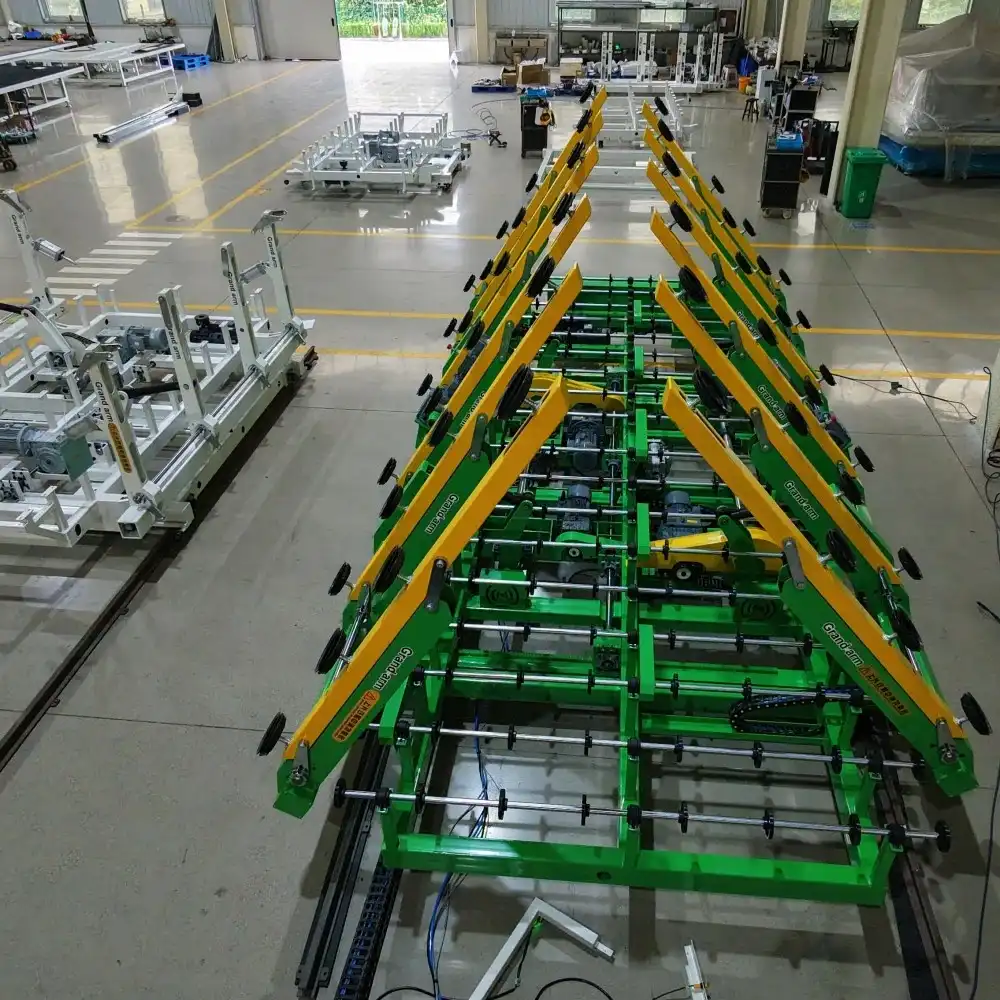
It is possible for the HSL-YTJ2721 to load itself, control the pressure itself, and find the edges itself. The glass is moved by suction cups, and the sheet is held up by something that floats in air. You can also use a remote to make the machine walk in any direction. Some of the work that needs to be done by hand is cut down by automatic loading, automatic edge finding, and automatic pressure control. Automatic edge finding finds the edge of the glass without having to measure it by hand. For best results, look at a model mirror that has each feature turned on. This is because the type of glass and finish used can change the results.
Score It With a Weighted Matrix and Sample Test
In order to compare, you must first make a weighted grid. Write down things that matter to you, like cut quality, output, uptime, total cost, safety, service, and customization. Then, give each one a weight that works for you. For a plant that makes many things, uptime might be the most important thing. For an OEM shop, freedom might be the most important thing. Sort the information into groups and give each group a score. If you want to avoid making these common mistakes, don't choose based on price alone, believe that rated speed and real output are the same, ignore edge quality, and skip utility checks. You should agree on the conditions for a free test before you sign the contract. This is the step where you write down the terms of acceptance, delivery, and payment.
Conclusion
It's smart to compare high quality mirror processing machines in a planned way. First, buyers should write down their aims for item sizes, glass thickness, output, and work hours. After that, they need to send one inquiry sheet to each supplier. Next are the up-front costs, safety paperwork, plant needs, and proof of source. Next is the kind of machine, how well it cuts, how it works with glass, and how automated it is. How those checks work on a real machine can be seen in the HSL-YTJ2721's functions and specs. These tests give a fair score with the help of a weighted matrix and a test on real mirror glass. For the plant, the best choice is the one that meets its needs for service, volume, products, and price.
FAQ
1. What matters most when comparing mirror cutting machines?
A good place to start is with the cost per finished mirror, the quality of the cuts, how the glass is handled, and the service. Then go over the accident report, the terms of the guarantee, the training, and how to get extra parts. Tests on your own glass show that what it says on the sheet is true.
2. When should I choose an automatic machine over a semi-automatic one?
You can choose automatic lifting if the amount stays the same. Lifting things by hand lowers output or consistency. Semi-automatic tools should be used in small shops with limited funds and jobs that come and go. Pick the option that works best for your daily work schedule and sheet count.
3. What should I send to get an accurate quotation?
The type of coating, goal output, choice of automation, sheet sizes, ranges of thickness, and shipping location will be sent. You can cut out shapes that aren't round with the help of drawings. If you give the supplier all the information they need, they can suggest a good configuration.
4. What are the HSL-YTJ2721 size and thickness limits?
The HSL-YTJ2721 can cut glass up to 19 mm thick and up to 2700 x 2100 mm. Before you get a price, make sure these limits are the same as your biggest sheet and thickest glass.
Request a High-Quality Mirror Processing Machine Recommendation from HUASHIL
Are you ready to talk to a group that makes glass machines about what you can do? Email HUASHIL at salescathy@sdhuashil.com with the sizes of your sheets, the thickness of the glass, and how much you want to print. The HSL-YTJ2721 will be on the shortlist of high quality mirror processing machine sources that our team will help you look over and put together information for a price.
References
1. ISO 9001:2015 Quality Management Systems – Requirements, 2015
2. ISO 12100:2010 Safety of Machinery – General Principles for Design – Risk Assessment and Risk Reduction, 2010
3. Directive 2006/42/EC of the European Parliament and of the Council on Machinery, 2006
4. OSHA, Safeguarding Equipment and Protecting Employees from Amputations, 2007
5. ASTM C1036 Standard Specification for Flat Glass, 2021
6. Ellram, L. M., Total Cost of Ownership: An Analysis Approach for Purchasing, International Journal of Physical Distribution & Logistics Management, 1995