




Upgrading to an automated door glass cutting machine is one of the most direct ways to improve production output, reduce material waste, and achieve consistent cut quality across high-volume runs. Whether you manage an architectural glass fabrication plant, a curtain wall integration facility, or a shower door manufacturing line, the right glass cutting equipment transforms how your floor operates. This guide walks through the core challenges, practical optimization techniques, machine selection criteria, and maintenance strategies that plant managers and procurement teams in the U.S. market rely on when making capital equipment decisions.
Understanding Production Challenges in Door Glass Cutting
Why Bottlenecks Form on the Cutting Floor
Both manual and semi-automated cutting lines have a weakness that is caused by human error. When people score and break glass panels by hand, the cut deviation can reach ±1–2 mm, which leads to more rework cycles and more waste. A 2022 industry report from Glass Magazine says that up to 30% of production delays in mid-sized glass fabrication plants are caused by inefficient labor. This problem is made worse by old machines that don't have automatic edge-finding or pressure control. This means that workers have to recalibrate them often, which takes time away from production.
Equipment specifications that aren't aligned correctly can also cause bottlenecks. It doesn't matter how skilled the operator is; a machine that is meant for architectural panels will not work well in a door panel line with tighter standards for size. Finding these main causes—equipment mismatch, reliance on manual labor, and putting off maintenance—is the first step in making a strategy to improve efficiency that works for a door glass cutting machine.
Key Techniques to Optimize Glass Cutting Efficiency
Increasing the speed of a door glass cutting machine line needs both process discipline and investment in new technology. When it comes to getting quick results, process restructuring and machine automation are the two most important things to do.
The time between cuts is cut down with lean timing. Putting together groups of panels of the same size, scheduling jobs so that tools don't have to be changed too often, and using optimization software like Optima to find the best way to cut materials directly cut down on offcut waste. Studies in automatic manufacturing show that just cutting optimization software can make 8–15% more of the material that is used.
Here are three types of automation that make production go much more smoothly:
- Automatic pressure control gets rid of scoring errors caused by human error by keeping the cutter pressure precise and constant across the entire panel surface. This is especially important when working with glass thicknesses ranging from 2 mm to 19 mm in a single shift.
- Air flotation systems make it possible for big glass panels (up to 3660 × 2440 mm) to glide across the cutting table with little resistance. This keeps the surface from getting scratched and speeds up shifting without adding extra work.
- Synchronous belt conveying keeps the panels aligned during the cutting cycle. This keeps the dimensions accurate between cuts and reduces edge chipping.
When paired with lean scheduling, these automation features make a factory where output rises or falls steadily with demand instead of changing based on human availability.
Choosing the Right Glass Cutting Machine for Your Production Needs
Evaluating Machine Specifications Against Production Requirements
Not every workspace needs the same kind of automatic cutter. Plant managers have to make sure that the machine specs match the real output goals, panel sizes, and different types of glass. Industrial-grade machines made for architectural and door glass use panels that are much bigger than those used by furniture-grade machines, so they have different requirements for mechanical tolerance for each door glass cutting machine.
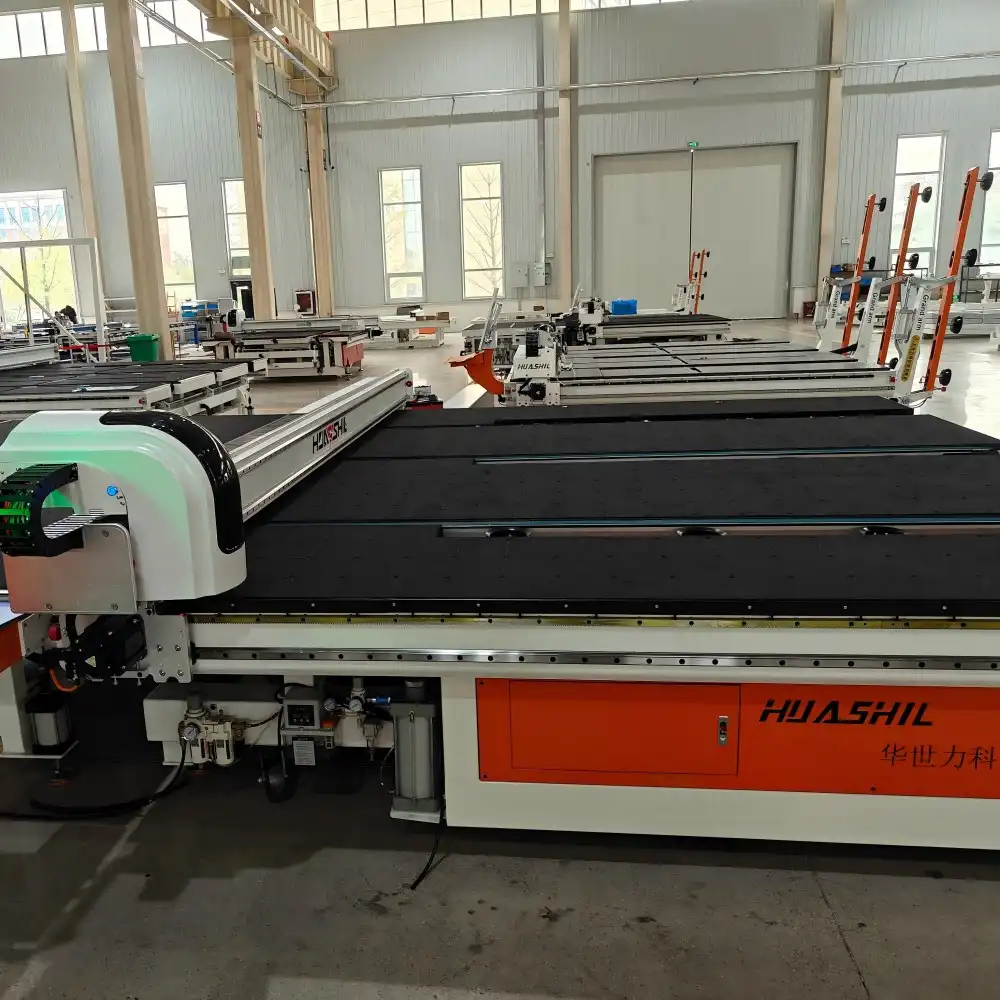
A Closer Look at the HUASHIL HSL-YTJ3826
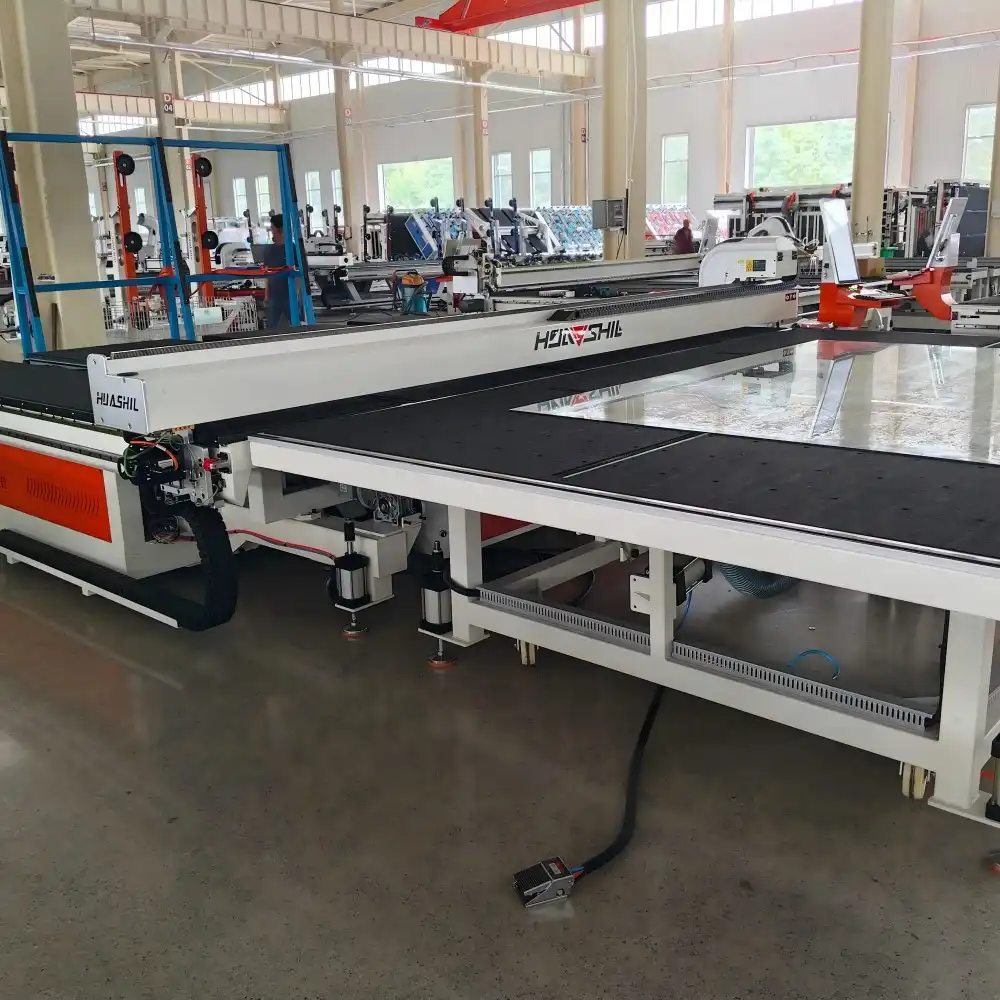
The HSL-YTJ3826 from HUASHIL is a good choice for B2B buyers who run medium- to large production lines. Standard architectural door panels can fit in their largest glass size of 3660 × 2440 mm, and their cutting thickness range of 2–19 mm covers all kinds of glass, from thin artistic glass to heavy structural panels.
The machine's footprint is 5550 × 4925 mm, which means it can fit on normal plant floors without needing any structural changes. Some important functional abilities are:
- Automatic loading cuts down on the time needed to move panels by hand and the chance that they will break while being moved.
- Automatic edge finding makes sure that the cutting head correctly references each panel before scoring starts. This gets rid of positioning mistakes that happen when panels aren't lined up correctly.
- Breaking table integration combines scoring and breaking into a single workflow, which shortens the time it takes to process each panel.
- 360-degree remote control walking feature lets operators see and change the position of the cutting head from anywhere on the floor. This makes complex cuts more precise and safer.
- Optima optimization software figures out the best way to cut glass sheets so that the yield per sheet is maximized. This lowers the cost of raw materials directly.
The HSL-YTJ3826 has both CE and ISO 9001 certifications, which meet the needs of U.S. buyers looking for equipment for regulated manufacturing environments.
When architectural glass fabricators, curtain wall installers, and door manufacturers upgrade from older equipment, they always say that they're missing key efficiency features. These features fill those gaps. HUASHIL's manufacturing background, which includes automated R&D, production, and global export experience, goes beyond specs. It helps buyers who need solid technical continuity after installation.
Maintenance Best Practices to Maximize Machine Uptime
Building a Structured Maintenance Schedule
Instead of making repairs when something breaks, equipment that is regularly maintained will last longer. Automated door glass cutting machine lines stay at full capacity thanks to a structured routine with daily, weekly, and monthly checks.
As part of daily checks, the cutting wheel should be looked at for wear, the air flotation pressure should be checked, and the moving belts should be cleaned of any waste. As part of weekly maintenance, the guide rails are oiled, and the tension on the synchronous belt is checked. Sensor calibration, electrical connection stability, and software diagnostic reviews should all be part of monthly checks.
Rapid troubleshooting protocols cut down on the time it takes to find a problem and get production back up and running. Common problems, like cutting wheels that aren't lined up right or belt tension drift, can be fixed in one shift if repair teams have enough extra parts on hand. Total downtime risk is greatly reduced when suppliers offer predictable lead times for spare parts and remote diagnostic support. This is a key factor in figuring out the total cost of ownership (TCO) for buying capital equipment.
Case Studies and Production Gains Through Optimized Glass Cutting
There are clear benefits to switching from cutting tables that need to be operated by hand to fully automatic lines. One architectural glass maker in the U.S. said that within three months of installing an automatic door glass cutting machine line with optimization software, the amount of scrap glass had dropped by 40%. A Southeast curtain wall installer cut the time it took to cycle each panel by 25% when they switched to a machine that could automatically find the edges and float on air. This was because the new machine got rid of the need for operators to move panels, which took time.
When OEM buyers add automated glass cutting to turnkey production lines, they always say that pre-configured machines with synchronized conveying and breaking tables make it easier to coordinate the assembly line, which speeds up the time it takes to start a project. These documented results are in line with larger industry trends: investing in automation in glass processing pays off mostly by lowering labor costs, reducing waste, and maintaining consistent throughput.
Conclusion
To make a door glass cutting machine line more productive, you must first figure out where the inefficiencies are coming from: inconsistent human work, incorrect equipment specifications, or neglected repairs. Filling in these holes with automation, planned maintenance, and choosing the right equipment will pay off over the lifetime of the equipment. The HUASHIL HSL-YTJ3826 is a platform designed for challenging B2B production settings. It has industrial-grade capacity, smart automation features, and certifications that are known around the world. This machine should be seriously considered by plant managers and buying teams who are planning to buy new equipment soon.
FAQ
1. What glass thickness can a door glass cutting machine typically handle?
Most industrial door glass cutting machines used for doors and buildings can handle glass that is between 2 mm and 19 mm thick. The HUASHIL HSL-YTJ3826 can handle all of these thicknesses with just one machine setup, so it can be used across multiple product lines without needing separate machines for each one.
2. How does cutting optimization software reduce material waste?
Optimization software, such as Optima, looks at the sizes of each order batch and figures out the best way to cut each glass sheet so that the most glass is produced. This cuts down on waste from offcuts by a large amount. According to data from the industry, this improves material usage by 8–15% compared to carefully planned cutting sequences.
3. What is the difference between automatic and manual glass cutting machines?
For consistent scoring and panel positioning on manual machines, the operator's skill is needed. This introduces variation that increases the rate of scrap. Automatic machines use sensors, pressure control systems, and software to make precise cuts every time, no matter how experienced the operator is. This is very important in places where a lot of things need to be made quickly.
4. How long does the buying cycle typically take for a full production line?
The buying process for fully automatic glass cutting lines usually takes three to six months. This time includes technical review, site assessment, finalizing equipment specifications, and getting financial permission. Most purchases of a single machine are finished within a few weeks.
Upgrade Your Production Line With HUASHIL's Door Glass Cutting Machine Supplier Expertise
HUASHIL offers tried-and-true robotic technology backed by ISO 9001 and CE certifications, years of experience exporting to over 100 countries, and reliable help after the sale. The HSL-YTJ3826 is designed to work in production settings with a lot of parts and tight tolerances. Get in touch with our technical team to get full specs, a custom business plan, or to set up a live presentation for our door glass cutting machine. You can email us at salescathy@sdhuashil.com to see all of our glass processing equipment.
References
1. Glass Magazine — Automation Trends in Architectural Glass Fabrication, 2022
2. International Journal of Advanced Manufacturing Technology — Optimization Algorithms for Sheet Material Cutting, 2021
3. Glazing Industry Resource Center — Total Cost of Ownership in Glass Processing Equipment, 2020
4. Journal of Manufacturing Systems — Lean Manufacturing Applications in Glass Production Lines, 2019
5. Construction Specifier Magazine — Glass Fabrication Standards and Equipment Compliance for Commercial Projects, 2023
6. Procedia Manufacturing — Automated Cutting Systems and Material Yield Improvement in Industrial Glass Processing, 2022