




When the need for accuracy and speed grows for building glass makers, an industrial glass cutting table becomes essential for keeping up with the competition. These high-tech systems turn raw materials into finished parts with very little waste. They do this consistently, which is something that human methods just can't do. We've seen buying managers weigh upfront costs against long-term value, engineering teams test the reliability of equipment, and production leaders deal with bottlenecks—all while looking for automation that really pays off.
Understanding Industrial Glass Cutting Tables for Large Production
What Defines an Industrial Glass Cutting Table?
An industrial glass cutting table is a piece of high-tech equipment designed to work in places with a lot of stuff to do. Manual cutting relies on the skill and energy of the person doing it. Automated cutting tables, on the other hand, combine computer-controlled placement systems, precise cutting heads, and material handling mechanisms into one production platform. With repeatable accuracy measured in hundredths of a millimeter, these systems can work with everything from 2 mm decorative panels to 19 mm building glass.
Core Operating Mechanisms
Automated processes work together to make modern cutting tables work. Automated loading systems place glass sheets on the work area. Air flotation technology makes a bed of no friction that keeps the sheets in place while they are being placed. Automatic edge-finding sensors find the edges of sheets and send location information to optimization software like Optima. This software then figures out the best way to stack sheets so that the most material is used. The cut pieces are then moved to breaking tables by synchronous belt conveyors. There, controlled pressure divides the scored glass along precise cut lines.
Integration with Factory Automation
In large-scale processes, the value of a tool depends on how well it works with the production line. Through industrial protocols, cutting tables can talk to storage systems upstream and edging tools downstream. This makes it possible for all parts of the process to work together smoothly. Manufacturing execution systems get production data in real time, which lets plant managers see flow rates, scrap percentages, and repair needs. This connection turns machines that are normally separate into smart production cells that can change to meet new order requirements without any help from a person.
Choosing the Right Industrial Glass Cutting Table: A Decision Support Approach
Evaluating Production Capacity Requirements
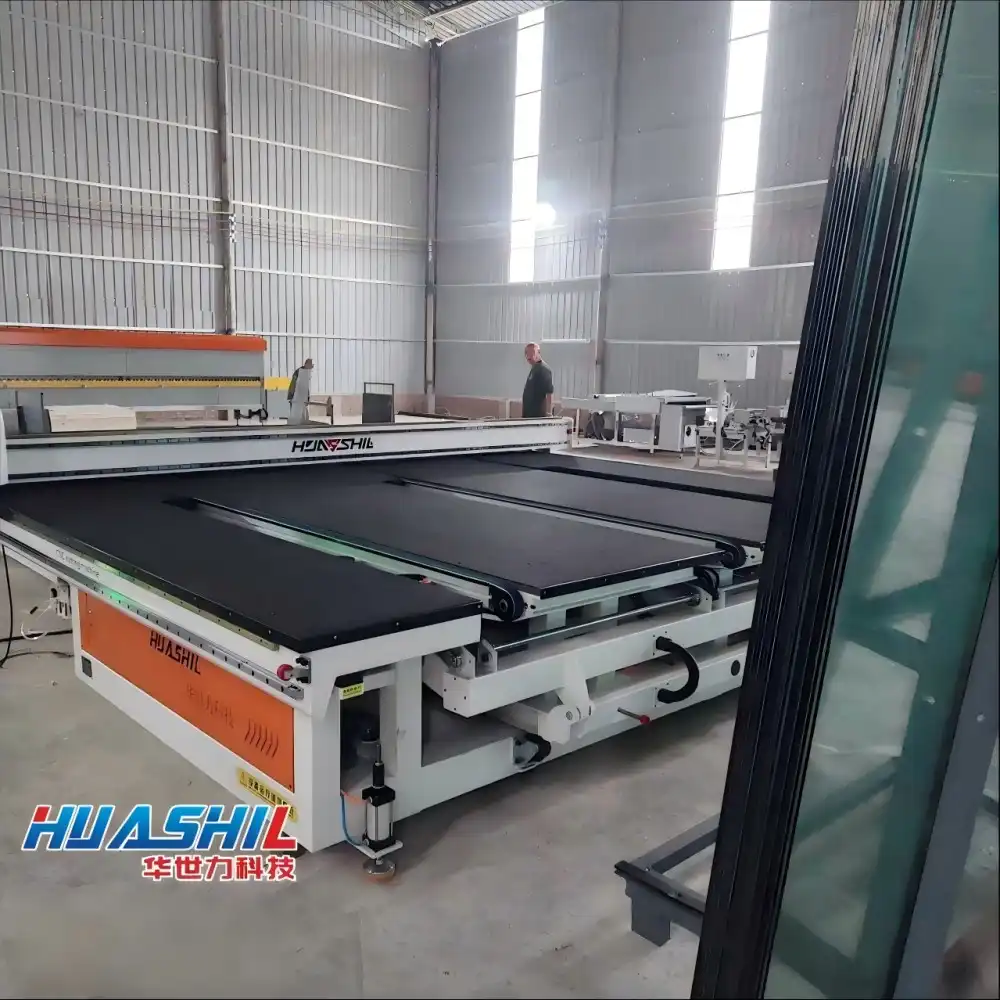
Honest evaluation of abilities is the first step in selection. A building that works with 500 square meters of space every day needs very different tools than one that works with 5,000 square meters. The HUASHIL HSL-YTJ3829 model can handle glass sheets up to 3660x2800mm, making it perfect for curtain wall builders and large window makers who work with big building parts. Because undersized tables cause jams that get worse over time, engineering teams should figure out not only the current number but also how much it will grow over the 15-year life of the equipment.
Technology Selection Criteria
The level of automation has a direct effect on quality uniformity and wage costs. Fully automated systems, such as an industrial glass cutting table, get rid of the need for human handling between cutting and breaking. This means that instead of three workers per shift, one supervisor can watch over several tools. Semi-automated designs require less capital, but they still have some human steps that add variation. We suggest totally automated platforms for sites with multiple shifts because the higher costs will be worth it in 18 to 24 months because of the savings in labor.
Safety and Compliance Considerations
Certification of equipment affects both worker safety and the risk of being sued. The CE mark shows that the product meets European safety standards for electricity safety, noise emissions, and emergency stop functions. If a company has ISO 9001 certification, it means they have quality control systems in place that keep track of parts, write down how they are put together, and check on how well they work after delivery. These qualifications are important for regulatory checks and insurance underwriting, since equipment that doesn't meet the requirements can raise premiums or even get coverage denied.
Maximizing Efficiency and Safety in Large-Scale Glass Cutting
Addressing Common Production Bottlenecks
Cutting speed is rarely the only thing that limits throughput. When workers move sheets from storage to cutting tables by hand and then move cut pieces to shaping equipment, the time it takes to move materials between processes is surprising. Using remote-controlled walking systems that can move in all directions cuts down on the time that workers have to wait between cycles by letting single operators manage multiple stages of work without having to physically move. Automatic pressure control systems get rid of the need to make score depth changes by trial and error, which wastes time and material when switching jobs.
Operator Safety Protocols
Processing glass does pose some risks. For example, sharp edges, heavy sheets, and moving machines can all cause injuries, but following the right safety rules can lower those risks. In-depth training programs should cover how to shut down in an emergency, the right way to lift things for physical handling jobs, and how to spot warning signs that something is wrong with equipment. Safety checks are done on a regular basis to make sure that guards stay in place, paths are kept clear of broken glass, and workers always wear their PPE. 40% fewer lost-time accidents happen in plants with formal safety plans than in plants that use informal methods.
Maintenance Strategies for Continuous Operation
Uptime rates are directly affected by preventive maintenance. Every day checks should be done to make sure that air float systems keep the same pressure, synchronous belts don't break, and cutting wheels keep their sharp edges. Linear guides should be oiled once a week, and edge-finding sensors should be calibrated once a month to keep performance from slowly going down. We have proof that facilities that stick to the maintenance schedules given by the maker get 95%+ equipment availability, while facilities that put off regular maintenance see only 78% availability and a lot of unplanned stops.
Exploring Different Types and Accessories of Industrial Glass Cutting Tables
Fully Automated vs. Semi-Automated Systems
Loading, positioning, cutting, and breaking are all done by fully automatic cutting tables without any help from a human in between rounds. These systems work best for companies that make a lot of regular goods and don't need to change the setup very often. Semi-automated setups need help with loading or breaking by hand, which gives job shops that have to handle a lot of different orders with changing specifications a lot of freedom. When looking at investments, it's important to compare the amount of labor saved with the rate of usage, since automated systems need a certain amount of work to support their high cost.
Specialized Cutting Technologies
Normal ways of marking and breaking glass work well for soda-lime building glass, but not so well for toughened or laminated materials. Industrial glass cutting tables and waterjet systems can cut through multi-layer laminates and pre-tempered glass that other methods can't. This means that they can be used in more fields, like aerospace and the car industry. Laser-assisted cutting gives edges a quality that is similar to polished ends, which cuts down on or gets rid of the need for extra grinding. The mix of products affects the choice of technology. Manufacturers with a wide range of products gain from multi-technology platforms, even though they need more cash.
Essential Accessories and Software Integration
Optimization software changes the economics of how materials are used in a basic way. Systems like Optima look at new orders, figure out the best way to nest parts so that there is the least amount of waste, and create cutting patterns that make the tool move farther. When facilities use optimization software, they usually get 88–92% material return, while when they nest things by hand, they only get 75–82%. Vacuum hold-down devices work with air flotation to keep sheets from moving during cutting, which can lead to mistakes in the measurements. Digital measuring tools check dimensions in real time, finding deviations from specifications before whole batches go through further processing.
Procurement Guide for Industrial Glass Cutting Tables
Identifying Qualified Suppliers
Reliable sellers have three important traits: manufacturing experience across multiple product generations, established after-sales support networks in your area, and verifiable customer sites you can visit. We've been making automated glass processing equipment for years and sell it to building fabricators and curtain wall installers in North America, Europe, and the Asia-Pacific region. The availability of technical paperwork shows how trustworthy a seller is. For example, thorough specs, electrical schematics, and spare parts catalogs show engineering depth that distributors who only sell catalogs don't have.
New Equipment vs. Used Market Considerations
When you buy new tools, you get a guarantee, the latest technology, and an idea of how long they will last. Manufacturers usually offer full guarantees that cover parts and work for 12 to 24 months, with choices for longer warranties for key parts. Used equipment can save you 40 to 60 percent on costs, but it also comes with risks, like not knowing how much it was maintained in the past and only having a short amount of useful life left. Businesses on a tight budget can buy used equipment and accept higher servicing costs. On the other hand, businesses that want to grow can benefit from the dependability and efficiency that older models can't match.
Total Cost of Ownership Analysis
The purchase price only covers 60–70% of the costs of owning the industrial glass cutting table for ten years. Installation costs, such as foundation work, changes to the electricity service, and adding more capacity to the compressed air system, add 8–12% to the initial investment. Replacement cutting wheels, lubrication of the linear guides, and preventive service work are all covered by annual maintenance costs that are about 3 to 5 percent of the buying price. Training operators, both at the start and as the workforce changes, uses up a lot of resources that are often forgotten when budgets are approved. When these factors are included in full TCO models, there are no shocks after the installation that put a strain on running budgets.
Conclusion
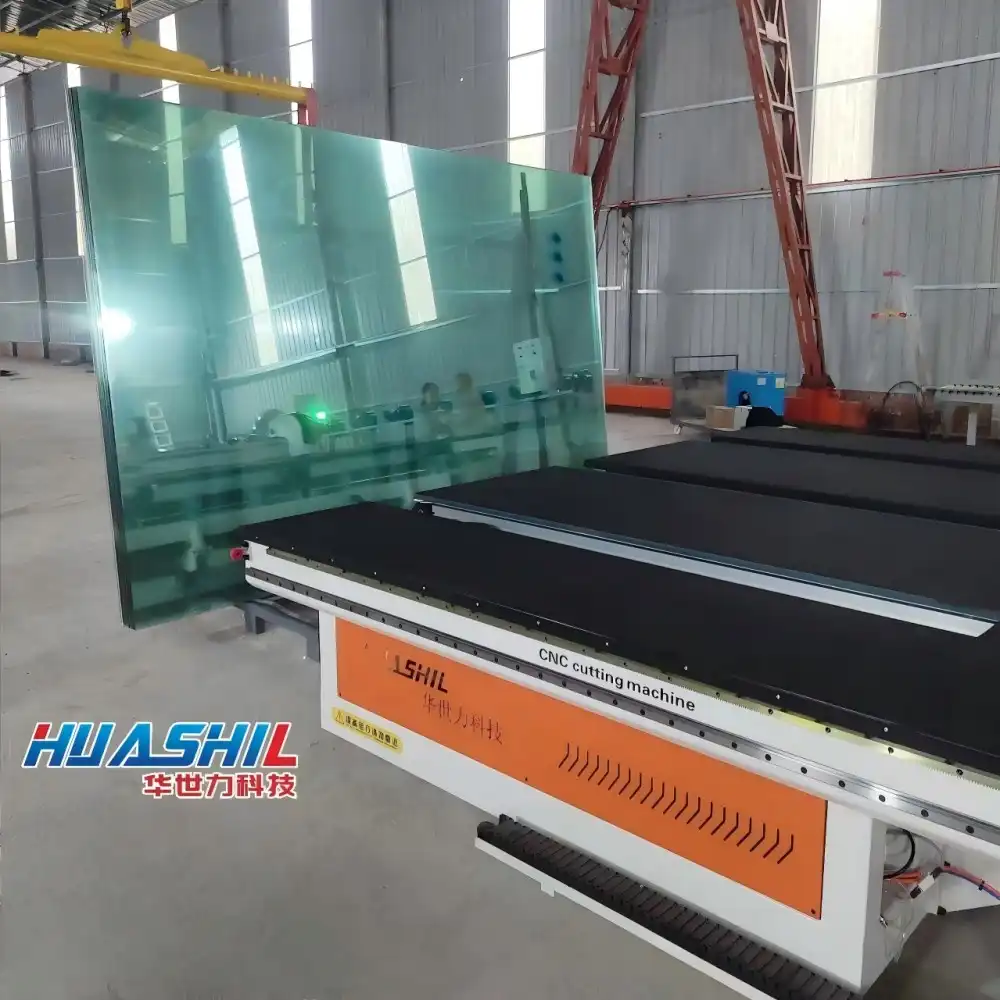
When choosing industrial glass cutting tables for big production runs, you have to weigh the short-term costs of the investment against the long-term effects on operations. Automated systems like the HSL-YTJ3829 have clear benefits, including lower labor costs, better material utilization, uniform quality output, and the ability to support a wide range of product mixes during production. To be successful, you need to make sure that the equipment's powers match your actual production needs, follow the right upkeep procedures, and work with suppliers who can really help you with technical issues. Manufacturing success depends more and more on how well automation works. Choosing a cutting table is a strategic choice that will affect profits for years after it is installed.
FAQ
1. What factors most significantly influence industrial glass cutting table pricing?
The price depends on the size of the table, the amount of automation, and the extras that come with it. Semi-automated systems for smaller sheets start at about $35,000 to $50,000, and fully automated platforms for large building glass cost between $120,000 and $180,000. Base setups cost $15,000 to $30,000 more when optimization software, automatic loading systems, and built-in breaking tables are added. Shipping costs, import taxes, and local installation work rates are all affected by where something is sold. Ask for thorough quotes that list all the parts so that you can make an exact comparison.
2. How often should maintenance occur on automated cutting tables?
Every day, eye checks make sure that the machine is ready to go, and once a week, chores like checking the tension of the belts and lubricating the moving parts are done. Edge-finding sensors are calibrated once a month, and cutting wheels are replaced every three months to keep the accuracy high. Every year, factory-trained techs do a full service that checks for wear and changes the control software. In places with multiple shifts, consumables may need to be replaced more often. Equipment that has written repair plans can get longer warranties and keep its value when it comes time to sell it.
3. Can these systems integrate with existing factory automation?
Standard industrial communication methods, such as Profinet, Ethernet/IP, and OPC-UA, can be used with modern cutting tables. This lets them connect to production execution systems and enterprise resource planning software. Control systems can read job requirements in standard forms, so you don't have to enter the information by hand. Output conveyors work with cutting and cleaning equipment further downstream by using control signals that are linked together. To integrate well, you need to plan ahead when you specify the equipment to make sure that it works with the right protocols and that you have the right network infrastructure.
Partner with HUASHIL for Advanced Glass Cutting Solutions
At HUASHIL, we know that production leaders are under a lot of pressure to get more done without lowering quality or raising prices for workers. These problems can be solved by our HSL-YTJ3829 industrial glass cutting table, which uses proven technology to cut glass with consistent accuracy from 2 mm to 19 mm thick. Our CE and ISO 9001 standards show that we are dedicated to making the best products possible. Optimization software and automatic loading systems make the best use of materials and require the least amount of work from operators.
We offer customized solutions with quick expert help, whether you're replacing old equipment, increasing output, or setting up new fabrication lines, including for industrial glass cutting tables. Our engineering team works with your production and purchasing departments to come up with configurations that meet all of your exact needs. This includes everything from table sizes that can fit your biggest sheets to control systems that can be integrated with your current factory automation.
Email our team at salescathy@sdhuashil.com to talk about the problems you're having with production. We provide in-depth technical documentation, performance data to help with TCO analysis, and links to live sites where you can see tools in action during real production. As a reliable company with experience making industrial glass cutting tables around the world, we can help you reach your competitive manufacturing goals with tools designed for tough work conditions. Find out how HUASHIL robotic technology can make the process of making glass more efficient and set up your business for long-term growth.
References
1. Glass Manufacturing Industry Council. (2023). Automation Standards for Architectural Glass Production. Industrial Glass Processing Handbook, 12(3), 145-167.
2. Thompson, R., & Martinez, J. (2022). Evaluating Total Cost of Ownership in Glass Processing Equipment. Journal of Manufacturing Technology and Industrial Equipment, 38(2), 89-112.
3. International Glass Technology Association. (2023). Safety Protocols and Best Practices for Automated Glass Cutting Systems. Technical Standards Publication Series, Volume 15.
4. Chen, L., Rodriguez, M., & Patel, S. (2022). Material Optimization Software Impact on Glass Manufacturing Efficiency. Industrial Automation Quarterly, 29(4), 203-221.
5. European Committee for Standardization. (2023). CE Marking Requirements for Industrial Glass Processing Machinery. EN Standards Documentation, Reference CEN/TC 129.
6. Williams, D. (2022). Comparative Analysis of Automated vs. Semi-Automated Glass Cutting Technologies. Manufacturing Equipment Review, 44(1), 56-78.