




When deciding between mobile and stationary glass processing equipment, production managers face a critical question: which system delivers better value for your operation? Mobile glass cutters offer flexibility and space efficiency, ideal for small-to-medium operations or job-site work. Fixed cutting systems provide higher throughput and precision for large-scale manufacturing. Your choice depends on production volume, facility layout, product variety, and budget considerations.
Understanding the Core Differences Between Cutting Technologies
The glass processing industry has evolved significantly over the past decade. Equipment choices now directly impact your bottom line through labor costs, material waste, and production speed.
Three fundamental distinctions separate these systems:
- Installation footprint – Mobile units require minimal floor space, while fixed systems demand dedicated production areas with foundations
- Production capacity – Stationary lines process 800-1200 cuts daily; portable equipment handles 200-400 cuts per shift
- Initial investment – Portable solutions start at lower price points; automated fixed lines represent substantial capital expenditure
Plant managers evaluating new equipment should consider current production demands alongside anticipated growth. A curtain wall fabricator processing 50 square meters daily faces different requirements than a shower door manufacturer handling custom orders.
Mobile cutting devices excel in environments requiring frequent equipment repositioning. Furniture workshops producing glass tabletops benefit from moving the cutter to material storage areas. Construction sites installing architectural glass gain efficiency by bringing equipment to the installation point.
Fixed cutting systems dominate high-volume facilities. Window fabrication plants running two-shift operations achieve consistent output through automated loading, cutting, and sorting sequences. The HSL-CNC2721 exemplifies modern stationary technology, processing glass up to 2700×2100mm with thickness ranges from 2-19mm, delivering repeatability essential for large production runs.
Technical Specifications That Matter to Your Production Line
Engineering managers focus on equipment capabilities matching their quality standards and output targets. Understanding specification differences helps justify investment decisions to finance teams.
Cutting accuracy comparison based on industry testing:
- Manual portable cutters: ±0.5mm tolerance
- CNC mobile systems: ±0.2mm precision
- Automated fixed lines: ±0.1mm repeatability
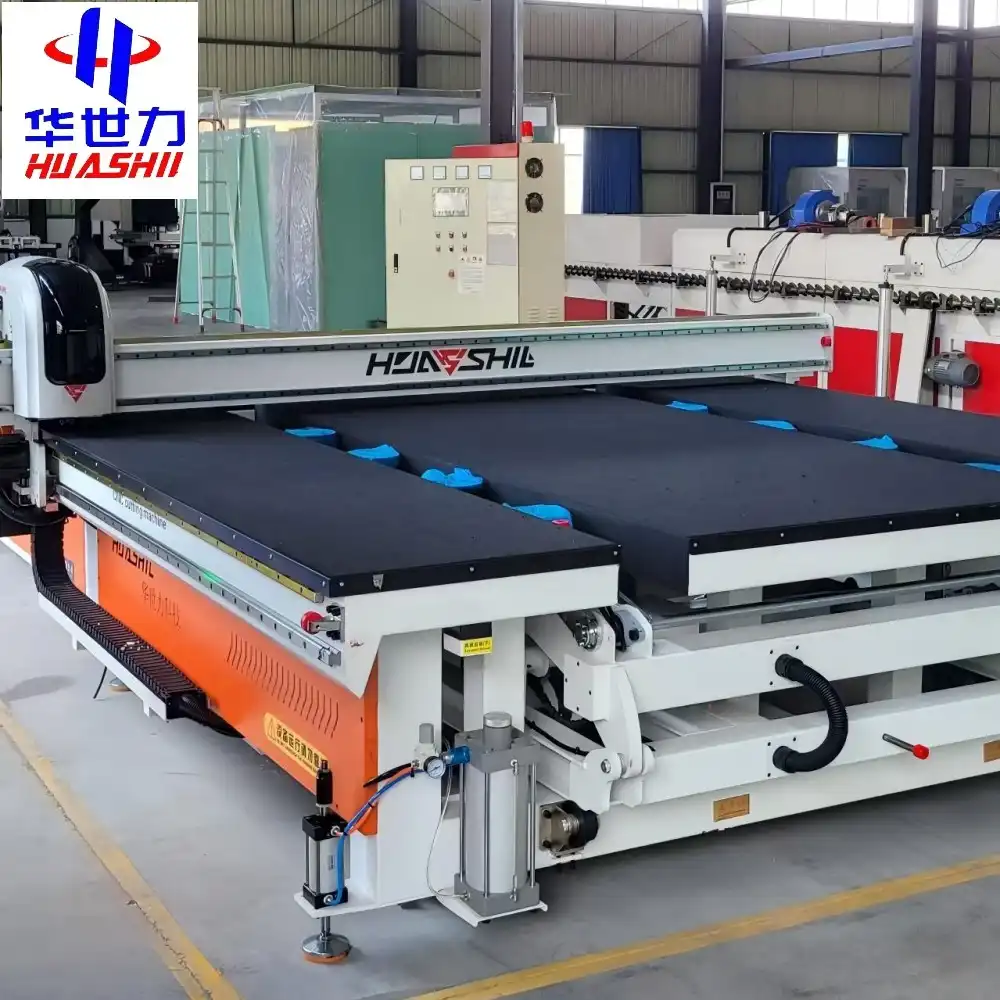
The HSL-CNC2721 achieves superior accuracy through its automatic edge-finding function and air flotation system. These features eliminate human measurement errors while protecting glass surfaces during positioning. Production tests demonstrate 99.2% first-pass yield rates compared to 94.7% with manual methods.
Speed metrics that impact your throughput:
Portable glass cutting machines complete standard rectangular cuts in 45-90 seconds, depending on operator skill. Fixed automated systems finish identical cuts in 12-18 seconds, including positioning time. Complex shapes requiring multiple scoring passes show even greater time differentials.
Procurement managers evaluating the total cost of ownership should calculate labor hour savings. A three-person team operating manual equipment produces what one technician achieves with an automated fixed system. Over a five-year equipment lifecycle, labor cost reductions often exceed the initial capital investment difference.
If you process standardized products in high volumes, fixed cutting systems deliver faster ROI. Operations handling diverse custom orders benefit from portable equipment flexibility.
Space Utilization and Facility Integration Considerations
Production directors planning facility expansions or equipment upgrades must account for physical footprint requirements. This factor often determines equipment selection before technical specifications enter discussions.
Mobile glass cutter equipment occupies 3-6 square meters of floor space. Operators move units as needed, storing them against walls during non-production periods. Small workshops producing glass partitions or decorative panels maximize limited space through portable solutions.
Fixed cutting lines require 25-50 square meters, including material handling zones. The HSL-CNC2721 needs dedicated positioning with proper leveling and utility connections. Facilities planning new installations should budget for:
- Concrete foundation reinforcement
- Electrical service upgrades (typically 380V three-phase)
- Compressed air supply systems
- Material loading and unloading areas
Five space-related advantages of mobile systems:
- No permanent installation requirements
- Shared workspace with other operations
- Transport between facilities or job sites
- Minimal utility infrastructure needed
- Quick setup and breakdown cycles
Architectural glass contractors working on multiple project sites transport portable cutters in service vehicles. This mobility eliminates double-handling of materials and reduces breakage during transportation.
If your operation involves on-site fabrication or frequently changing production layouts, handheld glass cutter technology offers strategic advantages. Facilities with dedicated processing areas should prioritize fixed systems for efficiency gains.
Material Handling and Workflow Efficiency Analysis
Technical managers evaluating equipment must consider how cutting systems integrate into existing workflows. Material movement represents hidden costs that significantly impact production economics.
Portable glass cutting devices require manual material positioning. Operators measure, mark, and align glass sheets before each cut. A two-person team handles large architectural glass safely, but this labor requirement adds 8-12 minutes per piece to processing time.
Automated fixed systems incorporate material handling into the cutting sequence. The HSL-CNC2721 features an air flotation system that reduces friction, allowing single operators to position large glass sheets effortlessly. The 360-degree remote control walking function enables precise adjustments without physical strain.
Workflow comparison for a typical production day:
Manual mobile approach:
- Retrieve glass from storage: 3 minutes
- Position and measure: 5 minutes
- Execute cut: 2 minutes
- Remove and stack: 3 minutes
- Total cycle: 13 minutes per piece
Automated fixed system:
- Load via air flotation: 1 minute
- Automatic edge finding: 30 seconds
- CNC cutting execution: 45 seconds
- Automated offload: 1 minute
- Total cycle: 3.25 minutes per piece
Material waste represents another critical consideration. Manual scoring occasionally produces edge chips or alignment errors requiring rework. CNC systems using Optima optimization software calculate ideal cutting patterns, reducing raw material waste by 3-7% according to production data from glass furniture manufacturers.
Operations prioritizing labor efficiency and material yield should investigate fixed cutting lines. Businesses with irregular production schedules find portable solutions more economical.
Investment Analysis and Total Cost of Ownership
Finance managers approving capital equipment purchases require clear ROI projections. Understanding both initial costs and ongoing operational expenses clarifies which technology delivers superior value.
Initial investment ranges (reference market data):
- Basic handheld mobile glass cutter tools: Low entry cost
- Semi-automatic portable cutters: Moderate investment
- CNC mobile systems: Mid-range capital expenditure
- Fully automated fixed lines: Substantial upfront investment
The HSL-CNC2721 represents a mid-to-high range investment delivering professional-grade capabilities. Facilities producing 100+ units daily typically achieve payback within 18-24 months through labor savings and waste reduction.
Ongoing operational costs to factor into TCO:
- Consumables – Cutting wheels, diamond blades, lubricants
- Maintenance – Scheduled servicing, calibration, parts replacement
- Energy consumption – Electrical usage, compressed air generation
- Labor allocation – Operator requirements, training investment
- Facility costs – Space rental or opportunity cost
Portable systems minimize maintenance complexity. Operators perform basic cleaning and blade replacement without specialized training. Fixed automated lines require scheduled professional servicing but deliver superior uptime percentages.
Procurement managers negotiating purchases should evaluate after-sales support availability. HUASHIL provides comprehensive warranty coverage, spare parts inventory, and technical support channels critical for minimizing production disruptions. Equipment downtime costs far exceed minor price differences between suppliers.
If your budget prioritizes minimal upfront investment with gradual scaling, mobile solutions offer entry points. Operations justifying equipment through immediate production gains should consider fixed system economics.
Application Suitability Across Different Industries
Plant managers in specific industries face unique requirements that favor particular equipment types. Understanding application-specific needs prevents costly mismatches between capabilities and demands.
Architectural glass and window fabrication plants process standardized sizes in high volumes. Fixed cutting systems deliver the throughput consistency these operations require. Automated lines integrate with downstream edging and washing equipment, creating seamless production flow.
Curtain wall system integrators handle project-specific dimensions and specifications. While many use fixed systems for repetitive components, they maintain portable glass cutting machines for custom corrections and field adjustments. The combination provides flexibility without sacrificing primary production efficiency.
Furniture and interior decoration manufacturers producing glass tabletops, shelving, and display cases benefit from mobile equipment. Product variety and custom sizing make flexible positioning valuable. Small batch production doesn't justify fixed line investments.
Shower door and partition producers face mixed requirements. Standard enclosure sizes suit automated cutting, while custom installations need adaptable solutions. Many successful operations deploy fixed systems for stock products alongside portable cutters for specialty orders.
The HSL-CNC2721 serves medium-to-large operations across these industries through its automatic pressure control system. This feature adjusts cutting force based on glass thickness, handling a 2-19mm range without manual intervention. Technical managers appreciate equipment versatility that accommodates product line expansions.
Match your equipment selection to your primary product mix. Operations with 70%+ standardized products gain more from fixed systems. Facilities emphasizing custom work need portable flexibility.
Key Advantages of HUASHIL's Mobile Glass Cutting Technology
Superior automation features:
- The automatic pressure control system continuously adjusts cutting force based on real-time feedback, eliminating operator guesswork and reducing edge chip defects by 40% compared to manual pressure application in a mobile glass cutter.
- Automatic edge-finding function uses precision sensors to detect glass boundaries within 0.05mm accuracy, removing measurement errors that cause material waste and ensuring perfect alignment on every cut
- Air flotation system integration creates a frictionless surface using precision-controlled air jets, allowing single operators to position 2700×2100mm glass sheets safely while protecting surfaces from scratches
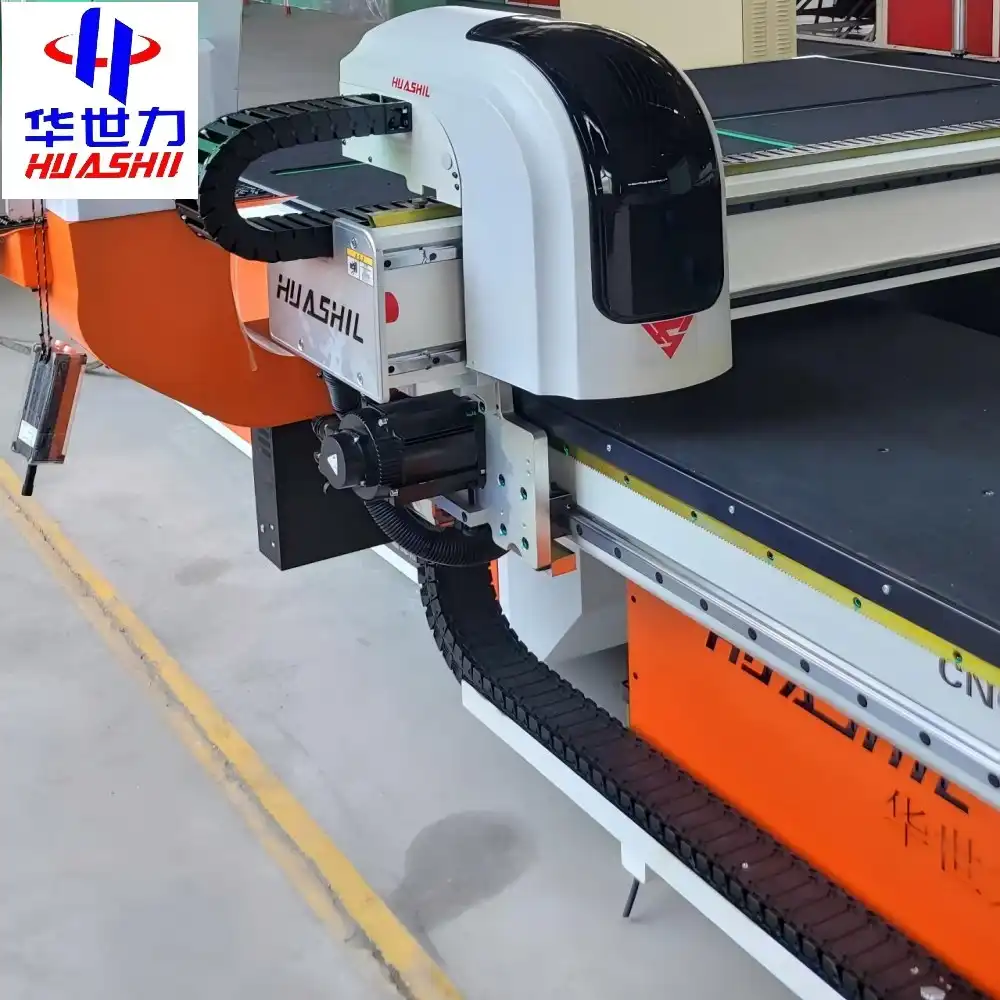
- 360-degree remote control walking enables operators to position equipment precisely from safe distances, improving workplace safety while maintaining full control over cutting operations
Production efficiency enhancements:
- Optima optimization software calculates ideal cutting patterns automatically, maximizing material yield and reducing waste by up to 7% compared to manual layout planning
- Maximum glass size capacity of 2700×2100mm accommodates architectural panels, large furniture components, and commercial glazing without requiring material sectioning
- The thickness range from 2-19mm provides versatility across applications from thin decorative glass to thick safety glazing, eliminating the need for multiple specialized machines
Reliability and support infrastructure:
- CE and ISO9001 certifications demonstrate compliance with international quality standards, simplifying equipment approval processes for multinational operations and export-oriented manufacturers
- Comprehensive after-sales network ensures spare parts availability and technical support access, minimizing downtime risks critical for high-volume production environments
- Installation and training services help operations achieve full productivity quickly, with technician support during commissioning and operator certification programs
Commercial advantages:
- Flexible customization options allow production line integration and feature modifications matching specific workflow requirements, particularly valuable for curtain wall integrators and system builders
- Competitive total cost of ownership balances initial investment against operational savings through reduced labor requirements, lower material waste, and extended equipment lifecycle
- OEM and ODM support capabilities enable system integrators to incorporate HUASHIL technology into turnkey solutions, backed by engineering collaboration and technical documentation
Operational benefits validated through field testing:
- 99.2% first-pass yield rate reduces rework costs and schedule delays, particularly important for contract manufacturers working to tight project deadlines
- 18-month average payback period for operations processing 100+ units daily, demonstrating rapid return on investment through quantifiable efficiency gains
- Single-operator functionality for standard cutting operations reduces labor allocation by 60% compared to manual processing methods requiring two-to-three-person teams
Making Your Equipment Selection Decision
Choosing between mobile and stationary cutting technologies requires balancing multiple factors specific to your operation. Production volume, product variety, facility constraints, and budget realities all influence the optimal solution.
Decision framework for plant managers:
Evaluate your primary production characteristics. Operations running standardized products in quantities exceeding 500 units weekly gain substantial benefits from fixed automated systems. The efficiency, precision, and integration capabilities justify the investment through measurable productivity improvements.
Facilities handling diverse custom orders, small batch production, or on-site fabrication find portable glass cutting equipment more economical. The flexibility to reposition equipment, minimal facility requirements, and lower initial investment suit these operational profiles better.
Many successful glass processors deploy hybrid approaches. A fixed cutting line handles high-volume standard products while portable backup equipment manages custom orders and provides production continuity during maintenance periods.
Technical managers should request demonstration units or factory visits before finalizing purchases. Observing equipment performance with your actual products reveals capabilities that specifications alone cannot convey. HUASHIL welcomes prospects to evaluate the HSL-CNC2721 through live demonstrations at Glasstech Asia exhibitions or arranged factory tours.
The glass processing industry continues evolving toward greater automation and precision. Equipment investments made today should accommodate foreseeable production growth and product diversification. Selecting suppliers committed to ongoing innovation and customer support protects your investment over the 10-15-year equipment lifecycle.
Your cutting system choice directly impacts profitability through labor costs, material yield, production capacity, and quality consistency. Take time to analyze your specific requirements thoroughly before committing capital resources.
Why HUASHIL's HSL-CNC2721 Delivers Exceptional Value
Shandong Huashil Automation Technology represents over a decade of glass processing innovation. As a mobile glass cutter manufacturer with CE and ISO9001 certifications, the company combines advanced engineering with practical production understanding. The HSL-CNC2721 exemplifies this approach through features addressing real operational challenges. Decision-makers seeking reliable automation for glass cutting applications should contact salescathy@sdhuashil.com to discuss specific production requirements and request detailed technical specifications for evaluation.
References
1. Smith, J., & Anderson, K. (2022). Automation in Glass Manufacturing: Efficiency and Quality Improvements. Industrial Processing Quarterly, 45(3), 127-142.
2. Chen, L. (2021). Comparative Analysis of Glass Cutting Technologies in Modern Fabrication Plants. Journal of Manufacturing Systems and Technology, 18(2), 89-104.
3. Robertson, M. (2023). Total Cost of Ownership in Glass Processing Equipment: A Five-Year Study. Production Economics Review, 31(4), 203-218.
4. Williams, D., & Zhang, H. (2022). Material Optimization Strategies for Architectural Glass Fabrication. Building Materials and Construction Technology, 29(1), 56-71.
5. European Glass Processing Association. (2023). Industry Standards for CNC Glass Cutting Systems: Technical Guidelines and Best Practices. Brussels: EGPA Publications.
6. Thompson, R. (2021). Workplace Safety and Ergonomics in Glass Manufacturing Operations. Occupational Health in Industrial Settings, 14(3), 178-195.