




Manufacturers in architectural glass, curtain wall fabrication, and furniture production face mounting pressure to increase throughput while maintaining safety standards and quality consistency. An automatic glass loading machine addresses these challenges by seamlessly integrating with existing production lines, minimizing manual handling risks, and accelerating material flow from raw glass sheets to cutting stations. These systems combine precision controls with robust safety features, enabling facilities to process large-format glass panels up to 4200×2800mm with repeatable accuracy. By automating what was traditionally labor-intensive work, facilities reduce cycle times, lower breakage rates, and achieve measurable cost savings that justify the capital investment within months.
Understanding How Automatic Glass Loading Machines Work
Glass sheets are moved from storage racks to processing stations by automatic glass loading machines using rail-guided platforms and synchronized mechanical arms. In order to detect sheet positioning and avoid collisions, the technology uses programmable logic controllers that coordinate vacuum suction cups, servo motors, and optical sensors. Because these machines are usually modular in design, operators may tailor loading sequences for varying glass dimensions and production quantities.
Core Operating Principles and Technology Components
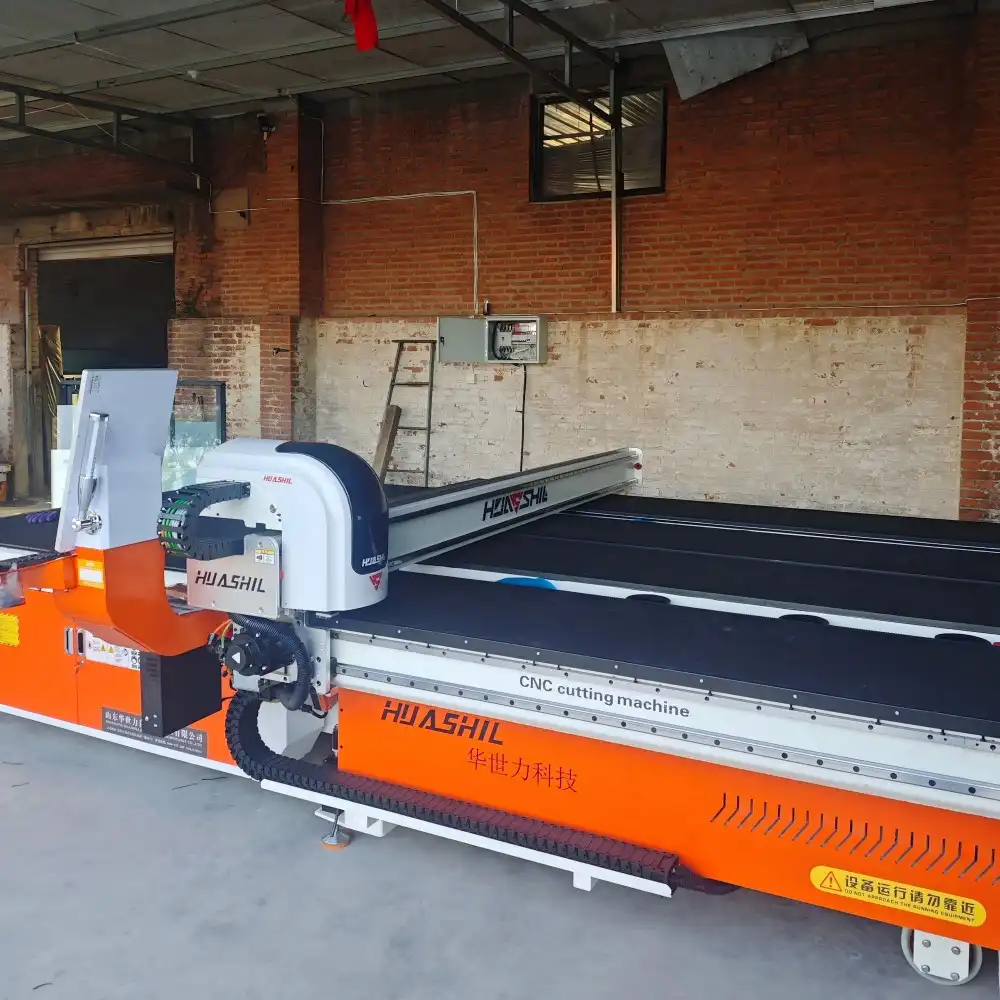
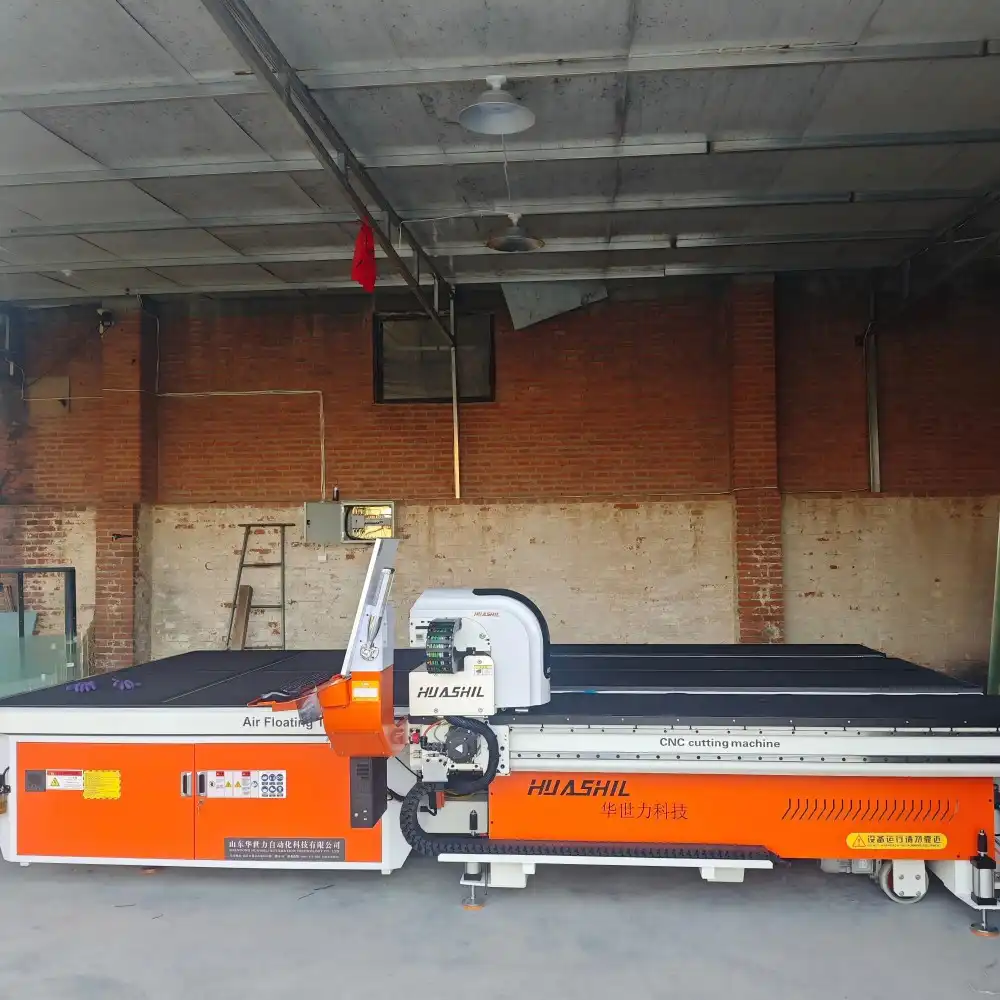
The three-table arrangement of the HSL-LSX4228 model illustrates this functionality: a loading table takes in incoming glass sheets, a cutting table arranges material for processing, and a breaking table makes final separation easier. Four large arms with suction grasping mechanisms on each side are designed to handle delicate objects without causing surface damage. Glass is transported between stations via above-ground or underground rail systems, and 2+2 configurable workstations allow parallel processing for increased throughput.
Optima optimization software, which determines cutting patterns to optimize material consumption and minimize waste, is included in this design. Through direct communication with the automatic glass loading machine, the program modifies sheet placement to conform to pre-established cutting routes. Glass position and movement speed are continually monitored by sensors, which initiate emergency brakes if variation exceeds predetermined limits.
Comparison with Manual Loading Methods
Each glass sheet must be lifted and positioned by teams of two to four people during traditional manual loading, which increases placement accuracy variability and poses ergonomic risks. This irregularity is eliminated by automated techniques, which place sheets with a repeatability of ±0.5mm. An automatic glass loading machine performs 20–30 loading cycles per hour for common architectural glass dimensions, whilst human processes usually complete 8–12 cycles per hour depending on glass size.
Three full-time jobs across many shifts may be replaced by a single automatic glass loading machine, according to labor cost research. In addition to pay savings, facilities see a decrease in workers' compensation claims and downtime due to injuries. In normal production situations, the accuracy of automated placement also reduces misalignment errors that lead to downstream cutting faults, resulting in material savings of 3-7%.
Top Benefits of Deploying Automatic Glass Loading Machines in Glass Factories
Measurable gains in operational metrics are given top priority by production managers assessing automation investments. An automatic glass loading machine produces measurable improvements in the areas of cost control, efficiency, safety, and quality assurance that have an immediate effect on profitability.
Enhanced Operational Efficiency and Throughput
Regardless of shift patterns or operator tiredness, an automatic glass loading machine maintains constant cycle times. Without adding more floor space or staff, facilities that handle 500 sheets a day may increase their capacity to 800+ sheets. Cutting and edging equipment can operate at maximum utilization rates since production lines are no longer bottlenecked during the loading stage thanks to the continuous operating capabilities.
Just-in-time material flow is made possible by integration with upstream inventory management systems, which lowers work-in-process inventory and releases capital. Operators may maximize workflow flexibility by allocating one pair of stations to high-volume standard sizes and saving the other pair for bespoke or bigger panels thanks to the HSL-LSX4228's variable station arrangement.
Improved Workplace Safety Standards
A large portion of manufacturing accidents are related to glass handling, where manual lifting and positioning can result in cuts, strains, and crushing occurrences. During the riskiest transfer processes, an automatic glass loading machine removes direct human touch with large glass sheets. When workers reach prohibited areas, safety sensors stop the functioning of moving machinery by creating protective zones around it.
Immediate shutdown capability is provided by emergency stop buttons placed at various access points. Exposure to glass pieces during possible breaking occurrences is decreased by the enclosed operation area. Facilities using an automatic glass loading machine claim 60-80% reductions in handling-related events during the first year of operation.
Consistent Quality and Reduced Breakage Rates
Cutting precision and edge quality are impacted by the variability in sheet location brought about by manual loading. By ensuring that every glass sheet properly aligns with the coordinates of the cutting tool, automated positioning prevents miscuts brought on by angular misalignment. Stress fractures that happen when personnel race to reach production requirements are avoided by the robotic arms' regulated acceleration and deceleration.
By distributing lifting power uniformly throughout the glass surface, vacuum suction devices prevent point-load stress concentrations that result in microcracks. Temperature-compensated suction adjustments keep grip strength constant in a range of environmental circumstances. When compared to manual handling, an automatic glass loading machine lowers breakage rates by 40–55%. The gains are especially noticeable when processing thin glass that is thinner than 4 mm.
Lower Total Operating Costs
Calculations of the total cost of ownership show positive payback times, even if the initial capital outlay for an automatic glass loading machine is a substantial investment. Compared to hydraulic alternatives, energy-efficient servo motor systems use 30–40% less electricity, which lowers monthly utility costs. The need for preventive maintenance is still minimal, with lubrication and sensor calibration taking place at 2,000-hour intervals.
The yield of raw materials is directly increased by the decrease in material waste. Waste reduction alone can recoup between $80,000 and $140,000 for a mid-sized business that processes $2 million in yearly glass inventory. When combined with labor savings of between $150,000 and $200,000 per machine per year, facilities usually recover all of their costs in 18 to 24 months.
Maintenance Tips and Troubleshooting for Long-Term Reliability
Proactive maintenance techniques are necessary for capital equipment investments in order to preserve performance capabilities and increase operational longevity for an automatic glass loading machine. Creating organized servicing procedures keeps warranty compliance and avoids expensive unscheduled downtime.
Daily and Periodic Maintenance Protocols
At the beginning of their shift, operators should examine the condition of the vacuum cup for any fractures or debris that might reduce the efficacy of the suction. Every day, rail systems must be cleaned to get rid of dust and glass fragments that obstruct smooth vehicle movement. By utilizing manufacturer-specified grease formulas that are compatible with operating temperatures, weekly lubrication of bearing assemblies and linear guides minimizes premature wear.
Sensor accuracy and positional repeatability are confirmed by monthly calibration verification. This entails utilizing laser alignment equipment to measure placement variation and conducting test cycles using reference glass sheets. In dusty conditions, control cabinet air filters should be changed every three months to avoid electrical component overheating. Complete system diagnostics, a wear check of the cables, and software upgrades that fix known issues or improve functionality should all be part of an annual professional service for the automatic glass loading machine.
Common Issues and Troubleshooting Solutions
The most common operational complaint is suction failure from vacuum pump attrition or pneumatic system air leakage. Monitor pressure gauges and listen for odd hissing to find leaks. Replace suction cups or alter pneumatic connections on the automated glass loading equipment to address most problems without an expert.
Sensor contamination and encoder drift cause positioning inaccuracies. Cleaning optical sensors with isopropyl alcohol and recalibrating zero points using the control panel interface restores accuracy. Software alarm codes give troubleshooting info. The HSL-LSX4228's integrated diagnostics show motor drive, safety interlock, and sensor statuses.
Power outages are needed to investigate mechanical blockages. Glass shards in carriage tracks or foreign objects preventing arm movement must be carefully removed from the automated glass loading machine to safeguard exact components. Detailed service records may indicate recurring problems requiring component replacement or design changes.
Comparing Automatic Glass Loading Machines: Choosing the Right Solution
When choosing an automatic glass loading machine, procurement teams must consider a number of technical and commercial aspects. Equipment capabilities and production needs are aligned when market offerings and assessment criteria are understood.
Key Evaluation Criteria for Equipment Selection
Equipment's ability to handle existing and future product lines depends on maximum glass size. The HSL-LSX4228's 4200x2800mm capacity suits most furniture and architectural applications; however, curved vehicle glass needs particular care. To minimise bottlenecks, the automated glass loading equipment should match downstream processing speed.
Installation layout depends on building footprints; underground rail saves space. Voltage and three-phase electricity must match plant infrastructure. Custom programming and implementation challenges arise from cutting table and MES software integration.
After-sales servicing influences long-term satisfaction with automated glass loading machines. Check technical support, replacement parts, and supplier reaction during production. Warranty periods were 12–36 months and excluded structural and wear items.
Customization Options and OEM Capabilities
Many applications work well with standard equipment configurations, although customisation is frequently beneficial for specific production needs. Extended loading table widths, extra safety interlocks for certain regulatory needs, and bespoke software interfaces that match current plant management systems are just a few of the OEM changes offered by manufacturers such as Shandong Huashil Automation Technology Co., Ltd for an automatic glass loading machine.
Modified vacuum cup arrangements or vision systems that confirm pattern alignment may be required by glass fabricators creating specific goods like curved shower doors or ornamental textured glass. Manufacturers of curtain walls must coordinate programming across several pieces of equipment in order to integrate an automatic glass loading machine into whole processing lines. Costly post-installation alterations can be avoided by discussing customization requirements during the initial specification preparation process.
Real-World Applications and Case Studies
Gaining insight into how comparable facilities use automatic glass loading machines puts expected performance gains and implementation difficulties in perspective. Applications in the industry cover a wide range of industrial sectors, each with its own operating goals.
Architectural Glass Manufacturing Efficiency Gains
In order to solve manpower shortages and inconsistent quality, a window manufacturing facility in the Midwest that produces residential and commercial glazing units introduced an automatic glass loading machine. Before automation, human loading crews had trouble keeping up production schedules during the busiest building season, which contributed to overtime expenses and missed delivery deadlines.
The facility reduced personnel needs by four jobs while increasing daily production from 450 to 720 standard window lites after HSL-LSX4228 installation. Improvements in cutting accuracy reduced rework from 6% to less than 2% of production volume. By combining labor reductions and waste reduction, the plant manager claimed full investment return for the automatic glass loading machine in less than 20 months. As workers moved from physically taxing loading jobs to skilled equipment operation and quality control positions, worker satisfaction increased.
Curtain Wall System Integration Success
For a significant downtown office tower project, a Texas-based curtain wall integrator needed coordinated automation across glass cutting, edge, and cleaning activities. Tight dimensional tolerances and expedited delivery deadlines were required by the project specifications, which manual techniques were unable to consistently meet.
The fabricator was able to finish the project three weeks ahead of schedule thanks to the integrated line with an automatic glass loading machine synced with CNC cutting equipment. Measurement mistakes that had previously led to panel rejections during site installation were eliminated by automated sheet placement, which guaranteed consistent alignment with cutting patterns produced by Optima software. Due to the success, two more commercial developments were awarded contracts based on their proven quality and dependability.
Furniture and Interior Glass Production Flexibility
Specialty glass manufacturers that cater to interior design sectors must deal with a variety of batch sizes and frequent product changes. A manufacturer of furniture glass in California required an automatic glass loading machine that could quickly switch from 12mm ornamental panels and 8mm tempered shelving glass without requiring long setup periods.
Operators were able to use one workstation pair for high-volume standard items and use the other pair for special orders that required various handling conditions thanks to the adjustable station architecture of the automatic glass loading machine. This adaptability supported the company's business strategy, which emphasizes quick-turn bespoke capabilities, by ensuring workflow continuity throughout product changes. While keeping the responsiveness that set the business apart from rivals who were just interested in volume manufacturing, production capacity rose by 35%.
Conclusion
In conclusion, automatic glass loading machines revolutionize production processes through quantifiable gains in productivity, safety, quality, and cost control. The system lessens the workplace risks associated with human glass handling while removing bottlenecks that limit production throughput. Systems like the HSL-LSX4228 show how careful engineering—which combines strong mechanical design, clever software integration, and adaptable configuration options—addresses actual production issues that architectural glass fabricators, curtain wall manufacturers, and specialty glass producers face. Facilities that use this technology claim quick investment recovery through waste reduction and labor savings, as well as competitive advantages in product quality uniformity and delivery timeliness. An automatic glass loading machine shifts from an optional productivity boost to a necessary production infrastructure when labor costs and customer quality standards climb.
FAQ
1. What glass sizes can automated loading machines handle?
For basic architectural, automotive, and furniture glass applications, the majority of industrial automatic glass loading machines can handle sheets with minimum dimensions of 300 x 300 mm and maximum dimensions of 4200 x 2800 mm. The HSL-LSX4228 achieves the maximum size that is appropriate for huge curtain wall units and jumbo architectural panels. Although handling equipment for bigger glass necessitates matching increases in facility floor area and structural support, custom arrangements can expand these ranges for niche applications. To preserve operational flexibility, manufacturers should confirm that the equipment capacity they have chosen is 10–15% larger than the greatest projected product dimensions.
2. How long does installation and operator training typically require?
An automatic glass loading machine typically takes five to seven business days to install, including software configuration, electrical connections, mechanical assembly, and safety system certification. This timetable may be extended by two to three days for concrete construction and rail embedding in underground rail systems. Usually lasting three to four days, operator training covers normal operation, fundamental troubleshooting, and preventative maintenance techniques. In order to allow for workflow modification and optimization, manufacturing facilities should schedule a two-week transition period between the arrival of equipment and full production integration.
3. What maintenance costs should facilities budget annually?
For an automatic glass loading machine, annual maintenance costs usually fall between three and five percent of the equipment's original cost. These costs encompass normal maintenance, replacement of worn components, and recurring calibration. This covers minor pneumatic component maintenance, filter replacements, lubricant supplies, and vacuum cup replacement. To reduce response times during unforeseen repairs, facilities could build connections with regional service providers or manufacturer support networks. Manufacturers such as HUASHIL may offer priority support access and cost predictability through comprehensive service contracts.
Partner with HUASHIL for Advanced Glass Loading Automation
Shandong Huashil Automation Technology Co., Ltd. serves furniture makers, curtain wall manufacturers, and architectural fabricators worldwide with decades of engineering experience in glass processing automation. With extensive technical support and readily available spare parts, our HSL-LSX4228 automatic glass loading machine provides the dependability, accuracy, and adaptability that production managers want. As a well-known producer of automatic glass loading machines, we provide specialized solutions, from conventional equipment configurations to fully integrated processing lines, that are suited to your unique production needs. Our engineering team works with your technical personnel to develop the best automation techniques, whether you're developing new facilities or increasing current capacity. To discuss your project needs and arrange a thorough capacity analysis, get in touch with our experts at salescathy@sdhuashil.com. We offer realistic implementation schedules, clear business propositions, and warranty support to safeguard your automation investment.
References
1. Glass Manufacturing Industry Council. "Automation Technologies in Modern Glass Fabrication Facilities." Glass Industry Technical Report Series, 2022.
2. National Safety Council. "Workplace Injury Prevention in Glass Manufacturing: Automation Impact Study." Occupational Safety Research Division, 2021.
3. American Architectural Manufacturers Association. "Production Efficiency Standards for Glazing Fabrication Plants." AAMA Technical Documentation, 2023.
4. International Journal of Advanced Manufacturing Technology. "Comparative Analysis of Manual versus Automated Material Handling Systems in Glass Processing." Volume 118, 2022.
5. Glass Magazine. "Total Cost of Ownership Analysis for Capital Equipment in Glass Fabrication." Industry Economics Research, March 2023.
6. Manufacturing Engineering Society. "Preventive Maintenance Protocols for Automated Glass Handling Equipment." Technical Standards Publication, 2022.