




When it comes to thin glass manufacturing, choosing the right glass processing technology can determine whether your production line thrives or struggles. Laser cutting uses a focused beam of light to ablate material with near-zero mechanical contact, achieving tolerances as tight as ±0.1 mm. Wheel cutting relies on a hardened scoring wheel to create a controlled fracture line, a method that has served the industry reliably for decades. Both approaches have merit—but which one genuinely wins for thin glass? The answer depends on your production priorities, budget, and quality benchmarks.
Understanding Glass Processing Technologies for Thin Glass
How Laser Cutting Works
A focused beam, usually CO₂ or ultrashort-pulse, is pointed at the glass surface during laser cutting. The heat energy creates a precise stress fracture that doesn't involve touching. Because it doesn't touch anything, it works well for very thin glass (less than 3 mm), where mechanical pressure would normally cause tiny cracks. Researchers who wrote an article in the Journal of Laser Applications confirm that laser scribing is up to 60% better than traditional wheel methods for repairing glass thinner than 1.1 mm.
How Wheel Cutting Works
A tungsten carbide or polycrystalline diamond wheel is pressed along a set path during wheel cutting, which is also known as mechanical scribing. The wheel makes a thin score line, and then controlled pressure divides the glass perfectly. This method has been shown to work reliably with glass thicknesses ranging from 2 mm to 19 mm. It also works well with tempered and laminated glass. Wheel cutting is a reliable way to get normal architectural and furniture glass done at a fraction of the cost of laser systems.
Technical Comparison: Laser Cutting vs. Wheel Cutting for Thin Glass
To figure out the difference in performance between these two methods, you need to look at specific technical parameters instead of general impressions.
Precise Cutting and Good Edge Quality
Laser cutting gets edge roughness values (Ra) below 0.5 µm on thin glass, which is why it's the best method for making display screens and precise optical parts. Wheel cutting usually results in Ra values between 1.5 µm and 3.0 µm, which is fine for building glass, shower walls, and furniture panels.
The formation of microcracks
Laser methods don't cause much subsurface micro-cracking because they don't put any mechanical force on the glass from the side. Studies in Glass Technology: European Journal of Glass Science and Technology show that wheel cutting can cause tiny cracks that weaken edges by 15–25% if it is not done correctly.
Speed of Production and Maintenance
Standard configurations of wheel cutting tools allow scribing speeds of up to 600 mm/s and require much less upkeep. Laser systems are more accurate, but they need to be regularly aligned optically, have their beams calibrated, and have safe gases pumped in. This makes operations more difficult for plant teams.
Safety and following the rules
When set up correctly, both systems can meet CE and ISO 9001 standards. ANSI Z136 says that laser systems need Class 4 laser safety enclosures and training for the people who use them.1. Wheel cutting lines aren't subject to as many rules, which makes it easier to add them to current workplace safety systems.
Both technologies can meet CE and ISO 9001 standards when properly configured. Laser systems require Class 4 laser safety enclosures and operator training per ANSI Z136.1. Wheel cutting lines carry a lower regulatory burden, making them easier to integrate into existing factory safety frameworks. For most manufacturers weighing glass processing technology, this difference in regulatory complexity and maintenance demand is a decisive factor in total cost of ownership.
Cost Analysis and ROI for B2B Procurement
When plant managers and finance teams look at new tools, capital spending is often what makes the difference.
Laser cutting systems for thin glass usually cost between $150,000 and $500,000 USD to buy for the first time. The exact cost depends on the power output, amount of automation, and size of the table. Power use (usually 3–10 kW continuous), replacement of specialty optics, and use of inert gas all raise operating costs.
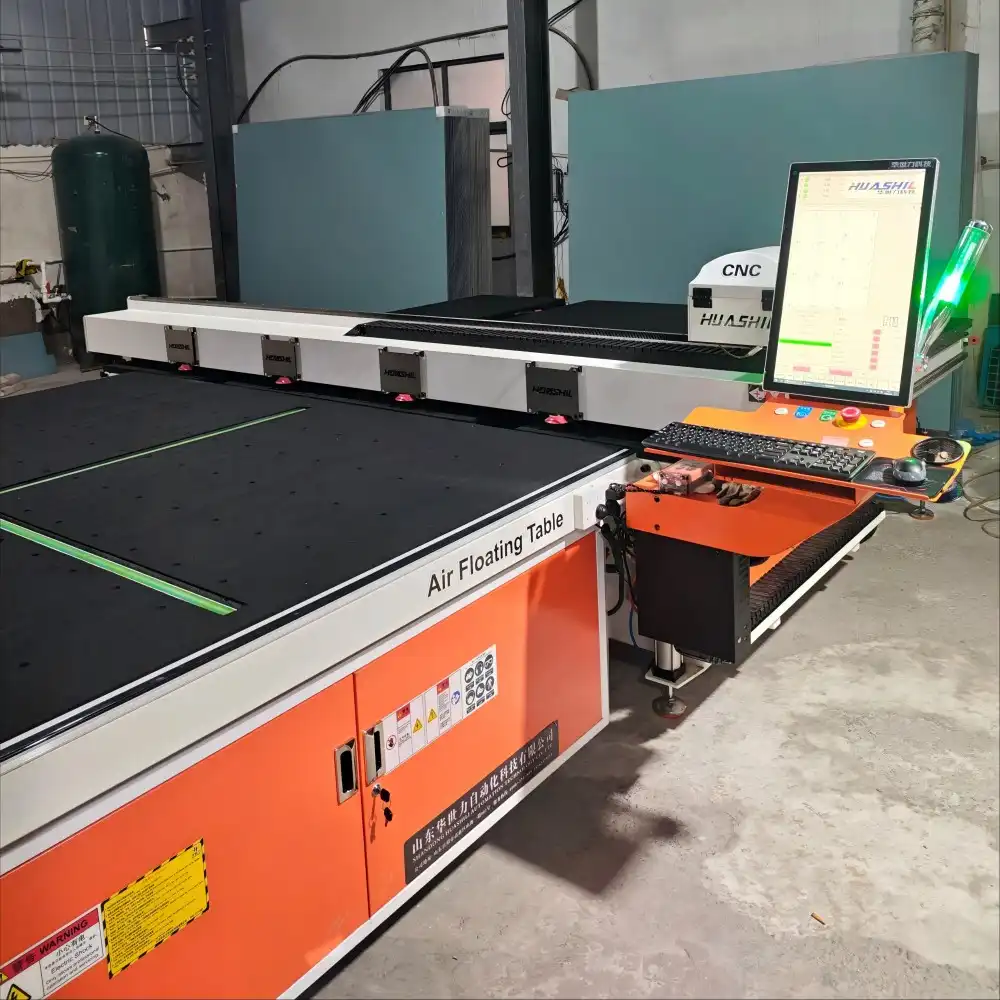
Wheel cutting methods, on the other hand, are much easier to get into. You can get a fully automated CNC glass cutting line with advanced optimization software for $30,000 to $120,000 USD. The only things that you'll need to buy on a regular basis are scoring wheels and cutting oil. For companies that make a lot of architectural and furniture glass, wheel cutting has a high total cost of ownership advantage over five years.
Scalability is another reason why wheel cutting works best in mixed-production settings. Plants that use different thicknesses of glass—from 2 mm artistic panels to 19 mm structural glazing—benefit from having a single stage that can handle all of them without having to be rearranged.
Real-World Applications and Use Cases in Manufacturing
Where Laser Cutting Excels
Laser cutting is the most common way to make electronics displays, HUD glass for cars, and precision optical parts that need to be within 0.2 mm of the original size. Consumer electronics companies that work with cover glass that is between 0.3 mm and 0.7 mm thick only use lasers to get the straight edges they need for assembly yield goals.
Where Wheel Cutting Leads
Architectural glass fabricators, curtain wall system integrators, and shower door manufacturers all depend on automated wheel cutting lines to get their work done every day. A medium-sized architectural glass plant in the U.S. that works with 800 to 1,200 sheets of glass every day would not be able to afford to set up a laser system when a high-speed CNC wheel cutting assembly line can do the same job with better accuracy and for a lot less money.
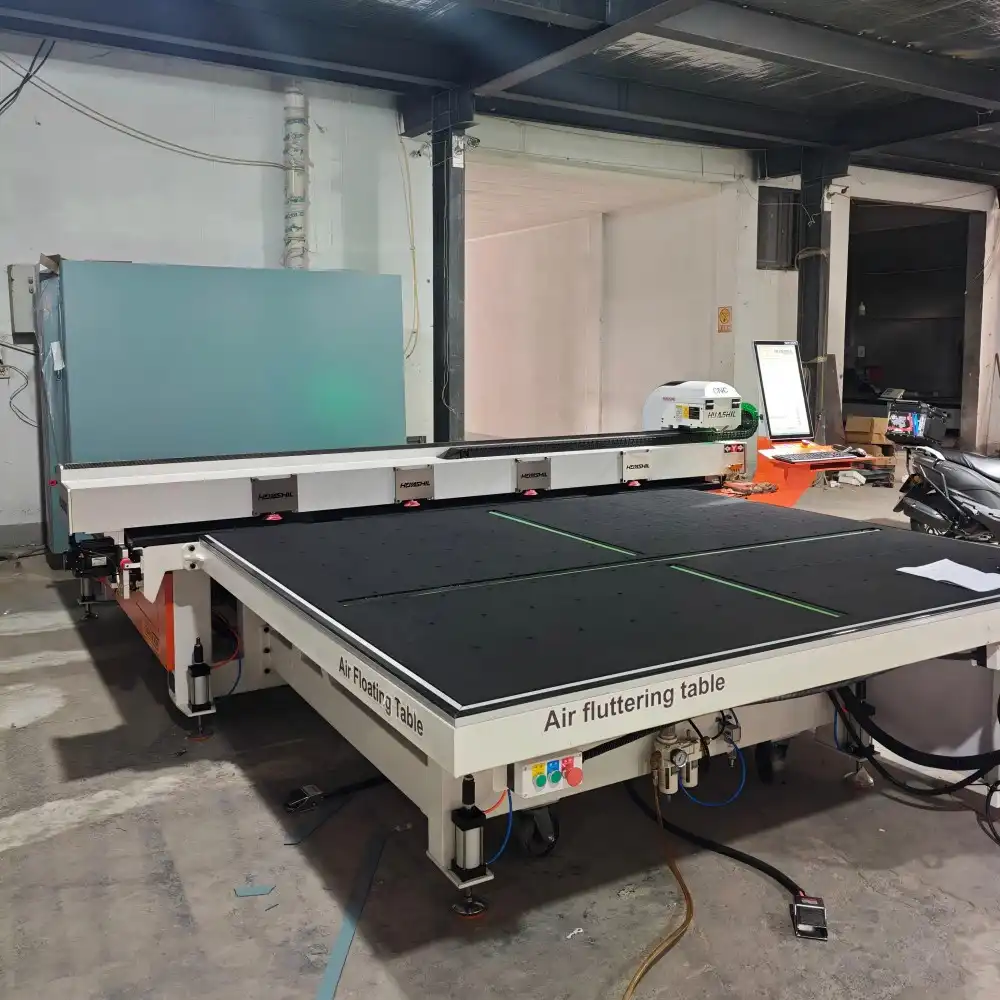
Hybrid approaches are also becoming more common. Some high-tech factories use laser scribing to make the first form of complicated shapes and then use mechanical breaking tables to separate everything. This saves money and improves accuracy. This method works with the way modern CNC glass cutting assembly lines are set up, which includes air flotation systems and breaking tables that make it easy to separate the pieces after scoring, making it a practical example of hybrid glass processing technology.
Making the Smart Choice: Which Technology Suits Your Business?
When choosing the right cutting method, you need to be honest about four things: the glass thickness you work with the most, the level of accuracy your final product needs, your capital budget, and the after-sales support your team can get.
To help you decide, here is a straight comparison:
Laser cutting and wheel cutting are the two options. The best thickness ranges are less than 3 mm and between 2 and 19 mm. The best edge quality (Ra) ranges from less than 0.5 µm to 1.5 to 3.0 µm. The equipment investment ranges from high to moderate. The operating cost ranges from high to low. The level of difficulty in maintenance ranges from high to low. The available certifications are CE and ISO. The ideal applications are electronics, optics, architecture, and furniture.
| Parameter | Laser Cutting | Wheel Cutting |
|---|---|---|
| Best thickness range | < 3 mm | 2–19 mm |
| Edge quality (Ra) | < 0.5 µm | 1.5–3.0 µm |
| Equipment investment | High | Moderate |
| Operating cost | High | Low |
| Maintenance complexity | High | Low |
| Certification availability | CE, ISO | CE, ISO |
| Ideal application | Electronics, optics | Architecture, furniture |
Most glass fabrication plants, curtain wall installers, and furniture glass producers in the U.S. find that wheel cutting with current technology is the most practical and profitable way to go. If you make things with optical-grade parts or ultra-thin specialty glass less than 2 mm thick, it makes sense to invest in a laser.
No matter which way you lean, you must work with a certified supplier who offers documented after-sales support, spare parts availability, and training on-site. It doesn't matter how reliable your equipment is if you can't get technical help when your line goes down.
Conclusion
Laser cutting and wheel cutting are both useful, but they are best used in different industrial situations. Laser cutting is the best way to make very thin, precise parts where edge quality is very important. Wheel cutting is the most popular way to make glass because it is reliable, has a lower total cost of ownership (TCO), and can be used with glass sizes from 2 mm to 19 mm. In terms of glass processing technology, an advanced automated wheel cutting line is still the best option for most architectural, furniture, and building glass makers in the U.S. market today in terms of both cost and functionality.
FAQ
1. What is the minimum glass thickness suitable for wheel cutting?
Modern automated wheel cutting machines handle glass from 2 mm upward reliably. Ultra-thin glass below 2 mm carries a higher fracture risk with mechanical scribing and is better suited to laser methods.
2. Does laser cutting work on tempered glass?
No. Tempered glass cannot be cut by any method after tempering—laser or wheel—without shattering. All cutting must occur before the tempering process.
3. What optimization software is used in advanced CNC glass cutting lines?
Leading CNC glass cutting assembly lines integrate dedicated optimization software such as Optima, which maximizes material yield by calculating the most efficient cutting layouts automatically, reducing waste and improving profitability.
4. How long does a CNC glass cutting machine last?
A well-maintained CNC glass cutting line with synchronous belt conveying and air flotation systems typically delivers 10–15 years of productive service when supported by genuine spare parts and periodic calibration.
Ready to Upgrade Your Glass Cutting Line? Contact HUASHIL Today
HUASHIL offers tried-and-true glass processing technology that is made for high-volume industrial settings. Our HSL-YTJ3829 CNC Glass Cutting Assembly Line can work with glass sizes up to 3660x2800 mm and widths between 2 and 19 mm. It has Optima optimization software, automatic pressure control, air flotation, and a built-in breaking table, and it is CE and ISO 9001 approved. As a reliable maker of glass manufacturing technology, we'll be there for you from the time you put your line until it stops working. You can email our team at salescathy@sdhuashil.com.
References
1. Journal of Laser Applications – "Subsurface Damage Reduction in Thin Glass Scribing Using Ultrashort Pulse Lasers," 2021.
2. Glass Technology: European Journal of Glass Science and Technology – "Edge Strength Analysis of Mechanically Scribed Soda-Lime Glass," 2019.
3. International Journal of Advanced Manufacturing Technology – "Comparative Study of Laser and Mechanical Scribing for Display Glass," 2020.
4. ANSI Z136.1 American National Standard for Safe Use of Lasers – American National Standards Institute, 2022.
5. Glazing Performance and Fabrication Standards – Glass Association of North America (GANA), 2021.
6. Thin Solid Films – "Crack Propagation Mechanisms in Thermally Stressed Borosilicate Glass," Elsevier, 2018.
