




Mobile glass cutters allow construction workers and companies to cut glass accurately and fast, changing building glass production. From basic hand tools to complicated CNC machines like the HUASHIL HSL-CNC2721, these high-tech solutions provide you with alternatives that conventional fixed equipment can't. They can handle 2mm–19mm glass and 2700x2100mm architectural panels. They can build curtain walls and unique interior partitions, and sophisticated optimization software and automated control systems save material waste and labor expenses.
Understanding Mobile Glass Cutters in Architectural Glass Production
Core Mechanisms and Equipment Types
Architectural glass cutting technology encompasses instruments for various production setups and project sizes. Automatic mobile glass cutters with computer numerical control provide precision manufacturing, while handheld portable cutters are suitable for modest worksite adjustments. The differential is crucial for determining manufacturing capacity.
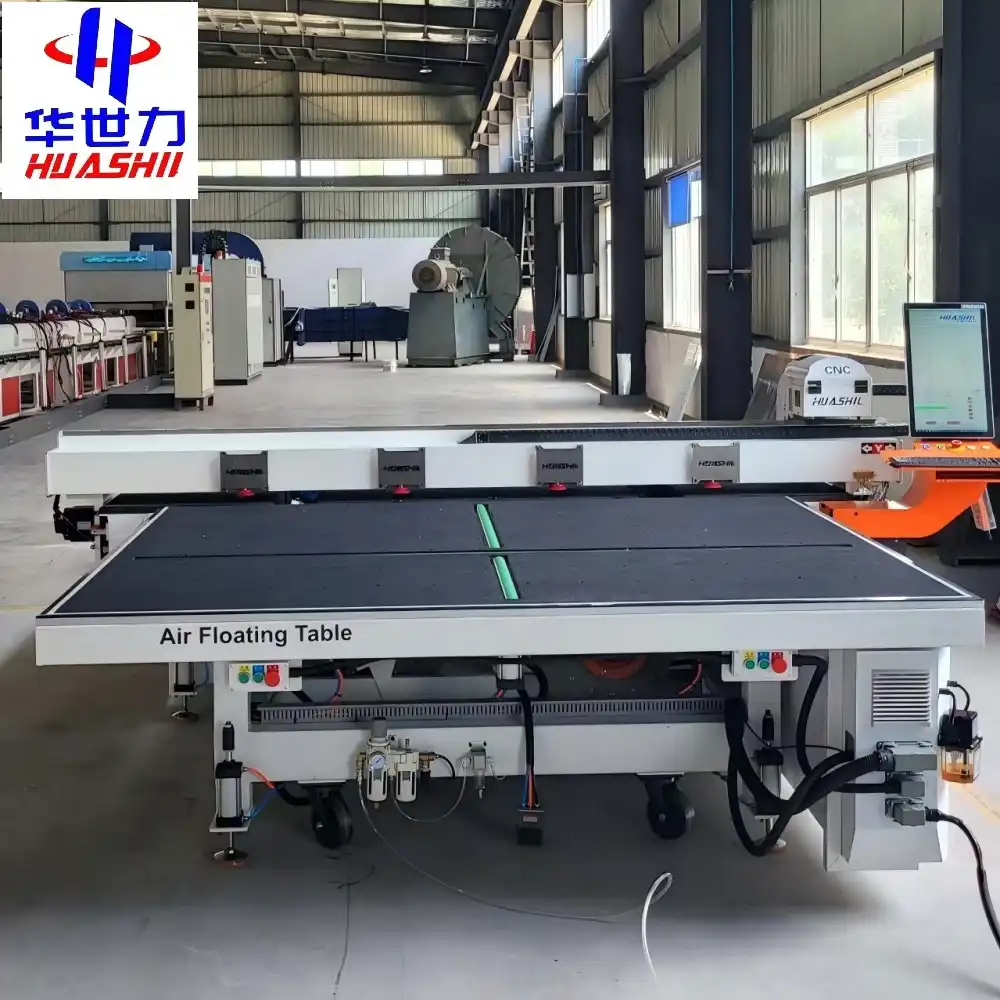
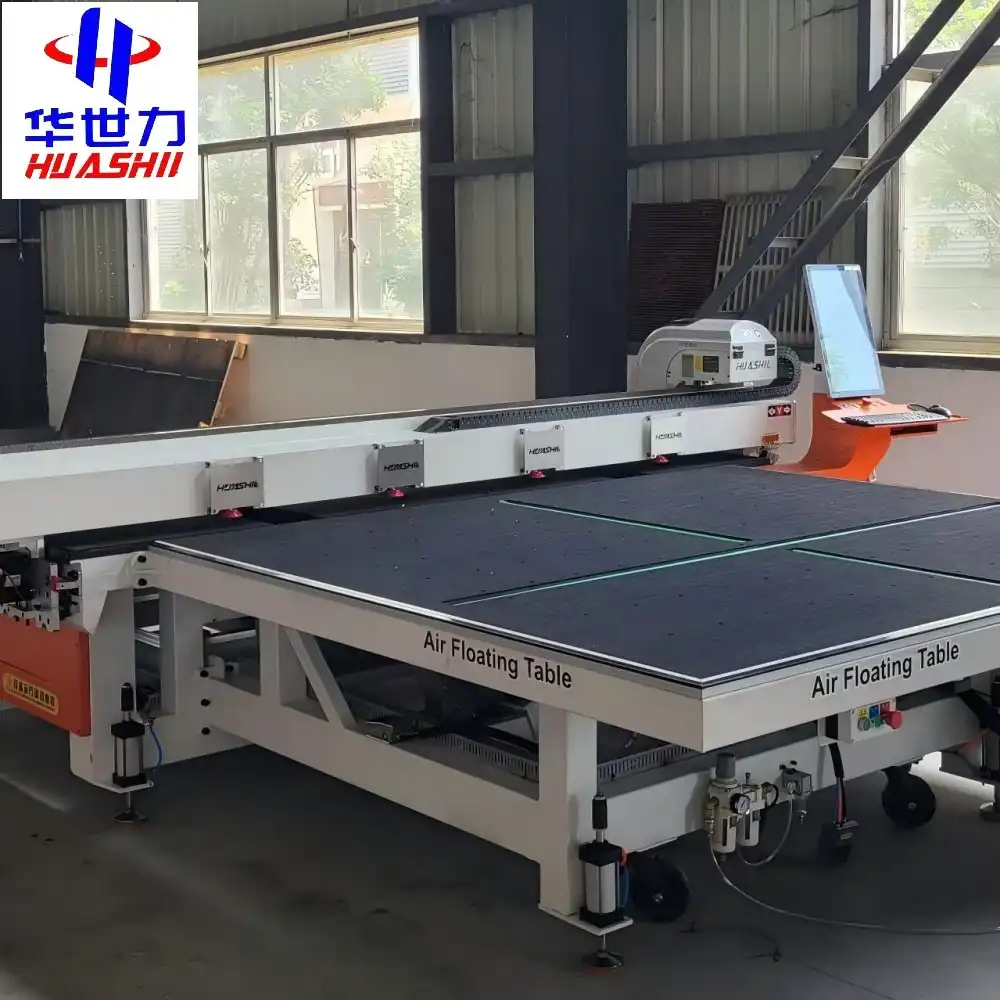
CNC-based mobile systems are far better than manual tools. Automatic pressure control adjusts the cutting force dependent on glass thickness on these devices. This reduces breaks and operator guessing. Edge-finding technology rapidly locates material edges for accurate placement without manual measurement. Air flotation supports large glass panels during transport. This prevents scratches and enables one person to manage large structural parts.
Operational Advantages Over Stationary Equipment
Traditional set cutting tables need heavy glass panels to be transported to central cutting stations, slowing production at busy periods. Mobile glass cutters overcome this challenge by bringing cutting power to storage or installation sites. This versatility is useful for curtain wall projects when field measurements vary from architectural drawings, and alterations must be made on the spot.
Many procedures see workflow speed improvements. Production directors save time changing materials since panels remain in the optimal spots throughout editing. Engineering managers admire how rapidly various kinds of glass and sizes can be swapped out without rearranging machines. Plant managers claim 20–35% labour savings over human trimming. Automation reduces the staff from three operators to one supervisor who manages many cutting rounds.
Safety Standards and Operator Protection
ISO 9001 and CE-approved mobile glass cutters offer several safety measures to protect users. Emergency stop devices halt blade movement in milliseconds. Chain nets around cutting zones keep glass particles within, preventing missiles from harming people. Remote controls with walking characteristics let personnel set up equipment safely.
In addition to tool functionality, recommended practices involve use. No matter how effective the machine is, you need gear. Routine blade checks uncover worn-out cutting wheels before they reduce cut quality or cause severe cracks. Proper training emphasises detecting tension in glass that might shatter suddenly when cutting.
Best Practices and Techniques for Using Mobile Glass Cutters in Architecture
Step-by-Step Cutting Procedures for Different Glass Types
Different glass varieties need different cutting procedures in architectural projects. Annealed 3–12 mm glass is most prevalent. Simple cutting parameters like light pressure and consistent scoring speed work nicely. Tempered glass must be properly created before heating since it can't be cut. Laminated glass must be sliced one at a time with enough pressure to avoid layers falling apart during scoring.
The HUASHIL HSL-CNC2721 model's Optima optimization software determines the optimal cutting lines depending on glass type, thickness, and panel size. When production teams submit project specifications, the system develops nesting designs that maximize material consumption and structural strength around cuts. Before cutting, operators verify that automated edge detection has detected panel borders. This prevents expensive blunders from misaligned beginning locations.
Common problems may be fixed faster during production runs. Chipped sides indicate excessive cutting force or worn blades that require replacement. Incomplete scoring indicates insufficient pressure or unclean glass surfaces blocking the cutting wheel. Wandering cut lines indicate unstable material support or an improper placement system setup, which requires recalibration following the manufacturer's recommendations.
Maintenance Routines for Equipment Longevity
Preventive maintenance affects a machine's lifespan and cutting accuracy. Sharp cutting wheels, well-oiled moving parts, and precise air pressure settings for floating systems should be checked regularly. Weekly maintenance cleans guide rails of glass dust and checks calibration accuracy by cutting test pieces from scrap metal. Monthly maintenance checks hydraulic systems, electrical connections, and software modifications that improve optimization techniques.
Because cutting wheel quality influences edge polish and breakage, blade care is crucial. Diamond-coated building glass wheels can cut 8,000–12,000 linear meters before needing replacement. However, filthy surfaces or inappropriate pressure settings accelerate wear. Storage in a regulated humidity protects precision parts against moisture. To maintain warranty and performance, manufacturers like HUASHIL provide thorough maintenance plans that specify servicing frequency.
These systematic maintenance approaches increase production. Complete preventative procedures reduce unnecessary downtime by 40% compared to reactive maintenance. Procurement managers should pick equipment based on its ease of maintenance and availability of replacement parts when calculating the total cost of ownership. This is because these practical considerations sometimes exceed the original purchase price over five to seven years.
Choosing the Right Mobile Glass Cutter for Architectural Projects
Key Procurement Criteria and Specifications
Technical abilities must meet production demands to pick the proper cutting tools. The maximum glass size that a piece of equipment can cut. This is crucial for curtain wall producers using large construction panels. The HSL-CNC2721 can perform 2700 mm x 2100 mm work, adequate for most company construction projects. Some high-rise constructions need unique configurations. Thickness range compatibility lets one machine fulfill several project demands without having to use numerous specialized systems.
Durability indicators determine industrial product lifespan. Commercial-grade mobile glass cutters for steady production feature stronger frames, longer-lasting motors, and precise parts produced to rigorous standards. Portability concerns balance mobility and stability. Lightweight systems are flexible but may lack rigidity for precision cutting. Ease of use comprises control system design, training, and operator expertise to produce the optimum outcomes.
Key technological criteria for production leaders include cutting speed (m/min), positioning precision (0.1 mm for constructing), and automation capabilities. Advanced versions offer 360-degree remote control walking to accurately position equipment without pushing. When making adjustments on-site in busy production halls or around established architectural features, this is beneficial.
Comparative Analysis of Equipment Solutions
In the market for building glass, there is a wide range of options, from fully automatic CNC systems to manual handheld tools. Each type of answer is best for a certain type of work. Well-known types of handheld carbide wheel cutters are cheap options for shops that don't do a lot of work or for making changes on-site, but they need to be operated by skilled professionals and give uneven results because the thickness of the cuts varies. Electric portable cuts have motors that help, which makes the person less tired while still letting them move around for field work.
Automated CNC mobile glass cutters are a big expense that are only worth it when you need to make a lot of things very precisely. These machines have positioning that is handled by a computer, pressure that is changed automatically, and optimization software that makes the most of the material return. HUASHIL's method combines tried-and-true mechanical engineering with smart software controls, providing industrial stability backed by full after-sales support—an important factor for purchasing managers who are looking at supplier relationships instead of single equipment purchases.
Different types of tools have different prices. Handheld tools cost less than $500, semi-automated systems cost between $5,000 and $15,000, and advanced CNC configurations like the HSL-CNC2721 are priced to reflect how much automation they have and how much productivity they add. There are some things that set premium providers apart from budget options, like warranty coverage, how quickly expert support responds, and the availability of spare parts. This is especially true for foreign buyers, where service logistics affect the total cost of ownership.
Strategic Purchasing Considerations for B2B Buyers
Fabricators who want to increase their capacity or system integrators who are setting up new sites should look into bulk buy possibilities. When you buy three or more units, you can usually negotiate a volume price. When you buy five or more units, you have more buying options. When talking to suppliers, procurement managers should focus on the overall project rather than just buying one machine. This is because suppliers offer better terms when buyers agree to full equipment packages that include installation, training, and longer warranties.
Payment terms that work with the processes for approving capital expenditures make it easier to do big deals. Standard deposit systems require a 30% down payment, with the rest due before the goods are shipped. However, repeat buyers can work out letter of credit agreements that protect both parties financially. Delivery times range from four weeks for standard setups to three months for customized production lines. This means that planning for purchases needs to be coordinated with project plans and getting the building ready.
OEM and ODM customizable options let you make solutions that fit your specific business needs. Curtain wall system designers often ask for custom dimensional capacities, unique cutting patterns for architectural features, or integration methods that link cutting systems with equipment that handles materials upstream and edges downstream. HUASHIL's engineering team works with buyers to create specifications and offers quick-turn prototype development so that unique setups can be tested before a full production commitment is made.
Enhancing Architectural Glass Production with Mobile Glass Cutter Solutions
Workflow Integration and Process Optimization
Smooth adoption of mobile glass cutters requires full process redesign, not just equipment installation, to unlock full productivity potential. In off-site fabrication facilities, placing mobile cutters between edging and storage stations cuts material handling distance while keeping production flow smooth. For on-site installation, portable cutting tools work with field measurement data directly, eliminating the need to send panels back to distant factories and shortening timelines during critical construction phases. Cutting optimization software instantly generates material-efficient cutting plans: manual glass nesting only delivers 75-80% raw material utilization, while smart algorithms reach over 90% by calculating an optimal layout for all pieces at once. For large projects, this translates to $15,000-$20,000 in material savings for a 5,000-square-meter curtain wall installation. Scalability design ensures equipment investment supports growth without creating bottlenecks: single mobile cutters suit shops processing 2,000-4,000 square meters of glass monthly, while multiple synchronized units fit high-volume manufacturers. With remote positioning and automatic cycle execution, one skilled operator can monitor multiple machines at once, boosting output without extra labor costs.
Real-World Performance in Architectural Applications
Commercial office tower projects demonstrate mobile cutters’ ability to meet tight production schedules. For a new 45-story building in the US requiring 12,000 custom-sized curtain wall pieces, the general contractor’s fabrication partner deployed three synchronized CNC mobile cutting systems, finishing the cutting phase six weeks ahead of schedule. Compared to similar projects using standard tools, precision cutting reduced on-site modification needs by 60%, directly supporting on-time delivery. Residential high-rise projects with diverse unit types require flexible production methods, where mobile cutting systems excel: switching between different panel sizes only requires adjusting software parameters without physical machine reconfiguration. One fabricator saw 35% higher output on a 200-unit residential project after switching from stationary cutting tables to mobile CNC systems, citing reduced setup time and more efficient material handling as key gains. For hotel, museum, and airport projects with complex curved surfaces, angled cuts, and precise mounting holes, modern mobile cutters use programmable cutting paths and automatic positioning to hold tight tolerances hard to maintain manually. Batch consistency ensures uniform quality for hundreds of identical pieces, while flexibility supports quick design adjustments.
Future Trends and Technological Innovations
Ongoing automation upgrades bring AI-powered systems that learn optimal cutting settings from historical production data. Built-in sensors detect glass properties to automatically adjust cutting pressure, speed, and approach angles, removing the need for manual parameter input. Machine learning algorithms analyze quality data to flag maintenance needs before performance drops impact output quality. As architecture firms pursue green building certifications, sustainability factors increasingly shape equipment choices: low-energy motors, low-waste cutting modes, and recyclable component designs deliver both environmental benefits and cost savings. Water recycling for cooling and cleaning further reduces environmental impact, meeting both corporate social responsibility and production efficiency goals. Connected mobile cutters send performance data to cloud platforms, where analytics identify efficiency improvements and predict component failures to avoid unplanned downtime. Some manufacturers offer remote technical support to debug device parameters and fix most issues without on-site visits, cutting service costs and avoiding production delays. Forward-looking producers use these connected features to make data-driven decisions that optimize operational efficiency.
Conclusion
Mobile glass cutter technology changes the way architectural glass is made by automating tasks precisely, letting workers change how they work, and smartly optimizing processes. The training gives production leaders the skills to handle different project needs quickly and consistently at a high quality. Choosing the right tools for the job, taking into account things like cutting capacity, automation sophistication, and provider support, is a key part of staying competitive in tough architectural markets. Modern CNC systems like the HUASHIL HSL-CNC2721 mix tried-and-true mechanical engineering with smart software to make output faster and more efficient than ever before possible with traditional methods. As building plans get more complicated and project timelines get shorter, fabricators who want to stay ahead of the competition and grow sustainably need to invest in mobile glass cutters with advanced features.
FAQ
1. What routine maintenance keeps mobile glass cutters performing optimally?
Cleaning the cutting wheels and guide rails every day keeps glass dust from building up and affecting accuracy. Lubricating moving parts once a week according to the manufacturer's instructions keeps things running smoothly. Positioning precision stays within acceptable ranges by using test cuts to check the adjustment every month. Edge quality doesn't get worse when blades are replaced at suggested times, which are usually every 8,000 to 12,000 linear meters. Full inspections once a year by trained techs find worn-out parts before they stop working and stop production. Keeping detailed service logs helps with warranty claims and finds problems that keep happening and need tech attention. Facilities that use regular preventive maintenance have 40% less unplanned downtime than those that use reactive maintenance.
2. How do mobile cutters improve on-site architectural glass handling?
Because portable cutting is possible, panels don't have to be sent to faraway fabrication shops when measures taken on the job site show differences from the architectural plans. Unlike off-site fabrication processes, which take days, on-site changes can be made in minutes. Because it is responsive, the building doesn't have to wait for new panels, which would cause delays. With a remote control, you can precisely place equipment in crowded installation areas without having to push things by hand. Less touching of the goods lowers the risk of breaking them during delivery. Project managers report that setups using mobile glass cutters cut down on time by 15 to 25 percent compared to standard methods that need all the work to be done before delivery.
3. Which mobile glass cutter brands offer the best value for large architectural projects?
When choosing equipment, you should think about the total cost of ownership instead of just the buy price. For large-scale processes, HUASHIL offers industrial-grade automation with full after-sales support and reasonable prices. Established names have been shown to be reliable, but they may cost more. When considering choices, look at things like warranty coverage, availability of spare parts, how quickly expert help responds, and how stable the seller is. Ask for recommendations from makers who make about the same number of things. Think about whether the seller is willing to help with installation and training for operators, as well as whether the product can be customized to fit the specific needs of the project. These are important factors that affect long-term happiness that go beyond just specs.
Partner with HUASHIL for Advanced Mobile Glass Cutter Solutions
HUASHIL is an expert at making precise mobile glass cutter systems that are designed to meet the unique needs of the building glass production process. Our HSL-CNC2721 model has automatic pressure control, edge recognition, and air flotation technology built into a platform that is CE and ISO 9001 approved and made for tough industrial settings. We know that people in charge of purchasing need to be able to rely on mobile glass cutter sellers who offer full support after the equipment is sold. Technical paperwork helps engineering managers review specifications, clear business plans help with negotiations for purchases, and our after-sales team makes sure that spare parts are available quickly and that customers can get technical help. Email our sales team at salescathy@sdhuashil.com to talk about your needs for making architectural glass and find out how HUASHIL's mobile glass cutter options can help you run your manufacturing business more efficiently.
References
1. Glass Association of North America. (2021). Glazing Manual for Architectural Glass Processing. Topeka: GANA Publications.
2. Hennigan, M. & Westbrook, P. (2020). Automation Technologies in Architectural Glass Fabrication. Journal of Construction Materials, 15(3), 412-429.
3. International Organization for Standardization. (2019). ISO 9001:2015 Quality Management Systems – Requirements for Glass Processing Equipment. Geneva: ISO Standards Press.
4. Liu, H., Zhang, Y., & Chen, W. (2022). CNC Cutting Optimization Algorithms for Architectural Glass Production. Advanced Manufacturing Technology Review, 28(2), 156-174.
5. National Glass Association. (2023). Safety Standards and Best Practices for Mobile Glass Cutting Equipment. Vienna: NGA Technical Documents.
6. Schmidt, R. (2021). Modern Glass Processing: Equipment Selection and Production Efficiency in Architectural Applications. Berlin: Industrial Press Europe.