




In modernizing glass plants, the Custom glass loading machine has solved long-standing issues with material movement and worker safety. Shandong Huashil Automation Technology has witnessed how this specialized equipment affects US architectural glass producers, curtain wall installers, and furniture manufacturers. Three connected grand arms that can move in any direction and an air-floating system allow workers to handle glass sheets up to 3660x2440 mm with precision that can't be attained by hand. The method saves time, reduces the chance of damaging objects, and works well in automated manufacturing environments where every second counts toward profit.
Understanding Custom Glass Loading Machines with 3-Arm Design & 360° Mobility
As tools for handling glass have changed over time, we have reached a turning point where automation and flexibility meet. For operations that require freedom without lowering throughput or safety standards, Custom glass loading machines represent technical solutions.
What Defines a Custom Glass Loading Machine?
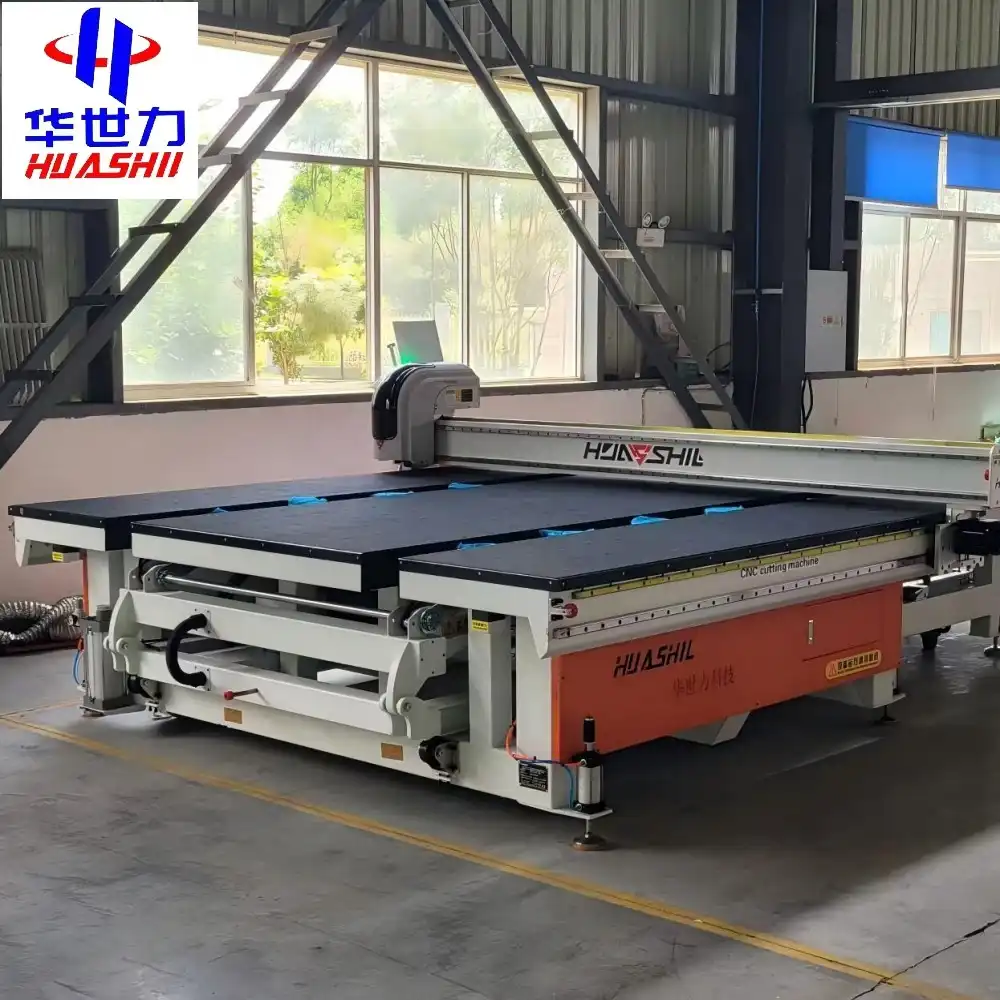
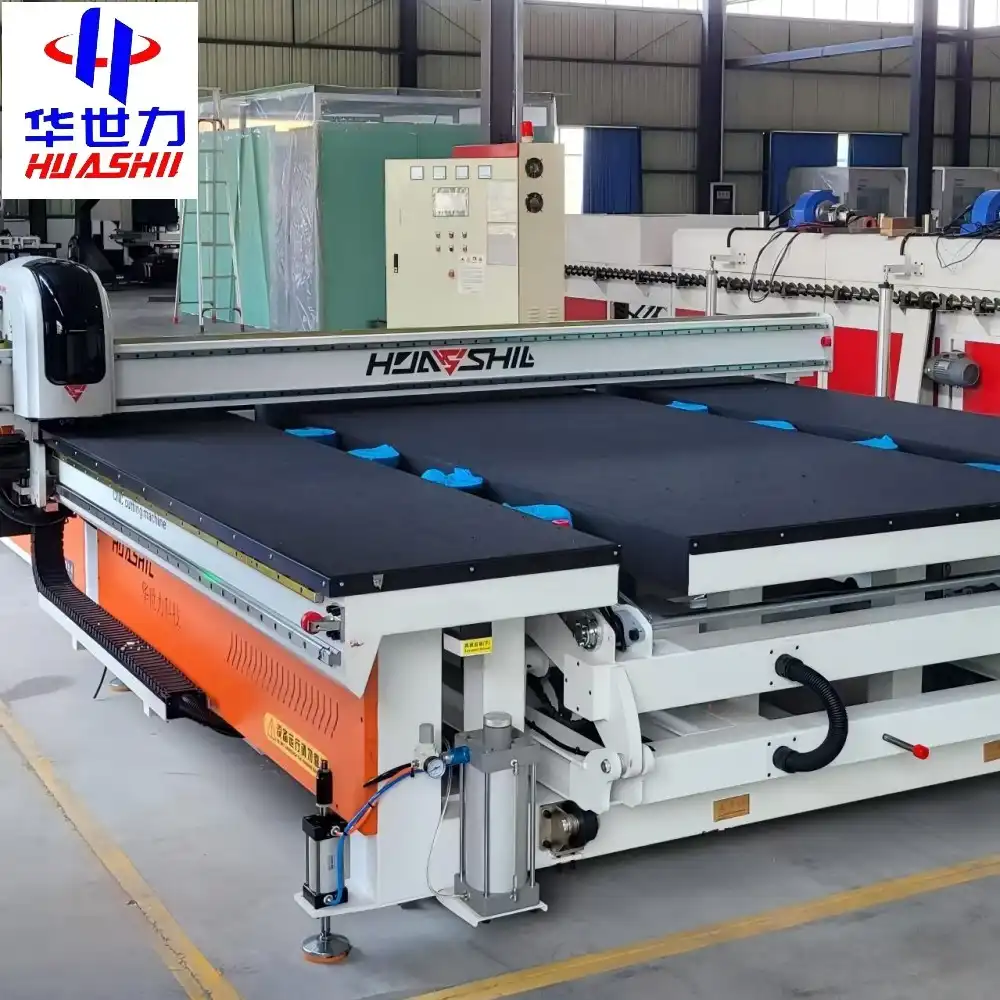
Specialised glass loading machines handle glass sheets securely and effectively throughout manufacturing. Glass is fragile, has weight distribution issues, and has a sensitive surface; these tools are created for it. Huashil's automated loading systems use three big arms to uniformly distribute load forces over the glass surface. The air floating technology cushions the machine's placement and allows it to navigate complex production floor designs with its 360-degree walking function. These tools can handle glass of various sizes, thicknesses, and handling ways since they can be entirely modified to meet different production line layouts.
The Three-Arm Configuration Advantage
Traditional two-point lifting techniques produce stress concentrations that increase the risk of breaking large-format building glass. The triangular support form of the three-arm arrangement modifies this dynamic by equally distributing weight. Each arm's precision motors quickly match grip pressure depending on the glass thickness and weight sensors. This setup is useful for dealing with non-round parts or materials with variable densities, including laminated safety glass or insulated glass units. Production managers say this approach reduces handling mistakes by 40% over two-point systems. This reduces material costs and boosts yields.
How 360-Degree Mobility Transforms Production Flexibility
Too little industrial floor space is scarce, and production plans seldom follow geometric patterns. The filling machine can swivel around on its axis and travel in any direction with its 360-degree walking capability. This feature allows designers to maximize floor space by eliminating straight-line pathways between processing equipment. The mobility mechanism uses precision wheel units with independent steering. The machine can navigate obstacles, position glass at varied angles, and service several processing lines per unit. Engineering managers enjoy this capability because it prevents costly reinstallation projects when the facility develops or the manufacturing line is reorganized.
Advantages of Custom Glass Loading Machines for Modern Industry Applications
Putting money into improved technology for handling glass pays off in a number of ways that can be measured. One of the benefits these systems offer to current glass fabrication sites is that they make production more efficient.
Productivity Enhancement Through Automated Operation
Manual glass handling has inherent speed constraints defined by human limitations and safety requirements. Automatic glass filling technology eliminates these issues since it runs at the same pace regardless of shift length or weather. For standard architectural glass sizes, Huashil's three-arm systems load in 45–60 seconds, whereas two-person teams require 3–5 minutes. This acceleration allows manufacturing lines to handle more work without recruiting additional workers. Designers of curtain wall systems believe automated loading methods increase throughput by 60–80%. This lets them accomplish large construction projects faster.
Versatility Across Glass Types and Sizes
Architectural and automotive purposes need the capacity to deal with many kinds of glass. Custom glass loading machines' air-floating mechanism makes coated low-emissivity glass soft to touch, and the robust arm construction can handle thick laminated security glass. The largest glass for floor-to-ceiling architectural panels is 3660 x 2440 mm. Changing preset settings allows the same machine to handle smaller furniture glass. This eliminates the need for several specialized handling systems. This reduces the requirement for capital equipment and simplifies operator training across product lines.
Safety Improvements and Risk Mitigation
Workplace injuries from handling glass by hand result in high workers' compensation claims, lost production, and regulatory violations. Automated filling systems keep personnel out of unsafe material handling locations, reducing these dangers. The three-arm design provides a secure hold during transfer, and built-in sensors may detect glass placement issues and halt the machine before it breaks. Safety interlocks prevent unauthorized entry into moving zones during operating cycles. Automation is frequently touted as a safety boost by production directors. This is particularly true today because insurance companies reward institutions that update their equipment to reduce risk.
Energy Efficiency and Operational Cost Reduction
Because of the significant initial financial expenditure, the total cost of ownership must be calculated carefully. Electric drive systems consume less energy than mechanical ones, and regenerative brakes recover energy as the system slows. The precise control systems optimise movement pathways, reducing cycle durations by 15-20% compared to the first generation of automation and eliminating unnecessary travel. Lubrication and testing may be done by the existing maintenance crew as maintenance demands are modest. By cutting labour, boosting productivity, and decreasing insurance, most glass factories recover their expenses in 18–24 months with support from reliable automatic glass loading machine manufacturers.
Comparing Custom Glass Loading Machines with Industry Alternatives
Before making a purchase choice, it's important to carefully consider how different types of tools fit with working needs and budget limits. Knowing these differences helps buyers make decisions that will give them the most value in the long run.
Custom Three-Arm Systems Versus Standard Two-Point Loaders
Standard two-point loading equipment is inexpensive initially, but its working restrictions become more problematic when output demands vary. Two-point devices must slow down to be safe while handling large-format glass. Custom glass loading machines eliminate these issues so they may function at maximum speed on all sizes, from little decorative pieces to enormous building panels. With its stability, the equipment can handle delicate coated glass items without the surface contact concerns of simpler systems. The price difference is normally 25–35%, but the performance gains make it worth the investment for facilities that process several goods or want to expand.
Automated Versus Semi-Automatic Solutions
Semi-automatic glass lifters need manual setup and operation. Less labor is required than with purely manual handling, although critical path workers are still needed. Fully automated systems like Huashil's work with production line controls. No human action is needed since the cutting or edging machinery upstream provides loading instructions. This eliminates delays between processing stages and allows manufacturing amid workforce shortages. Fully automated, multi-shift industries receive more from their equipment. Smaller firms with one shift may use semi-automated equipment for now, upgrading as production rates improve.
Evaluating Capacity and Customization Options
Production tool requirements must meet current and future demands. Customizing loading tools for diverse needs provides you with the flexibility that conventional solutions can't. Huashil engineers collaborate with customers to determine arm reach measures, grip surface materials, control system integration methodologies, and mobility speed factors. This customization ensures that the equipment works well with existing production lines and allows the firm to expand as they add additional goods. OEM and ODM capabilities are very valuable for enterprises that create curtain wall systems and furnishings for specialized markets with unique glass handling demands.
Procurement Guide for Custom Glass Loading Machines
To buy tools successfully, you need structured evaluation methods that take into account technical requirements, supplier skills, and financial factors. This approach makes it easier for buying teams to make good decisions about what to buy.
Assessing Your Production Requirements
Write down the present and expected amounts of glass handling, size ranges, and product mix traits to start the procurement process. Figure out how much it costs to hire people to do manual handling, taking into account pay, perks, and the time they spend doing this job. Count the quality problems caused by handling damage, such as the cost of wasted materials and the time it takes to fix them. Accurate ROI estimates for investments in automation are made possible by this standard data. To make sure that all operational factors are given the proper amount of weight in the evaluation standards, production leaders should include engineering and quality teams in this evaluation. Suppliers can help you find the best options by finding out whether your facility's main goals are maximum throughput, product flexibility, or floor space efficiency.
Evaluating Supplier Technical Capabilities
Not all companies that make automation tools have the same level of tech knowledge or experience in the field. Look at case studies from sites that are similar to yours to get an idea of how good a provider they are by looking at their track record in automating glass processing. Ask for detailed technical information that includes estimates for load capacity, cycle time, requirements for integrating with other brands of equipment, and steps for customizing the product. Suppliers with a lot of technical resources can give you modeling studies that show how the suggested equipment will work in your unique production setting.
Understanding Lead Times and Installation Requirements
Custom glass loading machines have longer planning, manufacturing, and testing times than regular equipment purchases. Depending on how complicated the design is and how busy production plans are at the moment, lead times are usually between 8 and 16 weeks. Plan when to buy things so that the arrival of the equipment matches up with activities that need to be done to get the building ready, like upgrading the electrical system, repairing the floor if it's damaged, and creating an operator training program. Talk to suppliers about their installation support services and make sure you know if they cover setting up the equipment, integrating it with current control systems, and checking its performance. Professional commissioning makes sure that the equipment meets the performance standards from the start, so there aren't any long periods of troubleshooting that delay the benefits of production.
After-Sales Support and Spare Parts Availability
Uptime of equipment has a direct effect on production capacity, so facilities for after-sales help are an important factor in judging a product. Check with your provider about how quickly they can respond to technical help requests, where they keep spare parts, and how many service technicians are available in your area. At Huashil, we keep full inventories of extra parts and offer fast shipping choices to keep downtime to a minimum. Our expert support team can diagnose many problems remotely, so they don't have to come to the site to fix them. If needed, our North American service network makes sure that on-site help gets to any U.S. facility within 48 hours. The warranty should cover both parts and labor for at least 12 months, and there should be choices for longer warranties for extra security.
Best Practices & Maintenance Tips for Custom Glass Loading Machines
Disciplined repair practices and operator training routines are needed to keep equipment running at its best and make it last as long as possible. These rules help sites protect the money they've spent on robotics.
Establishing Preventive Maintenance Schedules
Automated equipment for handling glass works best when it is maintained at the times suggested by the manufacturer. Every day, checks should be done to make sure the arm is in the right place, the air pressure is right, and the safety sensors are working. Some of the things that need to be done every week are lubricating moving parts, cleaning sensor surfaces, and checking pneumatic lines for leaks. As part of monthly maintenance, load monitors are calibrated, emergency stop systems are tested, and control system error logs are looked over for trends that could mean new problems are starting to show up. Full mechanical checks, tests of the electrical system, and software changes are all done once a year as part of the routine. Writing down all of your repair tasks makes historical records that can help you figure out problems and back your warranty claims.
Operator Training and Safety Protocols
Even equipment that is highly automated needs to be operated by people who know what it can and can't do and how to do it right. Comprehensive training programs should cover how to do regular operations, how to change parameters, how to fix basic problems, and what to do in an emergency. Stress how important it is to stay in safety zones and never go around safety interlocks, no matter how much pressure there is to make something. Operators should know how the properties of glass affect the factors for handling so that they can make the right changes when working with different goods. Regular refresher training helps workers remember how to do things right and shows them how to use new features that have been added by software updates or equipment changes.
Troubleshooting Common Operational Issues
In spite of their strong engineering, Custom glass loading machines sometimes have problems that stop production. Knowing about common problems and how to fix them cuts down on downtime. Positioning mistakes are often caused by calibration drift or sensor contamination, which needs to be fixed by recalibration or cleaning of the sensor. When the performance of an air system goes down, it usually means that the filter needs to be replaced or the pressure setting needs to be changed. Control system faults could be caused by contact problems with equipment further up the chain, which means the network link needs to be checked. Keeping detailed troubleshooting paperwork that is specific to how your equipment is set up makes it easier to figure out what's wrong when it happens. Set clear rules for when to try to solve the problem internally and when to call in expert help from a source.
Conclusion
Custom glass loading machines with three arms and 360-degree movement are smart investments that improve efficiency, quality, and safety. Concerns about dependability are no longer a good reason to put off choices about automation. This is especially true for facilities that are having trouble finding workers or need to expand their capacity. Because these systems can be changed to fit specific practical needs, they don't force production processes to fit the limits of the tools. As glass products keep getting bigger and more complicated, these tools' accuracy and flexibility will become more and more important for staying ahead of the competition in the specialty glass, automobile, and architectural glass markets.
Frequently Asked Questions
1. What glass sizes can three-arm loading machines handle?
Custom glass loading machines can usually hold sheets up to 3660 x 2440 mm at their largest, but the setups can be changed to fit your needs. No matter what size it is—from small decorative pieces to full-height building panels—the three-arm design keeps a firm grip and even support. The smallest size that can be handled varies on how flexible the arm is, but it's usually around 300x300 mm. Depending on the arm-grip surface specs, the tools can work with glass thicknesses ranging from 3 mm to 25 mm or more. Talking to equipment makers about your unique mix of products will make sure that the configuration fits your exact size needs.
2. How long does installation and commissioning take?
Installation times depend on how well the building is prepared and how complicated the customizations are. For standard setups, the mechanical construction, electrical connections, and first system testing usually take three to five days. Custom connections with current production line controls could make the setup process take an extra 7–10 days. It takes an extra two to three days for full operator training. Facilities that prepare the floor and work on the electrical infrastructure before the equipment arrives cut the installation time by a large amount. Working with experienced providers who give clear pre-installation requirement standards helps avoid delays and makes sure that the commissioning process goes smoothly.
3. What maintenance expertise do operators need?
For daily practical maintenance chores like eye checks, cleaning, and lubrication (as directed by the maker), you only need basic technical knowledge. Technicians with experience in industrial automation are better at more difficult maintenance tasks like calibrating sensors, repairing gas systems, and diagnosing control systems. After getting the right training from the equipment provider, many facilities are able to handle regular repairs with the staff they already have. Building relationships with skilled local automation service providers gives you backup help in case your company can't handle something on its own. Full paperwork and remote diagnostic help from makers like Huashil make it even less necessary to have specialized knowledge.
Partner with HUASHIL for Advanced Glass Handling Solutions
Shandong Huashil Automation Technology has been a trusted Custom glass loading machine maker for decades, working with architectural glass producers, curtain wall installers, and furniture manufacturers all over North America. Our three-arm loading systems are reliable because they use both tried-and-true mechanical engineering and cutting-edge control technology. We know that buying tools is a big investment that needs careful thought and determination to make a choice. Our expert team is ready to talk about your unique dealing problems, give you thorough data on the specifications, and show you how our customizable solutions can work with the production infrastructure you already have in place. You can email our sales team at salescathy@sdhuashil.com to set up a meeting, ask for technical details, or set up a video display of our glass loading equipment. Find out how working with the right automation partner can help you meet your efficiency goals and keep up the quality standards your customers expect.
References
1. Glass Manufacturing Industry Council. (2023). Automation Standards and Best Practices for Glass Processing Equipment. Industrial Glass Technology Press.
2. Henderson, M. & Torres, R. (2022). Material Handling Systems for Architectural Glass Production: Design Principles and Operational Efficiency. Manufacturing Engineering Quarterly, Volume 18, Issue 3.
3. National Safety Council Industrial Division. (2023). Workplace Safety Improvements Through Automated Material Handling in Glass Fabrication Facilities. NSC Publications.
4. Peterson, J. (2021). ROI Analysis of Production Automation in Specialty Glass Manufacturing. Journal of Industrial Equipment Investment, Volume 12.
5. Wang, L. & Schmidt, D. (2022). Comparative Analysis of Glass Loading System Configurations: Two-Point Versus Multi-Arm Designs. International Journal of Manufacturing Technology, Volume 31, Issue 4.
6. Architectural Glass and Metal Industry Report. (2023). Equipment Technology Trends Shaping Modern Glass Processing Operations. Industry Analysis and Market Research Publications.