




Getting the right mobile glass cutter can change how production works in areas like making building glass, curtain walls, and furniture. Modern automatic cutting systems can cut with more accuracy, speed, and dependability than people can do by hand. Glass makers today are under more and more pressure to cut down on labour costs while keeping quality standards high on all projects. The mobile glass cutter is a smart investment that directly addresses these problems because it is portable and works at an industrial level. When buying, teams know which features are the most important, like the ability to cut through thick materials and the ability to integrate software; they can choose equipment that gives them measured returns. This detailed guide shows you important evaluation criteria, useful operation tips, and buying strategies made just for people who work in the glass production industry.
Understanding Mobile Glass Cutters and Their Advantages
Learn about mobile glass cutters and the benefits they offer.
What Defines a Mobile Glass Cutting System
A mobile glass cutter machine is a new way to handle glass that is both accurate and quick in a number of different businesses. Unlike traditional fixed equipment, these systems combine CNC automation with movement features, which makes them easy to set up and change as production needs change. The technology combines automatic pressure control, edge recognition, and optimisation software to cut through complicated patterns with little waste.
Core Benefits for Production Efficiency
Modern automatic tools for cutting glass make operations much better. When optimisation algorithms figure out the best building patterns before each cut, material utilisation rates go up by a large amount. As automatic systems take over jobs like positioning and rating that used to require skilled operators, the need for workers goes down. Digital settings get rid of the differences in quality that come with making things by hand, so the quality is more consistent.
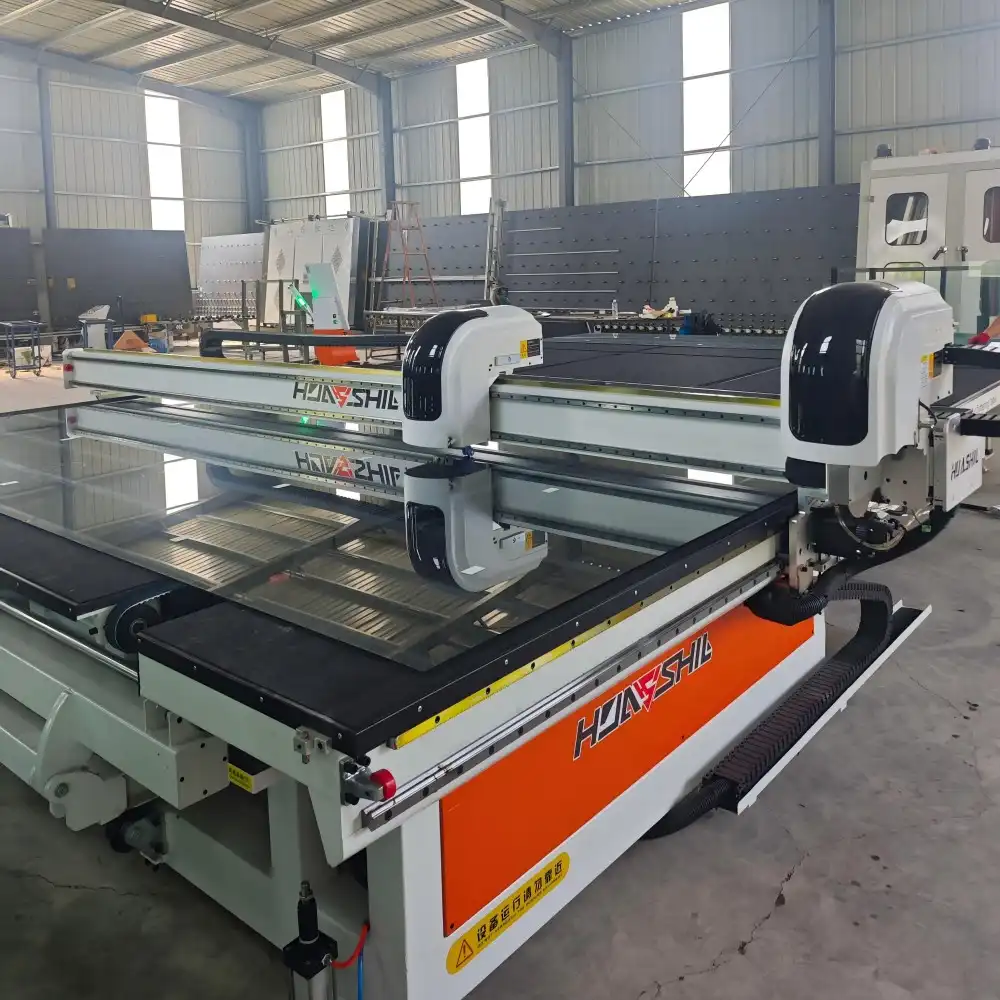
Compared to small tools, they greatly speed up production. Automated systems can keep processing sheets without stopping because of tiredness, which is a problem for human workers. Modern models, like the HSL-CNC2721, have an air-floating system that makes it easy for the glass to move across the cutting table. This cuts down on the time needed to move the glass from one action to the next. Operators can control the cutting process from a safe distance thanks to the remote control feature. This makes the workplace safer while keeping productivity high.
Precision and Waste Reduction
Cutting accurately has a direct effect on your bottom line because it lowers the amount of scrap you have. Precision systems that can achieve 0.1mm allow makers to get the most out of each sheet of glass. This is especially helpful when working with expensive speciality glass or custom building panels. Curtain wall makers need this level of accuracy to make sure that all hundreds of panels for a single job are the same size and shape.
Measurement mistakes that happen when setting up by hand are avoided by the automatic edge-finding function. The system finds the edges of the sheets and changes the cutting pattern to account for any small differences in where the sheets are placed. In high-volume settings where setup time adds up over several shifts, this feature is especially useful.
How to Choose the Best Mobile Glass Cutter for Your Manufacturing Needs
The best way to pick the best mobile glass cutter for your business.
Evaluating Technical Specifications
Your production needs should guide the tools you choose. The HSL-CNC2721 can handle glass thicknesses between 2 and 19 mm, which is thick enough for most building and furniture uses. If a manufacturer only works with lighter glass, cutting speed might be the most important thing to them. But if they work with thicker building glass, they need cutting heads that are stronger and can handle more pressure.
Which jobs your building can take on depends on the largest piece that can be cut. Standard architectural glass sheets and big furniture panels can fit in a 2700x2100mm capacity, but curtain wall fabricators who work with large panels may need special designs. Before you finalise the requirements, you should figure out what the standard and largest sheet sizes are for all of your product lines.
Software Integration and Optimization
Cutting optimisation software has a direct effect on the costs of materials and the schedule for output. The Optima software that comes with the HSL-CNC2721 looks at customer orders and makes cutting patterns that reduce waste while putting the production process first. Modern systems can directly load CAD files, which gets rid of the need to enter data by hand and cuts down on making mistakes.
Think about how the new tools will work with the production control systems that are already in place. Some manufacturers need to run their machines on their own, while bigger facilities can benefit from being connected to a network, which lets them centrally watch production and schedule jobs across multiple cutting stations.
Reliability and After-Sales Considerations
In work settings, the costs of equipment downtime add up very quickly. Having CE and ISO9001 certifications means that the company follows quality management standards. However, you should find out more about the guarantee terms and the availability of extra parts. Ask possible providers how long it takes for them to respond to service requests and if they keep parts in stock in your area.
The total cost of ownership, which is more than just the buying price, should be looked at by procurement teams. Think about how much it will cost to install, how long it will take to train operators, how often it needs to be serviced, and when to replace consumables. A slightly more expensive system that is more reliable and has lower running costs is often a better deal over the course of its life.
Comparing Performance Across Manufacturers
In different production situations, the equipment needs to have different features. For high-volume architectural glass makers, cutting speed and delay are very important. This means that parts must be available and reliable. Custom furniture makers put a lot of value on being flexible and being able to handle different cutting patterns quickly. Shower door makers have methods that are designed to cut standard sizes over and over again while allowing for quick changes.
When looking at your choices, ask to see examples of cuts made with the types of glass and shapes you usually use. This shows how it works in real life, which specs sheets can't do, especially when it comes to edge quality and cutting speed with your unique materials.
Practical Guide: Using and Maintaining Your Mobile Glass Cutter
Tips for using and taking care of your mobile glass cutter.
Preparation and Setup Procedures
Installing something correctly sets the stage for its best performance. The cutting table needs to be on a flat surface so that the glass is supported evenly and the cuts are straight. Make sure all of the pneumatic lines give steady pressure, since changes in pressure can affect the quality of the cutting. For the air flotation device to work properly, it needs clean, dry compressed air. Put in the right filter and moisture removal tools upstream.
Operating Techniques for Optimal Results
With the 360-degree walking function on the remote control, operators can put themselves in the best position for seeing during complicated cuts. At the start of each shift, make test cuts on scrap material to check the state of the cutting wheels and the pressure settings. Adjusting the pressure may be needed for different types of glass. For example, toughened glass needs different settings than annealed glass.
The automatic pressure control system changes the cutting force based on the thickness of the glass. However, workers should keep an eye on the quality of the edges and change the settings if micro-chipping happens. Regularly clean the cutting board so that dirt and other things don't get in the way of the air float system or scratch the glass.
Maintenance Protocols
Set up a regular check plan that includes the most important parts. Cutting wheels need to be checked and replaced regularly based on the quality of the edge, not just at random times. To keep the movement even across the table's surface, the air-float system needs to be cleaned every so often. Follow the manufacturer's instructions for lubricating linear guides to keep them from wearing out too quickly.
Troubleshooting Common Issues
If the cuts don't go along the planned lines, check to see if there is dirt on the cutting table or worn-out guide parts. Edge quality that isn't constant is usually a sign of dull cutting wheels or wrong pressure settings. For the automatic edge-finding system to work correctly, the edges of the glass must be clean. Chips or dirt along the edges of the sheet can cause false readings.
Write down problems that keep happening and how to fix them so that your support team can learn from them. This organised method cuts down on the time needed to fix problems and finds trends that could mean that the equipment needs to be adjusted or the operators need to be retrained.
Market Insights: Top Mobile Glass Cutters of 2026
What are the best mobile glass cutters for 2024?
HSL-CNC2721 Automated Cutting System
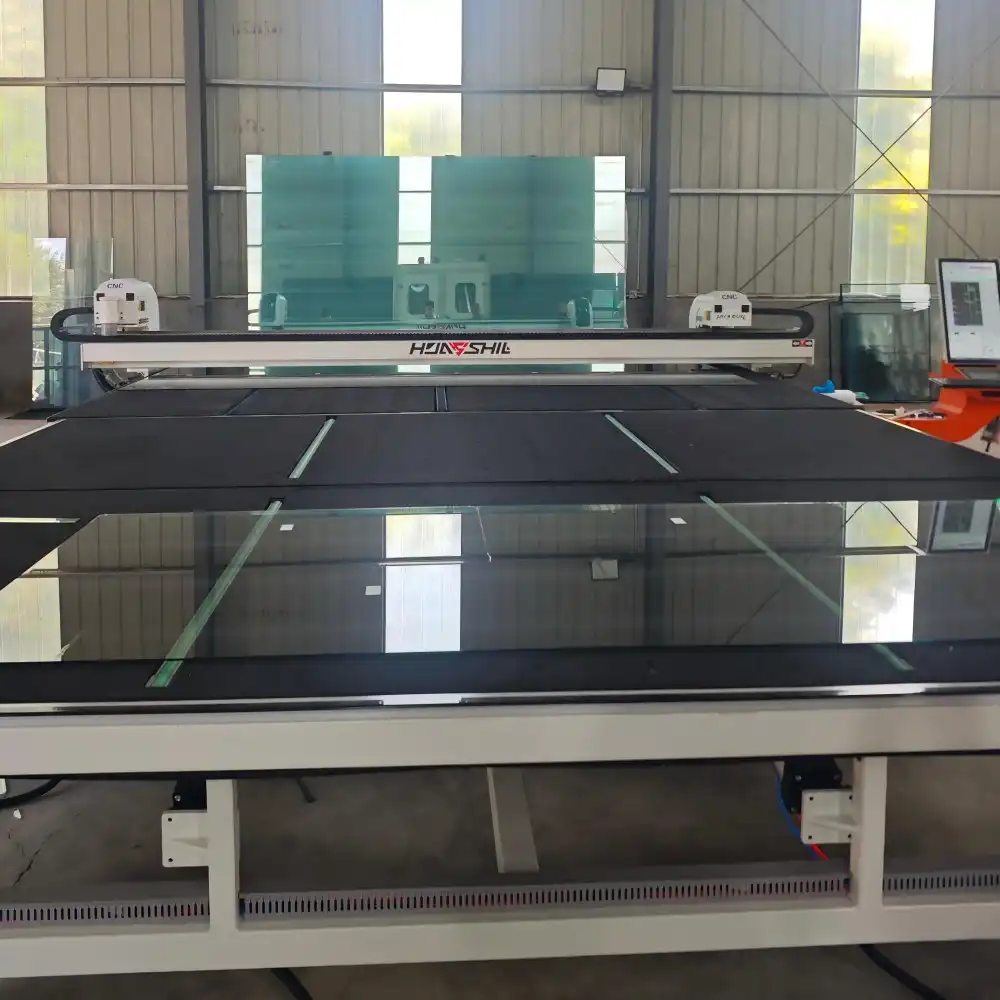
The HUASHIL HSL-CNC2721 is an example of advanced automation designed just for companies that make ornamental glass and furniture. It can cut common sheet sizes well with a cutting range of 2700mm x 2100mm, and the 2mm to 19mm thickness range is wide enough for most business needs. Intelligent building algorithms that make the best use of sheets help the Optima optimisation software interface cut down on material waste.
Auto-pressure control that changes the cutting force based on the thickness of the glass is one of the best features. It stops both missing scores and too much micro-chipping. The automatic edge-finding function gets rid of the need to measure by hand, which cuts down on the time needed to set up between jobs. The air float system helps the glass move smoothly, which is especially helpful when working with big or heavy sheets. Using a remote control makes things safer because it lets workers stay at safe distances while cutting.
Performance Benchmarks Across Leading Models
When looking at different cutting systems, the exact specs show if they can do work with very tight tolerances. Systems that are accurate to within ±0.1mm allow makers to meet strict design requirements and reduce the number of problems that arise during installation. Cutting speed varies a lot between models. More advanced systems can handle complicated patterns a lot faster than basic machines.
When a lot of things need to be made, durability becomes very important. Industrial-grade design guarantees uniform performance across multiple shifts, while consumer-grade tools may wear out faster when used continuously. Warranty coverage and approval standards like CE and ISO9001 are objective ways to tell how well a product is made and how committed the seller is to customer service.
User Feedback and Practical Performance
Production managers always say that dependability is their main worry. Systems that need to be recalibrated often are less valuable than ones that can keep the quality of the cuts the same over thousands of processes with little change. Programming ease has a big effect on output. For example, intuitive interfaces cut down on the time it takes to train new workers and reduce the number of mistakes that happen when setting up jobs.
The level of after-sales help is what sets good suppliers apart from great partners. When problems happen, production lines keep going thanks to quick expert help and easy access to spare parts. Before making a purchase, manufacturers should specifically ask where parts are kept and how long it usually takes for service to respond.
Purchasing Mobile Glass Cutters: Procurement Strategies and Logistics
Buying mobile glass cutters: strategies for buying and logistics.
Direct Manufacturer Relationships
Glass makers can get a lot of benefits from buying straight from manufacturers like HUASHIL. Capital equipment is usually cheaper through direct relationships than through dealer methods. This is especially important because these systems are big investments. Manufacturers can offer OEM configurations and customisation choices that are made to fit special production needs that standard models might not be able to meet.
When you buy straight from the mechanical team that made the equipment, the technical help is often better than what a distributor can offer. This is useful for setting up the machine, teaching operators, and fixing complicated problems that come up during output. Having a direct connection with a maker also makes it easier to get spare parts and improvements as production needs change.
Evaluating B2B Platforms and Distributors
Business-to-business (B2B) sourcing tools make it easy to compare prices from a number of mobile glass cutter manufacturers and providers. These sites put together technology specs, price data, and user reviews in ways that make initial research easier. But glass makers should check the qualifications of their suppliers and ask to speak directly with the factory before making big purchases.
Regional wholesalers have benefits, such as having parts in stock nearby and repair experts who know your equipment. This closeness cuts down on downtime when parts fail and speeds up the fixing of technology problems. Check to see if wholesalers have trained service staff or if they're just salespeople who don't know much about technology.
Contract Terms and Payment Structures
The terms of payment have a big effect on cash flow when buying major goods. Deposit plus final payment plans are popular. Usually, 30–40% is due up front, and the rest is due when the installation is finished or acceptance testing is done. When you buy something or sell something internationally, letters of credit cover both the buyer and the seller through banks.
Warranty terms should be carefully looked over for more than just how long they last. Comprehensive warranties cover parts, labour, and service visits. Limited warranties, on the other hand, might not cover important parts or charge extra for service calls. During talks, be clear about the availability and cost of spare parts. Some sellers offer low prices on tools but keep their profit margins high on replacement parts.
Logistics and Installation Planning
Delivery dates affect project schedules and plans for how much can be made. Standard setups may be sent out within a few weeks, but it can take three to six months from the time an order is placed until the system is fully operational. When deciding to buy equipment, you should think about how long it will take to ship, clear customs for foreign orders, and install.
The steps needed for installation depend on how complicated the system is. Simple machines may only need to be levelled and connected to utilities. Fully automatic lines, on the other hand, need to be fully integrated with other equipment and control systems. Plan to pay for installation services, training for operators, and test runs of your materials and goods to find the best options.
Conclusion
In conclusion, when choosing the right mobile glass cutter tools, you have to weigh the technical features against the needs of your business and your budget. Automated systems like the HSL-CNC2721 are much more accurate, use materials more efficiently, and use labour more efficiently than human processes. To make implementation work, you need to carefully look over the requirements, be honest about how much help you will need after the sale, and plan your purchases in a way that takes into account the total cost of ownership, not just the purchase price. Manufacturers of glass who take the time to go through this review process and build relationships with dependable sources will be able to compete on quality and efficiency.
FAQ
1. How can I extend the lifespan of cutting components?
Regular repair is necessary to make sure that equipment lasts as long as possible. Instead of waiting for cutting wheels to break completely, check them every day and change them when the quality of the edge starts to get worse. Once a week, clean the air filter system so that dust doesn't build up and make it work less well. Follow the manufacturer's instructions for lubricating linear guides. Skipping this simple job can lead to earlier wear that needs expensive repairs. Keep extra cutting wheels in controlled areas that aren't near water or high temperatures.
2. What performance differences exist between manual and automated systems?
When making thousands of cuts, automated systems always make the same precise cuts, while human tools depend on the skill and tiredness level of the person using them. Automation greatly speeds up production; a CNC system can handle complicated patterns three to five times faster than skilled workers doing the same work by hand. When optimisation software figures out efficient building patterns that can't be done by hand, a lot less material is wasted. Labour costs go down because one person can watch over automatic systems that do work that used to be done by several people, cutting things by hand.
3. What factors influence pricing for bulk equipment orders?
The number of units you order directly affects the price per unit, and you can get big savings if you buy more than one machine. Costs are affected by how much customisation is needed; normal setups ship faster and for less money than systems that need engineering changes. Prices are affected by when the goods are delivered. For example, makers may offer discounts for orders that fill in production gaps during slow times. Longer warranties, a parts inventory, and training are all part of after-sales service packages from well-known providers that are worth the extra money compared to unknown vendors with lower starting costs.
Partner with HUASHIL for Advanced Glass Cutting Solutions
Architectural fabricators, curtain wall manufacturers, and furniture makers who want to improve their production skills can buy automatic glass processing equipment from HUASHIL. Our HSL-CNC2721 automated cutting system is built for tough industrial settings and combines accuracy, dependability, and smart optimisation. Our equipment meets international quality standards and gives your business the performance it needs. It has CE and ISO9001 certifications to back it up.
We are aware that choosing capital tools is a big decision that needs to be carefully thought through. Our expert team gives you thorough specifications, performance demos, and application advice to make sure that the equipment fits your needs exactly. As a well-known company that makes mobile glass cutters, we keep a large stock of extra parts and offer quick technical help to keep production running smoothly. To talk about your glass cutting needs, email our buying experts at salescathy@sdhuashil.com. For both single machines and whole production lines, we offer personalised advice, thorough technical paperwork, and reasonable quotes.
References
1. Glass Manufacturing Industry Council. (2023). "Automation Trends in Architectural Glass Fabrication: 2023 Industry Report." Glass Industry Publications.
2. Thompson, R. & Martinez, J. (2023). "Precision Glass Cutting Technologies: Comparative Analysis of CNC vs. Manual Systems." Journal of Manufacturing Technology, Vol. 45, No. 3, pp. 127-145.
3. International Glass Processing Association. (2024). "Best Practices for Industrial Glass Cutting Equipment Selection and Maintenance." IGPA Technical Standards Committee.
4. Chen, L. (2023). "Optimizing Material Utilization in Glass Manufacturing Through Advanced Nesting Algorithms." Industrial Automation Quarterly, Spring 2023 Edition.
5. Building Materials Equipment Manufacturers Association. (2024). "Total Cost of Ownership Analysis for Glass Processing Equipment." BMEMA Research Division.
6. Rodriguez, M. & Kim, S. (2023). "Safety and Efficiency Improvements in Automated Glass Cutting Systems." Occupational Safety in Manufacturing, Vol. 18, No. 2, pp. 89-106.