




A glass cut outs machine is an important purchase for companies that want to be precise and run their business efficiently. These automatic systems use cutting-edge CNC technology and special cutting tools to get exact results in a wide range of situations, from making windows for buildings to making parts for cars. Modern automatic cutting equipment is different from old-fashioned human methods because it can handle complicated patterns while keeping tight tolerances. As the need for production rises around the world, plant managers and technical decision-makers who are looking at upgrading equipment or adding new production lines need to know more about these systems' technical skills and strategic benefits.
How Glass Cut-Out Machines Work to Achieve Precision Cutting
Core Technologies Behind Automated Glass Processing
Several precise technologies work together in automated glass cut-out machines. Diamond-tipped cutting wheels are still the most common way to cut building and automobile glass because they can make clean cuts through glass that is 2 mm to 19 mm thick. CNC-controlled placement systems move cutting heads along pre-set lines that can be repeated within ±0.1mm, which makes sure that the dimensions stay the same from one production run to the next.
Waterjet systems are useful for specific tasks that need complex shapes to be cut out without putting heat stress on the material. This is especially true for parts made of toughened glass. Laser-assisted scoring makes controlled fracture lines for certain types of materials. Modern machines combine these cutting methods with automatic material handling, which gets rid of the human error that used to make measurements less accurate.
Software Integration and Quality Control Systems
A big part of getting the most out of material yield and cutting accuracy is using optimisation tools like Optima. These programmes look at new orders, figure out the best way to nest things to cut down on waste, and make toolpaths that machines can read. Real-time sensors keep an eye on cutting pressure, the state of the blade, and where the material is placed. This lets changes be made right away that keep quality standards high throughout production cycles.
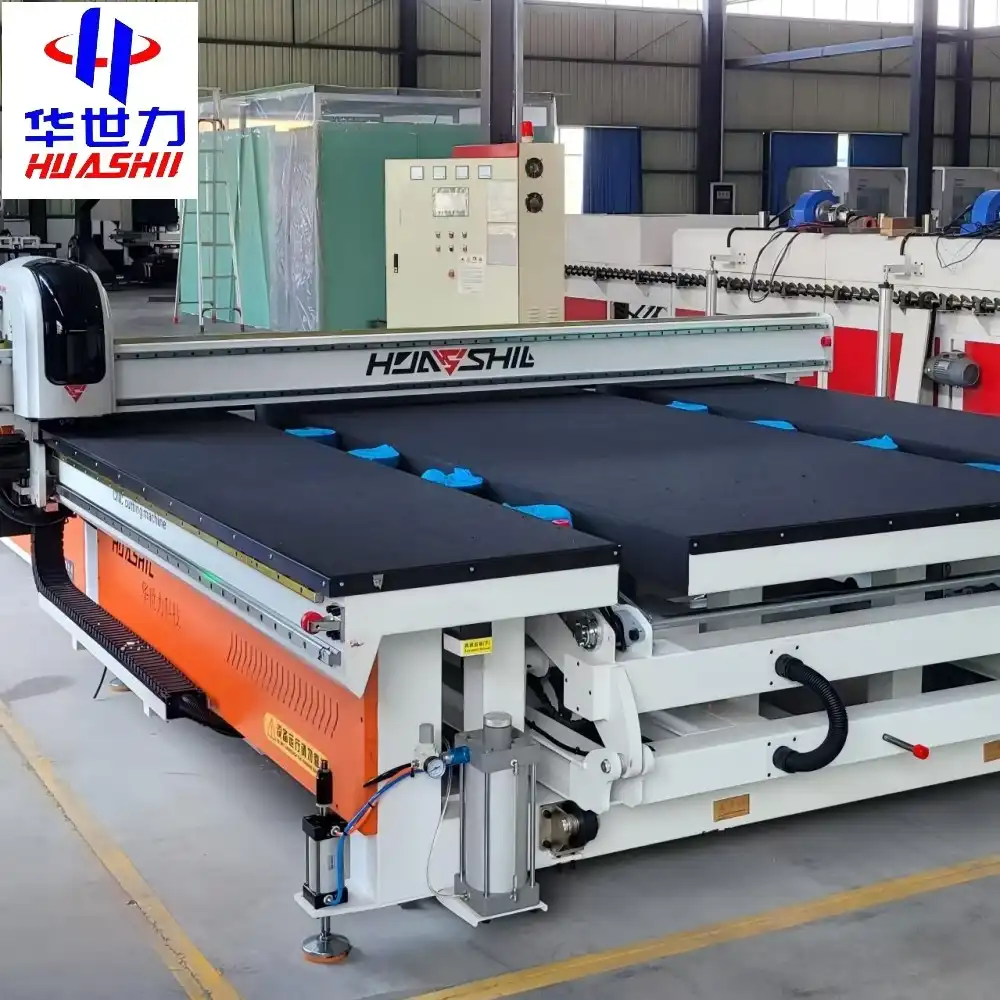
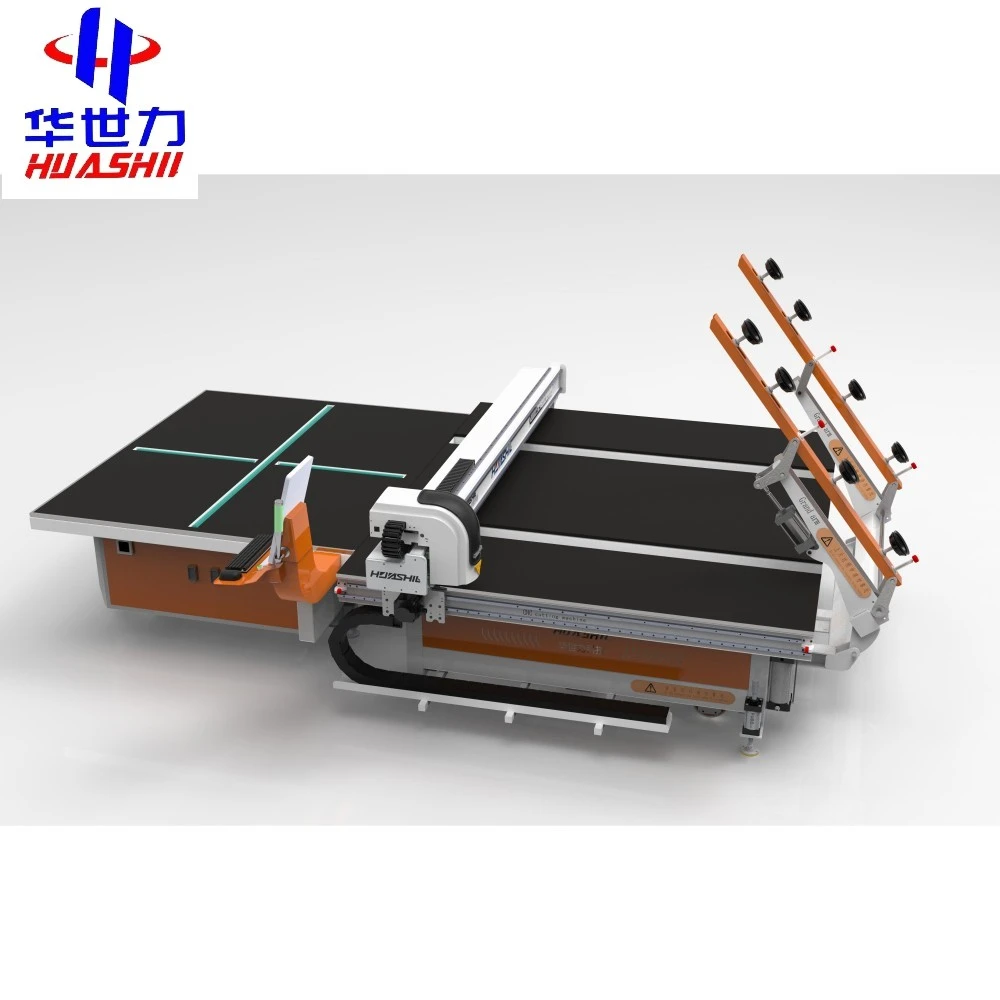
The HSL-YTJ2721 model is a good example of this combination because it has automatic edge-finding technology that fixes problems caused by changes in where the materials are placed. Its automatic pressure control system changes the cutting force based on the thickness and type of glass. This stops chip-outs and micro-cracks that weaken the structure. During processing, air flotation devices hold up big panels spanning up to 2700x2100mm, so they don't touch the surface and cause scratches or movement.
Precision Components and Calibration Mechanisms
For mechanical accuracy to start, machine frames must be stiff and not bend when they are under load. With linear guides and servo-driven joints, the machine stays in the same place throughout the whole working area. The cutting head units have quick-change tools and automatic depth adjustments, so they can work with different sizes of glass without any extra work from the user.
Laser measurement systems and standard test patterns are used in regular calibration processes to check the correctness of the dimensions. These procedures for verification make sure that equipment stays within certain limits, which directly supports quality licenses needed in controlled industries. For compliance reasons, manufacturers that work with the building and automobile industries value this recorded accuracy the most.
Advantages of Using Glass Cut-Out Machines in Industrial and Commercial Settings
Accuracy and Consistency Benefits
When a glass cut outs machine operates automatically, there is no room for error that comes with hand scoring. CNC controls can repeat patterns that have been set in a way that human workers can't, even over long production runs. When making curtain wall systems, this stability is very important because mismatched dimensions lead to fitting issues and expensive changes in the field.
Data from automatic quality control systems shows that failure rates are usually less than 1%, while they are between 3 and 5% for similar tasks that are done by hand. Less trash directly improves material usage, which is especially important now that the price of glass is going up. Plant managers who keep track of how well all of their equipment works say that replacing semi-automated equipment with fully integrated cutting lines makes a big difference.
Efficiency and Throughput Improvements
Automation greatly boosts the amount of work that can be done. Automatic loading systems get rid of the time it takes to move materials by hand, and suction cup conveyors move produced goods safely to activities further down the line. Modern models, like the HSL-YTJ2721, have a 360-degree remote control walking feature that lets operators run multiple machines at once, making the best use of workers' time.
By making cutting programs directly from CAD files or customer orders, optimisation software cuts down on the time needed for setup. This improved process speeds up job changes, which is especially helpful for companies that make a lot of different products for the custom glass furniture and home decor markets. When compared to regular semi-automated tools, output usually goes up by 40 to 60 per cent.
Cost Savings and Return on Investment
Investing in equipment pays off in more ways than just reducing the need for workers. When you lose less material, you save money right away. Usually, optimisation methods increase yield by 8–12% compared to human nesting. Less redoing due to mistakes in measurements saves time and materials. Warranty claims and customer service costs go down when the number of defects goes down.
Being energy efficient is also good for the economy. Servo-driven systems today use less power than hydraulic systems did in the past. In fact, some sites have reported 20–30% energy savings. With proper upkeep, these operational savings add up over the 10-15 years that the equipment lasts, making the total cost of ownership estimates much more accurate.
Sustainability and Environmental Considerations
Environmental compliance is becoming a bigger factor in purchasing choices. Goals for sustainability are supported by automated systems that use materials precisely, which reduces the amount of trash that ends up in landfills. Waterjet equipment with recycling methods uses less water, which is good for places that don't have a lot of it.
CE approval, which is required for tools like the HSL-YTJ2721, makes sure that it meets European safety and environmental rules. This makes it easier for companies that sell to customers in other countries to get into those markets. ISO 9001 approval shows that a company has quality management systems that help with tracking environmental performance and making improvements all the time.
Types of Glass Cut-Out Machines and Their Suitability for Different Business Needs
Manual and Semi-Automated Options
Low-volume businesses that make fewer than 50 pieces a day can use entry-level glass cut outs machines. These systems need skilled workers but don't require a lot of money up front. Adding powered cutting tools or simple pattern followers to semi-automated equipment makes it more consistent while still requiring a lot of human work.
A lot of small furniture shops and custom glass shops start out with semi-automated systems and then move up to fully automated systems as their production rates rise. This step-by-step method controls capital costs while building the practical knowledge needed to get the most out of advanced technology.
CNC Automated Cutting Systems
For medium to large production plants, fully automated CNC systems are the norm. Material handling, cutting, and quality control are all built into these tools so that they work continuously. Models that can handle panels up to 2700x2100mm are good for architectural glass uses, and special designs are good for curtain wall parts that are too big to fit on standard models.
Architectural glass makers and window manufacturers want the HSL-YTJ2721 design to have certain features. Automatic filling gets rid of slowdowns that happen when shifts change or when big panels need to be processed. The air-float device keeps the surface of low-iron and coated glasses from getting damaged in places where looks are important. When placing big sheets, using a remote control makes the process safer.
Specialized Technologies for Unique Applications
Manufacturers who work with toughened glass or need to make detailed cuts that can't be done with mechanical scoring use waterjet cutting systems. These systems work at pressures higher than 60,000 psi and can cut through glass, stone, and composite materials without leaving any hot spots.
Fabricators of sintered stone can use diamond wire saws and waterjets to work with the very hard and brittle manufactured stone products they work with. Even though the starting cost is higher than for regular glass-cutting tools, manufacturers need speciality equipment to expand into high-end surfaces for cooking and bathroom uses.
Maintenance, Safety, and Common Challenges in Using Glass Cut-Out Machines
Preventive Maintenance Requirements
Systematic repair plans for the glass cut-out machine keep cuts accurate and make tools last longer. Every day, checks are done to see how the cutting wheels are doing, how much oil is in them, and that the sensors are working. Drift is found in weekly calibration checks before it affects the quality of production. As part of the monthly service, the balance is checked, the belt tension is adjusted, and all air parts are carefully inspected.
Changing the cutting wheels is the most common repair job. Watching cutting force data can help you guess when wheels will wear out, so you can change them before the quality goes down. Having cutting wheels, suction cups, and standard sensors on hand as extra parts cuts down on downtime when parts need to be replaced.
Safety Protocols and Operator Training
Processing glass comes with its own risks that need to be managed by strict safety rules. Personal protective equipment, like gloves that won't cut, safety glasses, and shoes with steel toes, is the basis of job safety. Machine guarding keeps people from touching moving parts while the machine is running.
Emergency stop methods, lockout-tagout rules for maintenance, and the right way to handle materials should all be covered in training classes. Modern systems like the HSL-YTJ2721 have 360-degree remote controls that let workers stay at safe distances while loading materials. This lowers the risk of getting hurt when handling big panels.
Common Operational Issues and Solutions
Most of the time, problems with edge quality are caused by old cutting wheels or wrong pressure settings. Most edge problems can be avoided by checking the wheels regularly and adjusting the pressure. When chips or tiny cracks show up, checking the cutting settings right away generally shows what needs to be done to fix the problem.
Dimensional precision shift shows that the machine needs to be calibrated or is wearing out. By measuring produced parts against specs in a planned way, problems with accuracy can be found early on. Software bugs can sometimes stop output, so having quick access to technical help is very important. When looking at equipment providers, manufacturers should check to see if help is available, how long it takes to respond, and if there are enough parts on hand.
How to Choose the Right Glass Cut-Out Machine for Your Business
Assessing Production Requirements
A thorough study of output is the first step in choosing a glass cut outs machine. Figure out the daily flow needs, taking into account times of high demand and expected growth. Write down the usual thicknesses of glass—equipment that can handle 2–19 mm should be enough for most building uses, but specialty goods may need wider ranges. Make a list of the cut complexity and decide if simple rectangular cuts are enough or if more complex forms call for more advanced tools.
The level of mechanisation is directly related to the amount of production. Businesses that process less than 100 panels per day might not need fully automated systems, but businesses that process more than 300 panels per day need automation to meet their capacity needs efficiently. Window factories and curtain wall installers usually work with enough products that technology makes good financial sense.
Key Technical Specifications to Compare
Project appropriateness is based on the largest glass size. Most building uses can be met by machines that can handle 2700x2100mm panels, but jumbo setups may be needed for curtain wall parts that are too big. Cutting speed and setting accuracy have a direct effect on quality and productivity. Compare the specs of different models that are competing with each other.
The features of optimisation software have a big impact on how well materials are used and how efficiently programmes are run. Check to see if the software can work with current business tools or if it needs to be run on its own. Automatic loading, pressure control, and edge-finding functions make things more consistent and require less work, which is why high-volume businesses can afford to pay more.
After-Sales Support and Total Ownership Costs
How quickly technical help responds and how easy it is to get replacement parts have a huge effect on working continuity. When makers' equipment breaks down, they lose production and can't meet their delivery obligations. Check with your providers to see if they keep parts in stock in your area and what the normal shipping times are for important parts.
Warranty terms are very different. Most warranties cover you for one year, but for mission-critical technology, an extended warranty may be worth it. Training programs help users get the most out of their tools and avoid mistakes that can void guarantees. Check to see if sellers include on-site installation help and training for operators in the buy agreements.
OEM and Customization Considerations
Curtain wall designers and system builders often need setups that are made just right for their production processes. Companies that offer OEM and ODM help give customers more options for specific uses. With quick-turn prototype development, you can try custom setups before committing to full production systems.
Some customisation choices could be special handling for coated glass, connecting to existing lines, or changing the way the controls work. Engineering managers should talk to potential sources early on in the planning process to find out what kinds of customisation are possible and how much they will cost.
Conclusion
To cut glass precisely, you need a glass cut outs machine that is both technically advanced and reliable in its use. Modern glass-cutting machines provide the accuracy, effectiveness, and uniformity that architectural makers, car providers, and furniture producers need to compete effectively. Automated systems with CNC controls, optimisation software, and combined material handling change the cost of production while still meeting high-quality standards.
To choose the right tools, you need to carefully look at the production needs, technical specs, and total costs of ownership. When you buy CE and ISO 9001-approved equipment from well-known brands, you can be sure of its performance, safety, and long-term support, which keeps your business running and helps you make money.
Frequently Asked Questions
1. What glass thickness can automated cutting machines process?
Most industrial glass cutting machines handle thicknesses between 2 mm and 19 mm, which is wide enough for most uses in architecture, cars, and furniture. For thick laminated parts or thin display glass, these lengths can be made longer with special tools. The HSL-YTJ2721 works in this whole range, so it can meet a wide range of production needs without the need to change any equipment.
2. How does automatic edge-finding improve cutting accuracy?
Automatic edge-finding systems use sensors to find the exact position of the glass on the cutting table and adjust for changes in placement. This feature gets rid of the need to align things by hand while still making sure that the preset cutting lines match where the material is located. When compared to hand alignment methods, gains in accuracy usually cut dimensional mistakes by 30 to 50 percent.
3. What maintenance schedule do glass cutting machines require?
Daily inspections verify the glass cut-out machine cutting wheel state and oil levels. Dimensional precision is kept up with weekly testing checks. As part of the monthly thorough service, the alignment is checked, and all the parts are carefully inspected. Following planned repair plans can make equipment last longer than 10 years and keep the quality of the cuts throughout its use.
Partner with HUASHIL for Advanced Glass Cutting Solutions
Shandong Huashil Automation Technology has tested automated tools and has a lot of technical know-how to help you with your precise glassworking needs. Architectural makers and window manufacturers trust our HSL-YTJ2721 glass cut-out machine model's automatic loading, pressure control, and edge-finding features to make sure consistent, high-quality work.
As an experienced glass cut-out machine manufacturer, we offer quick technical help and spare parts that are easy to find. Our engineering team works with clients all over the world to find the best answers for their unique business problems.
Get in touch with our expert sales team at salescathy@sdhuashil.com to talk about your production needs and find out how our glass cut outs machine solutions can help you run your business more efficiently and make better products. We give you full specifications, an ROI analysis, and choices for customization that are unique to your manufacturing goals.
References
1. Smith, J. & Anderson, R. (2023). Automated Glass Processing Technologies: Engineering Principles and Industrial Applications. Industrial Manufacturing Press.
2. Chen, L. (2022). "Precision Control Systems in CNC Glass Cutting Equipment," Journal of Manufacturing Technology, 45(3), 178-195.
3. European Committee for Standardization (2023). Safety Requirements for Glass Processing Machinery: EN 12543 Standards. CEN Publications.
4. Thompson, M. (2024). Total Cost Ownership Analysis for Industrial Glass Fabrication Equipment. Manufacturing Economics Institute.
5. International Glass Association (2023). Best Practices for Automated Glass Cutting Operations. IGA Technical Report Series.
6. Wilson, K. & Patel, S. (2022). "Material Optimization Algorithms in Glass Fabrication," Advanced Manufacturing Systems, 18(2), 234-251.