




A mobile glass cutter machine is a specialized piece of equipment for making accurate cuts on architectural glass panels at scale. Unlike stationary systems, transportable configurations enable fabricators and construction teams to produce large-format glass on variable production layouts at job sites. The machines serve architectural applications ranging from curtain wall glazing to structural window systems. A glass cutter for architectural applications may cut with a precision of ±0.1mm and handle panels up to 6100×3300mm, significantly reducing rework, waste, and reliance on manpower compared to manual scoring.
Understanding Mobile Glass Cutter Machines in Architectural Projects
What These Machines Are and How They Work
Architectural glass cutting machines function by moving a diamond or tungsten carbide scoring wheel over the glass along a pre-programmed route. The score line produces internal tension, which enables a clean separation without chipping. Most of the automated versions use a CNC-controlled motion system, along with real-time pressure adjustment and cutting fluid supply, to guarantee consistent results in huge glass sheets.
Key Features That Matter in Construction Settings
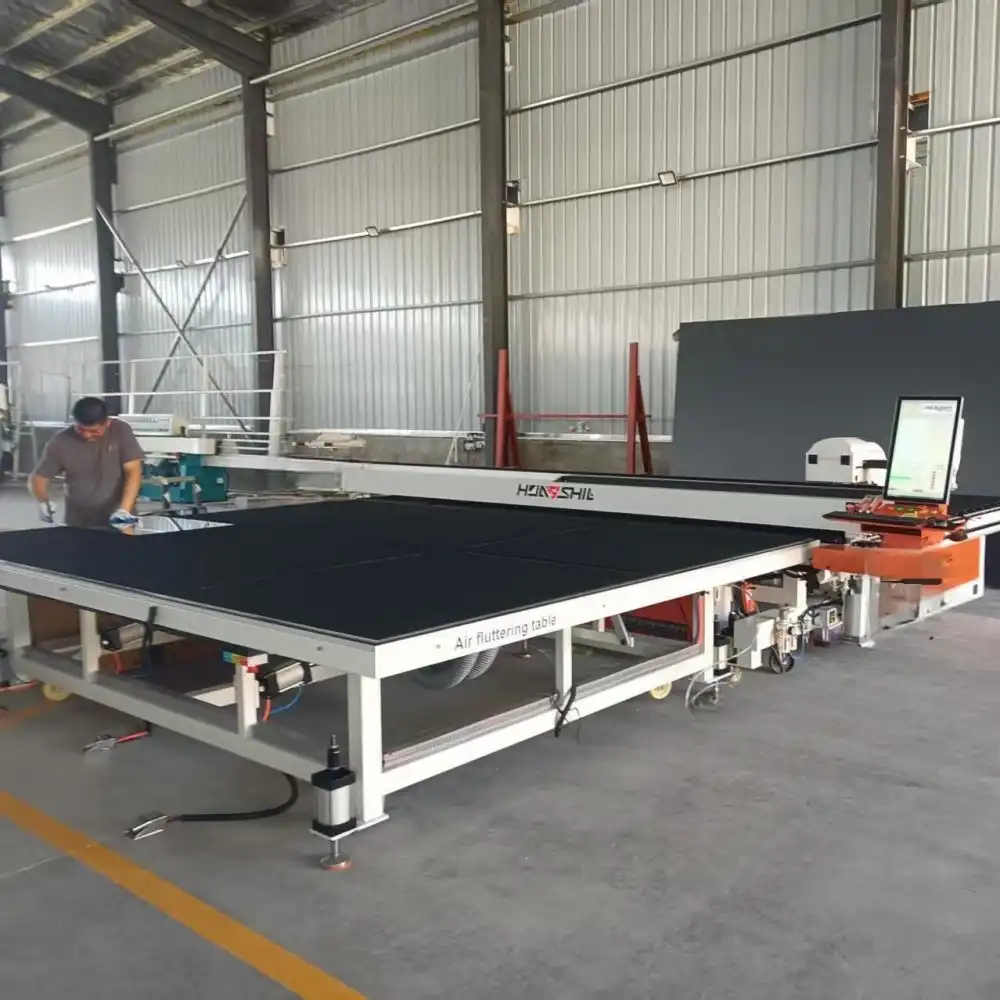
The usefulness of these computers in architectural settings is driven by portability, large-panel capability, and software-driven optimization. For example, the HUASHIL HSL-LSX6133 model has a maximum glass size of 6100×3300mm and has above- or below-ground rail choices to suit various floor designs. The continuous flow from loading table to cutting table to breaking table minimizes human handling between stages of the operation.
Why Architectural Projects Depend on Glass Cutting Automation
Architectural glass represents more than 70% of flat glass used in commercial buildings, according to the Glass Association of North America. Manual cutting cannot match the productivity, precision, or reproducibility requirements of curtain wall manufacturing or big window production. Automated glass cutting systems, when combined with optimization software, may eliminate material waste by up to 15–20%, directly affecting the bottom line of a project.
Choosing the Right Mobile Glass Cutter Machine for Architectural Use
Core Selection Criteria for B2B Buyers
In terms of selecting a mobile glass cutter machine for architectural work, there are four quantifiable elements to consider: cutting accuracy, maximum panel size, throughput speed, and software capabilities. Together with the Optima optimization program, which automatically generates the most material-efficient cutting arrangement. This decreases off-cut waste and the amount of glass used per project, which is important for plant managers running high-volume manufacturing lines.
Comparing Equipment Configurations for Different Project Scales
Not every project will have the same footprint or output need. The HSL-LSX6133 is configured as a 2+2 station machine and may be modified to suit the production requirements. Each side has six gantry arms to provide cut stability for big panels. This is a necessary structural support for curtain wall integrators working with panels more than 3000mm in width since it prevents scoring mistakes due to flex.
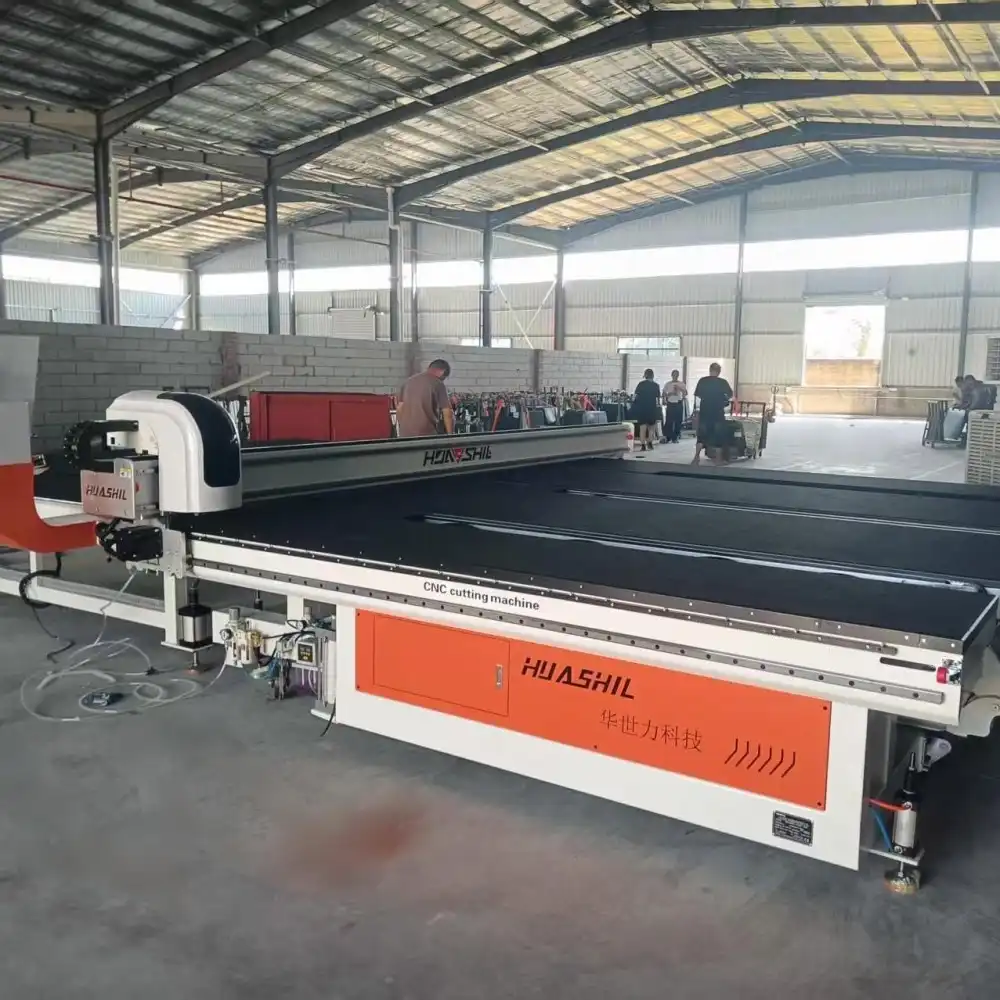
This is how the primary specifications stack up against buyer priorities:
- Loading table: Large panels up to 6100×3300mm may be easily loaded with minimum manual placement, minimizing manpower at the input stage.
- The CNC-guided scoring path on the cutting table automatically adjusts the pressure to provide a constant depth throughout the whole width of the panel.
- The breaking table turns scored panels into clean completed pieces, completing the three-step procedure in one continuous operation.
- These three linked tables enable manufacturing operations to function at larger volumes without a proportionate increase in staff. The ratio is a key investment motivator for a production director looking at total cost of ownership.
Mobile vs. Stationary vs. Manual — A Practical Comparison
Manual scoring tools may be ported, but they lose consistency. CNC glass cutting tables may be stationary, which means great accuracy but fixed floor space and pre-cut transit logistics. The HSL-LSX6133 mobile or semi-mobile automated glass cutting line offers the best of both worlds – it can handle big panels with CNC precision, while also adapting to site-specific layouts with variable rail systems. And in the U.S. market for architectural glass fabricators, where strict project-based delivery schedules are the norm, such flexibility is a deal-breaker.
Operational Guide: Using and Maintaining Glass Cutting Machines on Architectural Sites
Pre-Operation Setup and Calibration
Operators should check the rail alignment and condition of the cutting wheel before each production run and enter the work file into the Optima software interface. The program develops an efficient cutting plan considering the dimensions of the glass sheet and the sizes of the pieces needed, reducing material waste before the first score. Calibration tests on the 2+2 station configuration should validate the gantry arm arrangement on both sides of the cutting table.
Routine Maintenance to Extend Machine Life
Consistent maintenance usually eliminates unforeseen downtime in glass cutting processes. A weekly checklist should contain:
- Check all six gantry arms on either side for wear or misalignment.
- Clean and lubricate the rails of the cutting wheel carriage.
- Check cutting fluid levels and nozzle flow for uniform distribution.
- Check the software cut file integrity at the start of each shift.
By paying frequent attention to these things, you will maintain the mobile glass cutter machine at rated production levels and increase the service period between major component replacements.
Safety Protocols for Glass Processing Environments
There are certain concerns with glass cutting environments: airborne glass particles, sharp edge exposure, and panel handling accidents. Operators should wear impact-certified safety eyewear, cut-resistant gloves according to EN388 Level D, and steel-toe shoes. The HSL-LSX6133 has a three-table design that physically divides the loading, cutting, and breaking zones, reducing crowding near active cutting zones and limiting operator contact with moving parts.
Market Insights: Pricing, Procurement Options, and Supplier Evaluation
Understanding Price Ranges and What Drives Them
The prices of automated glass cutting lines vary greatly, depending on the panel capacity, software features, and the amount of automation. Entry-level semi-automatic cutters are available for about $30,000, but a complete CNC line with large-format capability, multi-station setups, and integrated optimization software like Optima represents a greater capital commitment. For architectural glass fabricators, the statistic that matters is not only first-cost but cost per cut panel at full production volume.
Procurement Channels and Sourcing Considerations
U.S. customers often look for glass cutting machines on B2B portals, manufacturers’ websites, and trade exhibitions. HUASHIL participates in the main shows for the glass sector where it demonstrates its machinery in operation and offers technical advice services. Direct factory sourcing provides procurement managers the opportunity to ask for OEM specifications, negotiate delivery conditions, and check manufacturing capabilities before placing an order. Payment arrangements are usually deposit + final payment. A letter of Credit may be arranged for foreign transactions.
Evaluating Supplier Credibility
Buyers should ask the glass cutting machine provider for documented machine specifications, reference installation instances, written warranty conditions, and replacement parts lead times. HUASHIL offers procurement and finance teams technical documents and commercial proposals for engineering assessment. They also provide after-sales support such as replacement parts delivery and remote technical help, which is an important concern for U.S.-based companies that cannot afford lengthy downtime.
Advanced Insights: Future Trends in Architectural Glass Cutting Technology
Automation and AI-Assisted Precision
Glass cutting technology is becoming more and more integrated with machine hardware and data-driven software. AI-assisted optimization algorithms can evaluate prior cut patterns, discover discrepancies in the material, and alter score settings on the fly. The HSL-LSX6133 is supplied with Optima software, the current best practice for layout optimization, and future versions will integrate predictive maintenance warnings and adaptive cutting profiles.
Reducing Waste and Improving Site Efficiency
Material waste is one of the major controllable cost elements in the manufacturing of glass. Optimization software that can refigure cutting patterns depending on remaining sheet inventory may decrease waste rates substantially. With a three-table process and adjustable station configuration, fabricators have more control over throughput without increasing their physical footprint.
Scalability for Growing Fabrication Operations
For glass fabrication operations that want to boost capacity, equipment with flexible station configurations (such as the 2+2 arrangement on the HSL-LSX6133) may provide a way to scale up without replacing the whole line. As project volumes grow, integrators building multi-phase construction projects may add more stations, conserving early capital while retaining production flexibility.
Conclusion
Architectural glass manufacturing needs accuracy, speed, and consistency at every level of the process. A properly configured mobile glass cutter machine will handle these criteria from the first scored line to the last shattered fragment. With the loading, cutting, and breaking table arrangement, Optima software integration, and flexible 2+2 station architecture, HUASHIL HSL-LSX6133 delivers the whole processing sequence. For plant managers and engineering teams contemplating their next equipment purchase, the ability to comprehend how these criteria translate to daily production and material savings is the basis of a smart procurement choice.
FAQ
1. Can the HSL-LSX6133 handle oversized architectural glass panels?
Yes. The HSL-LSX6133 accepts a maximum glass size of 6100×3300mm, which covers standard oversized panels used in curtain wall and structural glazing projects. Its six gantry arms per side provide the structural support needed to process large panels without deflection during scoring.
2. What maintenance does a glass cutting line require?
Routine maintenance includes weekly inspection of gantry arms, rail lubrication, cutting fluid checks, and software file verification. Most mechanical issues arise from deferred maintenance on cutting wheel carriages and rail alignment. Following a documented maintenance schedule keeps the machine at rated output and reduces unplanned repair costs.
3. How does a mobile glass cutting line compare to a manual scoring tool in accuracy?
A CNC glass cutting line achieves cutting accuracy of ±0.1mm consistently across a full production shift. Manual scoring tools depend on operator skill and fatigue, producing variable results that increase waste and rework. For architectural projects where panel tolerances are specified by design drawings, automated cutting is the only reliable option at production scale.
4. What is the Optima software used for?
Optima is the optimization software integrated with the HSL-LSX6133. It calculates the most material-efficient layout for each glass sheet before cutting begins, reducing off-cut waste and improving yield per sheet.
Get a Quote for HUASHIL Mobile Glass Cutter Machine
HUASHIL's HSL-LSX6133 is built for architectural glass fabricators who need large-panel capacity, software-driven precision, and a production-ready three-table workflow. As a trusted mobile glass cutter machine manufacturer, we support U.S. buyers with full technical documentation, commercial proposals, and after-sales service. Contact our team to request specifications or a project-specific quote. Reach us at salescathy@sdhuashil.com to start your inquiry today.
References
1. Glass Association of North America (GANA) — Glazing Manual, 2022 Edition.
2. Glass Industry Report: Architectural Flat Glass Market Trends in North America — Freedonia Group, 2023.
3. Automated Glass Processing Technology Review — Glass International Magazine, 2022.
4. CNC Cutting Systems in Flat Glass Fabrication — USGlass Magazine, 2023.
5. Material Optimization in Architectural Glass Production — Journal of Construction Engineering and Management, 2021.
6. Safety Standards for Glass Processing Equipment — Occupational Safety and Health Administration (OSHA), 2022.