




OEM customization covers much more than a change in machine size. A capable glass loader supplier adjusts the arm layout, handling method, control logic, safety functions, and line interfaces to match your glass range and your factory floor. I look at it this way: the machine should fit your process, not the other way around. In this article, I explain what customization includes, how it connects to your production line, how to judge a supplier, and how the HUASHIL automatic glass loader handles sheets up to 3660*2440 mm.
What OEM Customization Really Covers
Start With Your Glass and Your Floor Plan
Before I can start drawing, I need to learn the basics. Some of these are the type of glass, the biggest sheet size, the thickness, the weight, the direction of loading, the hourly output, the floor space, and the height of the ceiling. These numbers will be used to decide on all future designs. A sheet that is 3660 mm x 2440 mm needs more space and reach than a small shower door panel. Also, talk about how you want to grow. Maybe in a few years you'll want bigger sheets or a second line. The design should already allow for that. The engineer should also have a small layout sketch that shows where the columns and door widths go. It costs a lot more to change a frame that has already been sent than to account for room when the frame was being made.
Standard Parts, Options, and Real Engineering Changes
Not every change makes something new. Every machine has parts that are the same. You can get extra tools or other things when you have options. When engineers make changes to the design, they affect frame size, travel range, arm reach, mounting arrangement, PLC and HMI logic, electrical standards, and how computers talk to each other. Ask the glass loader supplier to sort each thing into one of these three groups. It's fairer for your engineers, purchasing team, and finance approvers to compare quotes if you have a clear scope document. If a quote only says "customized," write down more details before you agree to the deal.
Matching the Automation Level to Your Plant
For different kinds of plants, feeding them by hand, partially automatically, or fully automatically all work well. It might be easy for a small shop that sells furniture or shower doors to set up. If you work with big sheets of glass all day, it is best for an architectural glass business to be fully automated. You should think about the cost of labor, the amount of work that can be done, the return on investment, and the safety of the operators. Less pulling has to be done by hand when the machine loads itself, so sheets are less likely to fall, and workers are less likely to get tired. If someone buys from us, they can use these numbers instead of a sample leaflet to compare them to their own production data. That means the machine you buy will do the same work every day as your plant.
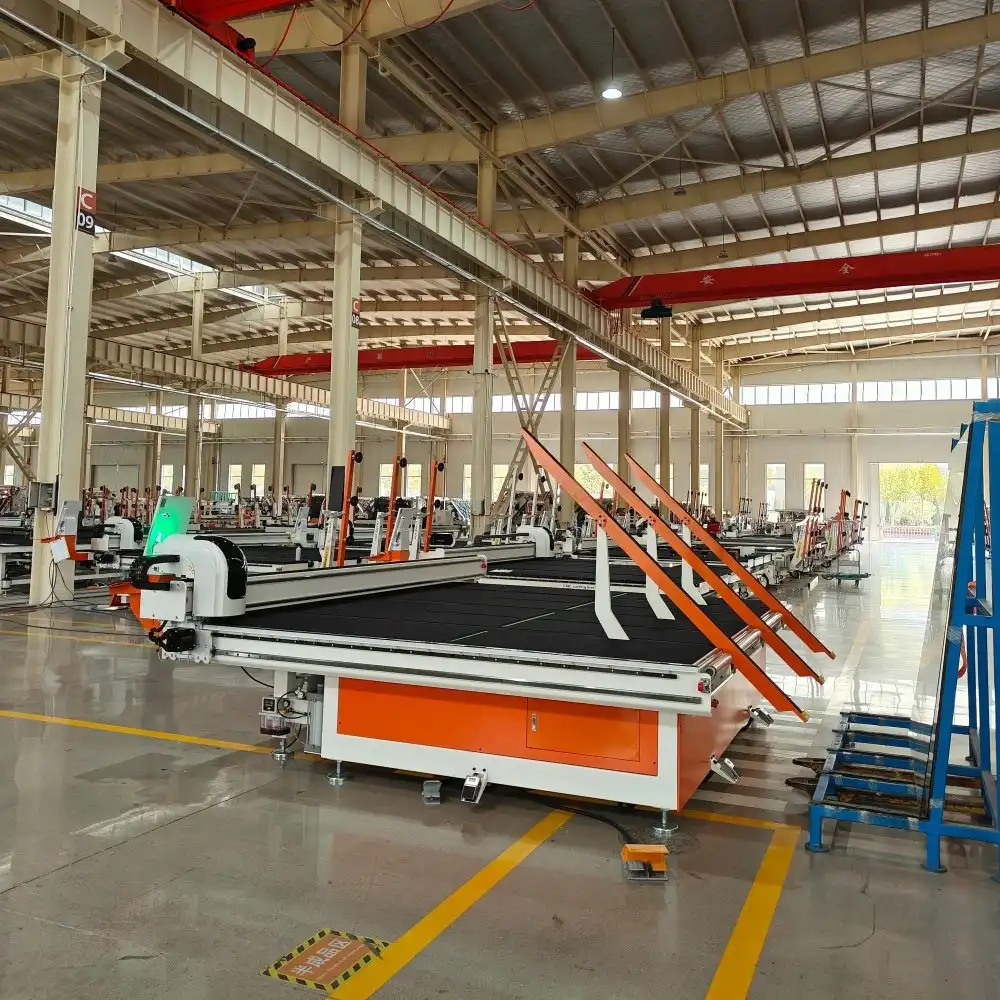
HUASHIL Automatic Glass Loader: Core Features
Automatic Loading by Three Grand Arms
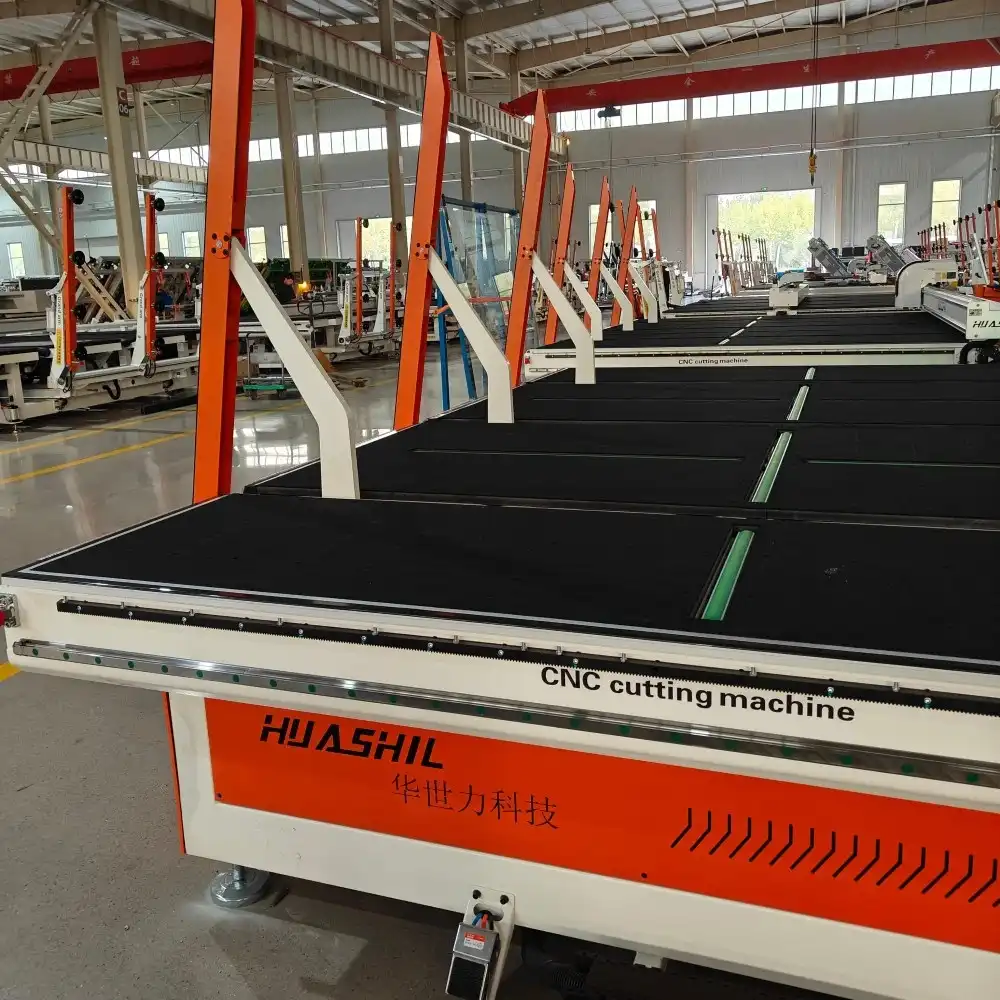
It has three big arms that automatically load glass. Big sheets don't need to be moved or lifted by hand as much, so loading cycles are more stable for them. When you look at different glass loader suppliers, you should find out how many arms they have and how they hold each sheet. How stable the item is to hold and how likely it is to break depend on these details. Also, when filling is done automatically, workers don't have to stand close to heavy glass as much. This is helpful in plants that move a lot of big sheets of glass during the shift. We can talk about how the arm arrangement works for your process and look at the sizes of your sheets.
Air Floating System for Gentler Sheet Movement
The sheet is lifted a little on a cushion of air by a method that floats it on air. After that, the glass will have less trouble moving across the table. This helps keep surfaces from getting scratched when things move quickly. It's also easier to move the sheet into place, which is helpful when you need to line up big panels before moving on to the next step. Building glass, furniture glass, and shower doors are all rejected based on how good the surface is, so even small movements can make a big difference. I always tell people who want to buy something to ask the seller how the machine keeps the glass safe while it's being transferred.
3660*2440 mm Capacity and 360-Degree Walking
The biggest piece of glass that can be used is 3660 mm x 2440 mm, which is 144 inches x 96 inches. In North America, glass shops are used to seeing sheets this big. It's helpful to be able to move and turn the machine in any direction because of this feature. We can make the loader fit your glass range and plant because these parts can be changed. Please send us your floor plan and list of sheets. What works as planned and what needs to be changed will be told to you by our engineers.
Integration, Safety, and Glass Quality
Connecting the Loader to Your Existing Line
It's not just a machine that works by itself; it's part of a line. The glass that comes out of this machine can be fed into kilns for tempering glass, washing systems, cutting lines, or lines for shielding glass. Your glass loader supplier must check that the links between the conveyors, the transfer heights, the rack places, the glass alignment, and the signs to the machines going up and down are all correct. Talk about the interlocks and what to do after a stop at the start. It took longer to set up two machines because the logic behind their signals was different. Before the product is made, both sides should bring drawings to a short technical meeting. This will help avoid most of these delays.
Safety Design for Heavy Glass
There are clear risks when working with glass, like sheets falling, bumping into each other, being cut, and moving in ways you weren't expecting. According to ISO 12100, the first step in good preparation is to look at the risks. You should also look at ANSI B11.19 for safety, NFPA 79 for electrical equipment in industrial machinery, and UL 508A for control panels in industrial machinery if you're in the US. Talk to your supplier about emergency stops, guarded zones, overload protection, and manual recovery modes. For everything, you should ask for proof. There may be extra rules that you need to follow before you place your order. Check with your local codes and insurance company to be sure.
Protecting Glass Quality During Transfer
Safety and product quality are closely connected in automated glass handling operations. Sudden acceleration, inadequate support, or excessive mechanical contact can cause edge chipping, surface scratches, and glass misalignment. When evaluating a glass loader supplier, buyers should examine how the equipment minimizes these risks during loading and material transfer. Our loader uses an air flotation system to reduce friction between the glass and supporting surfaces, while automatic loading helps minimize manual handling and unnecessary contact. Since coated and polished glass surfaces are particularly sensitive to damage, buyers should arrange sample testing with their most delicate glass products under manufacturer-approved operating conditions. It is also important to verify that glass sheets remain properly aligned and stable during transfer to downstream equipment. Recording glass breakage rates before and after installation can help quantify improvements in handling performance. These measurements provide valuable evidence for financial teams when assessing the equipment's operational benefits and return on investment.
Choosing a Supplier and Comparing Quotes
How to Evaluate a Glass Loader Supplier
Brochures and low prices don't tell you much. Check out their experience with similar projects, their application engineering skills, their testing methods, their technical documents, how they install things, how they train operators, and if they have spare parts available. People who want to export should also check the paperwork to make sure it is legal, look over the packaging, and look over the Incoterms. Ask the seller to explain the design choices it made and list any risks the project might have before you sign. If a glass loader supplier can answer these questions clearly, they likely know how to run projects well. You can ask for videos, installation guides, or a tour of the factory. If you can, talk to people who have bought from them before.
Reading a Quotation and Total Cost of Ownership
When comparing quotes, use the same criteria: the amount of supply, the cycle time, the interfaces, the tools, the tests, the guarantee, the spare parts, the shipping time, and the payment terms. People often talk about a deposit and the rest of the cash. There is a Letter of Credit used for orders from other countries. Finally, think about how much it costs to own it all, which includes setup, training, repairs, downtime, work, and broken glass. If the machine breaks down a lot or the sheets get ripped, it might cost more in the long run. Customization can be worth it if it gets rid of a slowdown or makes your line less likely to break.
From Technical Brief to Site Acceptance
When the workflow is clear, projects stay on track. The process starts with the info and plan on your glass. After that, any technical questions are solved, and the picture is given the green light. After that, the product is made, tested for plant acceptance, shipped, set up, put into service, and the user is trained. Before you start production, make sure everyone knows their jobs, what they will get out of it, how they can be accepted, and when they need to do it. Single robots usually decide what to do in a few weeks. In general, full line jobs take three to six months because of the technical review, site trips, and getting money cleared. Changes that are written down keep everyone safe and clear on what is expected of them.
Conclusion
It's not just a regular machine with bigger dimensions; an OEM glass loader is a way to handle things that was made to fix a problem in production. The best projects begin with clear floor plans and glass data. After that, they explain which parts come as standard, can be added, or are built in. Once it's set up, the loader will only work well if it works well with machines that come before and after it, the safety design is well documented, and the glass is moved carefully. This is shown by features like three-arm automatic filling, an air floating system, a 3660*2440 mm capacity, and 360-degree walking. Customization is based on what the real plant needs. When buyers look at glass loader supplier evaluation, like-for-like quotes, and total cost of ownership, they can really choose what to buy.
FAQ
1. What can be customized on a glass loader?
You can change the size of the frame, the arm's reach, the travel range, the safety features, the control logic, and the line connections. You can change our loader to fit your project requirements as your glass loader supplier.
2. What information do I need for a quotation?
Send details about the glass's size, thickness, maximum weight, loading direction, cycle time, plant layout, line connections, safety standards, and electricity standards. The stage of explanation is reduced by drawings, which also make the quote more accurate.
3. How long does a project take?
It takes three to six months for full line projects to get approved, studied, and visit the site. Most of the time, projects with only one machine move faster. How long it takes will depend on how much you want to customize it.
Contact HUASHIL, Your Glass Loader Supplier for Custom Projects
Because Shandong Huashil Automation Technology Co., LTD has been making things and sending them overseas for years, they can handle any project. This company, HUASHIL, is a glass loader supplier. They can look at your glass sizes, plan, and line needs and then suggest a setup. If you want to know more, you can email salescathy@sdhuashil.com.
References
1. ISO 12100: Safety of Machinery – General Principles for Design – Risk Assessment and Risk Reduction, 2010
2. ISO 13849-1: Safety of Machinery – Safety-Related Parts of Control Systems, 2023
3. NFPA 79: Electrical Standard for Industrial Machinery, 2021
4. ANSI B11.19: Performance Requirements for Risk Reduction Measures – Safeguarding, 2019
5. UL 508A: Standard for Industrial Control Panels, 2018
6. ISO 14120: Safety of Machinery – Guards – General Requirements for the Design and Construction of Fixed and Movable Guards, 2015