




When production volume scales up, edge quality cannot be left to chance. Reliable PV glass double edging machine suppliers play a decisive role in keeping photovoltaic glass fabrication lines running at peak performance. These machines grind both edges of a glass panel simultaneously, eliminating the bottlenecks that single-side processing creates in high-throughput environments. At Huashil, we have spent years developing automated edging solutions that meet the precision demands of solar panel manufacturers, architectural glass plants, and curtain wall integrators across North America and beyond.
Understanding PV Glass Double Edging Machines and Their Industrial Importance
Photovoltaic glass needs an edge finish that meets standards for both strength and clarity. Even small edge flaws can spread micro-cracks under thermal cycling, shortening panel lifespan. This problem can be solved by a double-edging machine, which works on both sides at the same time and keeps the range for size within ±0.1 mm, which is something that can't be done by hand when a lot of pieces need to be ground.
How Automatic Double Edging Technology Works
A fully automatic double-edging machine feeds glass panels on a servo-driven conveyor belt, changes the distance between the beams without any help from a person, and grinds the glass through a set of wheels that move in order. As a result, the edge profile is the same every time, which cuts down on waste and costs per panel compared to batch-mode or manual options.
The value in the business world goes beyond just edge quality. Consistent geometry makes it easier to do lamination and frame assembly later on, which cuts rework time on the production line by a significant amount. For plants that work three shifts a day, that gap adds up to big savings every year.
Key Criteria to Consider When Selecting PV Glass Double Edging Machine Suppliers
There are some suppliers of double-edging tools that can't work with a high-volume U.S. plant. A common mistake in buying is to judge sellers based on a short list of basic features. There should be more to the selection process.
Before committing to a supplier, the procurement and engineering teams should use these main criteria to judge them:
- Automation depth and control system quality: Servo motor-driven conveying and beam adjustment represent a higher automation tier than simple frequency-drive systems. Servo control enables faster changeover between glass sizes and tighter positional accuracy across all widths from 0.35 m to 2.5 m—the operating range relevant to most PV and architectural glass formats.
- Wheel configuration and edge profile capability: A machine equipped with 12 grinding wheels per side—covering 2 upper chamfers, 2 lower chamfers, and 8 flat grinding positions—can deliver a finished, market-ready edge in one pass. This eliminates intermediate handling and reduces labor exposure on the line.
- Customization readiness: High-volume buyers rarely accept a catalog-standard machine without modification. Suppliers who offer genuine engineering customization, including modified conveyor lengths, special wheel combinations, and tailored PLC programs, add measurable value to large-project procurement.
- After-sales infrastructure: Spare wheel availability, remote diagnostic support, and documented maintenance schedules are non-negotiable for facilities where downtime is measured in thousands of dollars per hour.
These factors have a direct relationship with production risk. A PV glass double edging machine suppliers that does well in all four areas will have a lower total cost of ownership over the life of five pieces of equipment.
Top PV Glass Double Edging Machine Types and Their Suitability for High-Volume Production
Figuring out which type of machine fits your output level keeps you from over-specifying or, even worse, under-investing.
Fully Automatic Models
Fully automatic double-edging tools are made to work continuously and quickly. Servo motor control of both beam opening and glass conveying removes human variation, keeping output steady over long production runs. The glass widths that these tools can handle range from 350 mm to 2,500 mm, so they can work with both normal PV panel forms and architectural panels that are too big for their frames.
Semi-Automatic Models
Semi-automatic configurations are a good way to start for operations with a moderate amount of work. When the size of a beam changes, it may need to be adjusted by hand, which takes longer but costs less up front. For plants that don't have a lot of options for glass formats, the trade-off is usually fine.
Manual Models
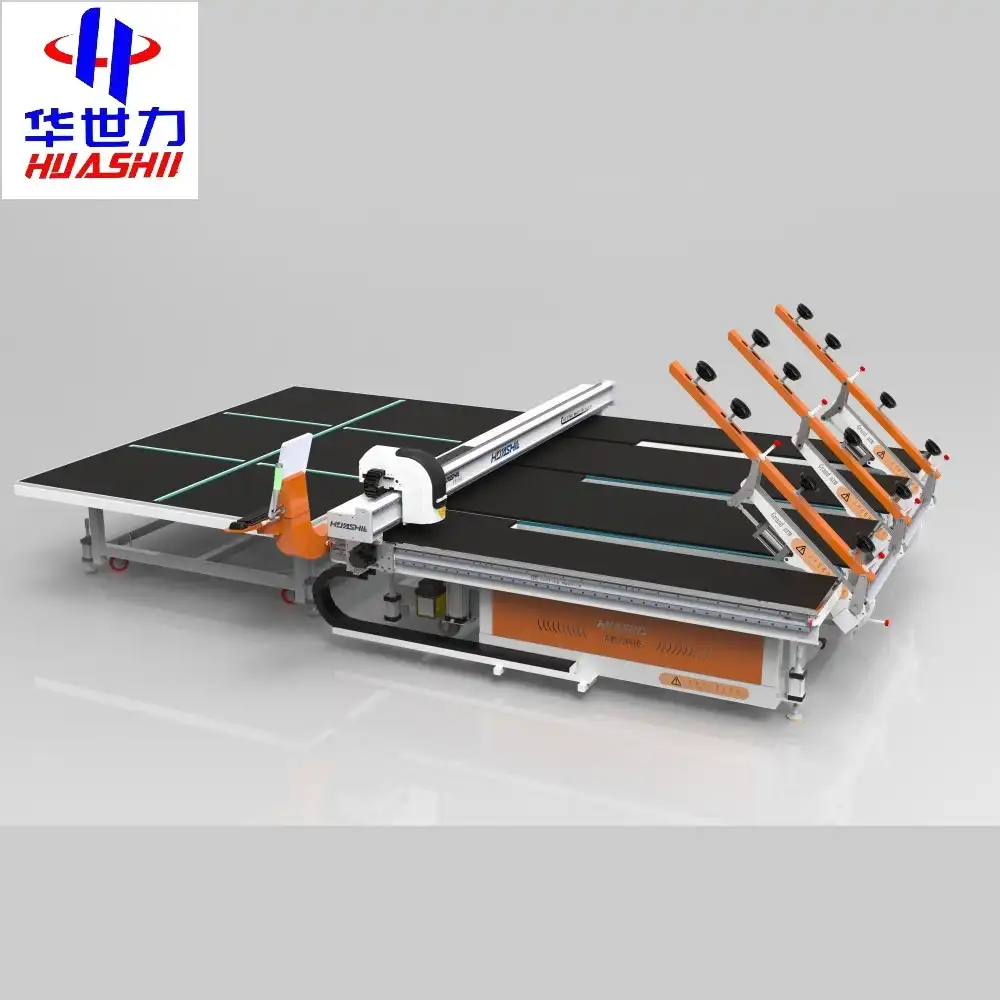
The cheapest way to get cutting tools is to do it by hand, but it doesn't work well for large-scale production. Edge consistency relies a lot on how skilled the user is, and output rates rarely go above and beyond what can be done by machines in a much shorter amount of time.
For large-scale production of PV glass, fully automatic machines with servo motion and PLC touchscreen displays are the best option. When servo control is used to optimize cycle times, less energy is used per panel, and the lower number of rework hours usually covers the higher capital cost within 18 to 24 months under normal operating conditions.
Why Partner with Leading PV Glass Double Edging Machine Suppliers?
If you choose a reputable bilateral glass edging machine manufacturer over an unproven reseller, there are practical effects that procurement teams often don't think about until a problem comes up in the middle of the project.
Huashil is a high-tech manufacturing company based in Shandong, China. It brings together automated research and development, production, and sales around the world. The company's double edging machines have 12 wheels on each side, with 2 upper chamfers, 2 lower chamfers, and 8 flat grinding wheels. These wheels are set up so that the edges are finished completely in one pass. Beam travel is controlled by servos, so it can open and close precisely and consistently over the 0.35 m to 2.5 m range of adjustments. Conveying speed is equally servo-managed, taking human speed calibration out of the operator's duties completely.
Huashil can handle both OEM and ODM requests, so system builders and integrators can ask for changes that work with their production line setup. Because of this, Huashil is a good partner for curtain wall integrators, solar module fabricators, and glass furniture manufacturers who need equipment that fits their specific process instead of a standard catalog answer.
Verified installation cases from factories in several countries show that productivity gains can be measured. Clients say that switching from older single-side processing lines to Huashil's automated bidirectional cutting setup cut processing time for each unit by a large amount, and under normal working conditions, edge rejection rates dropped to less than 0.5%. Working with PV glass double edging machine suppliers like Huashil means procurement teams can evaluate real documented performance instead of relying on catalog claims.
Practical Guide to Procurement and Post-Purchase Management
Structuring Your Request for Quote
A well-written RFQ cuts down on the time it takes to evaluate suppliers and brings to light any secret costs before they show up on the final bill. Include the range of glass thicknesses, the largest and smallest panel sizes, the target processing speed (in panels per hour), and the edge profile requirements. Asking for a detailed breakdown of the costs of installation, training, and commissioning will keep you from being surprised after you sign the contract.
Managing Lead Times and Logistics
Standard lead times for fully automatic double-edging equipment are between 30 and 60 days from the time an order is confirmed until it is shipped, but this depends on how much customization is needed. For this size of machine to get to U.S. ports, freight planning needs to be organized. It's easier to get things delivered when you know about Incoterms, port-of-entry requirements, and the availability of local installation support before you buy.
Warranty and Long-Term Maintenance
A good warranty for glass processing equipment should cover at least the mechanical drive system, servo motors, and grinding spindles. Plants that can't afford to be shut down for long periods of time need to know exactly how long it takes to get spare parts, especially grinding wheels that need to be replaced often. For foreign customers, Huashil offers recorded after-sales support routes and keeps extra parts on hand for as long as the machine is in use.
Conclusion
For large-scale production of PV glass, edge cutting tools must have the right balance of accuracy, speed, and dependability. Most industrial glass production jobs can be done with a double-edging machine that has 12 grinding wheels on each side, servo-controlled movement, and a full adjustment range from 350 mm to 2,500 mm. Picking reputable PV glass double edging machine suppliers that offer real customization options and quick customer service after the sale protects both ongoing production and the long-term value of your investment. Huashil's automated edging solutions are made to meet these large-scale needs.
Frequently Asked Questions
1. What factors most affect the price of a PV glass double edging machine?
The price of a machine depends on how automated it is, how many wheels it has, how far it can be adjusted, and how complex the control system is. It costs more up front for a fully automatic 12-wheel model with servo movement and PLC control than a semi-automatic model, but it usually costs less over five years because it needs less maintenance and is less likely to break down.
2. How do I evaluate whether a supplier can handle high-volume orders?
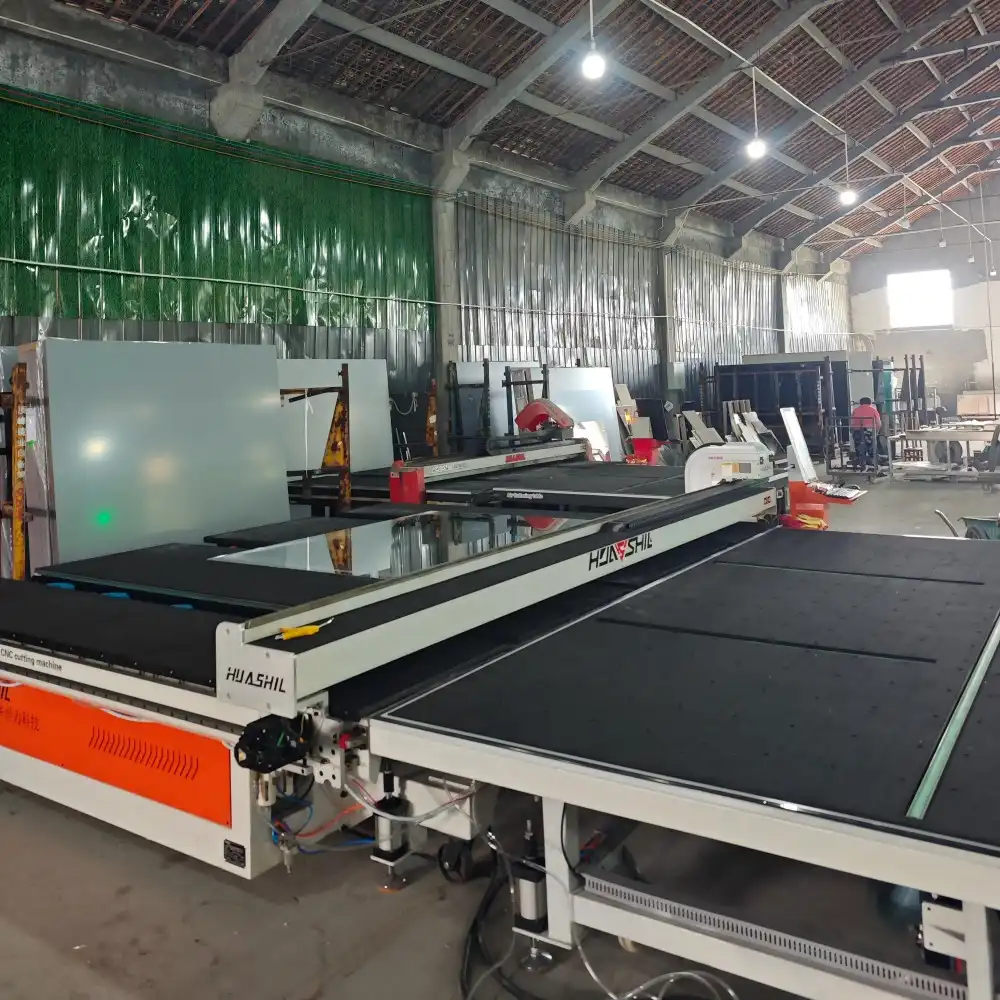
Ask for written confirmation of production capacity, lead time commitments, and references from companies that produce at a similar level. Fulfillment risk is lower for suppliers who have actively exported goods in the past and can show proof of installation cases than for those who haven't done much business internationally.
3. What safety features should a double edging machine include?
Important safety features include emergency stop circuits that can be reached from multiple operator positions, spindle guarding to limit wheel fragment events, and water cooling systems that control heat and flying particles while grinding. A fault detection system based on PLCs that stops the line when abnormal load readings are found adds another level of safety.
4. Can these machines process glass formats beyond standard PV panel sizes?
Yes. Machines with a beam opening range of 0.35 m to 2.5 m can work with standard photovoltaic formats as well as architectural glass panels, shower enclosures, and furniture glass. This makes them useful assets in a facility that processes a lot of different types of glass.
Partner with HUASHIL — Trusted PV Glass Double Edging Machine Supplier for Industrial Production
HUASHIL makes tested two-sided glass cutting tools that are made to work well for a long time and with a lot of glass. As one of the experienced PV glass double edging machine suppliers and manufacturers, we can help you with full customization for your production line and offer servo-controlled automation. Get in touch with our team right away to get a competitive quote that is made just for you. To get detailed data, email us at salescathy@sdhuashil.com.
References
1. Solar Energy Materials and Solar Cells — Elsevier, 2021
2. Glass Processing Technology: Principles and Applications — Society of Glass Technology, 2019
3. Photovoltaic Manufacturing & Automation Handbook — International Solar Energy Society, 2022
4. Glass Industry Magazine — BV Media Group, 2023
5. Automation in Glass Fabrication: Trends and Benchmarks — Machinery Market International, 2022
6. Global Photovoltaic Glass Market Analysis Report — Grand View Research, 2023