




A float glass cutting machine is a specialized industrial device engineered to score and separate flat glass sheets produced through the float process — where molten glass is poured over a tin bath to create uniform, distortion-free panels. These machines deliver dimensional accuracy that manual methods simply cannot replicate, making them indispensable in architectural fabrication, automotive production, and furniture manufacturing. Whether you're managing a high-volume curtain wall project or scaling a custom glass furniture line, understanding how this equipment works helps you make smarter procurement decisions.
Understanding Float Glass Cutting Machines
Traditional mobile glass cutters depend on the skill of the person using them, which leads to waste and inconsistent results. An automated glass cutting system, on the other hand, uses precise tracks and computer-controlled cutting heads to score the glass surface in the same way every time. It leads to cleaner break lines, tighter tolerances, and a huge drop in material loss.
The market divides these machines into three main groups. Manual units work well in workshops that don't need to automate much. Semi-automatic types use CNC control while still requiring some input from a person. On fully robotic lines, like those made by Biesse, Bystronic, Bottero, and RIKO, loading, cutting, breaking, and sorting are all done at the same time. Each tier is good for a different level of production. One of the most common and expensive mistakes I've seen in the industry is picking the wrong tier.
Core Components and How Float Glass Cutting Machines Work
The Anatomy of a Precision Cutting Line
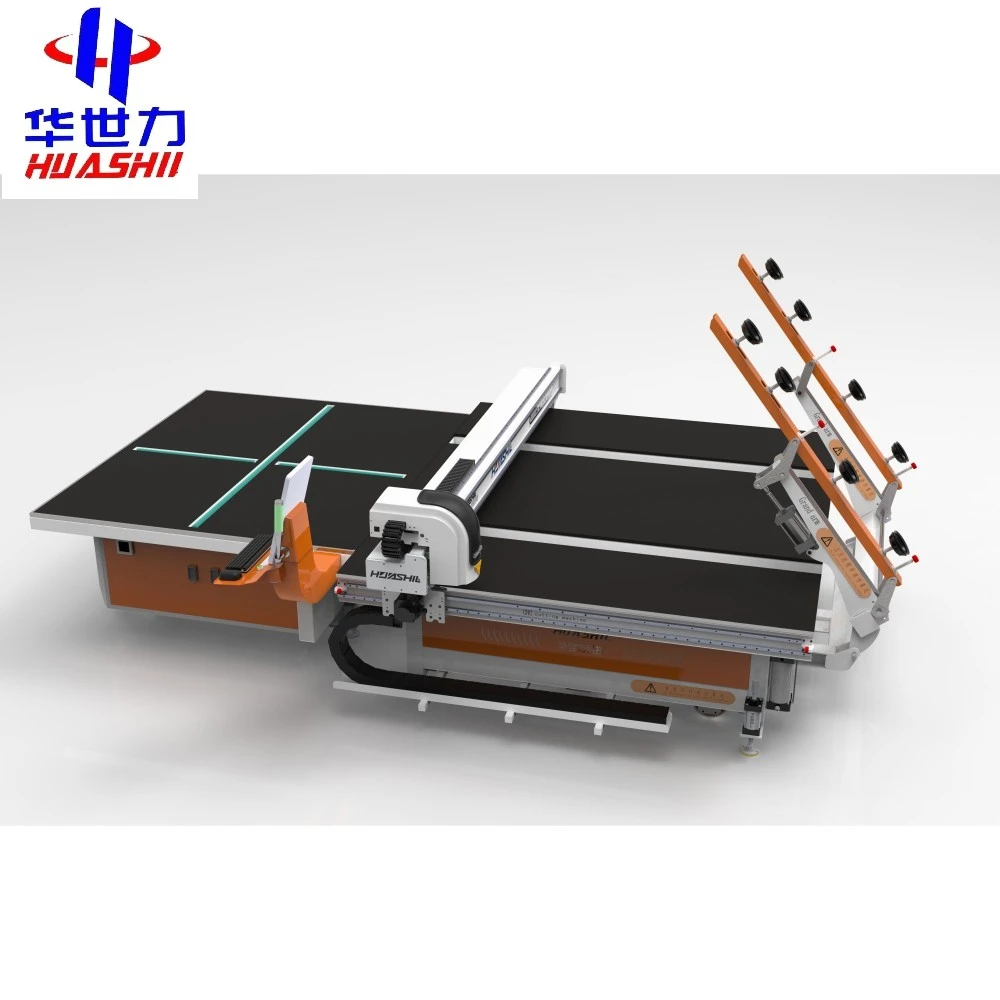
Knowing how a float glass cutting machine is put together physically helps engineers check specs before spending money. A normal automatic line has three positions that move glass from a raw sheet to a finished cut panel. These are the loading table, the cutting table, and the breaking table.
This three-stage design is shown very well by the HUASHIL HSL-LSX4228. It can hold glass panels up to 4,200 mm x 2,800 mm, so it can be used for large architectural panels and oversized curtain wall windows. The system can have rails above or below ground, and the layout of the 2+2 stations can be changed to fit the layout of your production floor. Each side has four large arms that move glass between stations safely and smoothly, reducing the chance of damage to the surface during handling.
The Role of Optimization Software
At the control level, the HSL-LSX4228 uses Optima software to make things run better. Before a single score line is made, this tool figures out the best way to cut the material, which cuts down on waste and increases glass output. Even a 2–3% increase in yield can save plants that make expensive architectural or low-E glass more than a quarter of their costs. Optima also supports batch programming, which lets operators put together a list of different cutting patterns and keep working while their shifts change.
Safety and Operational Protocols
Working with glass comes with its own risks. Automated machines deal with this problem by having physical guards, emergency stop circuits, and controlled break stations that hold broken glass while the machines separate it. For repair work, operators should always wear the right PPE and follow lockout/tagout rules. Checking the cutting wheel's pressure and water level every day keeps it from wearing out too quickly and maintains the quality of the cuts.
Advantages of Using Float Glass Cutting Machines
When skilled people score glass by hand, the measurements are accurate to within ±1.5–2.0 mm. Automated CNC glass cutting can usually achieve ±0.2–0.5 mm, which is a very important difference when making insulating glass units or layered safety glass because the way the edges are aligned affects how well the seal works.
When plant managers and production directors try to justify the capital investment, these are the main benefits they always list:
- Higher throughput with lower labor dependency: A fully automatic line can process hundreds of sheets per shift with minimal manual intervention, freeing skilled workers for value-added tasks like quality inspection and packaging.
- Consistent cut quality across all shifts: Software-driven cutting eliminates the variability introduced by operator fatigue, ensuring the same edge quality at hour one and hour eight of production.
- Material optimization through software: Nesting algorithms in platforms like Optima reduce glass offcut waste, which directly lowers raw material costs — particularly important when working with premium glass substrates.
- Scalable station configurations: The 2+2 station design on the HSL-LSX4228 allows production managers to adjust line capacity without purchasing an entirely new system.
Architectural glass fabricators and curtain wall integrators are under a lot of pressure to meet tight building plans and produce large amounts of glass for projects. These benefits directly help them do that. Putting money into automation isn't just for speed; it's also for stable production that keeps project delivery promises.
How to Choose the Right Float Glass Cutting Machine for Your Business
When purchasing managers look at flat glass making tools, they should base their decisions on four useful questions when choosing a float glass cutting machine: How big of glass do you need to be able to work with? How much output do you need each day for your production plan to work? How much space on the floor does the line need? And what level of automation do your operators support right now?
For large-format architectural glass, a machine like the HSL-LSX4228 that can handle pieces up to 4,200 × 2,800 mm fits the vast majority of normal commercial glazing sizes. Smaller companies that make furniture or bathroom doors might be fine with a smaller design.
When deciding between sellers, don't just look at the price tag. The total cost of ownership includes setting up the machine, training the operator, waiting times for spare parts, and the warranty. A machine that is 15% cheaper but has a 6-week lead time for spare parts can cost a lot more when it breaks down without warning than a slightly more expensive unit with quick customer service after the sale. HUASHIL offers a standard warranty, clear information on where to find spare parts, and direct lines of communication for technical help. These are all things that are just as important during long production runs as the specs of the machine itself.
For investments in a whole production line, the buying process can take up to six months and includes technical review, site visits, and financial sign-off. Early on in the process, making bid-ready documents with project goals and acceptance standards speeds up reviews and cuts down on the amount of back-and-forth with finance departments.
Maintenance, Troubleshooting, and Optimizing Performance
When you take care of your glass cutting line, it keeps making the same amount of glass for years. To make the schedule easier for floor supervisors to handle, I suggest putting maintenance tasks in order of how often they need to be done.
Checking the cutting wheels, coolant fluid levels, and rail cleanliness should all be done every day. As part of the weekly tasks, the software must be checked for accuracy, the grand arm's suction cups must be checked for wear, and the rails must be aligned. Every month, maintenance should include lubricating all moving parts, updating software through the Optima platform, and going over all cutting accuracy logs again to find drift before it hurts the quality of the work.
Cutting problems like chipping along the score line or partial breaks are often caused by worn cutting wheels, the wrong scoring pressure, or not enough lubricant. Taking care of these issues where they start keeps scrap from building up and protects processes like cutting and hardening that come after.
It's a good idea to pay for organized operator training during software changes and when the system is first set up. If an operator knows how to use the Optima interface, they can change nesting patterns, handle batch lines, and fix small problems without having to call outside technical help for simple problems.
Conclusion
A float glass cutting machine is an important tool for any serious glass fabrication business. From making custom furniture to covering buildings, the right automated cutting line improves accuracy, cuts down on waste, and can handle the large amounts of work that modern manufacturing and construction projects need. With its three-table workflow, Optima optimization software, flexible station setup, and large-format glass capacity, the HUASHIL HSL-LSX4228 is a technically developed choice for 2024 buyers looking at automated glass processing equipment.
FAQ
1. What types of glass can a float glass cutting machine process?
These tools are made to work with flat, annealed float glass that is used in construction, cars, and home art. Clear glass, colored glass, polished glass, and low-E glass are all things that most industrial models can handle. The HSL-LSX4228 can handle sheets that are up to 4,200 mm x 2,800 mm, which is most industrial glazing sizes.
2. How does optimization software improve glass yield?
Before processing starts, software like Optima figures out the best way to cut each sheet of glass. It improves the amount of useful glass per sheet by reducing the amount of waste. This can cut down on raw material waste by several percentage points in high-volume plants, which has a real effect on running costs.
3. What is the difference between semi-automatic and fully automatic cutting lines?
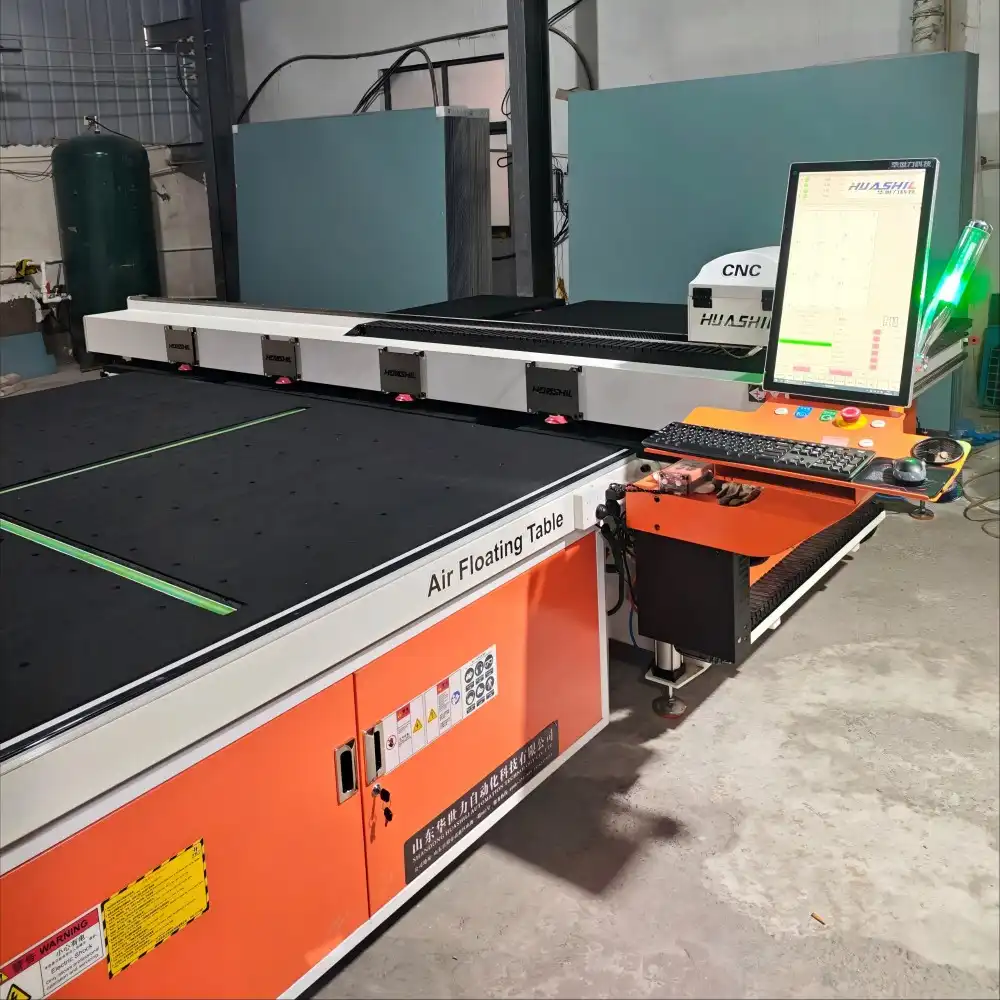
Fully automatic lines combine all stages—loading, scoring, breaking, and transfer—into a single, software-controlled process. Semi-automatic systems need to be loaded or broken by hand. Fully automatic setups work best for high-volume tasks where consistent output and efficient use of labor are important.
4. How long does installation and commissioning typically take?
Installation times depend on how complicated the line is and how the site is set up. Most single-machine setups are ready to go in one to two weeks. Full automatic production lines may take three to six weeks, which includes teaching the operators and making sure the software is correct.
Ready to Source a Reliable Float Glass Cutting Machine Supplier?
HUASHIL offers tried-and-true float glass cutting machine solutions that are made to work in tough production settings. The HSL-LSX4228 is built to last and comes with smart Optima software that will help your facility cut faster, waste less, and grow with confidence. Get in touch with our team right away to ask for technical details, a business proposal, or a factory tour. You can email us at salescathy@sdhuashil.com to see our whole store.
References
1. Glass Processing Technology: Principles and Applications — Society of Glass Technology, 2019
2. Flat Glass Market: Global Industry Analysis and Forecast — Persistence Market Research, 2023
3. Automation in Glass Fabrication: Trends and Benchmarks — Glass International Magazine, 2022
4. CNC Machinery and Industrial Automation in Construction Materials Manufacturing — Manufacturing Engineering Society, 2021
5. Energy Efficiency and Waste Reduction in Glass Processing Operations — International Journal of Advanced Manufacturing Technology, 2020
6. B2B Capital Equipment Procurement: Decision Frameworks for Industrial Buyers — Industrial Distribution Journal, 2022